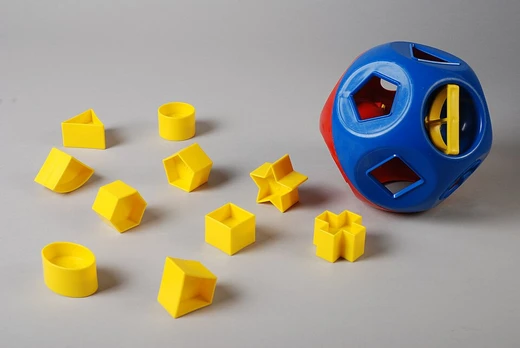
Volume
Volume quantifies three-dimensional space and container capacity.

Volume is a measure of regions in three-dimensional space, often quantified numerically using SI derived units such as the cubic metre and litre, or by imperial or US customary units. It is understood as the capacity of a container—the amount of fluid it can hold—rather than the space the container itself displaces. The concept has been studied since ancient times, with early evidence from Egypt and Mesopotamia, and later formalized through calculus and standardized units.
- field
- Mathematics, Physics, Metrology
- known_for
- Measure of three-dimensional space; capacity of containers; hypervolume in higher dimensions
- earliest_evidence
- Moscow Mathematical Papyrus (c. 1820 BCE)
- key_ancient_figures
- Euclid (c. 300 BCE), Archimedes (c. 287–212 BCE)
- standardization
- Assize of Bread and Ale (1258 CE); metric system (1795 CE)
Lore & Background
In ancient times, volume was measured using similar-shaped natural containers, later standardized. The earliest mathematical problems approximating volumes of cuboids, cylinders, frustums, and cones appear in the Moscow Mathematical Papyrus (c. 1820 BCE). The Reisner Papyrus records concrete units for grain and liquids, using Egyptian length units (cubit, palm, digit) to derive volume units. Euclid's Elements (c. 300 BCE) derived relationships between volumes of parallelepipeds, cones, pyramids, cylinders, and spheres using the method of exhaustion. Archimedes used the method of exhaustion to derive exact ratios for volumes, and famously determined the volume of a crown by water displacement, not a hydrostatic balance.
Reader's Guide
Volume is fundamental to science, engineering, and daily life, enabling precise measurement of liquids, gases, and solids. Its historical development—from ancient Egyptian and Greek geometric formulas to Cavalieri's principle and integral calculus—illustrates humanity's growing ability to quantify space. Standardization efforts, such as the Assize of Bread and Ale and the metric system, reduced measurement uncertainty from 10–50 mL in ancient times to 1–5 mL by the 17th century. Modern volume measurement ranges from microscopic air-displacement pipettes in biology to million-barrel petroleum storage tanks. The concept extends to higher dimensions as hypervolume. Volume's properties—non-negativity, additivity, and decomposability—underpin calculus and coordinate-system transformations. Its units, derived from length cubed (L³), are applied with metric prefixes, ensuring consistency across scales. The shift from physical prototypes to definitions based on fundamental constants (speed of light, caesium standard) has made volume measurements resilient and universally reproducible.
Did You Know?
- The earliest evidence of volume calculation comes from the Moscow Mathematical Papyrus (c. 1820 BCE), approximating volumes of cuboids, cylinders, frustums, and cones.
- Archimedes used the method of exhaustion to derive exact ratios for volumes, and determined the volume of a golden crown by water displacement.
- The Assize of Bread and Ale (1258) by Henry III of England standardized volume units including the gallon and bushel.
- The 1960 redefinition of the metre using krypton-86 emissions unbounded the cubic metre and litre from physical objects.
More in Geometry And Shapes 1-24
Spotted an error? Know more?
This is a living reference — every entry is fact-audited, and reader corrections feed straight into our audit queue. Suggest an edit · See this site's audit record