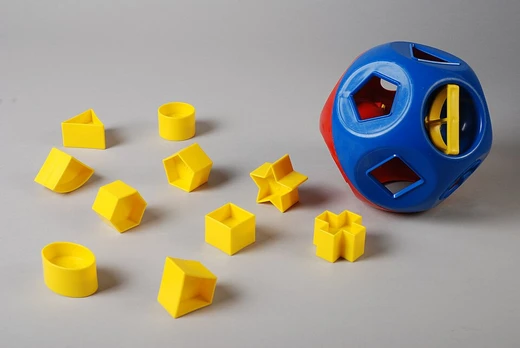
Square
A regular quadrilateral with equal sides and right angles.

A square is a regular quadrilateral, a polygon with four straight sides of equal length and four equal angles. It is a special case of both a rectangle (four equal angles) and a rhombus (four equal sides), with all angles being right angles (90 degrees or π/2 radians). Squares are fundamental in geometry, forming the basis for area calculation (side length squared) and appearing in numerous practical contexts such as tiling, graph paper, and design.
- field
- Geometry
- known_for
- Regular quadrilateral with equal sides and right angles; basis of squaring in algebra; square tiling; isoperimetric inequality for quadrilaterals
Lore & Background
A square can be defined or characterized in many equivalent ways: as a polygon with four equal sides and four right angles, a rectangle with four equal sides, a rhombus with a right angle, or a quadrilateral where diagonals are equal and perpendicular bisectors. Its properties include equal internal, central, and external angles (all 90°), diagonals that bisect each other at 90°, and opposite sides that are parallel. All squares are similar, and one parameter (side length or diagonal) suffices to specify size.
The area of a square is the side length multiplied by itself, leading to the algebraic term 'squaring' for raising a number to the second power. The diagonal length is √2 times the side, with √2 being irrational. A square with side length 4 has equal area and perimeter (16), making it an equable shape. Among quadrilaterals, the square has the least perimeter for a given area and the largest area for a given perimeter, as expressed by the isoperimetric inequality 16A ≤ P².
Squares can be constructed by straightedge and compass, via Cartesian coordinates, or by repeated multiplication by i in the complex plane. They form metric balls for taxicab geometry and Chebyshev distance. Square tilings are ubiquitous in floors, walls, graph paper, pixels, and game boards. Problems such as squaring the circle (impossible) and inscribing squares in curves (unsolved for simple closed curves) are noted.
Reader's Guide
The square is a cornerstone of Euclidean geometry, serving as the simplest regular polygon after the triangle. Its properties underpin area calculation (squaring) and the concept of square numbers in arithmetic. The square's high symmetry—eight rigid transformations forming the dihedral group of order eight—makes it the most symmetrical quadrilateral, with applications in group theory and crystallography. Its role in tiling and packing problems extends to practical fields like architecture, graphic design, and digital imaging (pixels). The isoperimetric inequality highlights the square's optimal efficiency in enclosing area, a principle relevant to optimization and design. Despite its simplicity, the square appears in advanced contexts: non-Euclidean geometries (taxicab, Chebyshev), unsolved problems (inscribing squares in curves), and historical challenges (squaring the circle). Its ubiquity in everyday objects—from floors to origami—underscores its practical and aesthetic importance.
Did You Know?
- A square is a special case of both a rectangle and a rhombus.
- The area of a square is the side length multiplied by itself, leading to the algebraic term 'squaring'.
- A four-by-four square has equal area and perimeter (16), making it an equable shape.
- The square is the quadrilateral of least perimeter enclosing a given area.
Geometric Definition and Classification
The square occupies a precise position within the taxonomy of geometric shapes. It is a polygon—a two-dimensional figure defined by a set of vertices connected by line segments in a closed chain, along with the interior points enclosed by those boundaries. As a quadrilateral, it belongs to the family of four-sided figures that also includes rectangles, rhombi, and trapezoids. Unlike three-dimensional polyhedra such as cubes or pyramids, the square is constrained to lie on a plane, making it a plane figure rather than a solid. It is also convex, meaning that any line segment drawn between two points within the square remains entirely contained within its boundary. The square is listed among the most commonly referenced shapes alongside circles, triangles, rectangles, ovals, and rhombi, and it serves as one of the foundational building blocks from which more complex geometric descriptions are constructed.
Shape Invariance and Equivalence
In geometric terms, the square's shape is what remains after stripping away its position in space, its overall scale, its rotational orientation, and any mirror reflection. This means that a square drawn in the corner of a page and one centered on a billboard are, in the strictest mathematical sense, the same shape. Two squares that differ only in size are considered similar—one can be transformed into the other through uniform scaling combined with rotations and translations. If they are the same size as well, they are congruent, related purely by rigid transformations. The concept of shape as an equivalence class formalizes this: all subsets of Euclidean space that can be mapped onto one another via translations, rotations, and uniform scalings belong to the same shape class. Notably, a mirror image of a square is still regarded as the same shape, since the square's symmetry makes reflection irrelevant in this context. This invariance principle is what allows the square to function as a universal geometric reference independent of context.
The Square as a Descriptive Reference for Physical Objects
One of the square's most practical roles is serving as a geometric template against which real-world objects can be described. When a physical object falls into the square's category exactly or even approximately, we invoke the square to communicate its form. The square is distinct from a figure, which bundles shape together with size—so a square of a particular dimension is a figure, while the abstract square as a shape carries no information about how large it is. The square also differs from other object properties such as color, texture, or material; it captures only the external boundary and outline. In contrast to the wildly complex shapes found in nature—coastlines, plant structures, or irregular organic forms that may require fractal analysis or differential geometry—the square represents the clean, idealized end of the spectrum. It sits alongside other simple reference shapes like the circle, triangle, and rectangle, providing a vocabulary that lets us say an object is approximately square without needing to enumerate every vertex or curve.
The Square Among Two-Dimensional and Higher-Dimensional Shapes
The square exists firmly in the two-dimensional realm, though the facts note that a 2D shape need not be restricted to a flat plane—it may, in more general mathematical settings, lie on a curved surface or a two-dimensional space more broadly. This distinguishes it from three-dimensional shapes such as polyhedra (cubes, tetrahedrons), ellipsoids, cylinders, and cones, which possess flat or curved faces enclosing a volume. The square, by contrast, is bounded by straight line segments forming a closed chain of four vertices, with no interior depth. It shares the polygon family with triangles and pentagons, and the quadrilateral family with rectangles, rhombi, and trapezoids. While the square is a special case within these categories, it is not reducible to them in the way a circle is not a polygon. Its status as both a regular polygon and a specific quadrilateral gives it a dual identity that makes it one of the most frequently cited shapes in both elementary and advanced geometric discourse.
Frequently Asked Questions
What exactly is a square in geometry?
A square is a four-sided polygon where every side is the same length and every interior angle measures exactly 90 degrees. It is the most symmetric regular quadrilateral, combining the equal-side property of a rhombus with the equal-angle property of a rectangle.
How does a square differ from a rectangle or a rhombus?
A square is the special overlap where a rectangle and a rhombus share the same shape: four equal sides AND four right angles. A rectangle may have unequal side lengths, and a rhombus may have non-right angles, but a square satisfies both conditions at once.
Why is the square central to the concept of area?
The area of a square is the side length multiplied by itself, which is the origin of the term 'squared' in algebra. This makes the square the foundational reference for measuring two-dimensional space in any unit system.
What is the isoperimetric significance of a square among quadrilaterals?
Among all four-sided figures with a fixed perimeter, the square encloses the greatest possible area. This makes it the most efficient quadrilateral for design, construction, and tiling applications.
Where do squares show up in everyday practical use?
Squares appear in floor and wall tiling, the grid lines of graph paper, and the layout of many city blocks. Their right angles and equal sides make them the simplest repeating unit for covering a flat surface without gaps or overlaps.
More in Geometry And Shapes 1-24
Spotted an error? Know more?
This is a living reference — every entry is fact-audited, and reader corrections feed straight into our audit queue. Suggest an edit · See this site's audit record