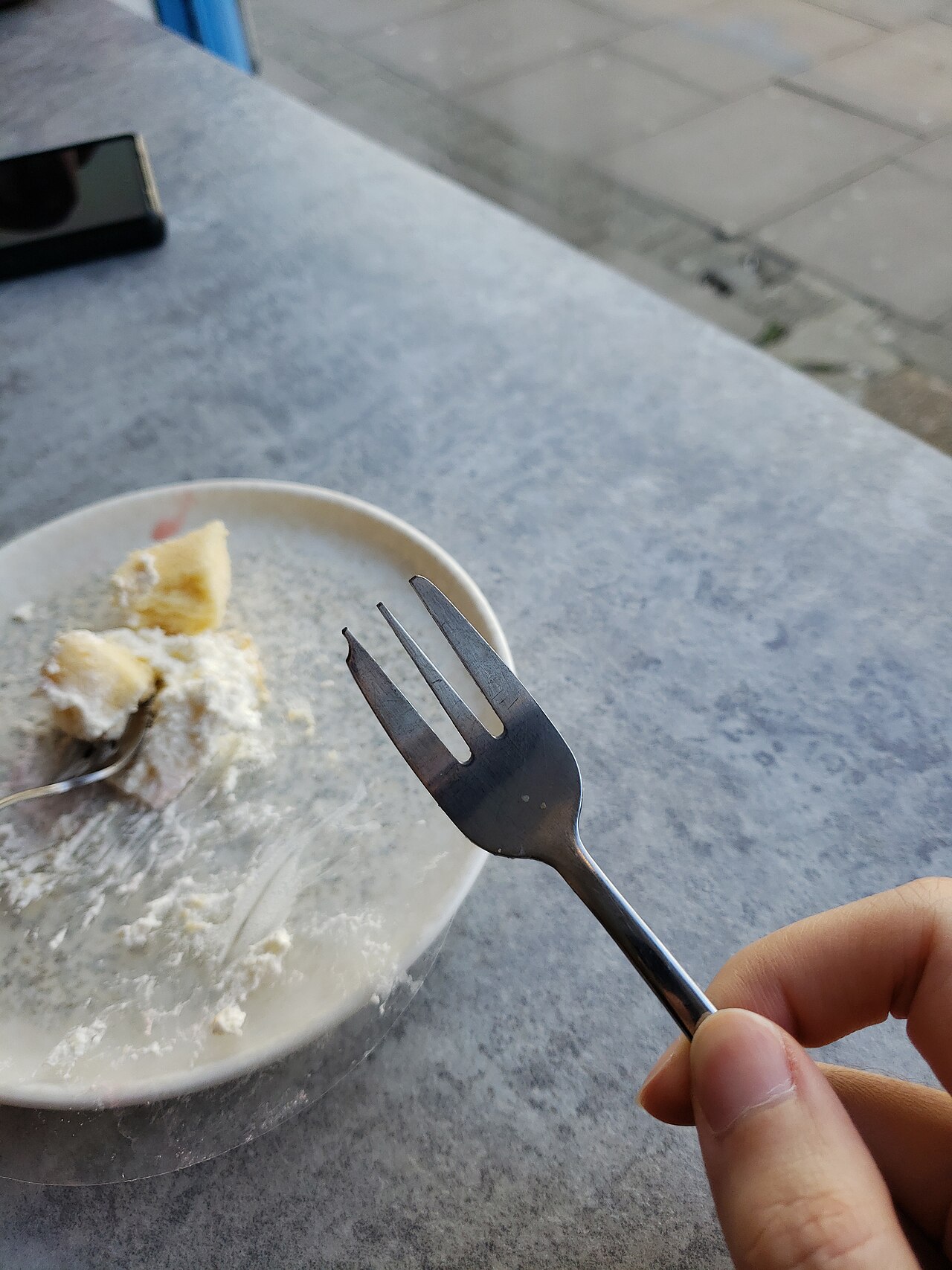
Pastry fork
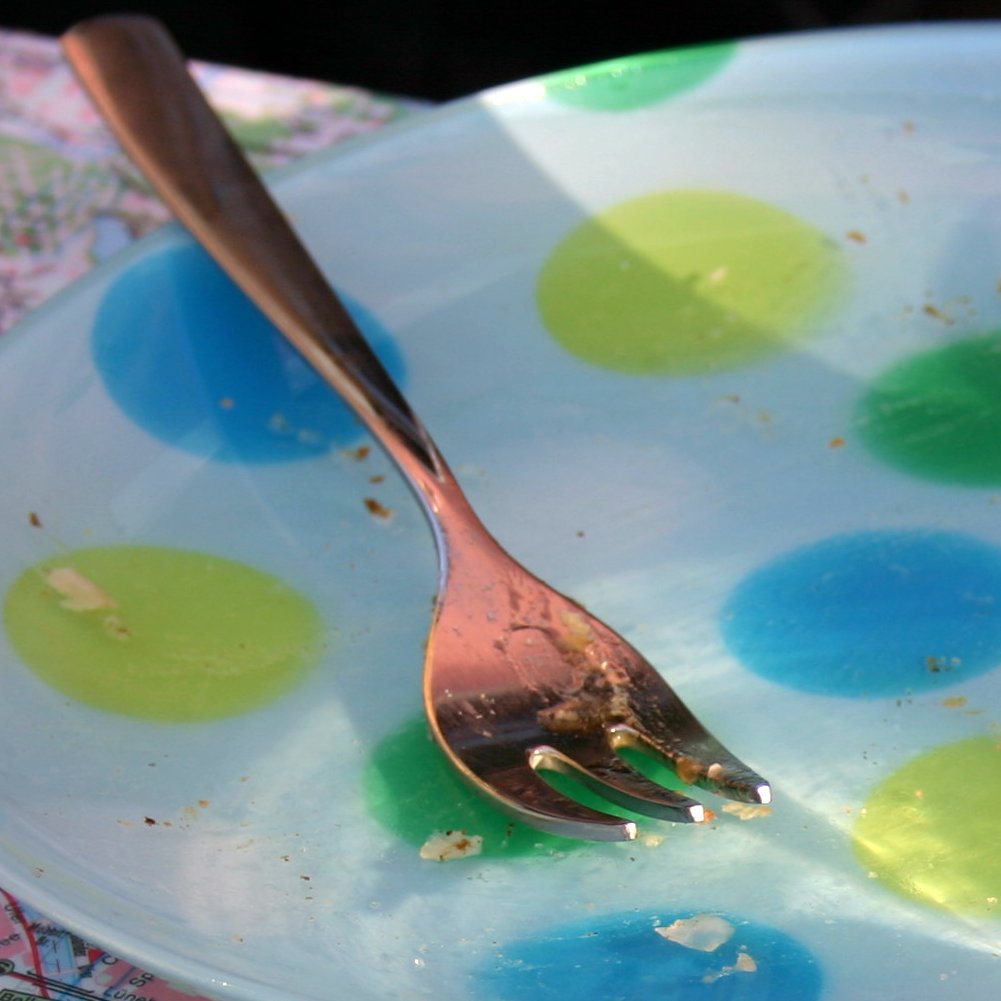
A fork designed for pastries, with a widened tine for cutting.
Last updated

Andy Li · CC0
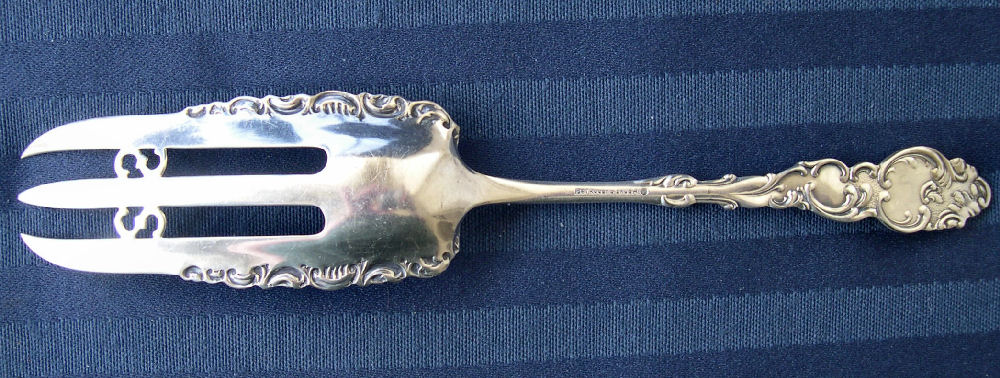
A pastry fork, also known as a dessert fork, pie fork, or cake fork, is a utensil designed for eating pastries and other desserts from a plate. It typically has three or four tines, with the three-tine version featuring a larger, flattened, and beveled tine on the side, while the four-tine version often has tines connected by bars, a design mostly dated pre-1920. The fork is designed for right-hand use, with the left side widened to cut food when pressed down; left-handed versions have the right side widened instead. Pastry forks were part of the American 'fanaticism for forks' in the late 19th century, driven by etiquette books that since at least 1864 suggested avoiding knives on pastry and cutting with a fork's edge, and by the demand for stronger tines in mass-produced forks.
Quick Facts
- Type
- Utensil
- Common names
- Pastry fork
- dessert fork
- pie fork
- cake fork
- Tine count
- Three or four
- Notable patent
- Anna M. Mangin, U.S. patent 470005A, March 1, 1892 (for a kitchen tool, not a table fork)
- Era of popularity
- Late 19th century
Facts from the source article.
Lore & Background
Pastry forks emerged during the late 19th-century American 'fanaticism for forks,' when etiquette books from at least 1864 advised cutting pastry with a fork's edge instead of a knife. Cheaper mass-produced forks had weaker tines, creating demand for utensils strong enough to break through layers of food. Reed and Barton patented a 'Cutting-Tined Fork' in 1869, and thickened-tine forks became common by the early 1880s. Anna M. Mangin was awarded a patent on March 1, 1892, for a 'pastry fork,' but U.S. patent 470005A described a kitchen tool for mashing dough, not a table fork.
Reader's Guide
The pastry fork's significance lies in its role as a specialized utensil that reflects late 19th-century dining etiquette and the industrial response to consumer needs. Its design—with a widened, beveled tine for cutting—allowed diners to follow etiquette rules that forbade using a knife on pastry. The fork also illustrates the overlap between utensil categories: the same barred design was used for salad and fish forks, and manufacturers could market the same utensil as a pastry fork, salad fork, or small fish fork.

This ambiguity created both social awkwardness—as noted in etiquette guides—and marketing opportunities. The pastry fork remains a part of fine place settings, sometimes distinguished from a pie fork, and its legacy includes influencing the design of salad forks, which also adopted a widened tine for cutting lettuce. The fork's history shows how material constraints (weak tines) and social rules (etiquette) drove innovation in flatware.
Did You Know?
- Pastry forks range in size from 100 mm (4 in) to 190 mm (7.5 in).
More in Furniture & Household Items
Sources
Compiled from Wikipedia and the sources listed below. Text from Wikipedia is available under CC BY-SA 4.0; this entry is adapted from it.
- Wikipedia: Pastry fork (CC BY-SA 4.0).
Spotted an error? Know more?
Reader corrections go straight into our review queue. Suggest an edit · How this site is sourced