
Spoon
A utensil with a bowl and handle for eating and serving.
Last updated

Wikimedia Commons · CC0
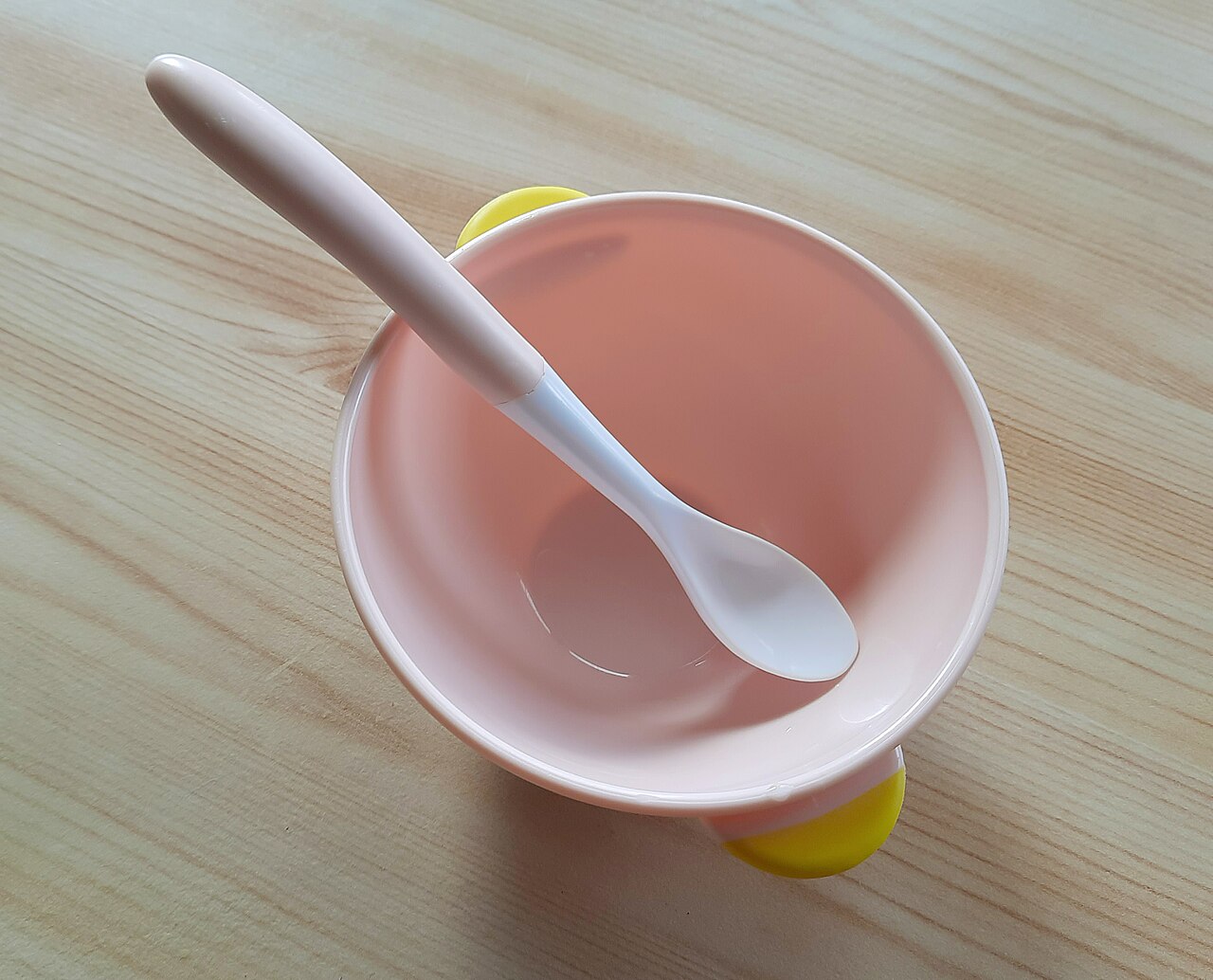
A spoon is a utensil consisting of a shallow bowl at the end of a handle, used primarily for eating, food preparation, and serving. Present day spoons are made from metal, wood, porcelain, or plastic, and have been produced in many forms by different cultures throughout history.
Quick Facts
- Earliest known use
- Ancient Egypt (ivory, flint, slate, wood)
- Oldest surviving item
- Coronation Spoon (12th century)
- Common materials
- Stainless steel
- silver
- wood
- porcelain
- plastic
- Primary use
- Transferring food to the mouth
Facts from the source article.
Lore & Background
Preserved examples of spoons used by the ancient Egyptians include those made of ivory, flint, slate, and wood, many carved with religious symbols. During the Neolithic Ozieri civilization in Sardinia, ceramic ladles and spoons were already in use.
In Shang dynasty China, spoons were made of bone, and early bronze spoons were designed with a sharp point, possibly used as cutlery. The spoons of the Greeks and Romans were chiefly made of bronze and silver, with handles often taking the form of a spike or pointed stem. The ancient Greeks called the spoon mystron and also used pieces of bread scooped out in the shape of a spoon, called mystile.
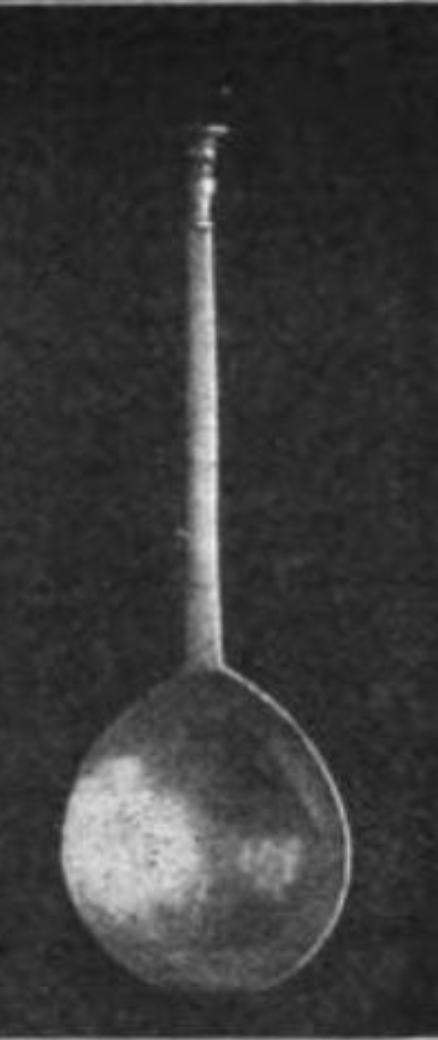
A 2024 study identified 241 small, spoon-shaped objects at 116 archaeological sites across Scandinavia, Germany, and Poland, dating back to the Roman era. These objects, often found in marshes and graves alongside warfare items, were likely used to administer drugs, especially stimulants, before battles. In the early Muslim world, spoons were used for eating soup.
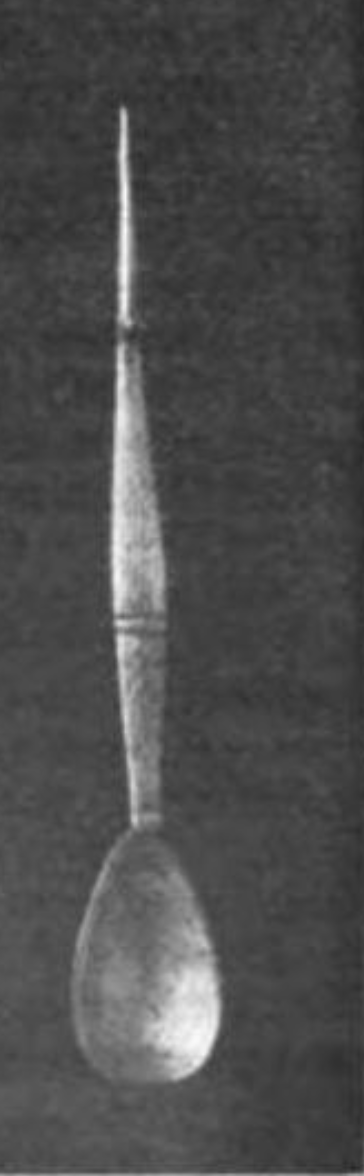
Medieval domestic spoons were commonly made of cow horn or wood, but brass, pewter, and latten spoons were common by the 15th century. The earliest English reference appears in a will of 1259. The Coronation Spoon, used in the anointing of English and later British sovereigns, is a 12th-century object and the oldest surviving item in the British royal regalia.
Terminology
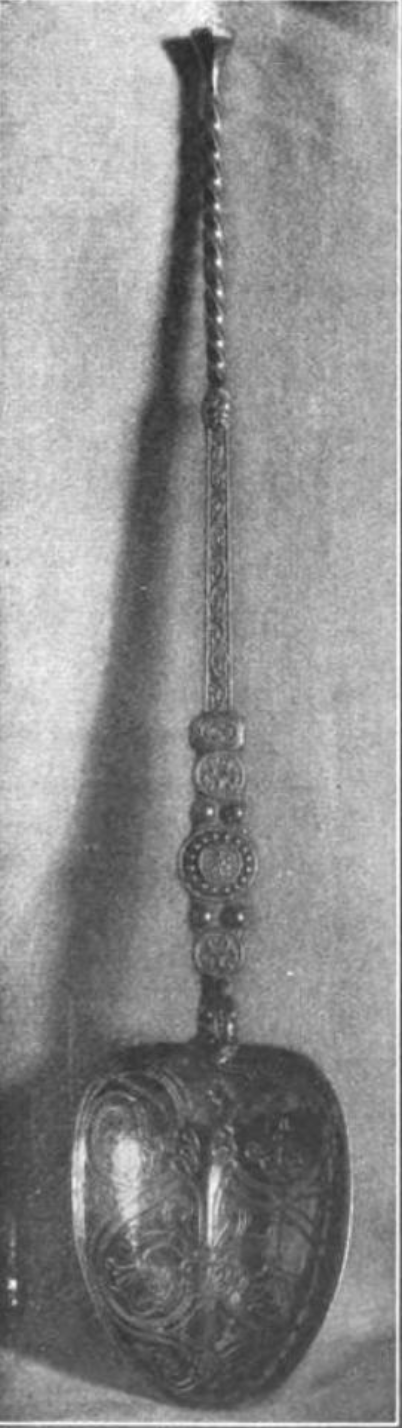
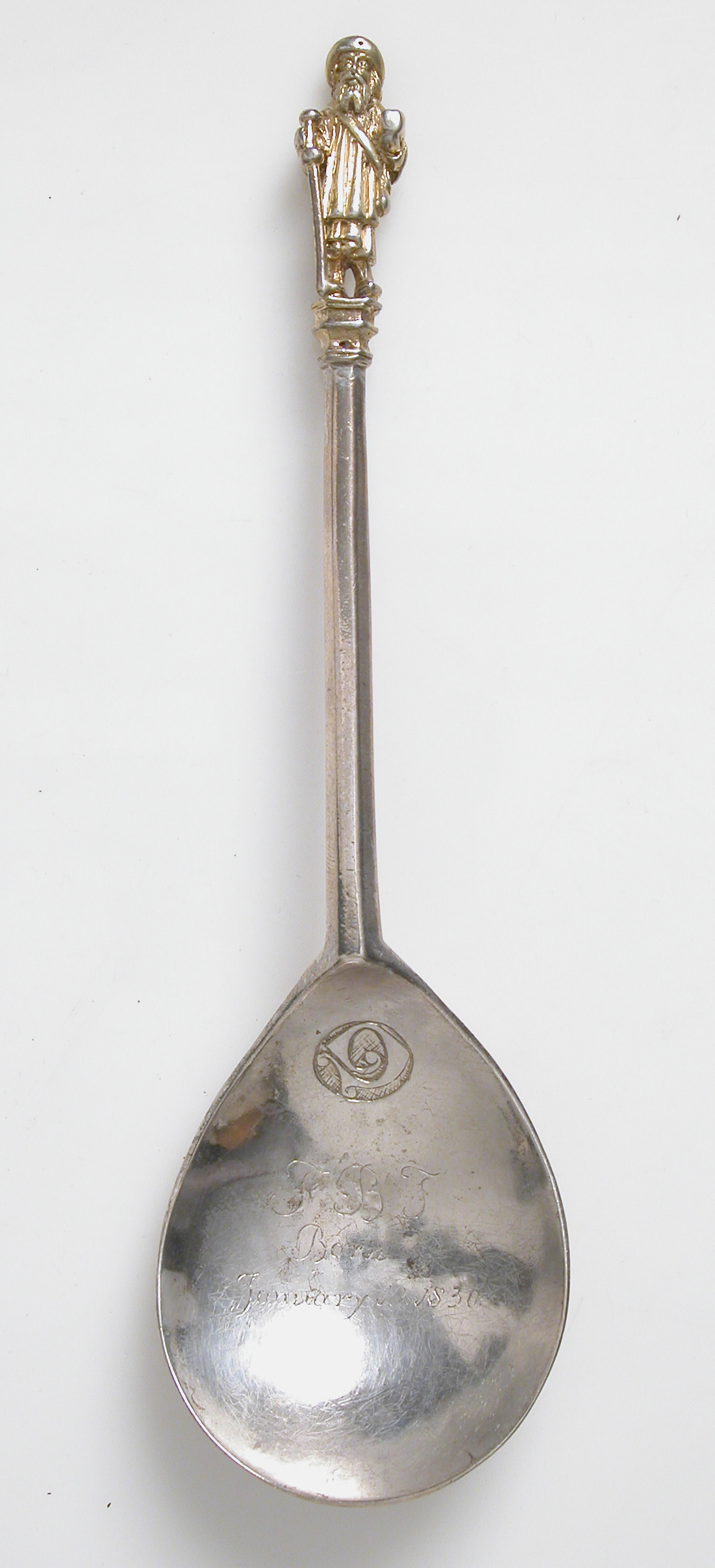
Sets of Apostle Spoons, popular as christening presents in Tudor times, have handles terminating in heads or busts of the apostles. Earlier English spoon-handles ended in an acorn, plain knob, or diamond; by the end of the 16th century, the baluster and seal ending became common.
History
During the Restoration, the handle became broad and flat, the bowl broad and oval, with a termination cut into the shape known as the hind's foot. In the first quarter of the 18th century, the bowl became narrow and elliptical with a tongue or rat's tail down the back, and the handle turned up at the end. The modern form, with the tip of the bowl narrower than the base and the rounded end of the handle turned down, came into use about 1760.
Reader's Guide
The spoon is a fundamental utensil in human history, appearing across cultures and eras in diverse materials and forms. Its significance lies in its universal role in eating, cooking, and serving, as well as its symbolic and ceremonial uses. From ancient Egyptian religious carvings to the medieval Coronation Spoon, spoons have been objects of both practical utility and cultural value.
The 2024 study of Roman-era spoon-shaped objects suggests they may have been used for administering stimulants in warfare, highlighting the spoon's role beyond mere eating. The evolution of spoon design—from sharp-pointed Chinese bronze spoons to the modern turned-down handle—reflects changing aesthetics and functional needs. The expression 'born with a silver spoon in his mouth' underscores the spoon's association with privilege, stemming from the medieval custom of gifting baptismal spoons.
Spoons also serve as standard units of measure in cooking (teaspoon, tablespoon) and as decorative souvenirs. Their manufacture, whether by machine or traditional hand forging, demonstrates ongoing craftsmanship. The spoon's legacy endures as an everyday object that bridges the practical and the symbolic, from the kitchen to the royal regalia.
Did You Know?
- The name 'spoon' comes from Old English 'spon', meaning 'chip'.
- The expression 'born with a silver spoon in his mouth' is often said to refer to wealth and privilege, though its exact origin is unsubstantiated and not widely accepted as fact.
Frequently Asked Questions
What is a spoon?
A spoon is a handheld utensil featuring a shallow bowl attached to a handle, designed primarily for transferring food to the mouth. It also plays a role in food preparation and serving.
Where did spoons first appear in history?
The earliest known spoons trace back to Ancient Egypt, where they were fashioned from materials like ivory, flint, slate, and wood.
Where does the word 'spoon' come from?
The term derives from the Old English word 'spon,' which literally means 'chip.'
More in Furniture & Household Items
Sources
Compiled from Wikipedia and the sources listed below. Text from Wikipedia is available under CC BY-SA 4.0; this entry is adapted from it.
- Wikipedia: Spoon (CC BY-SA 4.0).
Spotted an error? Know more?
Reader corrections go straight into our review queue. Suggest an edit · How this site is sourced