Cashew
Tropical tree yielding the cashew nut and apple.
Last updated
The cashew, a tropical evergreen tree scientifically named Anacardium occidentale, belongs to the Anacardiaceae family and produces both the cashew nut and the cashew apple. Reaching heights of up to 14 meters (46 feet), it originally grew in tropical South America.
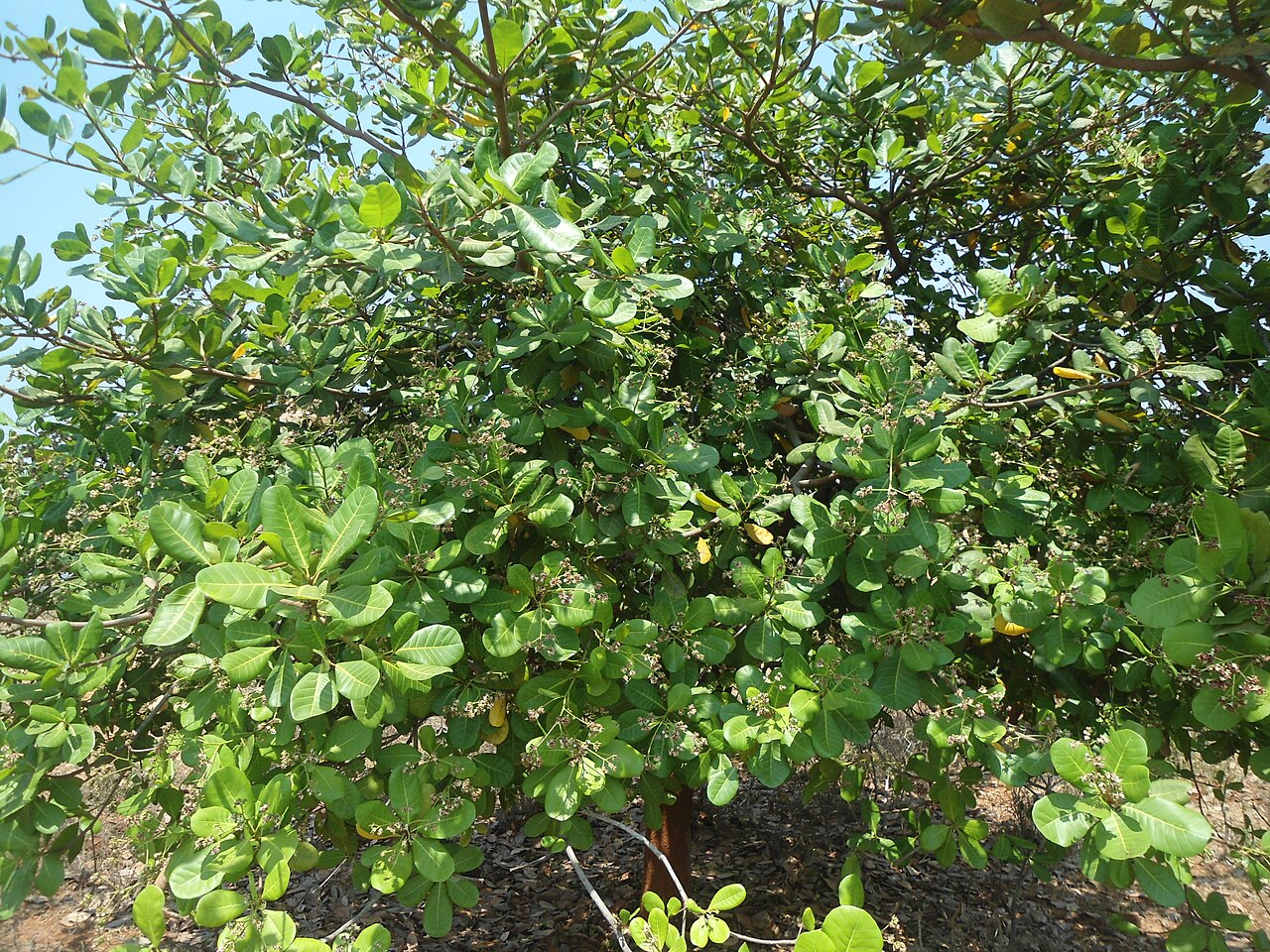
Portuguese explorers first came across it during the 1500s and introduced it to India and other warm regions around the globe. Dwarf varieties, which top out at 6 meters (20 feet), are more profitable because they mature faster and yield more fruit. By 2023, global cashew nut harvests totaled 3.9 million tons, with the Ivory Coast and India as the leading producers.
The nut’s shell and raw seed contain toxins, but once shelled and either roasted or steamed, the kernel becomes safe to eat. Treated cashews are enjoyed as snacks, used in cooking, or turned into cashew cheese or butter. The cashew apple—an accessory fruit that is light red to yellow—can be made into a sweet, astringent drink or fermented and distilled into liquor. Shell derivatives also find use in varnishes, lubricants, and paints.
Description
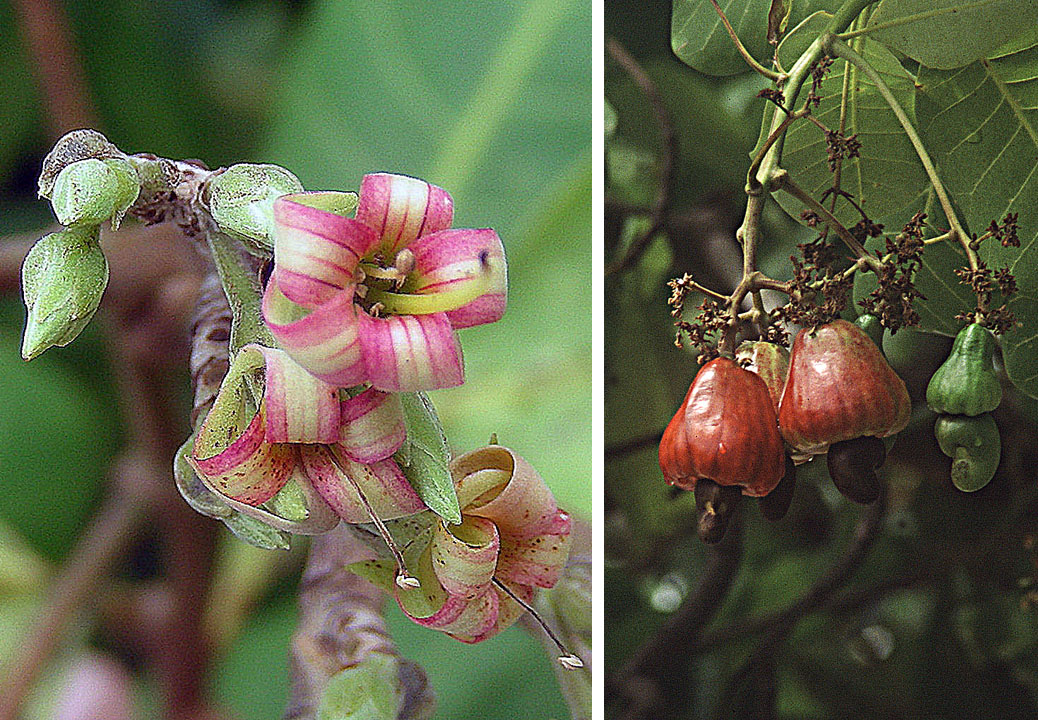
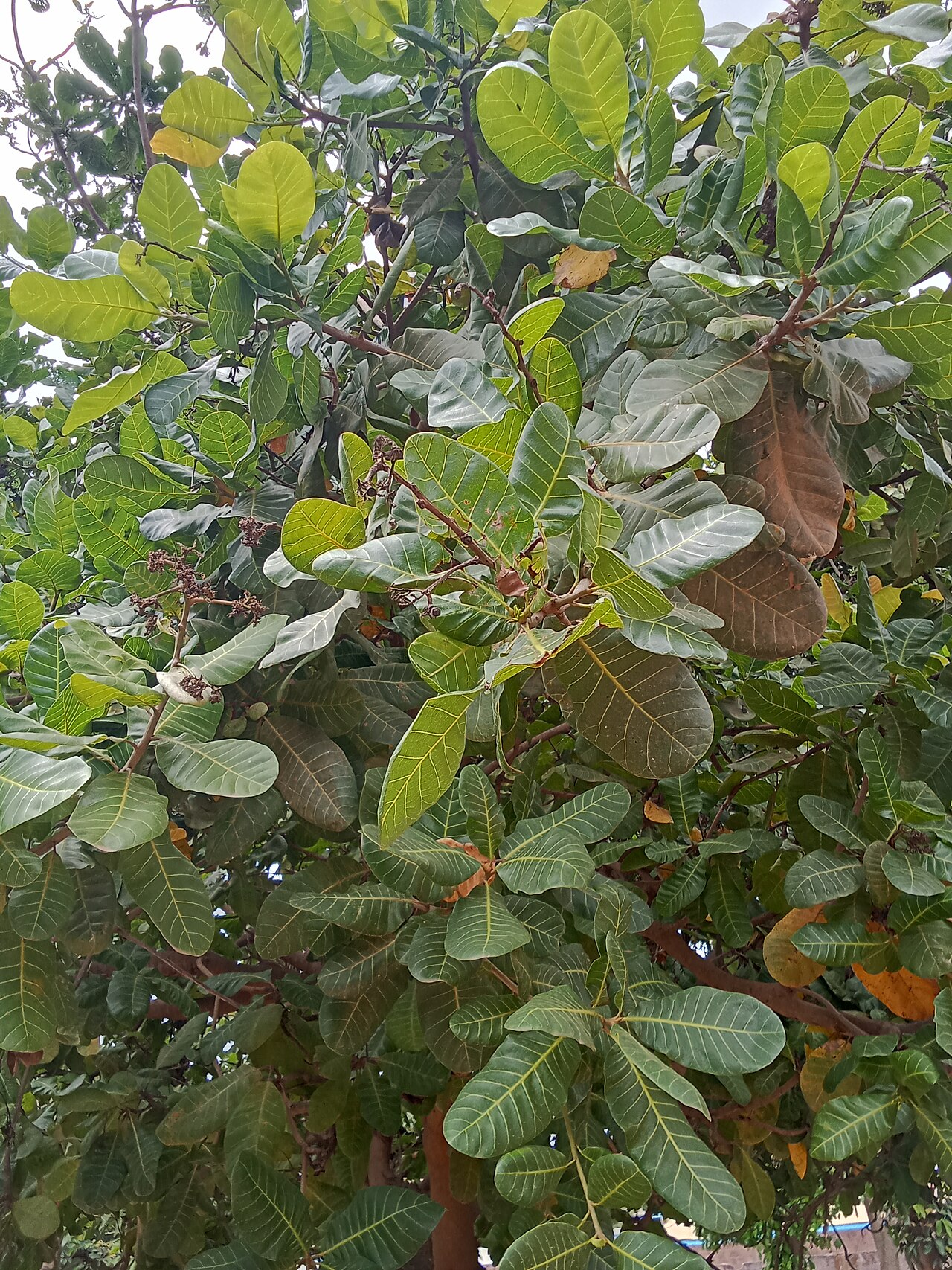
The tree itself is large and evergreen, with a short, often irregular trunk. Its leaves are spirally arranged, leathery, and elliptic to obovate, measuring 4–22 cm long and 2–15 cm wide, with smooth edges. Flowers appear in a panicle or corymb up to 26 cm long; each small flower starts pale green, turns reddish, and has five slender, acute petals 7–15 mm long. The world’s largest cashew tree, located in Parnamirim, Brazil, covers about 7,500 square meters (81,000 square feet).
What looks like the fruit is actually a hypocarpium—an oval or pear-shaped structure that develops from the flower’s pedicel and receptacle. Known as the cashew apple (or marañón in Central America), it ripens into a yellow or red form 5–11 cm long.
The true fruit is a kidney- or boxing-glove-shaped drupe that grows at the apple’s end. This drupe first appears on the tree, after which the pedicel expands into the apple. Inside the drupe lies a single seed encased in a double shell, which contains anacardic acid—a potent skin irritant related to urushiol, the allergenic oil in poison ivy and lacquer trees.
Scientific classification
- CladeTracheophytes
- CladeAngiosperms
- CladeEudicots
- CladeRosids
- OrderSapindales
- FamilyAnacardiaceae
- GenusAnacardium
- SpeciesAnacardium occidentale
Named by L.
Sources: Wikipedia taxobox: Cashew (CC BY-SA 4.0)
Conservation status
Least Concern (LC)
- LC▲ this species
- NT
- VU
- EN
- CR
- EW
- EX
Source: IUCN Red List assessment · GBIF copy of the Red List category
Where the cashew has been recorded
Each dot is a place where the species has been observed and reported (10,615 records, half-degree grid) — not a modelled range. 528 inland records left out (institution coordinates).
Map: drawn by Codexery. Data: GBIF occurrence search (records CC0 / CC BY) · Natural Earth basemap (public domain) · place coordinates: Wikipedia (CC BY-SA 4.0)
Quick Facts
- Genus
- Anacardium
- Species
- occidentale
Facts from the source article.
Lore & Background
The cashew tree is large and evergreen, growing to 14 meters tall, with a short, often irregularly shaped trunk. Its leaves are spirally arranged, leathery, and elliptic to obovate. The flowers are produced in a panicle or corymb up to 26 cm long, each small and pale green turning reddish.
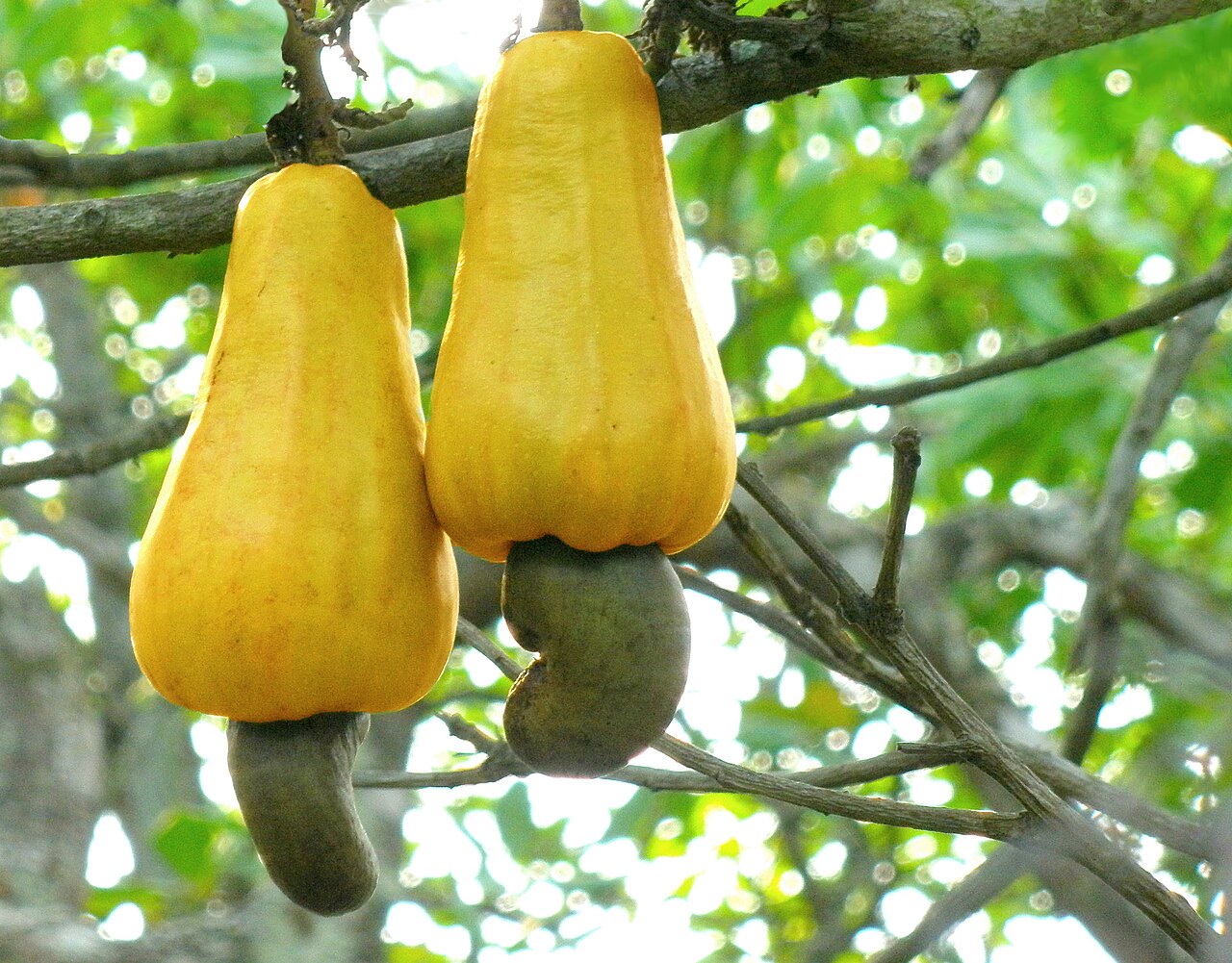
The largest cashew tree in the world covers about 7,500 m² and is located in Parnamirim, Brazil. The fruit is an accessory fruit called the cashew apple, which ripens into a yellow or red structure. The true fruit is a kidney-shaped drupe that contains a single seed, the cashew nut, surrounded by a double shell with allergenic phenolic resin.
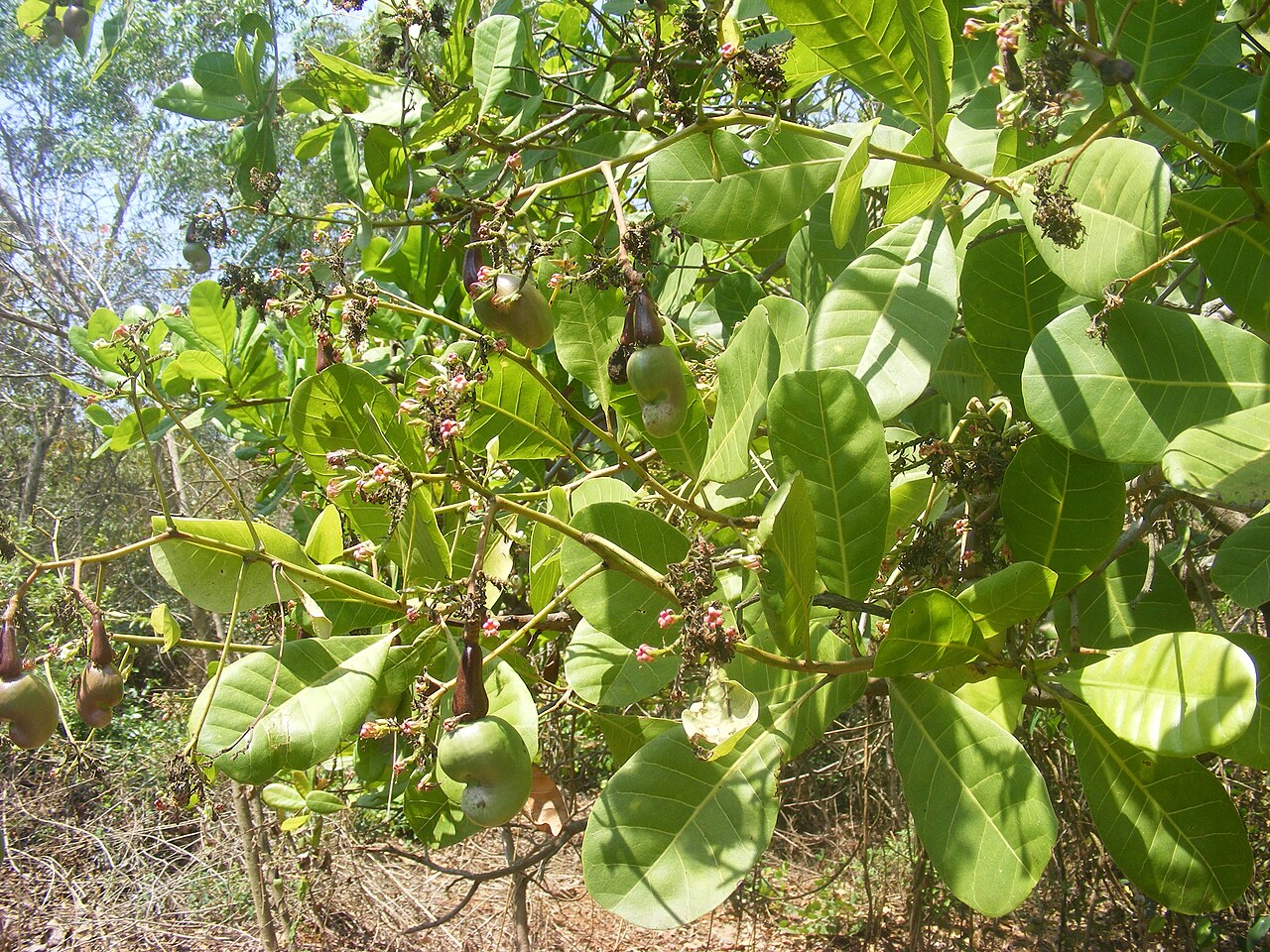
The True Fruit and the Nut of Commerce
At the very tip of the cashew apple sits the structure that is, botanically speaking, the genuine fruit of the tree: a kidney-shaped drupe. This small, hard-shelled pod qualifies as the true fruit because it develops from the ovary, in contrast to the fleshy hypocarpium that hangs above it. Inside that drupe lies the seed the world knows as the cashew nut, the commodity traded across global markets.
The pairing is visually striking — a large, colorful, pear-shaped accessory structure supporting a compact, kidney-shaped true fruit at its end. Because accessory fruits are typically indehiscent, meaning they do not split open at maturity to scatter their seeds, the cashew drupe remains sealed in its hard shell even after the apple has fully ripened. The nut must therefore be extracted mechanically rather than released by the fruit splitting apart, a practical consequence of the indehiscent nature that characterizes this entire class of fruits.
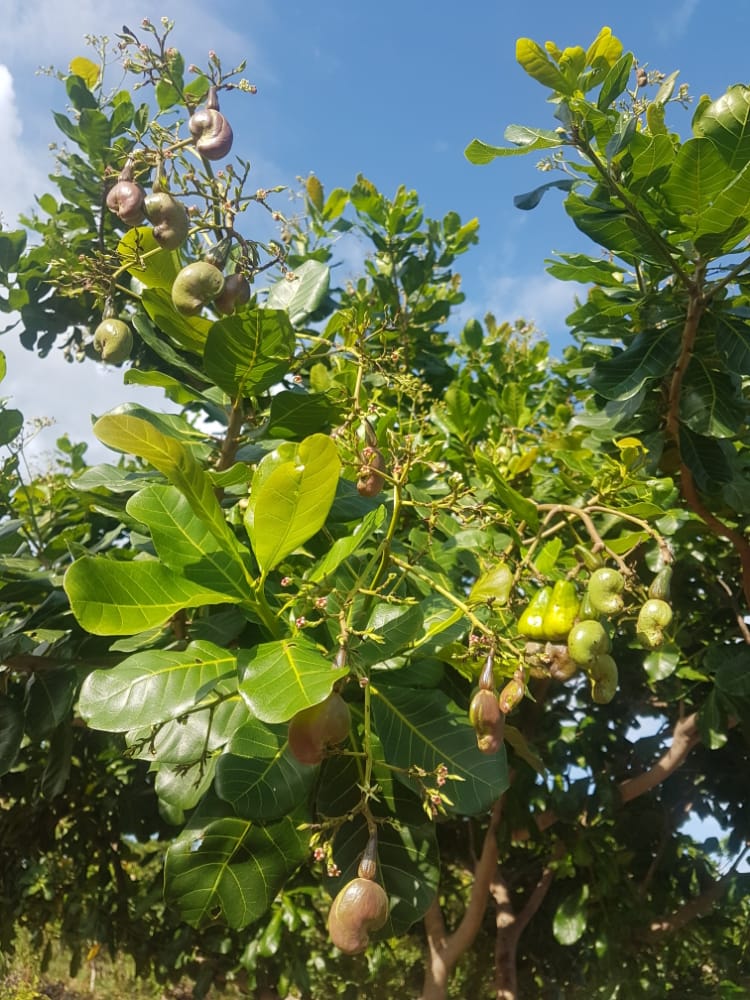
Shape, Color, and the Ripening Journey
As the cashew apple matures, it transforms from a green, unripe structure into a vivid yellow or red body, roughly five to eleven centimeters in length — about two to four and a quarter inches. Its overall form is best described as oval or pear-shaped, tapering gently from a broader base to a narrower tip where the true drupe is attached.
The color shift signals that the accessory tissue, derived from the pedicel and receptacle, has completed its developmental program and reached peak ripeness. Unlike dehiscent fruits that burst open to fling their seeds into the air, the cashew apple and its associated drupe remain closed; the indehiscent nature of accessory fruits means the seed stays locked inside the hard shell of the kidney-shaped drupe. This closed architecture has shaped how humans harvest and process the nut, since the seed cannot simply be shaken free but must be pried from its protective casing.
Reader's Guide
The cashew is significant for its dual products: the nut and the apple. The nut, edible only after shelling and roasting or steaming, is consumed as a snack, used in recipes, or processed into cashew cheese or butter. The apple is processed into a sweet, astringent drink or fermented into liquor. Derivatives from the shell are used in varnishes, lubricants, and paints.
Dwarf cultivars, growing up to 6 meters, are more profitable due to earlier maturity and higher yields. The cashew's global trade is substantial, with African nations exporting mostly raw nuts, while processing is a goal for local profitability. The tree's cultivation is adapted to hot lowland areas with a pronounced dry season.
More in Fruit Trees & Berries
Sources
Compiled from Wikipedia and the sources listed below. Text from Wikipedia is available under CC BY-SA 4.0; this entry is adapted from it.
- Wikipedia: Cashew (CC BY-SA 4.0).
- Conservation status: IUCN Red List assessment.
- Occurrence records: GBIF (CC0 / CC BY). Basemap: Natural Earth (public domain).
- Word definitions: the Codexery glossary, each quoted from its Wikipedia article.
Spotted an error? Know more?
Reader corrections go straight into our review queue. Suggest an edit · How this site is sourced