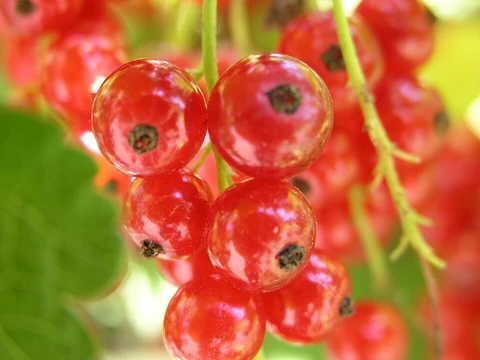
Brazil nut
Last updated
The Brazil nut is the seed of Bertholletia excelsa, a large tree in the family Lecythidaceae.[1][2] Among Amazon rainforest trees, the Brazil nut is both one of the biggest and one of the most long-lived.[1] Bertholletia is a monotypic genus, and the Brazil nut tree is its sole member.[3]
Scientific classification
- CladeTracheophytes
- CladeAngiosperms
- CladeEudicots
- CladeAsterids
- OrderEricales
- FamilyLecythidaceae
- GenusBertholletia
- SpeciesBertholletia excelsa
Named by Humb. & Bonpl.
Sources: Wikipedia taxobox: Brazil nut (CC BY-SA 4.0)
Conservation status
Vulnerable (VU)
- LC
- NT
- VU▲ this species
- EN
- CR
- EW
- EX
Source: IUCN Red List assessment · GBIF copy of the Red List category
Where the brazil nut has been recorded
148 inland records left out (institution coordinates).
Map: drawn by Codexery. Data: Natural Earth basemap (public domain) · place coordinates: Wikipedia (CC BY-SA 4.0)
Quick Facts
- Genus
- Bertholletia
- Species
- excelsa
Facts from the source article.
Biology and range
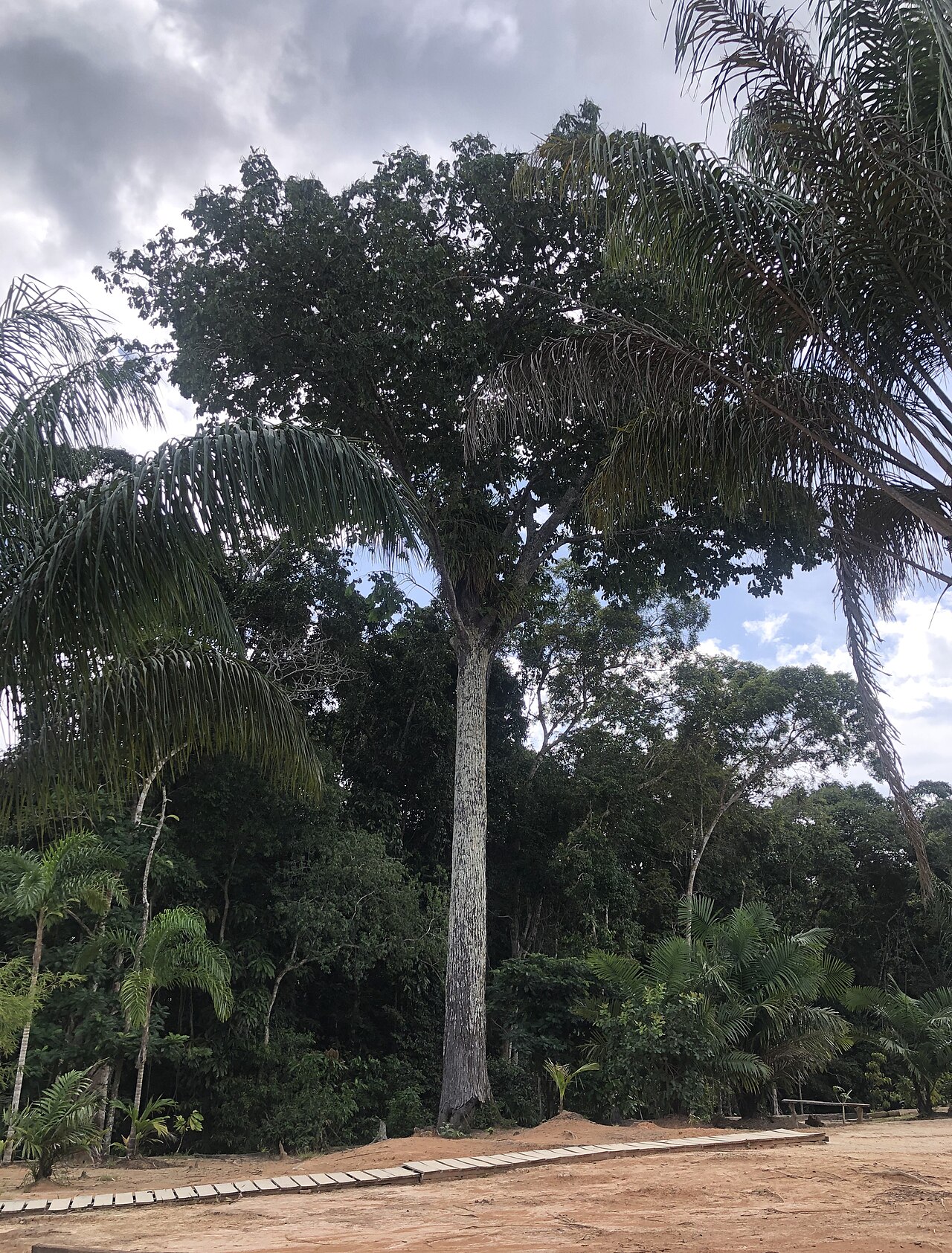
The Brazil nut tree can reach 50 m tall with a trunk 1 to 2 m in diameter.[4] The Brazil nut family, the Lecythidaceae, is in the order Ericales.[3] Brazil nut trees produce fruit almost exclusively in pristine forests.[5] Specimens can survive for half a millennium or longer, and frequently attain an age of one thousand years.[6]
For more than half its total height, the trunk is straight and typically branch-free.[6] Agoutis consume some seeds and cache others; from those buried caches, some seeds later sprout into new trees.[7]
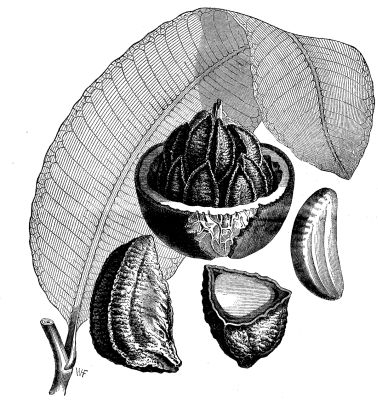
What the specialist sources record
Scott A. Mori's account notes that Brazil nuts are collected mostly during the wet season.[8] Mori states that collection of Brazil nuts and rubber has relatively little impact on Amazonian forest ecology.[8] Mori reports that fruit development takes longer in B. excelsa than in any other Lecythidaceae species.[8] Mori records that bees of the genera Bombus, Centris, Epicharis, Eulaema, and Xylocopa have been captured visiting Brazil nut trees.[8]
Mori explains that most seed set results from cross-pollination, though a low level of in-breeding may occur.[8] Mori states that over a ten year period, using a forest for Brazil nut production appears more profitable than extracting timber or cutting the forest for pasture.[8]
References
- Wikipedia, "Brazil nut" (CC BY-SA 4.0), which cites: Mori, Scott A., "The Brazil Nut Industry – Past, Present, and Future", The New York Botanical Garden (we also read that source) en.wikipedia.org
- GBIF Backbone Taxonomy and occurrence index, Bertholletia excelsa (taxon key 3083180). CC BY 4.0 (backbone); counts are facts. gbif.org
- Wikipedia, "Brazil nut" (CC BY-SA 4.0), which cites: Mori, Scott A., "The Brazil Nut Industry – Past, Present, and Future", The New York Botanical Garden; Burkhardt, "Eine Enzyklopädie zu eponymischen Pflanzennamen", Botanic Garden and Botanical Museum, Freie Universität Berlin, 2022 (we also read that source) en.wikipedia.org
- Wikipedia, "Brazil nut" (CC BY-SA 4.0), which cites: Hennessey, "The Brazil Nut (Bertholletia excelsa)", March 2, 2001 (original not read by us) en.wikipedia.org
- Wikipedia, "Brazil nut" (CC BY-SA 4.0), which cites: Nelson, B. W., "Observations on flower visitors to Bertholletia excelsa H. B. K. and Couratari tenuicarpa A. C. Sm. (Lecythidaceae)", Acta Amazonica, January 1985, p. 225–234; Moritz, A., "Estudos biológicos da floração e da frutificação da castanha-do-Brasil (Bertholletia excelsa HBK)", 1984; Cavalcante, "Pollination Requirements and the Foraging Behavior of Potential Pollinators of Cultivated Brazil Nut (Bertholletia excelsa Bonpl.) Trees in Central Amazon Rainforest", Psyche: A Journal of Entomology, Octobe; Mori, Scott A., "The Brazil Nu en.wikipedia.org
- Wikipedia, "Brazil nut" (CC BY-SA 4.0), which cites: Taitson, Bruno, "Harvesting nuts, improving lives in Brazil", World Wildlife Fund, January 18, 2007 (original not read by us) en.wikipedia.org
- Wikipedia, "Brazil nut" (CC BY-SA 4.0), which cites: Haugaasen, "Seed dispersal of the Brazil nut tree (Bertholletia excelsa) by scatter-hoarding rodents in a central Amazonian forest", Journal of Tropical Ecology, 2010-03-30, p. 251–262; Haugaasen, "Seed dispersal of the Brazil nut tree (Bertholletia excelsa) by scatter-hoarding rodents in a central Amazonian forest", Journal of Tropical Ecology, 2010-03-30, p. 251–262; Haugaasen, "Seed dispersal of the Brazil nut tree (Bertholletia excelsa) by scatter-hoarding rodents in a central Amazonian forest", Journal of Tropical Ecology, 2010-03-30, p en.wikipedia.org
- Mori, Scott A., "The Brazil Nut Industry – Past, Present, and Future", The New York Botanical Garden. nybg.org
Each numbered sentence above was checked against the source it cites before publication. Sentences citing Wikipedia adapt text from the English Wikipedia article Brazil nut (contributors), used under CC BY-SA 4.0; this entry is available under the same licence. Other sources were used for facts only.
More in Fruit Trees & Berries
Sources
Compiled from Wikipedia and the sources listed below. Text from Wikipedia is available under CC BY-SA 4.0; this entry is adapted from it.
- Wikipedia: Brazil nut (CC BY-SA 4.0).
- Conservation status: IUCN Red List assessment.
- Occurrence records: GBIF (CC0 / CC BY). Basemap: Natural Earth (public domain).
- Word definitions: the Codexery glossary, each quoted from its Wikipedia article.
Spotted an error? Know more?
Reader corrections go straight into our review queue. Suggest an edit · How this site is sourced