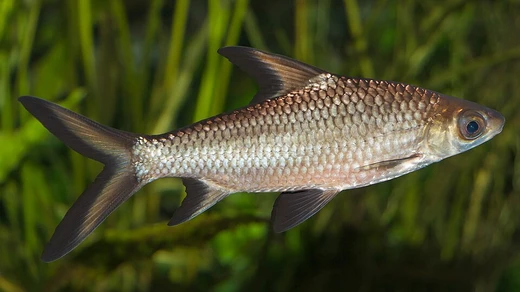
Gobioidei
Suborder of ray-finned fish, mostly small benthic gobies.

The Gobioidei are a suborder of percomorph fish, most of which are known as gobies. This group is by far the largest and most varied within the order Gobiiformes and ranks among the most diverse lineages of ray-finned fish overall. Once treated as a suborder of Perciformes, it now contains roughly 2,211 species distributed across seven families. Molecular data has clarified the evolutionary relationships within the Gobioidei. Most gobies are small, with large heads and tapered bodies, and live in marine environments, though about 10% of species inhabit freshwater. The suborder is mostly made up of bottom-dwelling or burrowing fish; like many benthic species, most gobioids lack a gas bladder or any other buoyancy control, so they must stay on or near the seafloor.
Traditionally, most goby species were classified under Perciformes as the suborder Gobioidei, but the 5th Edition of *Fishes of the World* elevated this group to the order Gobiiformes within the clade Percomorpha. In the most recent taxonomic treatment, they have been returned to suborder status within an expanded Gobiiformes.
**Nomenclature** Not every species in Gobiiformes is called a goby. "True gobies" belong to the family Gobiidae, while other goby-like species are placed in Oxudercidae. The term "goby" is also used for some fish outside Gobiiformes, such as the engineer goby (or convict blenny, *Pholidichthys leucotaenia*). The word "goby" comes from the Latin *gobius*, meaning "gudgeon." Some goby species—especially sleeper gobies in the family Eleotridae and certain dartfishes—are called "gudgeons," particularly in Australia.
**Evolution** The earliest known fossil gobioid is *Carlomonnius* Bannikov & Carnevale, 2016, from the Early Eocene Monte Bolca site in Italy. Initially considered an indeterminate gobioid, later study of more specimens identified it as a stem member of the Butidae. Slightly older evidence comes from isolated otoliths ("genus Gobiidarum" nolfi and "genus Gobiidarum" vastani) found in the Cambay Formation of Gujarat, India. Phylogenetic evidence indicates that two of the most diverse families, Gobiidae and Oxudercidae, are relatively young compared to many other fish families, diverging during the Late Eocene or middle Oligocene. Notably, they diversified during the Eocene-Oligocene extinction event.
**Taxonomy** Until the early 21st century, gobies were placed within Perciformes as the suborder Gobioidei. Phylogenetic studies later showed they are a basal percomorph group related to cardinalfish and nurseryfish. Consequently, the 5th Edition of *Fishes of the World* reclassified the former superfamily Gobioidei as the order Gobiiformes and rearranged its families. The biggest change split Oxudercidae and Gobiidae into two families: Oxudercidae now includes species formerly in the Gobiidae subfamilies Amblyopinae, Gobionellinae, Oxudercinae, and Sicydiinae, while the families Kraemeriidae, Microdesmidae, Ptereleotridae, and Schindleriidae were merged into Gobiidae (though no subfamilies within Gobiidae were proposed). More recently, Eschmeyer's *Catalog of Fishes* retained some aspects of this classification but returned Gobioidei to suborder status within an expanded Gobiiformes that also includes Apogonoidei and Trichonotoidei. Xenisthmidae is now recognized as its own family, while Butidae and Milyeringidae have been returned to subfamilies of Eleotridae.
The following classification is based on Eschmeyer's *Catalog of Fishes*, with fossil taxa added:
**Suborder Gobioidei** - Genus †*Laubeichthys* Reichenbacher & Přikryl, 2024 (fossil; Early Oligocene, Czech Republic) - Genus †*Simpsonigobius* Dirnberger, Bauer & Reichenbacher, 2024 (fossil; Early Miocene, Turkey) - Family Rhyacichthyidae Jordan, 1905 (loach gobies) - Family Odontobutidae Hoese & Gill, 1993 (Asian freshwater sleepers) - Family Milyeringidae Whitley, 1945 (cave gudgeons) - Family Eleotridae Bonaparte, 1835 (sleepers or bullies) - Family Xenisthmidae Miller, 1973 (collared wrigglers) - Family Butidae Bleeker, 1874 (gudgeons) - Family Thalasseleotrididae Gill & Mooi, 2012 (ocean sleepers) - Family †Pirskeniidae Obrhelová, 1961 (fossil; Early Oligocene, Czech Republic) - Family Oxudercidae Günther, 1861 (mudskippers and allies) - Subfamily Oxudercinae Günther, 1861 (mudskippers) - Subfamily Amblyopinae Günther, 1861 (mudburrowing gobies) - Subfamily Gobionellinae Bleeker, 1874 (estuarine gobies) - Subfamily Sicydiinae Gill, 1860 (rock-climbing gobies) - Family Gobiidae Cuvier, 1816 (gobies) - Subfamily Kraemeriinae Whitley, 1935 (1911) (sand darts) - Subfamily Ptereleotrinae Bleeker, 1875 (dart-gobies) - Subfamily Gobiinae Cuvier, 1816 (sea gobies) - Subfamily Microdesminae Regan, 1912 (wormfishes)
**Families**
**Rhyacichthyidae** The loach-gobies are a small family with only three species in two genera, found in marine and fresh waters of Oceania and the western Pacific. They are considered among the more primitive gobioids.
**Odontobutidae** The freshwater sleepers contain 22 species across six genera from eastern Asia. This family is the sister group to all other Gobioidei, forming a clade with Rhyacichthyidae.
**Milyeringidae** Milyeringidae includes two genera of cave fish—one in Western Australia and one in Madagascar—each with three recognized species. This family forms a second clade within Gobioidei.
**Eleotridae** The sleeper gobies...
- field
- Ichthyology
- known_for
- Largest and most diverse suborder within Gobiiformes; includes gobies, mudskippers, and sleepers
- families
- 7
- habitat
- Primarily marine, with roughly 10% inhabiting fresh water
- earliest_fossil
- Carlomonnius from Early Eocene Monte Bolca, Italy
Lore & Background
The Gobioidei were traditionally classified as a suborder of Perciformes, but the 5th Edition of Fishes of the World elevated them to the order Gobiiformes within the clade Percomorpha. In the most recent taxonomic treatment, they are again placed as the suborder Gobioidei within an expanded Gobiiformes. Phylogenetic relationships have been elucidated using molecular data, and the group includes both marine and freshwater species, with about 10% inhabiting fresh water. The earliest known fossil member is Carlomonnius from the Early Eocene of Italy, originally considered an indeterminate gobioid but later determined to be a stem-member of the Butidae. Slightly older evidence comes from isolated otoliths from the Cambay Formation of Gujarat, India. Phylogenetic evidence suggests that two of the most diverse families, Gobiidae and Oxudercidae, diverged during the Late Eocene or middle Oligocene, diversifying during the Eocene-Oligocene extinction event. Gobioidei are primarily small species with large heads and tapered bodies. Most are benthic or burrowing, and like many benthic fishes, most gobioids lack a gas bladder or any other means of controlling buoyancy. The word 'goby' derives from the Latin gobius meaning 'gudgeon', and some species, especially sleeper gobies in the family Eleotridae and some dartfishes, are called 'gudgeons' in Australia.
Reader's Guide
The Gobioidei represent a major component of global fish diversity, with over 2,200 species across seven families. Their ecological significance is immense: they occupy marine, freshwater, and brackish habitats worldwide, from coral reefs to estuaries to caves. Many species form symbiotic relationships with invertebrates, such as the cohabitation of Amblyeleotris and Cryptocentrus with alpheid shrimps, while others serve as cleaner fish. Their lack of a gas bladder confines them to benthic or burrowing lifestyles, and some, like mudskippers, can survive extended periods out of water. Taxonomically, the group has been subject to ongoing revision, with recent classifications placing it as a suborder within an expanded Gobiiformes that also includes Apogonoidei and Trichonotoidei. The families Gobiidae and Oxudercidae are relatively young, diverging during the Late Eocene or middle Oligocene, and diversified during the Eocene-Oligocene extinction event. The earliest known fossil, Carlomonnius, dates to the Early Eocene. The group's high species richness, ecological versatility, and complex evolutionary history make it a key subject for studies of fish evolution and biogeography.
Did You Know?
- The earliest known fossil member of Gobioidei is Carlomonnius from the Early Eocene of Italy.
- Roughly 10% of gobioid species inhabit fresh water.
- Most gobioids lack a gas bladder and must spend most of their time on or near the bottom.
- The word 'goby' derives from the Latin gobius meaning 'gudgeon'.
More in Fish 1-24
Spotted an error? Know more?
This is a living reference — every entry is fact-audited, and reader corrections feed straight into our audit queue. Suggest an edit · See this site's audit record