Actinopterygii
Ray-finned fish dominate aquatic ecosystems and vertebrate diversity.

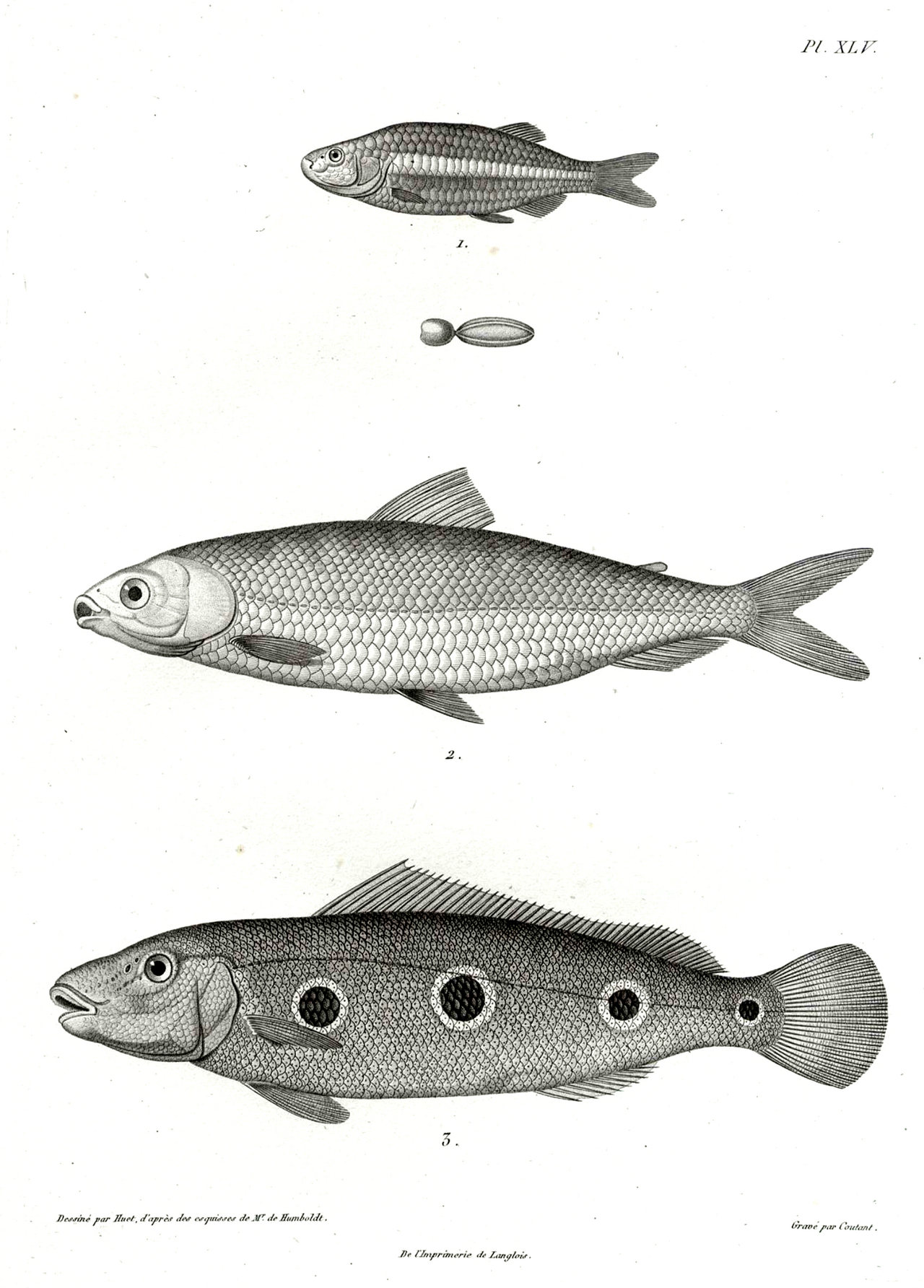
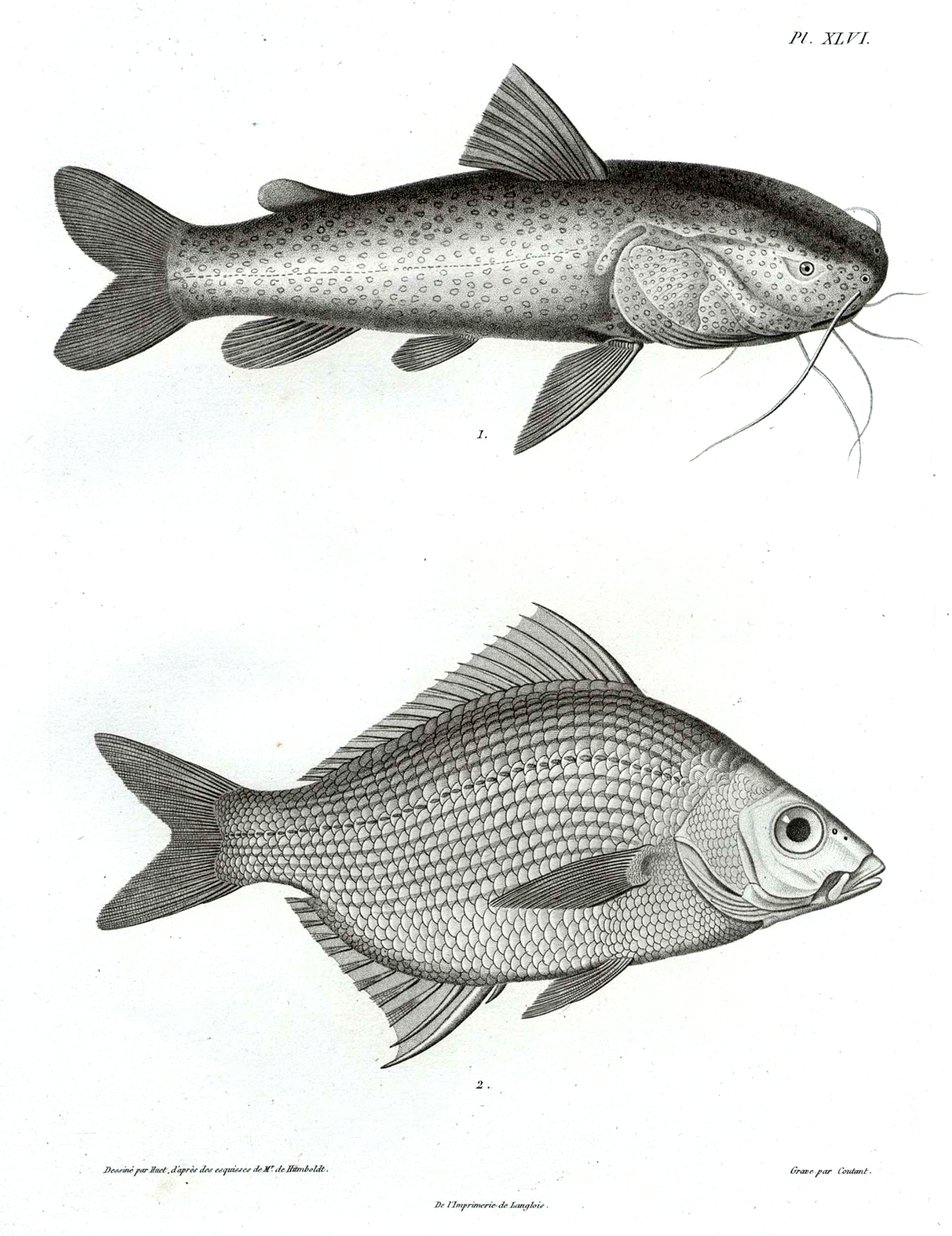
A. Humboldt (1769-1859) · Public domain
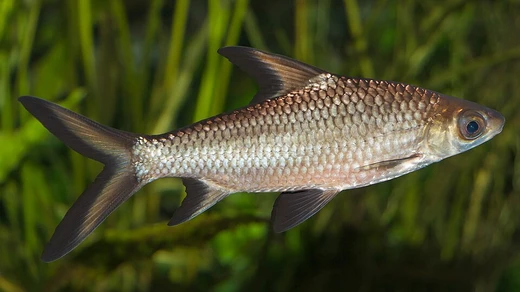
Ray-finned fish, or actinopterygians, make up a class of bony fish that accounts for nearly 99% of the more than 30,000 living fish species. Among them, teleosts are the dominant group, and by species count, they represent over half of all living vertebrates. These fish are the most abundant nektonic animals in aquatic environments, found everywhere from the deep sea and subterranean waters to high mountain streams, as well as in freshwater, brackish, and marine habitats. Living species range dramatically in size: the tiny *Paedocypris* measures just 8 mm (0.3 in), while the giant sunfish can weigh 2,700 kg (6,000 lb), and the giant oarfish reaches 8 m (26 ft)—possibly even 11 m (36 ft). The largest known ray-finned fish ever, the extinct Jurassic *Leedsichthys*, is estimated to have grown to 16.5 m (54 ft).
Their name comes from their fins, which are built from skin webbings supported by thin, radially arranged bony spines called lepidotrichia—unlike the bulkier, fleshy fins of their sister group, the lobe-finned fish (Sarcopterygii). These fins resemble folding fans and can easily change shape, orientation, and surface area, giving them better thrust-to-weight ratios per movement than the fins of sarcopterygians or cartilaginous fish. The fin rays attach directly to proximal skeletal elements called radials, which connect the fins to the internal skeleton, such as the pelvic and pectoral girdles.
Ray-finned fish come in many forms. A key feature is the swim bladder, a derived structure used for buoyancy. Except in bichirs, which retain the ancestral condition of a ventral bud from the foregut (similar to the lungs of lobe-finned fish), the swim bladder in ray-finned fish develops from a dorsal bud above the foregut. In early forms, it could still be used for breathing—a trait still seen in Holostei (bowfins and gars). In some fish, like the arapaima, the swim bladder has been modified for air breathing again, while in other lineages it has been completely lost.
Teleosts have fully separate urinary and reproductive tracts, whereas Chondrostei have common urogenital ducts. Cladistia and Holostei show partially connected ducts. Scale types vary widely, but all teleosts have leptoid scales. These scales have an outer part with bony ridges that fan out, and an inner part crossed with fibrous connective tissue. Leptoid scales are thinner and more transparent than other scale types, lacking the hardened enamel- or dentine-like layers found in many other fish. Unlike the ganoid scales of non-teleost actinopterygians, new leptoid scales are added in concentric layers as the fish grows.
Teleosts and chondrosteans (sturgeons and paddlefish) differ from bichirs and holosteans (bowfin and gars) in having undergone a whole-genome duplication (paleopolyploidy). In teleosts, this duplication is estimated to have occurred about 320 million years ago, with about 17% of the gene duplicates retained. In chondrosteans, it happened around 180 million years ago (with a range of 124–225 million years). Additional whole-genome duplications have occurred in some teleost lineages, such as Salmonidae (80–100 million years ago) and multiple times independently within Cyprinidae—in goldfish and common carp as recently as 14 million years ago.
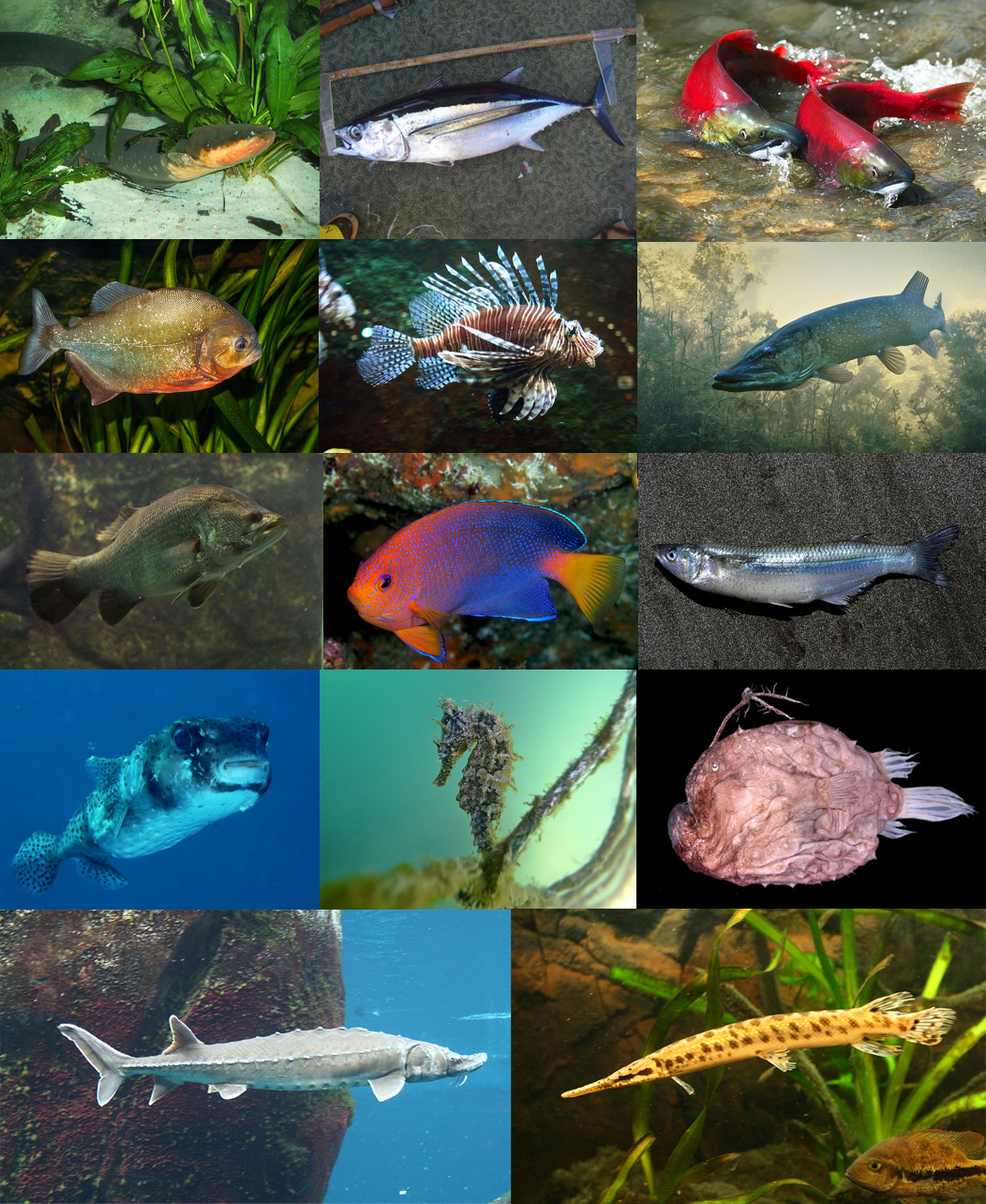
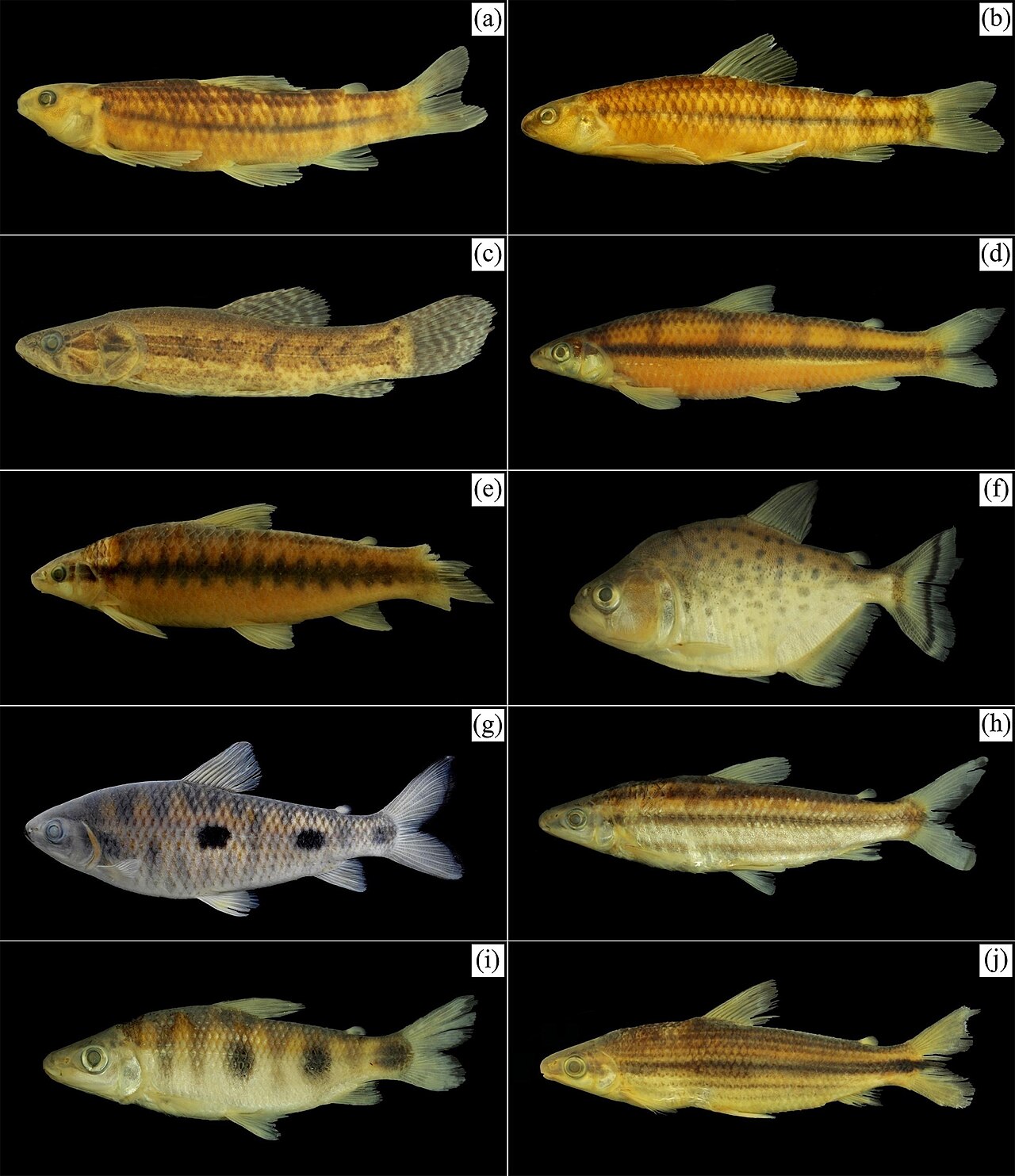
Ray-finned fish vary greatly in size, shape, feeding specializations, and the number and arrangement of their ray-fins.
In nearly all ray-finned fish, sexes are separate. Most species have females that spawn eggs fertilized externally, typically with the male inseminating the eggs after they are laid. Development then proceeds through a free-swimming larval stage. Other patterns exist, with sequential hermaphroditism being common—most often protogyny, where fish start as females and later convert to males, triggered by internal or external factors. Protandry (conversion from male to female) is much rarer.
Most families use external rather than internal fertilization. Among oviparous teleosts, 79% provide no parental care. Viviparity, ovoviviparity, or some form of parental care for eggs—by the male, female, or both—occurs in 21% of the 422 teleost families; no care is likely the ancestral condition. The oldest known case of viviparity in ray-finned fish is from Middle Triassic species of †*Saurichthys*. Viviparity is relatively rare, found in about 6% of living teleost species, and male care is far more common than female care. Male territoriality is thought to "preadapt" a species for evolving male parental care.
A few fish self-fertilize. The mangrove rivulus is an amphibious, simultaneous hermaphrodite that produces both eggs and sperm and uses internal fertilization. This mode may relate to its habit of spending long periods out of water in mangrove forests. Males occasionally appear at temperatures below 19 °C (66 °F) and can fertilize eggs that the female then spawns, maintaining genetic variability in an otherwise highly inbred species.
Actinopterygii is divided into the subclasses Cladistia, Chondrostei, and Neopterygii. Neopterygii is further divided into the infraclasses Holostei and Teleostei. Teleosts diversified widely during the Mesozoic (Triassic, Jurassic, Cretaceous) and Cenozoic, and as a result, 96% of living fish species are teleosts.
- field
- Vertebrate paleontology and ichthyology
- known_for
- Ray-finned fish; dominant group of living vertebrates by species count
- largest_extant_species
- Giant oarfish at 8 m (26 ft) or possibly 11 m (36 ft); giant sunfish at 2,700 kg (6,000 lb)
- largest_extinct_species
- Leedsichthys from the Jurassic, estimated at 16.5 m (54 ft)
- smallest_extant_species
- Paedocypris at 8 mm (0.3 in)
Lore & Background
Ray-finned fish are so called because of their lightly built fins made of webbings of skin supported by radially extended thin bony spines called lepidotrichia, as opposed to the bulkier, fleshy fins of the sister clade Sarcopterygii (lobe-finned fish). Resembling folding fans, the actinopterygian fins can easily change shape, orientation and wetted area, providing superior thrust-to-weight ratios per movement compared to sarcopterygian and chondrichthyian fins. The fin rays attach directly to the proximal or basal skeletal elements, the radials, which represent the articulation between these fins and the internal skeleton.
Reader's Guide
Actinopterygii are a class of bony fish that includes nearly all living fish species, with teleosts alone accounting for 96% of extant fish. Their evolutionary success is reflected in their dominance of vertebrate diversity—over 50% of all living vertebrates are ray-finned fish. They inhabit virtually every aquatic environment, from deep seas to mountain streams. The group's classification includes Cladistia, Chondrostei, and Neopterygii, with teleosts being the most diverse infraclass. Reproduction is mostly external fertilization, with sequential hermaphroditism and viviparity present in some lineages. Their legacy is central to understanding vertebrate evolution and aquatic ecosystems.
Did You Know?
- The largest ever known ray-finned fish is the extinct Leedsichthys from the Jurassic, estimated at 16.5 m (54 ft).
Deep Roots in the Silurian
The oldest known fossils of bony fish date back roughly 436 million years to the early Silurian period. These ancient specimens are particularly fascinating because they represent transitional forms—their tooth patterns fall somewhere between the rows seen in sharks and those of true bony fishes. Despite carrying the name 'bony fish,' these early basal representatives had not yet developed true ossification; their skeletons remained predominantly cartilaginous. What truly set them apart from other fish lineages was not bone but a pair of foregut pouches, outpouchings on either side of the esophagus. These structures served as supplementary respiratory organs in low-oxygen waters and would eventually diverge along two evolutionary paths: in ray-finned fish they became swim bladders for buoyancy control, while in lobe-finned ancestors they specialized into the lungs that characterize all land-dwelling vertebrates today. This single anatomical innovation thus underpins the respiratory systems of an astonishing breadth of life.
A Skeleton of Bone and Scale
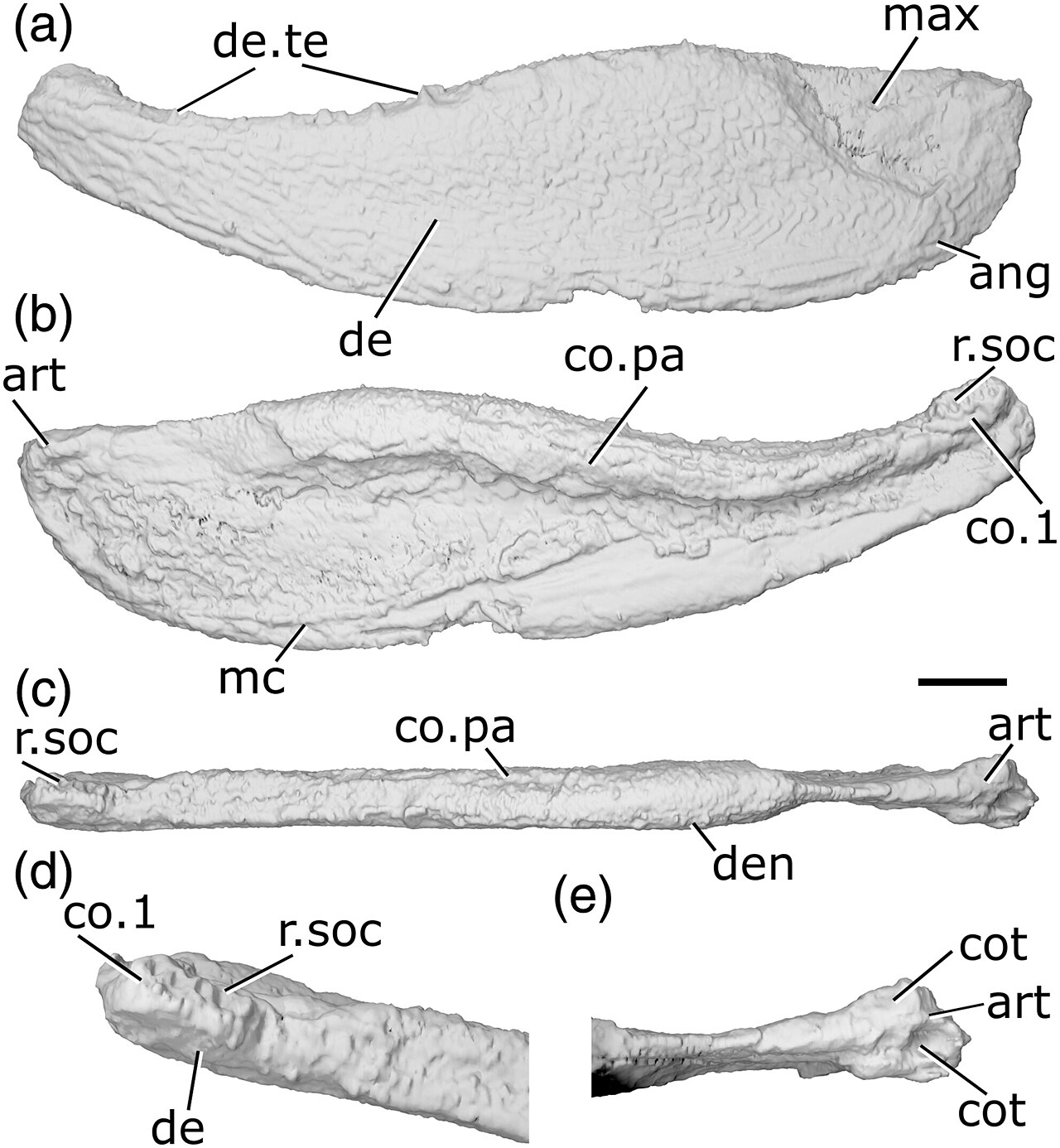
Bony fish display a remarkably consistent cranial architecture: a stable arrangement of skull bones, a medial insertion point for the jaw-closing muscle, and broad dermal plates covering the head and pectoral girdles. The eyeball is cradled by a ring of four tiny scleral bones, though many modern species have lost or modified this feature. Inside the inner ear, large otoliths anchor the labyrinth, and the braincase is often split into anterior and posterior compartments by a distinct fissure. Equally distinctive is the scale system. Unlike the placoid scales of sharks, bony-fish scales sit beneath the epidermis rather than piercing through it. Three major types exist: cosmoid, ganoid, and teleost. All share a bony base, but they differ in layering. Teleost scales consist of a single bone layer and are further divided into smooth cycloid and spiny ctenoid varieties. Ganoid scales add lamellar bone topped by vascular bone and a cap of enamel. Cosmoid scales mirror the ganoid structure but insert a layer of dentin between the enamel and vascular bone.
The Tetrapod Connection and Taxonomic Revolution
For much of the twentieth century, ichthyologists treated Osteichthyes as a paraphyletic grouping that included only fishes, deliberately excluding the land vertebrates that evolved from lobe-finned ancestors. Under that older framework, the group was recognized by the presence of a swim bladder, three pairs of gill arches tucked behind a bony operculum, and a predominantly bony skeleton. The ray-finned fish formed a monophyletic subclass, but adding the smaller lobe-finned subclass made the whole assemblage paraphyletic because the common ancestor's descendants included tetrapods. A paradigm shift has since taken hold. Since 2013, widely cited ichthyology papers have published phylogenetic trees that treat Osteichthyes as a fully monophyletic clade encompassing tetrapods. In this cladistic view, the group is broadly equivalent to Euteleostomi. In paleontology the two terms are already synonymous; in ichthyology the distinction has narrowed to one of perspective. The lobe-finned fish, long seen as a small side branch, are now understood as the lineage from which every amphibian, reptile, bird, and mammal ultimately descended, making the 'bony fish' a group that includes us.
Diversity, Respiration, and the Whole-Genome Legacy
With 45 orders, more than 435 families, and roughly 28,000 described species, Osteichthyes represents one of the most species-rich vertebrate assemblages on Earth, and the vast majority of all living fish belong to this group. Respiration is universally gill-based, yet the group displays extraordinary flexibility: lungfish and certain other species breathe through lungs or vascularized swim bladders, while still others extract oxygen across their skin, intestines, or stomach lining. Most bony fish are ectothermic, their internal temperature tracking the surrounding water. However, some large marine species—opah, swordfish, and tuna—have evolved mechanisms that let them maintain body temperatures independently of the environment. A deeper genetic legacy also shapes the group: a whole-genome duplication event occurred in the ancestral Osteichthyes, providing the raw genetic material that likely fueled the extraordinary morphological diversification seen today. The lobe-finned fish, meanwhile, evolved articulated skeletal elements within their paired fins, the very structures that would become the limbs of tetrapods, and developed opercula that actively pump water over the gills, freeing them from the need to swim continuously just to breathe.
Gallery
Frequently Asked Questions
Who is Actinopterygii?
Actinopterygii is the clade of ray-finned fish, accounting for the vast majority of all living fish species. They span an astonishing size range, from the 8-millimeter Paedocypris to the colossal giant sunfish, and they inhabit every kind of aquatic environment on the planet.
What are Actinopterygii's powers/role?
Ray-finned fish are the dominant nektonic group in aquatic ecosystems, filling nearly every ecological niche from abyssal trenches to subterranean streams to alpine rivers. Their bony, ray-supported fins grant them precise maneuverability and sustained swimming that no other vertebrate group matches at this scale of diversity.
How does Actinopterygii's story end?
The story doesn't end—Actinopterygii remain the most species-rich lineage in the entire subphylum Vertebrata as of today. With teleosts making up the overwhelming bulk of extant members, their arc is still very much in progress.
Why is Actinopterygii important?
By raw species count, ray-finned fish comprise over 50% of all living vertebrates, making them the single most diverse vertebrate group in existence. Their ecological ubiquity means they underpin virtually every aquatic food web from the deep sea to mountain brooks.
What's the biggest Actinopterygii member?
Among living species, the giant oarfish reaches roughly 8 meters (possibly 11), while the giant sunfish pushes about 2,700 kg. In the Jurassic past, the extinct Leedsichthys is estimated at around 16.5 meters, holding the record for the largest ray-finned fish ever known.
More in Fish 1-24
Spotted an error? Know more?
This is a living reference — every entry is fact-audited, and reader corrections feed straight into our audit queue. Suggest an edit · See this site's audit record