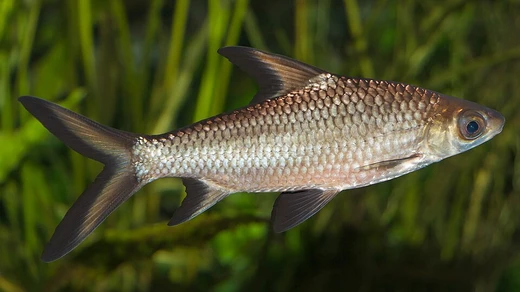
Alaska pollock
A key North Pacific fish, second only to Peruvian anchoveta in global catch.

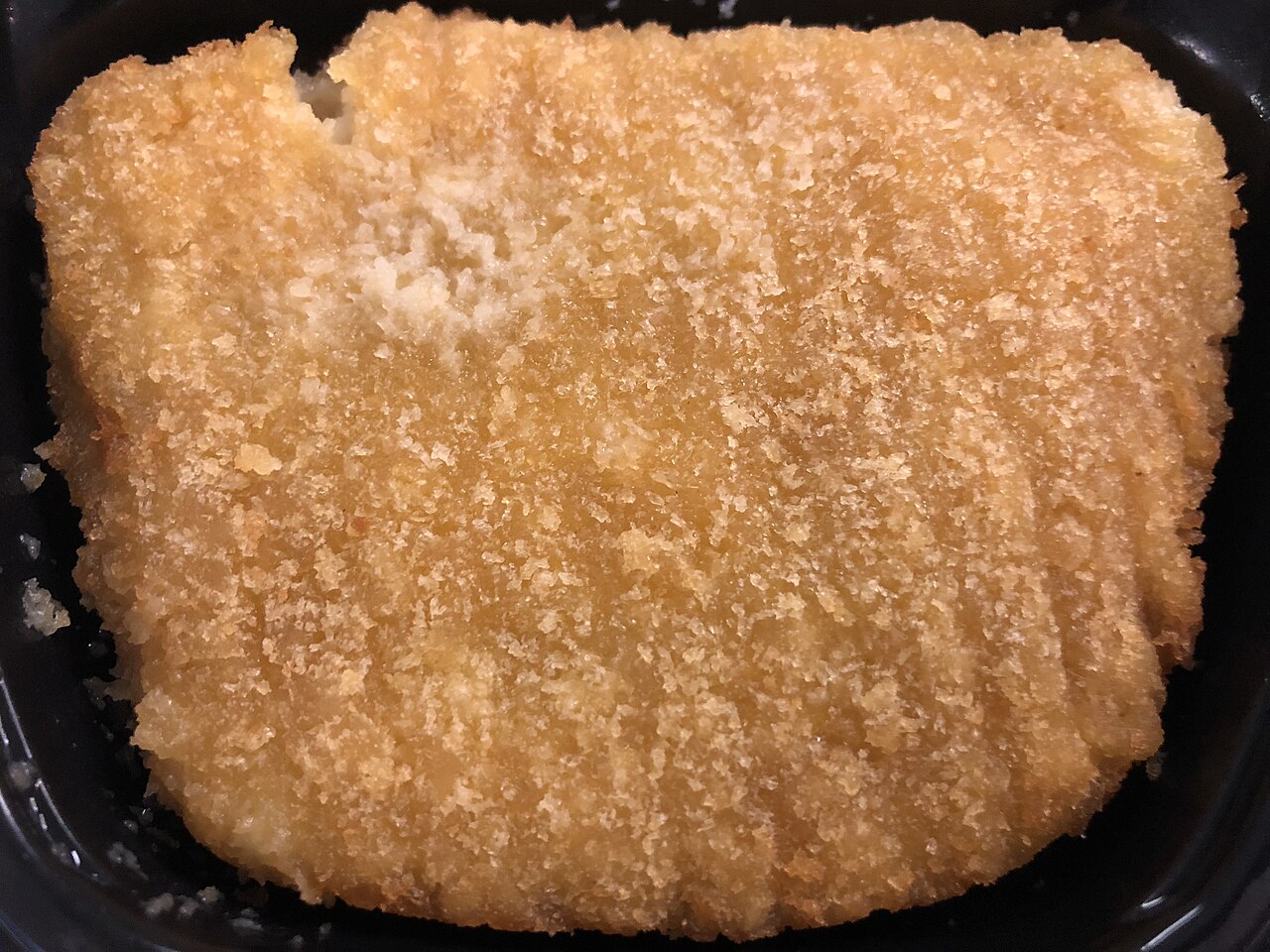
Famartin · CC BY-SA 4.0
The Alaska pollock, also called Pacific pollock or walleye pollock (scientific name *Gadus chalcogrammus*), is a marine fish in the cod genus *Gadus* and the family Gadidae. It is a semi-pelagic, schooling fish found across the North Pacific, with the biggest populations in the eastern Bering Sea.
**Name and differentiation** In 1956, the Alaska pollock was placed in its own genus, *Theragra*, as *Theragra chalcogramma*. Research in 2008, however, showed it is closely related to Atlantic cod, so it was moved back to *Gadus*, where it originally belonged. In 2014, the U.S. Food and Drug Administration officially changed its scientific name back to *Gadus chalcogrammus*, reflecting this close genetic link to other cod species. Since then, major fish species registries (like the United Nations' ASFIS list and the World Register of Marine Species) have mostly adopted *Gadus chalcogrammus*. The name change sparked discussion about also changing the common name to emphasize its cod lineage. The common names "Alaska pollock," "Pacific pollock," and "walleye pollock" are used internationally in trade, but scientists and trade experts consider them misleading because they don't match the scientific classification. Although it shares a family with Atlantic pollock, the Alaska pollock belongs to the cod genus *Gadus*, not the genus *Pollachius*. Alternative trade names that highlight its cod placement—such as "snow cod," "bigeye cod," or names derived from the scientific name like "copperline cod" (from *Gadus* meaning cod, *chalco-* from Greek for copper, and *grammí* for line) or "lesser cod" (from the synonym *Gadus minor*)—have not gained wide acceptance. The National Oceanic and Atmospheric Administration notes that the common name "might never change, as common names are separate from scientific names." Additionally, the Norwegian pollock (*Theragra finnmarchica*), a rare fish from Norwegian waters, is likely the same species as the Alaska pollock.
**Ecology** The speckled coloring of Alaska pollock helps hide them from predators near sandy ocean floors. They grow relatively fast and live short lives, forming a major part of the Bering Sea ecosystem. Catches of Alaska pollock increase three years after stormy summers, because storms stir up nutrients, allowing phytoplankton to stay plentiful longer, which helps more pollock hatchlings survive. Like many other gadids, Alaska pollock have well-developed drumming muscles used to produce sounds during courtship.
**Foraging behavior** Age is the main factor in how Alaska pollock forage. Young pollock fall into two groups: those under 60 mm (about 2½ inches) and those over 60 mm. Both groups mainly eat copepods, but the larger group also eats krill. Food shortages affect smaller pollock more. Size differences also influence seasonal foraging. In winter, when food is scarce, hunting longer raises the risk of encountering predators. Larger young pollock can skip winter hunting because they store more energy, while smaller ones must keep foraging, facing greater danger. To survive, large pollock increase calorie intake in autumn to gain weight, while smaller ones focus only on growing. Alaska pollock also perform diel vertical migration, following their food as it moves seasonally. Although they move vertically during the day, their average depth changes with the seasons—not because of light or water temperature, but because they track their food. In August, when food is abundant near the surface, pollock stay shallow; in November, they move deeper along with their planktonic food.
**Distribution** The Alaska pollock's main habitats are coastal areas of the northern Pacific, especially off Alaska (eastern Bering Sea, Gulf of Alaska, Aleutian Islands) and off Russia, Japan, and Korea (western Bering Sea and Sea of Okhotsk). The largest concentrations are in the eastern Bering Sea.
**Small populations in the Arctic Ocean (Barents Sea)** Very small populations of fish genetically identical to *Gadus chalcogrammus* live in the Barents Sea waters off northern Norway and Russia. This fish was first described as a separate species, *Theragra finnmarchica*, by Norwegian zoologist Einar Koefoed in 1956, and called "Norway pollock." Genetic analyses, however, show it is genetically identical to the Alaska pollock, so it is now considered the same species (*Gadus chalcogrammus*). How it got to the Barents Sea is unknown. Koefoed based his original species description on two specimens landed in Berlevåg, northern Norway, in 1932 (hence the Norwegian name "Berlevågfisk"). He saw morphological differences and thought *Theragra finnmarchica* was a new species related to, but separate from, Alaska pollock. Only seven specimens were caught between 1957 and early 2002 in the Arctic Ocean. In 2003 and 2004, 31 more were caught. All specimens were large, ranging from 465 to 687 mm in length.
- Conservation status (Europe)
- Not Evaluated (IUCN)
Lore & Background
The change of scientific name sparked discussion about renaming the common name to reflect its cod lineage, but alternative names such as 'snow cod' or 'copperline cod' have not gained widespread acceptance. The National Oceanic and Atmospheric Administration stated that the common name might never change, as common names are separate from scientific names. Ecologically, the Alaska pollock is a relatively fast-growing, short-lived species that forms a major component of the Bering Sea ecosystem. Its speckled coloring helps it avoid predators near sandy ocean floors. Catches increase three years after stormy summers, as stirred nutrients boost phytoplankton, improving survival of hatchlings. The fish uses well-developed drumming muscles to produce sounds during courtship. Foraging behavior depends on age. Young pollock under 60 mm feed mainly on copepods; larger ones also eat krill. During winter, larger young pollock can rely on stored energy and avoid foraging, while smaller ones must continue hunting, increasing predation risk. The species exhibits diel vertical migration, following the seasonal movement of its planktonic food.
Reader's Guide
The Alaska pollock is the largest remaining source of palatable fish in the world, with around 3 million metric tons caught annually in the North Pacific. In U.S. fisheries, landings average about 1.3 million tons per year, mostly from the Bering Sea. Independent certification groups have hailed the fishery as an example of good management. The Marine Conservation Society rates Alaska pollock from these U.S. waters as sustainable, but not those from the Western Bering Sea in Russian waters. A small population genetically identical to the Alaska pollock exists in the Barents Sea, originally described as a separate species (Norway pollock), but genetic analyses have shown it is conspecific.
Did You Know?
- The fish uses drumming muscles to produce sounds during courtship, like many other gadids.
- Catches of Alaska pollock increase three years after stormy summers because stirred nutrients boost phytoplankton, helping hatchlings survive.
- The Barents Sea population previously thought to be Alaska pollock is actually Atlantic cod (Gadus morhua), a separate species.
Taxonomic Identity and the Naming Debate
The story of how scientists classify this fish is one of the most contested in marine biology. When the species was first formally recognized, it sat comfortably within the cod genus Gadus. Then in 1956, researchers decided it warranted its own genus, Theragra, and the name Theragra chalcogramma became standard. That arrangement held for over five decades until genetic research published in 2008 revealed the fish was actually a close relative of the Atlantic cod, prompting a call to restore its original placement. In 2014, the U.S. Food and Drug Administration officially reverted the scientific name to Gadus chalcogrammus, a change quickly echoed by major registries like the United Nations' ASFIS list and the World Registry of Marine Species. Yet the common names—Alaska pollock, Pacific pollock, walleye pollock—persist in international trade, even though scientists and industry experts acknowledge they are misleading, since the fish belongs to the cod genus rather than the pollock genus Pollachius. Proposed alternatives such as snow cod, bigeye cod, copperline cod, and lesser cod have all failed to gain traction, and NOAA has openly noted that the familiar common name might simply never change.
Foraging Strategies and Seasonal Rhythms
Age is the single most important factor shaping how young Alaska pollock hunt. Fish under sixty millimeters in length and those above that threshold both rely primarily on copepods, but the larger group supplements its diet with krill, meaning food shortages hit the smallest juveniles hardest. Winter brings a particularly brutal calculus: the longer a fish spends searching for prey, the greater its chance of encountering a predator. Larger young pollock can simply fast through the cold months thanks to their superior energy reserves, while smaller fish must keep foraging and accept elevated risk. To prepare, big juveniles bulk up their calorie stores during autumn, whereas smaller ones channel their energy into growing in size. Beyond feeding, these fish perform a daily vertical migration that tracks the seasonal drift of their planktonic prey rather than responding to light levels or water temperature. In August, when food clusters near the surface, pollock occupy shallower waters; by November, they descend to deeper layers alongside their food source.
Range and the Arctic Enigma
Alaska pollock are a semi-pelagic schooling species whose core range spans the coastal waters of the Northern Pacific. Their greatest concentrations gather in the eastern Bering Sea, but healthy populations also thrive along the Gulf of Alaska, the Aleutian Islands, the western Bering Sea, and the Sea of Okhotsk off the coasts of Russia, Japan, and Korea. Far from this familiar Pacific home, a remarkable mystery persists in the Arctic. In 1932, two specimens washed up in Berlevåg, northern Norway, and in 1956 Norwegian zoologist Einar Koefoed described them as a distinct species, Theragra finnmarchica, the "Norway pollock." For nearly fifty years, only seven additional specimens were recorded across the Barents Sea. Then in 2003 and 2004, thirty-one more appeared, all large individuals ranging from 465 to 687 millimeters, caught between Vesterålen and Varangerfjord. By 2006, fifty-four individuals had been logged. Mitochondrial DNA sequencing ultimately revealed no meaningful genetic distinction from Pacific pollock, confirming the Arctic fish as the same species, though how they arrived in those northern waters remains unknown.
Biology, Behavior, and Ecosystem Influence
As a fast-growing, short-lived member of the cod family, Alaska pollock plays a disproportionately large role in the Bering Sea food web, serving as a major biological component of that ecosystem. Their speckled body coloration provides effective camouflage against sandy ocean floors, making them harder for predators to spot. One of their most distinctive traits is a set of well-developed drumming muscles that allow them to produce courtship sounds, a behavior shared across the gadid family. Their population dynamics are also tightly linked to weather patterns: commercial catches tend to spike roughly three years after a stormy summer, because the storms churn up deep nutrients, extending the bloom of phytoplankton and giving more hatchlings a better chance of surviving to maturity. This connection between atmospheric events and fish abundance underscores how a single species can act as a sensitive barometer for ocean health, linking weather, plankton productivity, and the survival of an entire generation of juvenile fish in a chain that unfolds over several years.
Gallery
Frequently Asked Questions
Who is Alaska pollock?
Alaska pollock (Gadus chalcogrammus) is a marine fish in the cod genus Gadus, family Gadidae, also called Pacific pollock or walleye pollock. It is a semi-pelagic species that moves in large schools across the North Pacific Ocean.
What is Alaska pollock's role in the ecosystem?
As a mid-level, semi-pelagic schooling fish, Alaska pollock bridges the gap between small planktonic prey and larger North Pacific predators. Its dense aggregations in the eastern Bering Sea make it a critical energy-transfer link in that food web.
Where does Alaska pollock live?
The species ranges widely across the North Pacific, with its highest concentrations found in the eastern Bering Sea. It is a semi-pelagic fish, spending most of its life in the open water column rather than hugging the seafloor.
Why is Alaska pollock so important to humans?
It holds the title of the world's second most heavily caught fish species by total volume, behind only the Peruvian anchoveta. That massive commercial harvest makes it a cornerstone of global fisheries and a major source of protein worldwide.
What is Alaska pollock's conservation status?
In European IUCN assessments, the species is listed as Not Evaluated, meaning no formal conservation category has been assigned for that region. Its broad North Pacific range and large school sizes have so far kept it a plentiful, heavily targeted fish rather than a threatened one.
More in Fish 1-24
Spotted an error? Know more?
This is a living reference — every entry is fact-audited, and reader corrections feed straight into our audit queue. Suggest an edit · See this site's audit record