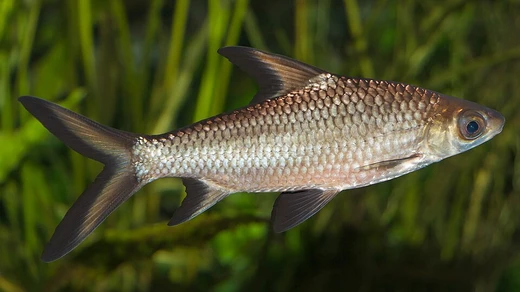
Cyprinodontiformes
An order of small, mostly freshwater fish including killifish and live-bearers.

Cyprinodontiformes is an order of ray-finned fish, mostly small and living in freshwater. It includes many popular aquarium species, such as killifish and live-bearers. The order is closely related to Atheriniformes and is sometimes grouped with them. A common name for the group is toothcarps, but they are not closely related to true carps—true carps belong to the superorder Ostariophysi, while toothcarps are part of Acanthopterygii.
The families within this order can be split into three groups based on how they reproduce: viviparous and ovoviviparous species give live birth, while oviparous species lay eggs. The difference between viviparous and ovoviviparous species is whether the young develop inside an eggshell (ovoviviparous) or without one (viviparous). However, from a phylogenetic perspective, one suborder—Aplocheiloidei—contains only egg-laying species, as do two of the four superfamilies in the other suborder, Cyprinodontoidei (specifically Cyprinodontoidea and Valencioidea). Vivipary and ovovivipary evolved independently from egg-laying ancestors, with ovovivipary possibly arising twice.
The oldest known fossil from the group is ?Cyprinodon primulus, a nomen vanum based on isolated scales from the Late Paleocene of Argentina. Its exact classification is uncertain, though it is generally considered to be a true cyprinodontiform.
Some members of this order live in extreme environments, such as salty or very warm water, heavily polluted water, rainwater pools low in minerals and made acidic by decaying plants, or isolated places where no other fish are found. They are mostly carnivores and often stay near the surface, where oxygen-rich water helps offset environmental challenges. Scheel (1968) noted that their gut contents were always ants; other studies have found insects, worms, and aquatic crustaceans. In aquariums, they are often seen eating protozoans from the water column and leaf surfaces, though these do not show up in stomach contents. Many pupfishes (family Cyprinodontidae) also eat plant material, and some have adapted to a diet high in algae—the Flagfish, for example, is known in the aquarium trade as a dedicated algae eater, even though the order generally does not consume plant matter. Killifish get some of the carotenoids and other pigments they need from pollen grains on the surface of and inside the insects they eat from the water’s surface; this can be replicated in captivity with color-enhancing foods containing those compounds.
Though diverse, most Cyprinodontiformes are small to medium fish with small mouths, large eyes, a single dorsal fin, and a rounded caudal fin. The largest species is the cuatro ojos (Anableps dowei), reaching 34 cm (13 in) in length, while the smallest is the least killifish (Heterandria formosa), which as an adult measures just 8 mm (0.31 in).
Based on Eschmeyer's Catalog of Fishes (2025), the systematics are as follows:
CYPRINODONTIFORMES
Suborder Aplocheiloidei (all oviparous) Family Aplocheilidae - Asian killifishes Family Nothobranchiidae - African killifishes Family †Kenyaichthyidae (Miocene of Kenya) Family Rivulidae - New World killifishes
Suborder Cyprinodontoidei Family Pantanodontidae - spine killifishes (oviparous) Family Fundulidae - topminnows (oviparous) Family Cyprinodontidae - pupfishes (oviparous) Family Profundulidae - Middle American killifishes (oviparous) Family Goodeidae - splitfins or goodeids (largely viviparous) Family Fluviphylacidae - American lampeyes (oviparous) Family Anablepidae - four-eyed fish (largely ovoviviparous) Family Poeciliidae - livebearers (viviparous) Family Aphaniidae - Oriental killifishes (oviparous) Family Valenciidae - Valencia toothcarps (oviparous) Family Procatopodidae - African lampeyes (oviparous)
Some authorities have expanded the family Aplocheilidae to include all killifishes, with three subfamilies—Aplocheilinae, Cynolebiinae, and Nothobranchiinae—but this is not the classification used in the 5th Edition of Fishes of the World.
- Common name
- Toothcarps
- Size range
- 8 mm (least killifish) to 34 cm (cuatro ojos)
- Reproductive strategies
- Oviparous, ovoviviparous, viviparous
- Oldest fossil
- ?Cyprinodon primulus (Late Paleocene of Argentina)
- Diet
- Primarily carnivorous; some eat algae
Lore & Background
Some members of this order are notable for inhabiting extreme environments, such as saline or very warm waters, heavily polluted waters, rain water pools devoid of minerals and made acidic by decaying vegetation, or isolated situations where no other types of fish occur. They are typically carnivores, and often live near the surface, where the oxygen-rich water compensates for environmental disadvantages. Scheel (1968) observed the gut contents were invariably ants, others have reported insects, worms and aquatic crustaceans. Aquarium specimens are invariably seen eating protozoans from the water column and the surfaces of leaves, however these are not apparent as stomach contents. Many members of the family Cyprinodontidae (the pupfishes) eat plant material as well and some have adapted to a diet very high in algae to the point where one, the Flagfish also known as American flagfish, is a renowned algae eater in the aquarium, in spite of belonging to an order of fishes that do not generally consume any plant material. In addition, killifish derive some of the carotenoids and other chemicals required to make their body pigments from pollen grains on the surface of and in the gut of insects they eat from the surface of the water; this can be simulated in culture by the use of special color enhancing foods that contain these compounds.
Reader's Guide
The Cyprinodontiformes are significant as a diverse order of small freshwater fish that includes many popular aquarium species, such as killifish and live-bearers. Their reproductive strategies are notably varied, encompassing oviparous (egg-laying), ovoviviparous (live birth with eggshell), and viviparous (live birth without eggshell) forms, with vivipary and ovovivipary having evolved independently from oviparous ancestors. The order's fossil record extends to the Late Paleocene, though the oldest known specimen, ?Cyprinodon primulus, is of uncertain taxonomic identity. Ecologically, many species thrive in extreme environments, such as saline waters or acidic pools, and are primarily carnivorous, though some pupfishes consume algae. The largest species, the cuatro ojos, reaches 34 cm, while the smallest, the least killifish, is only 8 mm. The classification includes two suborders: Aplocheiloidei (all oviparous) and Cyprinodontoidei (with both oviparous and live-bearing families). Their legacy lies in their adaptability, reproductive diversity, and importance in the aquarium trade.
Did You Know?
- The colloquial term 'toothcarps' is used for the order, though they are not close relatives of true carps.
- The oldest fossil record is ?Cyprinodon primulus from the Late Paleocene of Argentina, though its exact identity is uncertain.
- The largest species, the cuatro ojos (Anableps dowei), measures 34 cm, while the smallest, the least killifish (Heterandria formosa), is just 8 mm.
- Vivipary and ovovivipary have evolved independently from oviparous ancestors, the latter possibly twice.
More in Fish 1-24
Spotted an error? Know more?
This is a living reference — every entry is fact-audited, and reader corrections feed straight into our audit queue. Suggest an edit · See this site's audit record