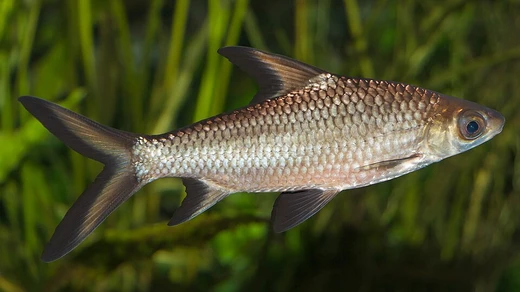
Cichlid
Diverse fish family known for rapid evolution and parental care.

Cichlids are a large and varied family of percomorph fish, officially placed in the family Cichlidae under the order Cichliformes. At least 1,760 species have been formally described, making this one of the biggest vertebrate families—only the Cyprinidae contains more known species. New species are found every year, and many have not yet been described, so the true total is unknown, with estimates ranging from 2,000 to 3,000. These fish are originally from the Neotropics, Africa (including Madagascar), the Middle East, and the Indian subcontinent, though people have introduced some species to waters around the world.
Many cichlids, especially tilapia, are raised as food fish, while others, like those in the genus *Cichla*, are popular game fish. The family also includes well-known freshwater aquarium species such as angelfish, oscars, and discus. Among vertebrate families, cichlids have the highest number of endangered species, most of which belong to the haplochromine group. They are famous for evolving rapidly into many different forms—known as species flocks—in the African Great Lakes. Key differences among these forms include jaw and tooth structure, fin, head, and body shape, and especially coloration. This diversity makes them important for studying how new species arise. When introduced outside their natural range, many cichlids become nuisance species.
All cichlids care for their eggs and young in some way, typically by guarding them or by mouthbrooding.
The fast speciation in Lakes Victoria, Malawi, and Tanganyika is partly due to their geological and climate history. Tectonic rifting about 20–25 million years ago created the rift system and eventually formed the basins of these three lakes. Lake Tanganyika, the oldest, formed roughly 12–9 million years ago, while Lake Malawi deepened later, during the Pliocene (around 5–2 million years ago). Sediment cores from Lake Malawi show that over the past 1.3 million years, the lake level dropped at least 24 times by 200 meters and 14 times by 400 meters; similar patterns occurred in the other two lakes. These lowstands reduced available habitats and isolated fish populations, while highstands refilled the lakes, increased habitat, and reconnected populations, allowing hybridization and gene flow.
Cichlids vary greatly in size, from species as small as 2.5 cm (1 in) long, such as female *Neolamprologus multifasciatus*, to much larger ones approaching 1 m (3 ft), like *Boulengerochromis* and *Cichla*. Their body shapes also range widely, from strongly compressed forms (e.g., *Altolamprologus*, *Pterophyllum*, and *Symphysodon*) to cylindrical, elongated ones (e.g., *Julidochromis*, *Teleogramma*, *Teleocichla*, *Crenicichla*, and *Gobiocichla*). In general, though, cichlids tend to be medium-sized, oval, and slightly compressed, similar to North American sunfishes in shape, behavior, and ecology.
A key trait shared by all cichlids is the fusion of the lower pharyngeal bones into a single tooth-bearing structure. A complex set of muscles lets these bones work as a second set of jaws for processing food, splitting the work between the true jaws and the pharyngeal jaws. This makes cichlids efficient and often highly specialized feeders that handle a wide variety of food, which is thought to be one reason for their diversity.
The current consensus taxonomy, based on the Catalog of Fishes (2025), places cichlids into four subfamilies: Etroplinae (Indian and Madagascan cichlids), Ptychochrominae (Malagasy cichlids), Pseudocrenilabrinae (African cichlids), and Cichlinae (American cichlids). In the past, classifications varied; Kullander (1998) recognized eight subfamilies, and Sparks and Smith later added a ninth. Cichlid taxonomy is still debated, with no complete agreement on genera or a system that assigns all species to monophyletic groups. For example, Kullander placed the African genus *Heterochromis* within Neotropical cichlids, though later studies disagreed. Other issues involve the common ancestor of the Lake Victoria superflock and the ancestral lineages of Lake Tanganyikan cichlids. Phylogenies based on morphology sometimes differ from those based on genetics, but there is consensus that the family Cichlidae is monophyletic. Dentition was once used for classification, but tooth shapes change with age and wear, making it unreliable. Genome sequencing and other technologies have since transformed cichlid taxonomy. Alternatively, all New World cichlids can be placed under Cichlinae, while Etroplinae covers all Old World species.
The external taxonomic placement of cichlids was long disputed and variable, but has now been largely resolved. In the past, based on morphology, they were classified in a different group.
- Scientific classification
- Family Cichlidae, order Cichliformes
- Estimated total species
- 2,000 to 3,000
- Native range
- Neotropics, Africa (including Madagascar), Middle East, Indian subcontinent
- Key trait
- Fused lower pharyngeal bones forming a second set of jaws
- Parental care
- All species practice some form of parental care (guarding or mouthbrooding)
- Conservation note
- Largest number of endangered species among vertebrate families, mostly in haplochromine group
Lore & Background
Cichlids span a wide range of body sizes, from species as small as 2.5 cm (female Neolamprologus multifasciatus) to nearly 1 m (Boulengerochromis and Cichla). Body shapes vary from strongly laterally compressed (Altolamprologus, Pterophyllum, Symphysodon) to cylindrical and elongated (Julidochromis, Teleogramma, Crenicichla). Most cichlids are medium-sized, ovate, and slightly laterally compressed, similar to North American sunfishes in morphology, behavior, and ecology. A single key trait unites them: the fusion of the lower pharyngeal bones into a single tooth-bearing structure, allowing a second set of jaws for processing food, which contributes to their feeding specialization and diversity. The geological and climate history of the African Great Lakes—Victoria, Malawi, and Tanganyika—drove rapid speciation. Tectonic rifting ~20–25 million years ago created the rift system, with Lake Tanganyika forming ~12–9 million years ago and Lake Malawi deepening during the Pliocene (~5–2 Ma). Sediment core analysis from 1.3 million years ago shows lake-level fluctuations, with at least 24 drops of 200 m and 14 drops of 400 m in Lake Malawi. Lowstands reduced habitats and isolated fish populations; highstands refilled lakes, increased habitat, and reconnected populations, allowing hybridization and gene flow. Cichlid taxonomy has been debated. The current consensus (Catalog of Fishes, 2025) recognizes four subfamilies: Etroplinae (Indian and Madagascan cichlids), Ptychochrominae (Malagasy cichlids), Pseudocrenilabrinae (African cichlids), and Cichlinae (American cichlids). Dentition was formerly used for classification but is unreliable due to age-related tooth wear. Genome sequencing has transformed taxonomy. The family is considered monophyletic, but classification of genera remains unresolved.
Reader's Guide
Cichlids hold significant scientific and economic importance. Their rapid evolution into species flocks in the African Great Lakes provides a natural laboratory for studying speciation, driven by geological and climate history that caused repeated isolation and reconnection of populations. Their morphological diversity—especially in jaw and teeth structure, fin shape, and coloration—illustrates adaptive radiation. The family's disjunct distribution across Africa, Madagascar, the Neotropics, the Middle East, and India has sparked debate about whether it results from Gondwanan breakup or oceanic dispersal; molecular clock estimates suggest divergences too young for the former, favoring dispersal, though the mechanisms remain unclear. Economically, cichlids are vital as food fish (tilapia), game fish (Cichla), and aquarium fish (angelfish, oscars, discus). However, they also have the largest number of endangered species among vertebrate families, mostly in the haplochromine group, and introduced species have become nuisances. Their unique pharyngeal jaws and parental care (guarding or mouthbrooding) are key biological traits. The ongoing taxonomic debates and undiscovered species highlight that cichlid diversity is still incompletely understood.
Did You Know?
- Cichlids have the largest number of endangered species among vertebrate families, mostly in the haplochromine group.
- All cichlids practice some form of parental care for their eggs and fry, either guarding or mouthbrooding.
- The fusion of the lower pharyngeal bones into a single tooth-bearing structure is a key trait unique to cichlids.
- Lake Tanganyika, the oldest of the African Great Lakes, formed approximately 12–9 million years ago.
Frequently Asked Questions
What is a cichlid?
Cichlids are a large and highly diverse family of freshwater fish classified in the family Cichlidae, order Cichliformes. The group contains roughly 2,000 to 3,000 described species and is found in tropical and subtropical waters on several continents.
What is the defining physical trait of cichlids?
Every cichlid has a pair of fused lower pharyngeal bones that act as a secondary set of jaws deep in the throat. This structure lets them crush hard-shelled invertebrates or process food in ways most other fish simply cannot manage.
Where do cichlids naturally live?
Their native range covers the Neotropics, sub-Saharan Africa including Madagascar, the Middle East, and the Indian subcontinent. Through the aquarium trade and aquaculture, some species have since been introduced to waters around the globe.
How do cichlids care for their young?
Without exception, every cichlid species provides some form of parental care, whether by guarding eggs and fry in a nest or by carrying offspring in the mouth. This universal trait distinguishes them from many other fish families that abandon their eggs after spawning.
Why are cichlids so important to evolutionary biology and conservation?
The African Great Lakes host extraordinary flocks of closely related cichlid species that radiated rapidly from common ancestors, making them a premier model for studying adaptive speciation. At the same time, the haplochromine group carries the largest number of endangered species of any vertebrate family, underscoring their conservation urgency.
More in Fish 1-24
Spotted an error? Know more?
This is a living reference — every entry is fact-audited, and reader corrections feed straight into our audit queue. Suggest an edit · See this site's audit record