Mars suit
Space suit designed for walking and survival on Mars.

A Mars suit is a space suit designed for extravehicular activity (EVA) on the surface of Mars. Compared to suits for low Earth orbit, Mars suits emphasize walking and abrasion resistance due to the planet's gravity, dust, and environmental conditions. They must provide pressure, oxygen, temperature control, and radiation protection in an atmosphere with a pressure of about 0.6 to 1 kilopascal and composed mostly of carbon dioxide.
- Field
- Space suit engineering
- Known for
- Designed for surface EVA on Mars
- Key challenges
- Abrasion resistance, radiation, low temperature, Martian dust
- Atmospheric pressure
- 0.6–1 kPa (0.087–0.145 psi)
- Surface gravity
- 37.8% of Earth's
- Minimum temperature
- −130 °C (−202 °F)
Lore & Background
Design concepts include the Biosuit, a mechanical counterpressure suit that uses material elasticity instead of pressurized gas; the Aoudo suit, a simulator with ambient air ventilation and a heads-up display; and the AX-5 hard-suit, which can use a high-pressure atmosphere to avoid pre-breathing for decompression sickness. A simulated Mars suit was used in the HI-SEAS Earth-based analog tests in Hawaii. One researcher drew inspiration from Medieval armor suits.
Reader's Guide
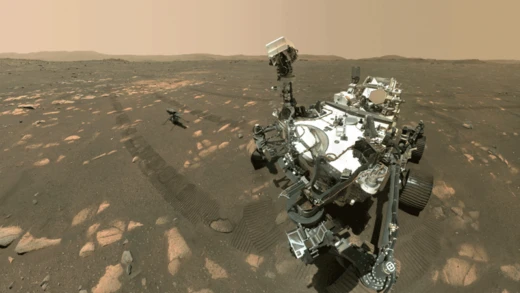
Mars suits are significant because they address the unique challenges of planetary surface exploration: walking in reduced gravity, resisting abrasive dust, surviving extreme temperature swings (down to −130 °C), and protecting against cosmic radiation and solar flares. Unlike orbital suits, they must operate in a thin carbon dioxide atmosphere and provide oxygen at a pressure above the Armstrong limit (6.3 kPa). The choice of materials—tested via the Perseverance rover and UV exposure experiments—is critical for durability. Design debates include whether suits should work in space or only on the surface, and whether to use hard-suit or soft-suit architectures to manage pressure and mobility. The legacy of Mars suit development informs future human missions to Mars, balancing weight, flexibility, and life support.
Did You Know?
- The Apollo lunar EVA suit weighed about 82 kg on Earth but only about 13.6 kg on the Moon.
- The average surface pressure on Mars is about 0.61 kPa, well below the Armstrong limit of 6.3 kPa.
- One concept for scrubbing carbon dioxide uses re-usable amine bead scrubbers that vent CO₂ to the Martian atmosphere.
- The NASA Z-2 suit did not have electroluminescent patches; the Z-1 prototype had them, but the Z-2 design did not include them.
More in Exploration of Mars 1-24
Spotted an error? Know more?
Reader corrections go straight into our review queue. Suggest an edit · How this site is sourced