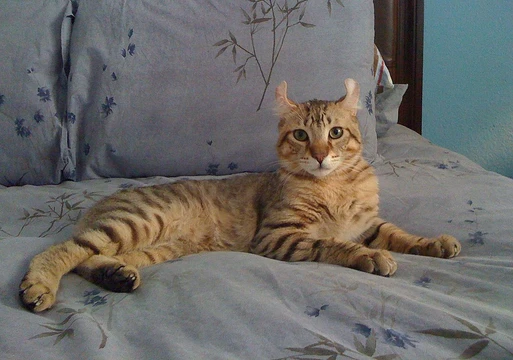
Australian Tiffanie
Australian longhair breed derived from Burmilla and Chinchilla Persian.

The Australian Tiffanie was developed by crossing the short-haired Burmilla with the long-haired Chinchilla Persian. Its appearance is similar to the older style of the Chinchilla Longhair. There is some confusion over the breed’s name: this Australian cat is distinct from the Tiffanie breed found in Europe (which is also called the Burmilla Longhair) and from the Tiffany breed in the United States. The Australian Tiffanie is recognized by the Waratah State Cat Alliance.
- Field
- Cat breed
- Origin
- Australia
- Registry
- Waratah State Cat Alliance
- Foundation breeds
- Burmilla and Chinchilla Persian
- Coat type
- Longhair
- Resemblance
- Old style Chinchilla Longhair
Lore & Background
The Australian Tiffanie was developed by crossing the short-haired Burmilla with the long-haired Chinchilla Persian. The resulting cats resemble the old style of the Chinchilla Longhair. The breed is recognized by the Waratah State Cat Alliance, a smaller cat registry.
Reader's Guide
The Australian Tiffanie is a minority cat breed that illustrates the naming conflicts common among experimental breeds. The article notes that the name 'Tiffanie' is used for a different breed in Europe (the Burmilla Longhair), and the name 'Tiffany' is used for yet another breed in the United States (the Chantilly-Tiffany). This breed's recognition only by the Waratah State Cat Alliance places it among those not accepted by major international registries such as TICA, CFA, or GCCF. Its significance lies in its role as an example of how regional breeding efforts can produce distinct varieties that may be confused with other breeds due to overlapping nomenclature. The breed's development from two established breeds—Burmilla and Chinchilla Persian—shows the ongoing experimentation in cat fancy outside the mainstream.
Did You Know?
- The Australian Tiffanie is derived from crosses between the short-haired Burmilla and the long-haired Chinchilla Persian.
- It is not the same as the Tiffanie breed in Europe (also known as the Burmilla Longhair) or the Tiffany breed in the United States.
- The Australian Tiffanie resembles the old style of the Chinchilla Longhair.
Breeding Origins & Physical Character
The Australian Tiffanie was developed through a deliberate cross between two established pedigrees: the short-haired Burmilla and the long-haired Chinchilla Persian. This pairing was designed to produce a cat that carries the genetic heritage of both parent lines while expressing a particular aesthetic. The resulting cats closely resemble the old style of the Chinchilla Longhair, suggesting that the breeders were working toward a specific visual standard rooted in that earlier type. The breed exists as a crossbreed in the sense that it was created by combining two distinct, already-recognized lines rather than arising as a natural landrace. Its place among experimental and minority cat breeds reflects the fact that, despite its clear parentage and defined appearance, it has not yet achieved the level of institutional endorsement that would place it alongside the world's most established pedigrees. The Waratah State Cat Alliance is the body that currently extends recognition to this cat, anchoring it within the Australian feline community even as it remains outside the purview of the largest international registries.
Registry Standing & the Question of Formal Recognition
The Australian Tiffanie occupies a particular niche in the world of cat fancy. It is recognized by the Waratah State Cat Alliance, which qualifies it as a documented breed within at least one extant multi-breed registry. However, it does not carry the endorsement of any of the major national or international bodies that govern cat registration worldwide. The International Cat Association, the Governing Council of the Cat Fancy, the Fédération Internationale Féline, the Cat Fanciers' Association, and the World Cat Federation have all, to date, declined to grant this breed their seal of approval. This places the Australian Tiffanie in the same category as a number of other minority and experimental cats that exist in a kind of limbo—known and bred by dedicated individuals, yet lacking the broad institutional validation that would make them universally acknowledged. In some cases, breeds in this position actively seek major recognition but have not yet received it. In others, recognition has been refused for reasons such as perceived over-similarity to an existing breed or concerns about health issues statistically linked to the line. The Australian Tiffanie's specific reasons for remaining unrecognized by the larger bodies are not detailed in the available record, but its status as a deliberate crossbreed rather than a naturally occurring landrace may influence how registries assess its distinctiveness.
The Tiffanie Name Tangle
One of the most persistent challenges surrounding the Australian Tiffanie is the confusion created by overlapping breed names across different countries and registries. The Australian Tiffanie is not the same cat as the breed known in Europe as the Tiffanie, which is also called the Burmilla Longhair. It is equally distinct from the American breed called the Tiffany, which goes by the alternative name Chantilly-Tiffany. To compound the matter, the breed that Australia itself calls the Burmilla Longhair is actually analogous to the Asian Semi-longhair recognized in Britain, which is also referred to as the Tiffanie in that country. So a single name—Tiffanie—can point to three entirely different cats depending on where you are in the world. This kind of nomenclature clash is not unique to this breed; discrepancies between registry names have long caused confusion across the global cat fancy community. Fortunately, such conflicts are gradually decreasing as communication between registries improves, a process largely facilitated by the Internet and by gatherings such as the World Cat Congress, which bring breeders and registry officials from different nations into direct dialogue.
A Place Among the Experimental Breeds
The Australian Tiffanie is one of many cat breeds that exist in the experimental or minority category—lines that have been developed through selective breeding or crossbreeding but have not yet secured the recognition of the world's largest cat registries. It shares this status with a diverse group of cats, from the Greek Aegean, a landrace being formalized since the 1990s, to the American Polydactyl, a breed in development recognized only by the Rare and Exotic Feline Registry since 2004, to the Alpine Lynx, a white short-tailed cross between a Highlander and a barn cat. What unites these breeds is the fact that each is recognized by at least one extant national or international multi-breed registry, even if that recognition is limited to a smaller body. Some of these cats are in the process of seeking full major-registry status, while others may have been granted only preliminary standing with experimental conformation standards that have yet to prove viable over the long term. The Australian Tiffanie, with its Waratah State Cat Alliance recognition, sits squarely in this middle ground: a defined, bred, and documented cat whose future standing in the broader world of cat fancy remains an open question.
Frequently Asked Questions
What is the Australian Tiffanie?
The Australian Tiffanie is a longhair cat breed developed in Australia by crossing a short-haired Burmilla with a long-haired Chinchilla Persian. It is recognized by the Waratah State Cat Alliance.
How was the Australian Tiffanie bred?
Breeders combined a Burmilla with a Chinchilla Persian to produce a new longhair variety. The resulting cats carry the plush, flowing coat of the Persian parent alongside the coloring traits of the Burmilla.
What does the Australian Tiffanie look like?
The breed closely resembles the older style of the Chinchilla Longhair, featuring a long, soft coat and the characteristic chinchilla-like markings. Its overall silhouette and fur texture echo that vintage Persian look rather than the sleeker modern Persian silhouette.
Is the Australian Tiffanie the same as the European Tiffanie or the American Tiffany?
No—despite the similar-sounding names, these are three separate breeds. The European Tiffanie (sometimes called the Burmilla Longhair) and the American Tiffany are distinct lineages; the Australian Tiffanie is its own breed registered under the Waratah State Cat Alliance.
Who is the official registry for the Australian Tiffanie?
The Waratah State Cat Alliance is the body that recognizes and records the Australian Tiffanie. No other major international registry is listed as its governing organization in the breed's canon.
More in Experimental cat breeds 1-24
Spotted an error? Know more?
Reader corrections go straight into our review queue. Suggest an edit · How this site is sourced