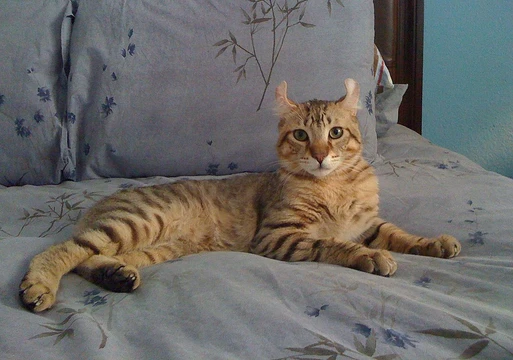
American Polydactyl cat
An experimental cat breed with extra toes, still in development.

The American Polydactyl is a cat breed currently in development, characterized by polydactylism—having more than the usual number of toes. As of 2018, it is recognized only by the Rare and Exotic Feline Registry (since 2004), and not by any major national or international cat registries.
- Field
- Cat breed (experimental)
- Known for
- Polydactylism (extra toes)
- Recognition
- Rare and Exotic Feline Registry (since 2004)
- Status
- In development
Lore & Background
The American Polydactyl is a breed defined by its polydactyl trait, meaning individuals possess more toes than the typical cat. This breed is currently in development, with breeders working to establish consistent traits. As of 2018, it has been recognized only by the Rare and Exotic Feline Registry (REFR) since 2004, and has not gained recognition from major registries such as The International Cat Association (TICA) or the Cat Fanciers' Association (CFA).
Reader's Guide
The American Polydactyl represents a minority breed that has not yet achieved widespread recognition. Its status as a breed in development highlights the challenges faced by experimental breeds seeking acceptance from major cat registries. The breed's defining feature—polydactylism—is a naturally occurring genetic variation, but the breed's long-term viability and standardization remain uncertain. The fact that it is recognized only by the Rare and Exotic Feline Registry underscores the fragmented nature of cat breed registration, where smaller registries may accept breeds that larger ones do not. This breed's existence reflects ongoing efforts to formalize and preserve unique feline traits, though its future in the cat fancy is not guaranteed.
Did You Know?
- The American Polydactyl has more than the usual number of toes.
- The breed is currently in development and not recognized by major registries such as TICA or CFA.
The Extra-Toed Distinction
The American Polydactyl is defined by a single, striking physical characteristic: it possesses more toes than a typical domestic cat. This condition, known as polydactyly, is the breed's namesake and its most immediately visible trait. Unlike many cat breeds that are distinguished by coat color, body type, or ear shape, the American Polydactyl's identity is rooted in this digit anomaly. The breed falls within the broader category of experimental and crossbred cats that have not yet earned the recognition of major national or international cat registries. Its defining feature sets it apart in the cat fancy world, where most established breeds are categorized by fur length, body structure, or pattern. The polydactyl trait is the foundational characteristic around which this developing breed is organized, making it a point of both fascination and, in some registries, potential concern regarding the broader health and viability questions that accompany experimental breeds.
A Breed Still Taking Shape
The American Polydactyl is explicitly described as a breed currently in development, meaning it has not yet reached the stage of a fully established, standardized cat breed with a fixed conformation. In the world of cat fancy, this places it among experimental varieties that are still being refined through selective breeding. Breeders working with minority and experimental cats often seek to produce consistent traits over generations, a process that can take considerable time before a breed is considered stable enough for formal recognition. The American Polydactyl's developmental status means that its conformation standards are still being worked out, and the breed has not yet demonstrated the long-term viability that major registries typically require. This ongoing process of development is common among breeds that originate from naturally occurring traits or private breeding programs that gradually attract an informal following before attempting to formalize their standards.
Recognition at the Margins
As of 2018, the American Polydactyl holds recognition from a single registry: the Rare and Exotic Feline Registry, which has listed the breed since 2004. This means the cat has not earned any form of approval from the major cat fancy organizations, including The International Cat Association, the Cat Fanciers' Association, the Governing Council of the Cat Fancy, the Fédération Internationale Féline, or the World Cat Federation. The REFR is one of the smaller registries that acknowledge breeds which major bodies have not yet accepted. This limited recognition places the American Polydactyl in a category shared by numerous other experimental and crossbred cats that exist in a regulatory gray area. The breed's absence from the major registries' rolls means that, in the eyes of the broader cat fancy community, it remains an unofficial variety rather than an established breed, regardless of how long breeders have been working to stabilize its traits.
Among the Experimental Few
The American Polydactyl exists within a larger population of experimental cat breeds and crossbreeds that have not achieved the recognition of any major national or international cat registry. These breeds share a common trajectory: they may be bred for private reasons, inadvertently attract an informal following, and then face the challenge of seeking formal acknowledgment. Recognition can be denied for a variety of reasons, including over-similarity to an existing breed or medical problems statistically linked to the variety. Some experimental breeds achieve only preliminary status in one or more registries, with conformation standards in place but ultimately proving non-viable over the longer term. The American Polydactyl, with its single-registry recognition through the REFR, sits squarely in this landscape of cats that exist at the periphery of the organized cat fancy, where breeders continue to work toward consistency and legitimacy while the broader community remains undecided about their place in the feline world.
Frequently Asked Questions
What is the American Polydactyl cat?
It is a cat breed still in the experimental development stage, distinguished by the trait of polydactylism—meaning the cats carry extra toes beyond the typical count. It has not yet reached full established-breed status in the wider feline world.
What makes the American Polydactyl cat stand out from other breeds?
Its defining feature is the natural occurrence of extra digits on the paws, a condition known as polydactylism. This extra-toe trait is the breed's entire raison d'être and the reason it was set apart as its own experimental category.
Is the American Polydactyl cat recognized by major cat registries?
As of 2018, no major national or international cat registry grants it official breed recognition. The only registry that lists it is the Rare and Exotic Feline Registry, which has carried the breed on its books since 2004.
What is the current development status of the American Polydactyl cat?
The breed remains in a developmental, pre-approval phase rather than being a finalized, stable breed. Breeders and the Rare and Exotic Feline Registry are still working toward a more established standard before broader recognition is expected.
Why is the American Polydactyl cat labeled 'experimental'?
Because it has not yet been accepted by any of the large, mainstream cat registries and its breed standard is still being refined. The 'experimental' tag reflects that the breed is a work in progress, tracked only by a smaller registry focused on rare and exotic lines.
More in Experimental cat breeds 1-24
Spotted an error? Know more?
Reader corrections go straight into our review queue. Suggest an edit · How this site is sourced