Elegast
Elf spirit and noble robber in a medieval Dutch epic.

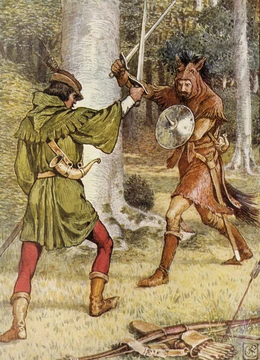
Elegast (also known as Elbegast or Alegast) is the hero and noble robber of the early Middle Dutch epic poem *Karel ende Elegast*. He appears as a knight on a black horse, an outcast vassal of Charlemagne living in the forest, and possibly represents the King of the Elves. The poem is notable for combining Frankish legends of Charlemagne with Dutch-Germanic mythology, and for making a Dutch character the hero.
- Name
- Elegast
- Also known as
- Elbegast, Alegast
- Field
- Medieval epic poetry, folklore
- Known for
- Hero and noble robber in *Karel ende Elegast*; elf spirit; loyal to Charlemagne; magical abilities (sleep inducement, lock opening, talking to animals)
- Associated with
- Charlemagne, Eggeric van Eggermonde
- Etymology
- Common Germanic *albi-gastiz ('elf guest')
Lore & Background
Elegast is the central figure in the early Middle Dutch poem *Karel ende Elegast*, likely written at the end of the 12th century or in the 13th century. The poem is set near Charlemagne's castle in Ingelheim. Although Elegast's background is not described, he was an old friend of Charlemagne who had fallen into disgrace and was banished to the forest. His name connotes elven origins. Elegast could put people to sleep magically, open locks without keys, and possessed a magic herb that allowed him to talk to animals. He lived in the forest, stealing from the rich and being kind to the poor.
Reader's Guide
Elegast is significant as a rare example of a Dutch heroic figure in medieval epic poetry, most other poems of the time concerning Frankish heroes. The poem uniquely portrays Charlemagne, a Christian king, as friends with an elf or dwarf figure of the forest, and depicts the king attempting robbery on divine inspiration. This blending of Frankish legend with Dutch-Germanic mythology gives Elegast a symbolic role, possibly representing the Dutch people's pre-Christian myth of an ancient elf or folk hero. The forest dwelling in pre-Christian mythology is a religious and sacred place. Historically, the epic may reflect a real insurrection against Charlemagne around 785, as noted in a 1240 chronicle describing a plot discovered when Charlemagne, urged by an angel, went thieving at night. The name Elegast, from Common Germanic *albi-gastiz ('elf guest'), connects him to a broader Northern European tradition of elf and dwarf kings, including a dwarf named Elbegast in Eddic texts and Low German legends of a dwarf who could steal eggs from under birds.
Did You Know?
- Elegast's name derives from Common Germanic *albi-gastiz, meaning 'elf guest'.
- In the poem, Elegast uses a magic herb to talk to animals and can open locks without keys.
- Elegast proves his loyalty to Charlemagne by refusing to steal from the king's castle.
- Some scholars propose Elegast is the character Alberich, whose name means 'king of the elves'.
More in European folklore 1-24
Spotted an error? Know more?
Reader corrections go straight into our review queue. Suggest an edit · How this site is sourced