Corpse road
Routes for transporting corpses to burial churches, steeped in folklore.

Gordon Hatton · CC BY-SA 2.0
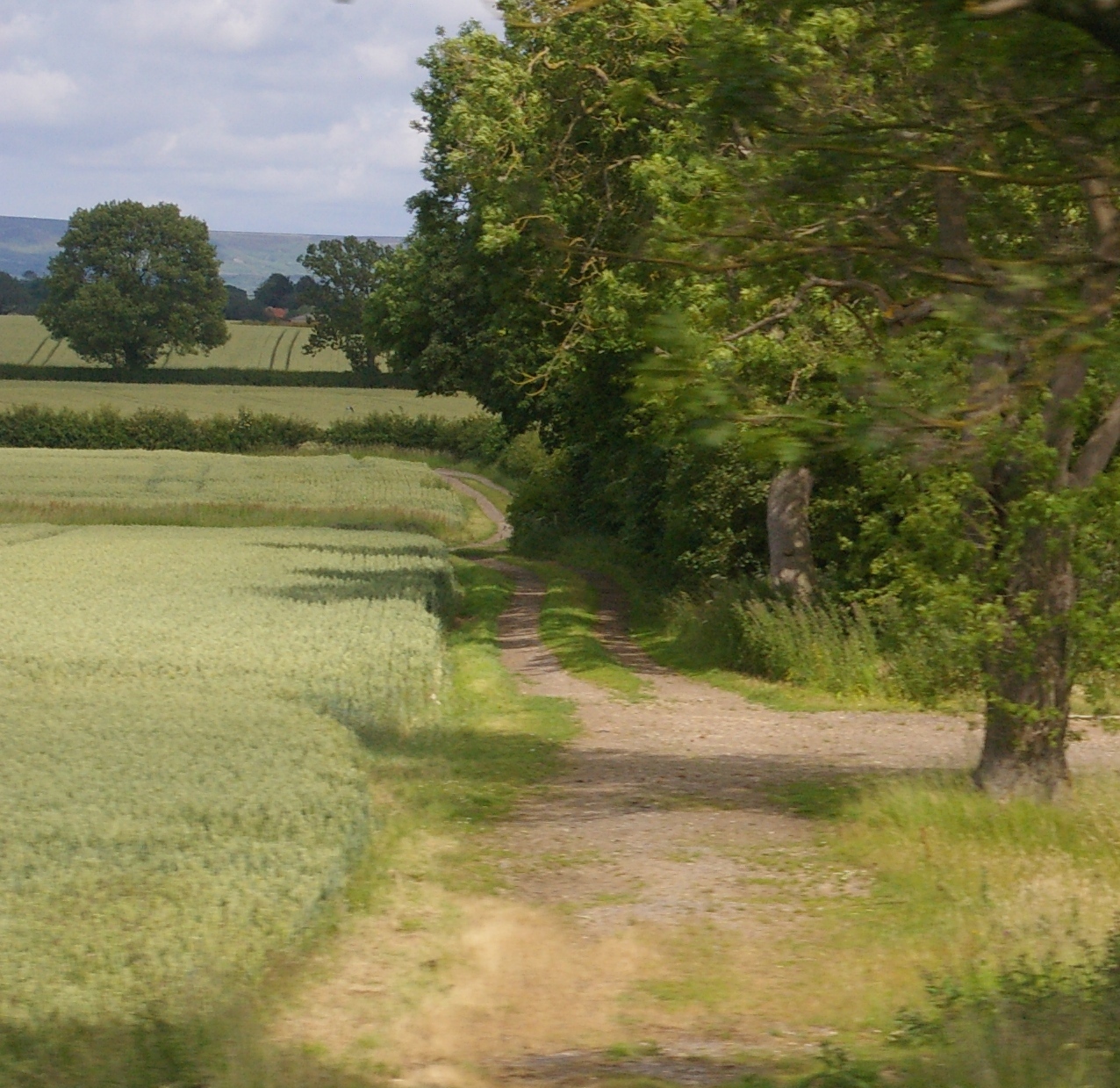
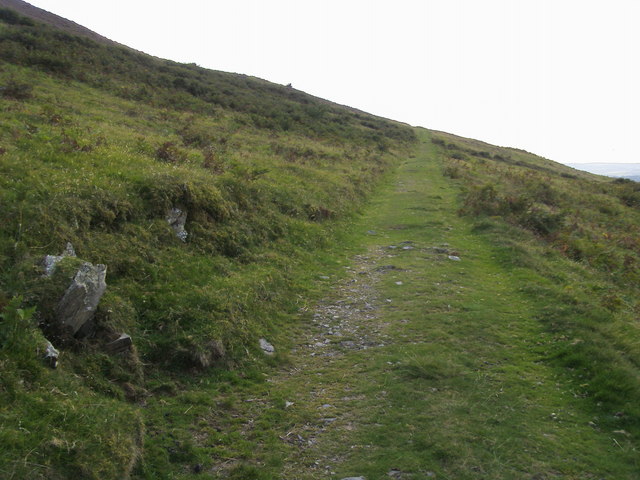
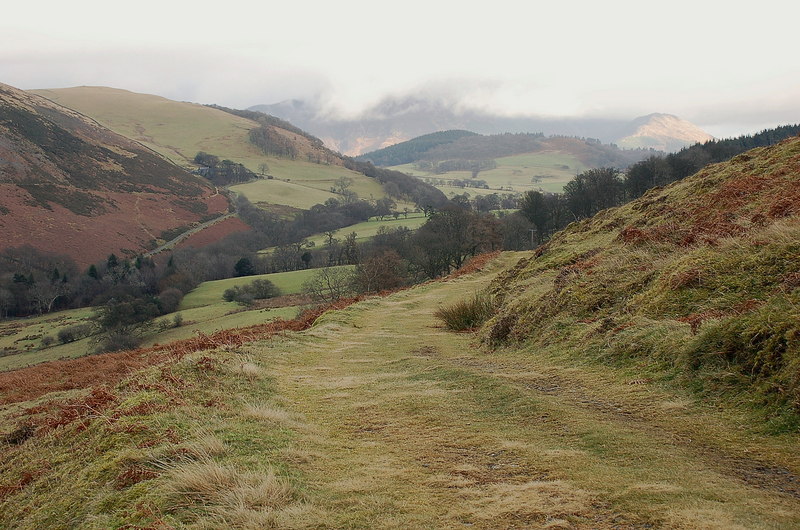
In late medieval Britain, as the population grew and new churches were built, existing mother churches and minsters saw their authority and income threatened. To maintain control, they established corpse roads—routes connecting outlying settlements to the central parish church, which alone held burial rights. This meant that people in remote communities often had to carry their dead over long distances, sometimes across difficult terrain, unless the deceased was wealthy enough to afford transport. One surviving example is the funeral way from Rydal to Ambleside in the Lake District, where a coffin stone still marks a resting spot for bearers. Over time, many new churches were granted their own burial rights, and the corpse roads fell out of use.
These routes are also called bier roads, burial roads, coffin lines, coffin roads, coffin walks, corpse ways, funeral roads, lych ways, lyke ways, or procession ways. Many have since disappeared, and those that remain as footpaths are often forgotten, especially if features like coffin stones or crosses are gone. Fields crossed by these paths were sometimes named "Church-way" or "Kirk-way Field," and today, lost routes can sometimes be traced through old field names, local knowledge, legends, and features marked on historical maps. An old superstition held that any land over which a corpse was carried became a public right of way.
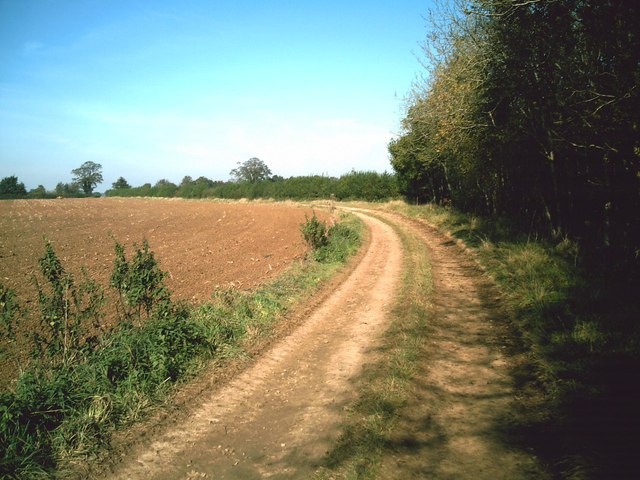
A well-documented example is the corpse road from the hamlet of Aston Magna to the church of St Peter and Paul at Blockley in Gloucestershire, a journey of over two miles crossing three streams. Another route from Stretton-on-Fosse to Blockley runs about four miles and crosses two streams. In Stawell, Somerset, one of the best-preserved coffin walks survives: part lies on private land, but the section near the church of St Francis connects to a public footpath believed to be the rest of the walk, leading up to the old Roman Road (A39) between Bridgwater and Street.
The folklore surrounding corpse roads is rich. Spirits of the dead, phantasms, wraiths, or nature entities like fairies were thought to travel along straight routes, similar to ley lines, while convoluted paths like labyrinths were believed to hinder them. Ghosts were said to fly close to the ground on a direct course, so these paths were kept clear of fences, walls, and buildings.
- Also known as
- Bier road, burial road, coffin line, coffin road, coffin walk, corpse way, funeral road, lych way, lyke way, procession way
- Primary region
- Great Britain
- Period of origin
- Late medieval times
- Primary function
- Transporting corpses to churches with burial rights
- Associated folklore
- Ghosts, spirits, wraiths, corpse candles, will-o'-the-wisps
Lore & Background
In late medieval times, population increase and church expansion in Great Britain encroached on territories of existing mother churches. To maintain authority and revenues, minster officials instituted corpse roads connecting outlying settlements to mother churches that alone held burial rights. This meant corpses had to be transported long distances, often through difficult terrain, usually carried unless the departed was wealthy. An example is the funeral way from Rydal to Ambleside in the Lake District, where a coffin stone still exists. Many new churches eventually gained burial rights, and corpse roads ceased to be used as such.
Reader's Guide
Many corpse roads have disappeared, and the original purposes of surviving footpaths are largely forgotten, especially where features like coffin stones or crosses no longer exist. Fields crossed by church-way paths often had names like 'Church-way' or 'Kirk-way Field', and lost routes can sometimes be plotted through old field names, local knowledge, and old maps. One of the oldest superstitions is that land over which a corpse is carried becomes a public right of way. The corpse road from Aston to Blockley churchyard is over two miles long and crosses three streams; the one from Stretton to Blockley runs about four miles and crosses two streams. A well-preserved coffin walk exists in Stawell, Somerset, linking to a public footpath believed to be part of the original route to the old Roman Road.
Did You Know?
- Corpse roads are also known as bier road, burial road, coffin line, coffin road, coffin walk, corpse way, funeral road, lych way, lyke way, and procession way.
- The corpse road from Stretton-on-Fosse to Blockley churchyard runs for some four miles and crosses two streams.
- A coffin stone, on which the coffin was placed while parishioners rested, still exists on the funeral way from Rydal to Ambleside in the Lake District.
Medieval Origins and the Burden of Distance
In the late medieval period, Great Britain experienced both population growth and a wave of church construction. New outlying settlements sought independence from their parent minsters, threatening the authority and income of established parish officials. In response, these officials formalized corpse roads—designated routes linking distant communities to the mother church that alone possessed burial rights. The practical consequences for ordinary people were severe. Unless the deceased happened to be wealthy enough to afford a cart or other conveyance, the body had to be carried by hand over potentially lengthy and rugged terrain. A striking illustration is the funeral way between Rydal and Ambleside in the Lake District, where a flat stone once allowed mourners to set down the coffin and rest during the journey. Over time, many of these newly built churches were themselves granted burial rights, rendering the old corpse roads obsolete in their original function.
Traces in the Landscape and the Right-of-Way Superstition
A great many corpse roads have vanished entirely, and even where the physical path survives as a footpath, its original purpose is frequently forgotten—particularly once distinctive markers like coffin stones or roadside crosses have crumbled away. Yet the landscape retains a quiet memory. Fields traversed by these routes often carried names such as 'Church-way' or 'Kirk-way Field,' and by tracing sequences of such toponyms, consulting old maps, and drawing on local church histories, researchers can sometimes reconstruct the course of a long-lost way. A notable example is the parish of Blockley in Gloucestershire, whose church of St Peter and Paul held burial rights over the hamlets of Stretton-on-Fosse and Aston Magna. The corpse road from Aston stretched over two miles and crossed three streams; the route from Stretton covered some four miles over two. An enduring superstition held that any ground over which a corpse was carried automatically became a public right of way, a belief that may have helped preserve these routes in communal memory.
Spirit Routes and the Sacred Geometry of the Dead
Deeply embedded in rural folklore is the conviction that the dead, wraiths, and other supernatural entities travel the physical landscape along dedicated, often perfectly straight, corridors—routes that share a conceptual kinship with what later writers would call ley lines. In this worldview, any convoluted or non-linear feature, such as a labyrinth or maze, acts as an obstacle to spirit movement. Because ghosts were thought to fly low and in a direct line between two points, the land along a corpse road was kept free of fences, walls, and buildings so as not to block the passage of flitting spectres. These paths could cut straight across mountains, valleys, and marshes, and in towns they would pass close to or even through houses. Since each route terminated at a cemetery, it was believed to carry the same spiritual charge as a burial ground, a place where the spirits of the deceased thrive. Ploughing the path was taboo, and diverting a funeral to an alternative route was regarded as profoundly unlucky.
Corpse Candles, Will-o'-the-Wisps, and the Shakespearean Echo
Perhaps the most evocative supernatural phenomenon tied to these routes is the corpse candle: a small blue flame or ball of light reportedly seen skimming just above the ground along the path between a cemetery and a dying person's home, a sight especially associated with Wales. A closely related omen, the corpse fire, was said to appear within graveyards on the night before a death, tracing the future funeral route from the victim's house to the burial spot before vanishing into the earth. Across Gaelic, Slavic, and Germanic traditions, similar lights were interpreted as mischievous dead or unbaptized children flitting between heaven and hell, known by names such as Jack O' Lantern, Joan of the Wad, or Spunkie. Modern science offers prosaic explanations—fungal bioluminescence or methane gas rising from decomposing matter in bogs and marshes. Shakespeare's Puck, in A Midsummer Night's Dream, gestures toward this rich folklore, suggesting that these physical routes had long since been absorbed into the invisible mental geography of pre-industrial communities.
Gallery
Frequently Asked Questions
What is a corpse road in European folklore?
A corpse road is a designated medieval route in Britain that linked a remote village to its parish church, the only site legally allowed to perform burials. The term simply describes the path's sole purpose: carrying the dead from their home settlement to the churchyard for interment.
Why were corpse roads established in medieval Britain?
As the population grew in the late medieval period, newer churches threatened the income and authority of older mother churches and minsters. To protect their exclusive burial rights, these institutions enforced specific routes so that every death within their parish had to be carried to their churchyard, no matter how far or how difficult the terrain.
What supernatural folklore is associated with corpse roads?
British folk tradition holds that these paths are haunted by ghosts, wraiths, and restless spirits of the dead who were forced to travel them. Corpse candles and will-o'-the-wisps are also commonly linked to these routes, understood as the lingering lights of the departed.
What other names is a corpse road known by?
Across different regions the same route may be called a lych way, lyke way, bier road, coffin road, coffin walk, funeral road, procession way, or burial road. Every one of these names points to the identical medieval practice of reserving a specific path for transporting the dead to their burial church.
Does any original corpse road still survive today?
Yes, one well-documented example is the funeral way running from Rydal to Ambleside in the Lake District. This path was historically used to carry the dead from the isolated village of Rydal to the parish church at Ambleside and remains a recognized route to this day.
More in European folklore 1-24
Spotted an error? Know more?
Reader corrections go straight into our review queue. Suggest an edit · How this site is sourced