Ankou
A skeletal figure who collects the dead in Breton folklore.

Louboutinj · CC BY-SA 3.0
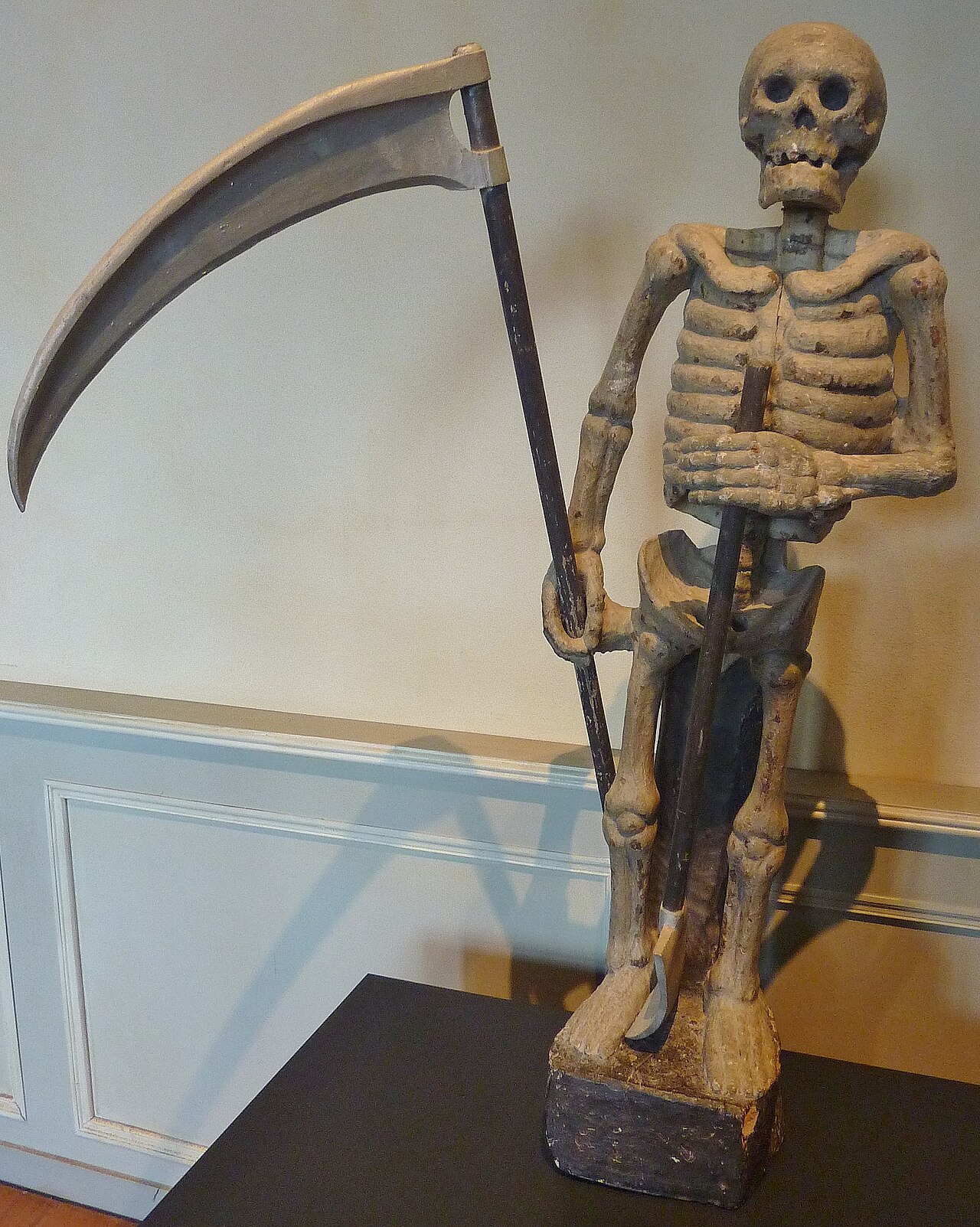
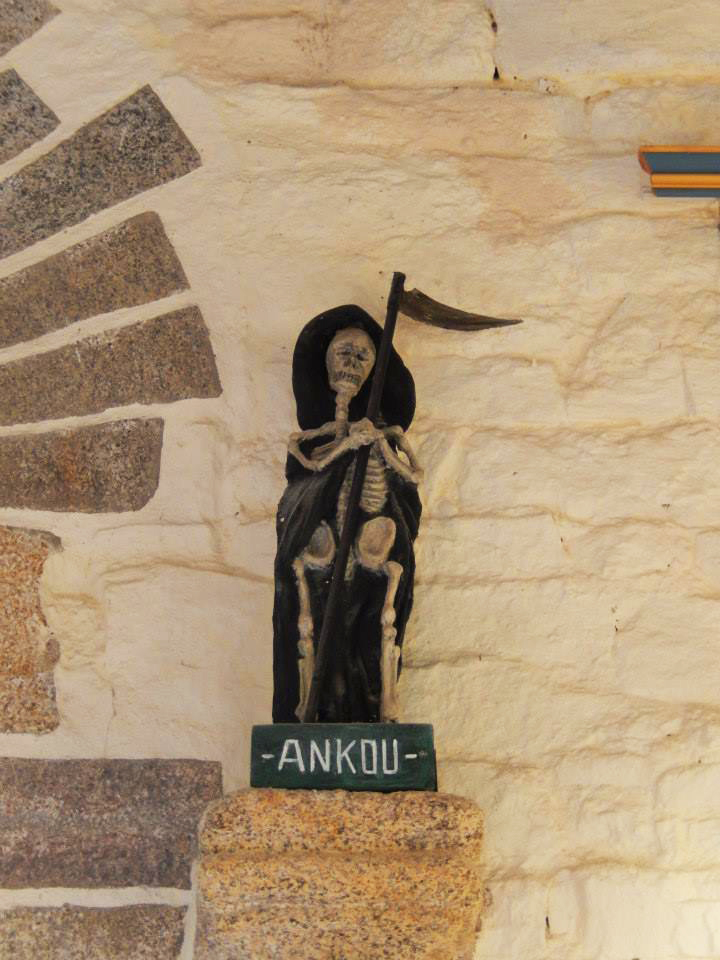
Ankou is a servant of death in Breton, Cornish, and Welsh mythology, often depicted as a skeletal figure or a man in a black robe and large hat, wielding a scythe and driving a cart or coach to collect the dead. Central to Breton folk belief, the Ankou personifies death and is considered a rotating role filled by the last person to die in a parish each year.
- Field
- Mythology
- Nationality
- Breton, Cornish, Welsh
- Known for
- Servant of death, collector of souls, personification of death in folklore
Lore & Background
Ankou appears as a man or skeleton wearing a black robe and a large hat that conceals his face, or occasionally as a shadow. He wields a scythe and is said to sit atop a cart for collecting the dead, or to drive a large black coach pulled by four black horses and accompanied by two ghostly figures on foot. In Breton tradition, the squealing of a cart or wheelbarrow outside one's home is supposed to be Karrigell an Ankou ('The Wheelbarrow of Ankou'), and the cry of the owl is referred to as Labous an Ankou ('The Death Bird').
Reader's Guide
The Ankou holds significance as a central figure in Breton folk belief, embodying death as a functional, cyclical role rather than a static entity. According to Anatole Le Braz in The Legend of Death, the last dead of the year in each parish becomes the Ankou for the following year, and when there have been more deaths than usual, one says 'War ma fé, heman zo eun Anko drouk' ('On my faith, this one is a nasty Ankou'). The Ankou is also found on the baptismal font at La Martyre, where he is shown holding a human head. This figure reflects a communal understanding of death as an ongoing duty, with each parish having its own Ankou, and connects to broader Celtic mythologies such as Arawn, the Welsh king of the Otherworld.
Did You Know?
- The cry of the owl is called Labous an Ankou ('The Death Bird') in Breton tradition.
- The Ankou appears on the baptismal font at La Martyre holding a human head.
The Rotating Office of Death
The Ankou is not a fixed supernatural entity but a role that shifts hands. In Breton folk belief, the last person to die in any given parish during a calendar year assumes the mantle of that parish's Ankou for the following twelve months. This means every community in Brittany has its own designated servant of death, and the identity changes annually. The role is always depicted as a male adult, regardless of who actually died last. When a particular year brings an unusually high number of deaths, the community expresses this through a specific Breton phrase: "War ma fé, heman zo eun Anko drouk" — "On my faith, this one is a nasty Ankou." The concept was documented by Anatole Le Braz, a writer and collector of legends, in his work The Legend of Death, where he describes Ankou as the "henchman of Death" (oberour ar maro) and a graveyard watcher who protects the cemetery and collects lost souls within his territory.
Origins and the Prince Who Challenged Death
Ankou's mythological origins are remarkably varied across Breton, Cornish, and Welsh traditions. One legend identifies him as the first child born to Adam and Eve, making him an ancient figure predating most of human history. Another tradition holds that he is simply the first person to die in a given year, charged with gathering other souls before he himself can pass into the afterlife. Perhaps the most narrative-rich origin tells of a cruel prince who, while on a hunting trip, encountered Death and issued a challenge: who could kill a black stag first? Death claimed victory, and the prince was cursed to wander the earth as a ghoul for all eternity. In yet another telling, Ankou is elevated to the status of king of the dead, presiding over subjects who follow their own sacred processional paths. These layered origins suggest the figure absorbed multiple archetypes over centuries of oral tradition.
Form and Iconography
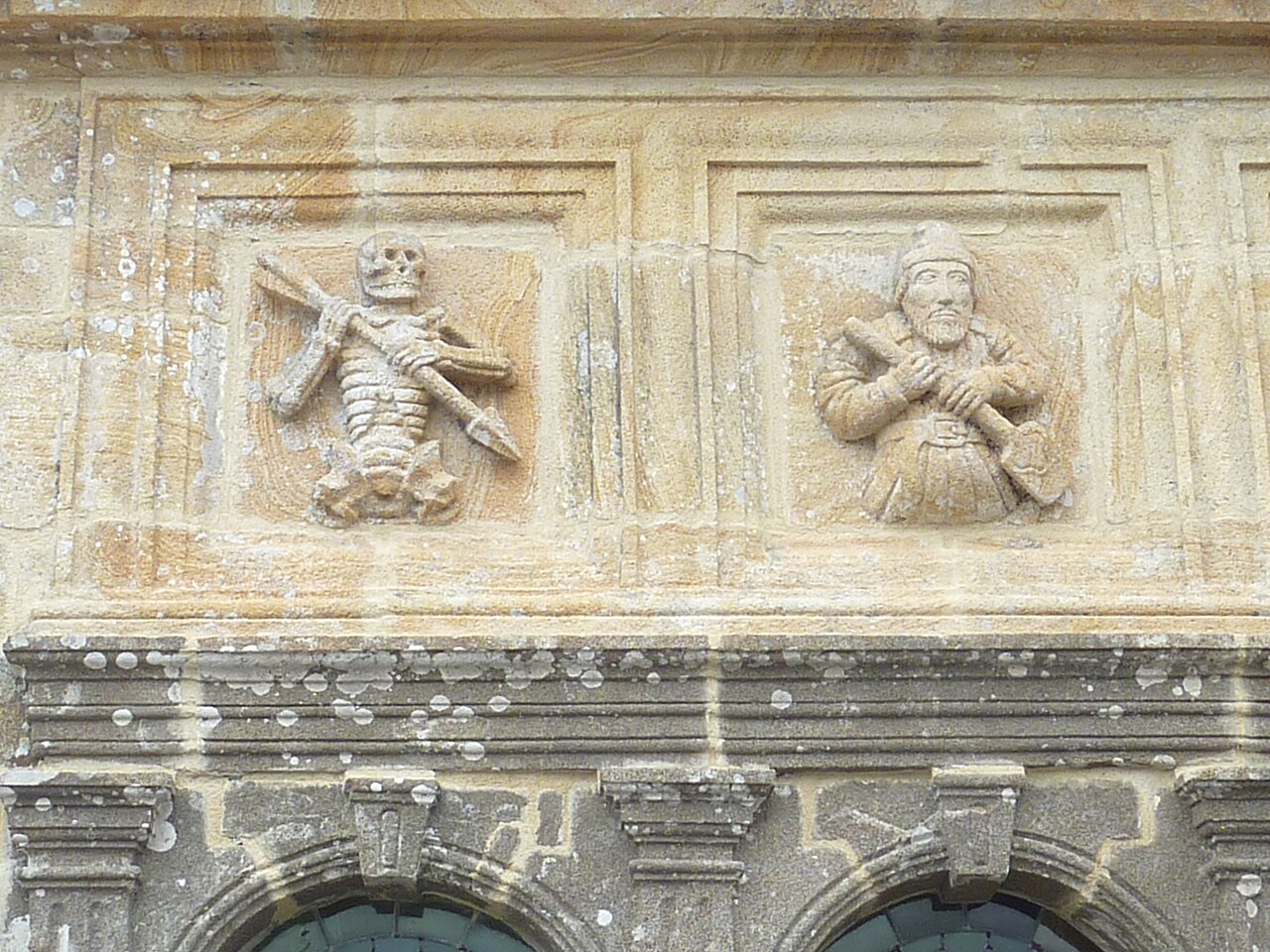
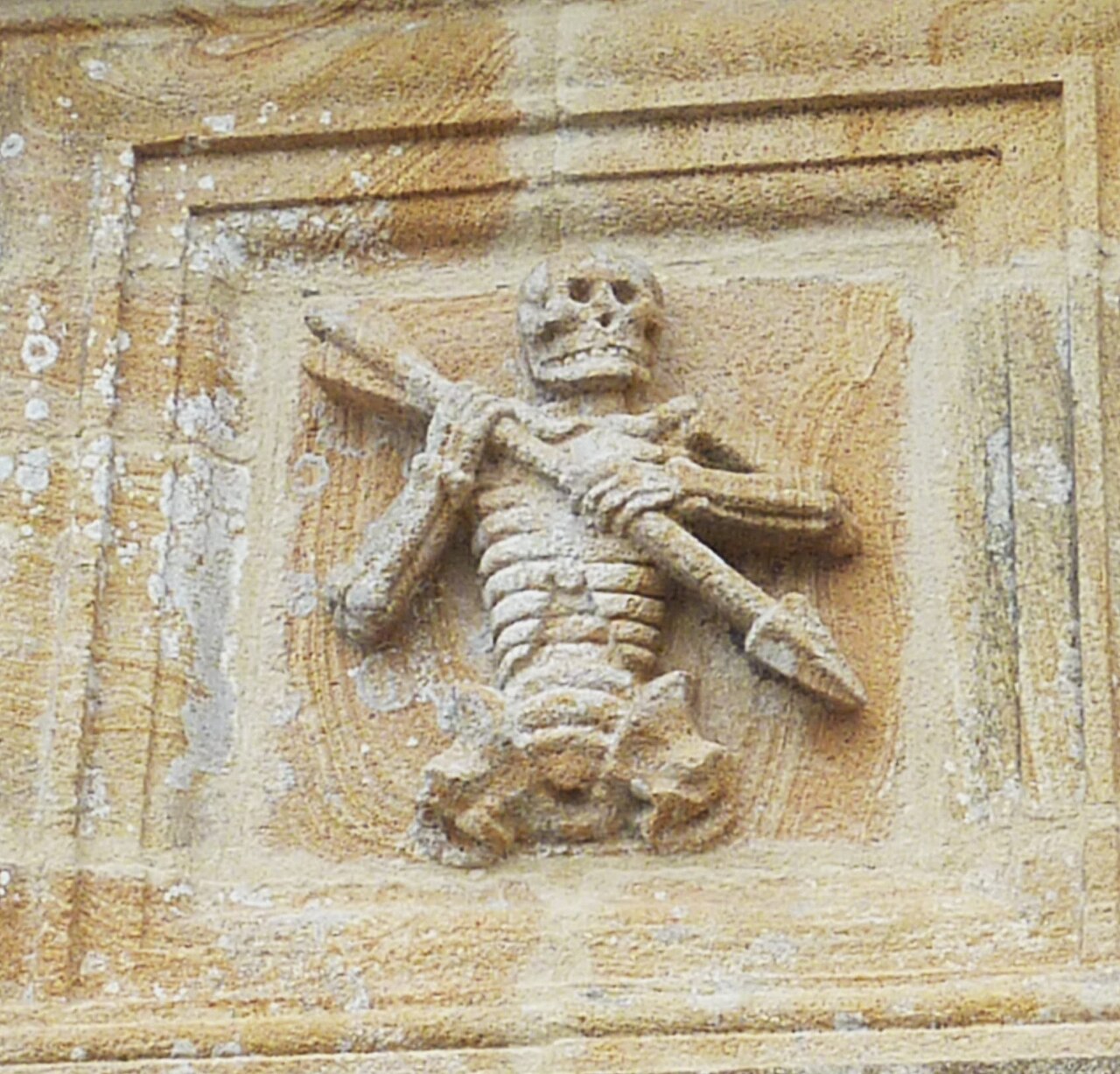
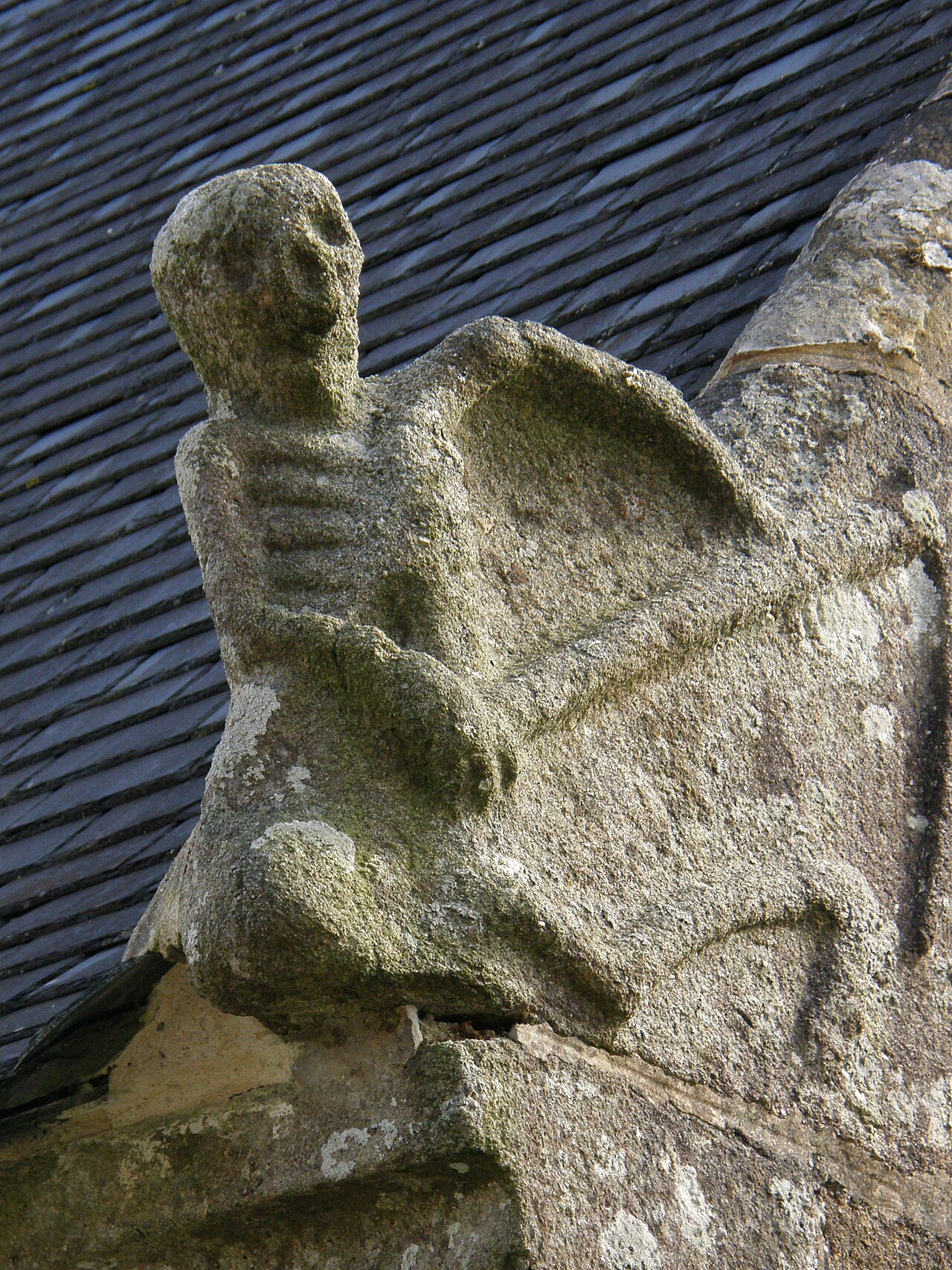
Ankou's visual identity is as varied as his origins. Most commonly he appears as a skeletal figure or a man draped in a black robe, his face hidden beneath an oversized hat. In some accounts he is reduced to nothing more than a shadow. His primary weapon is a scythe, and his mode of transport shifts between traditions: he may sit atop a creaking cart known as karrig an Ankou, or drive a large black coach drawn by four black horses, flanked by two ghostly figures walking on foot. In Cornish tradition he is called an Ankow, and in Welsh, yr Angau, showing the figure's reach across the Celtic world. A particularly striking physical representation appears on the baptismal font at La Martyre, where Ankou is carved holding a human head — a grim image placed in a space meant for the celebration of new life.
Ankou in Everyday Breton Life
The Ankou is not confined to legend books; he permeates the sensory landscape of Breton daily life. Every parish is said to maintain its own Ankou, making death a localized, almost municipal presence. The squealing of railway wheels passing a home is interpreted as Karrigell an Ankou, "The Wheelbarrow of Ankou," while the cry of an owl at night is called Labous an Ankou, "The Death Bird." These associations transform ordinary sounds into omens tied to the servant of death. The figure also exists alongside other supernatural beings in Breton lore, such as the lavandières de la nuit — night washerwomen encountered at moonlit fountains and streams, where they wash the shrouds of those about to die. Together, these elements create a dense web of folk belief in which death is not an abstraction but a neighbor, a sound, a sight woven into the texture of rural existence.
Gallery
Frequently Asked Questions
Who is Ankou?
Ankou is a death-servant figure rooted in Breton, Cornish, and Welsh folk tradition. In these stories, the character acts as a grim courier who gathers the souls of the recently deceased.
What does Ankou look like in folklore?
Depictions typically show a gaunt, skeletal figure dressed in a long black robe and an oversized wide-brimmed hat. The character is almost always paired with a scythe and a rattling cart or coach used to haul the dead.
How is the Ankou role assigned in a parish?
Breton belief holds that the title of Ankou passes to whatever person dies last in a given parish during a calendar year. That individual is then understood to take on the death-collector duties for the following year.
What is Ankou's specific job in the stories?
The Ankou functions as a personification of death itself, traveling from household to household to claim those whose time has come. Rather than a vengeful demon, the figure is generally portrayed as a dutiful, if grim, servant carrying out an inevitable task.
Why is Ankou important to Breton cultural identity?
The Ankou is one of the most recognizable figures in Breton oral tradition and has become a symbol of the region's distinct mythological heritage. The story reinforces a communal view of death as a shared, rotating responsibility rather than a purely individual fate.
More in European folklore 1-24
Spotted an error? Know more?
Reader corrections go straight into our review queue. Suggest an edit · How this site is sourced