Alp (folklore)
A German folklore being that causes nightmares and wears a magic cloak.

L.Cremisi · CC BY-SA 4.0
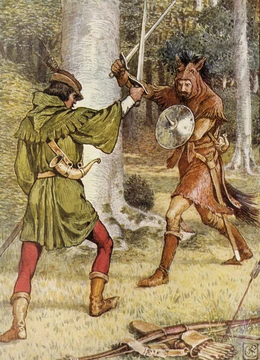
The Alp (German: [alp]; plural alpe or alpen) is a supernatural being from German folklore. Though sometimes compared to a vampire, its behavior is closer to that of an incubus. What sets it apart from both is its magic cloak, the Tarnkappe, which is the source of its powers. The name *Alp* is the German version of the word that became *elf* in English, both tracing back to Common Germanic. Other names for this creature include trud, mar, mart, mahr, schrat, and walrider. Similar beings appear across Europe, such as the drude or, in the British Isles, the Old Hag, which is linked to what is now recognized as sleep paralysis.
In early medieval sources, the Old High German word *alp* appears only in a few glosses before 1000. The Althochdeutsches Wörterbuch defines it as a nature-god or nature-demon, equated with Classical fauns, and described as eerie and ferocious. As a mare, it meddles with women. This is why the German word *Alpdruck* (literally "elf-oppression") means "nightmare." Elves were also linked to illnesses like epilepsy. In Middle High German, elves are frequently associated with deceiving or bewildering people, often in a phrase that seems proverbial: "die elben/der alp trieget mich" (the elves/elf is deceiving me). This pattern continued into Early Modern German. This deception sometimes has a seductive side, as seen in Heinrich von Morungen's early thirteenth-century Minnesang, which begins with the line "full many a man is bewitched by elves / thus I too am bewitched by great love." The word *Elbe* was also used to translate terms for nymphs.
Later medieval prayers portray elves as threatening or demonic. Evidence includes Latin prayers on lead amulets from southern Scandinavia and Schleswig, most famously the fourteenth-century Münchener Nachtsegen, a nighttime prayer. In the early modern period, northern German elves were said to carry out the evil bidding of witches; Martin Luther believed his own mother had been afflicted this way. As in Old Norse, few characters are explicitly identified as elves. One exception appears in the Old Norse Þiðreks saga, based on a lost German text, where the hero Hagen is conceived when his mother Oda is impregnated by an elf while lying in bed. Otherwise, German elves seem to have been largely conflated with dwarves (Middle High German: getwerc).
- Type
- Supernatural being
- Origin
- German folklore
- Also known as
- trud, mar, mart, mahr, schrat, walrider
- Associated with
- Nightmares, sleep paralysis, shapeshifting
- Distinctive feature
- Wears a Tarnkappe (magic cloak or hat)
Lore & Background
In medieval sources before about 1000, the Old High German word alp is attested only in a small number of glosses, defined as a 'nature-god or nature-demon, equated with the Fauns of Classical mythology ... regarded as eerie, ferocious beings ... As the mare he messes around with women.' The German word Alpdruck (literally 'elf-oppression') means 'nightmare.' In Middle High German, elves are most often associated with deceiving or bewildering people, as in the proverbial phrase 'die elben/der alp trieget mich' (the elves/elf is/are deceiving me). In later medieval prayers, elves appear as threatening, even demonic forces, as seen in Latin prayers on lead amulets and the fourteenth-century Münchener Nachtsegen. In the early modern period, elves in Northern Germany were described as doing the evil bidding of witches; Martin Luther believed his mother to have been afflicted in this way.
Reader's Guide
The Alp holds significance in German folklore as a supernatural being that explains sleep paralysis and nightmares, with the term Alptraum ('elf-dream') persisting in modern German for 'nightmare.' Its characteristics, such as the Tarnkappe and shapeshifting abilities, connect it to broader European traditions of elves, incubi, and vampires. The Alp's role in medieval and early modern texts reflects evolving perceptions from nature-demon to demonic force, influencing later folklore and literature. The word Alp declined in use after the medieval period but survived in fossilized forms like Alptraum. In the twentieth century, J. R. R. Tolkien recommended using the older German form Elb, which was introduced in the 1972 German translation of The Lord of the Rings, helping repopularize the form in German. The Alp's legacy endures in cultural references to nightmares and sleep paralysis, as well as in fantasy fiction that revived the concept of elves.
Did You Know?
- The Alp wears a magic cloak called a Tarnkappe, from which it draws its powers.
- The German word Alptraum ('elf-dream') means 'nightmare.'
- An Alp attack, called Alpdruck, involves the Alp sitting on a sleeper's chest and causing paralysis.
- People with eyebrows that meet are suspected to be Alpe.
Nature & Identity
The alp occupies a peculiar niche in German supernatural taxonomy. Unlike the vampire or the incubus, it derives its supernatural power from a specific enchanted garment known as the Tarnkappe, a magic cloak that sets it apart from both creatures it is often compared to. The word itself is the German cognate of "elf," both tracing back to a shared Common Germanic root, and the creature appears under a constellation of alternative names including trud, mar, mart, mahr, schrat, and walrider. In most tellings the alp is male, while the mara and mart function as more feminine counterparts of the same entity. Its victims skew heavily toward women, whom it targets during the night hours. Though sexual assault by the alp is described as rare, the creature does drink blood from the nipples of men and young children, with a particular fondness for breast milk. In many traditions it is classified outright as a demon, though some accounts frame it as the lingering spirit of a recently deceased relative, blurring the line between malevolent supernatural and ghostly presence.
The Nightmare & Sleep Paralysis
The most visceral and widely recognized aspect of the alp is its nocturnal assault on sleeping humans. The German compound Alpdruck, literally "elf-oppression," describes the specific attack in which the creature settles astride a sleeper's chest and grows progressively heavier until the crushing weight jolts the victim awake, gasping and unable to move. This experience, also called Alpdrücke or "elf-pressure," has long been understood as a folk explanation for what modern medicine identifies as sleep paralysis, sleep apnea, and night terrors, and may even encompass certain forms of lucid dreaming. The German word for nightmare itself, Alptraum, translates as "elf-dream," preserving the creature's name in everyday vocabulary. In Teutonic tradition the alpe were originally conceived as friendly, mountain-dwelling elf-like beings, but over time their character darkened into something malevolent. The physicality of the attack—sitting, pressing, weighing down—gives the alp a distinctly corporeal menace that distinguishes it from more ethereal supernatural threats.
Medieval Literary & Religious Presence
In medieval German sources the alp and its elf-cognates appear far more as abstract forces than as named characters. Before roughly 1000, the Old High German word survives only in a handful of glosses, where it is defined as a nature-demon comparable to the Fauns of classical mythology—eerie, ferocious, and specifically a threat to women. By the Middle High German period, the dominant motif shifts to deception: the phrase "the elves are deceiving me" recurs so frequently it borders on proverbial. Heinrich von Morungen's early thirteenth-century Minnesang captures the seductive dimension, equating bewitchment by elves with being overcome by great love. Yet in later medieval prayers, particularly the fourteenth-century Münchener Nachtsegen and Latin incantations carved into lead amulets from southern Scandinavia and Schleswig, elves take on an openly demonic character. Martin Luther reportedly believed his own mother had been afflicted by elves acting on witches' behalf. In heroic poetry, elves are largely conflated with dwarves, as seen in the figure of Alberich—whose name etymologically means "elf-powerful"—who in the epic Ortnit is revealed as the true, rapist-father of the hero.
Mischief, Decline & Modern Revival
Beyond its terrifying nocturnal attacks, the alp is credited with a catalogue of domestic mischief that echoes the trickster behavior of elves in other traditions. It sours milk, tangles hair into so-called "elfknots," chews and twists horse tails, and rides horses to exhaustion through the night. Smaller farm animals, particularly geese, may be crushed to death during a pressing attack, and cows are drained of milk because the creature savors the taste. A maid who fails to sign a cross on a baby's diaper risks the alp returning the soiled garment to the child. In the German-speaking world the word alp gradually fell out of common use after the medieval period, surviving mainly in fossilized compounds like Alptraum. Later folkloric variants include the moss people and the Weiße Frauen, or "White Women." The creature's magic cloak and mischievous nature also draw parallels to the Kobold, especially the figure Hodekin. In the twentieth century, J. R. R. Tolkien's recommendation to use the older German form Elb in his 1967 guide to The Lord of the Rings names led to Elb and Elben appearing in the 1972 German translation, effectively repopularising the archaic form in modern German.
Gallery
Frequently Asked Questions
What is the Alp in European folklore?
The Alp is a supernatural creature from German folklore that haunts sleeping people, causing nightmares and episodes of sleep paralysis. It is often loosely compared to a vampire, but its actual behavior is much closer to that of an incubus.
What is the Tarnkappe and why is it important to the Alp?
The Tarnkappe is a magic cloak or hat that the Alp wears, and it is the literal source of the creature's supernatural abilities. Without this item, the Alp would lose its power to shapeshift and afflict its victims.
How is the Alp different from a vampire or a standard incubus?
Although fans often group the Alp alongside vampires, it does not drink blood and instead targets sleepers in the manner of an incubus. The Tarnkappe is the key distinguishing feature, as neither vampires nor typical incubi are defined by a magical cloak.
What other names is the Alp known by across German-speaking regions?
The creature appears under several regional names, including trud, mar, mart, mahr, schrat, and walrider. Similar figures show up elsewhere in Europe, such as the drude or the Old Hag in British Isles folklore.
Where does the word 'Alp' come from?
The name Alp is the German form of the same old root that eventually became the English word 'elf,' both tracing back to a Common Germanic ancestor. This shared etymology points to a very deep, shared mythological thread across Germanic cultures.
More in European folklore 1-24
Spotted an error? Know more?
Reader corrections go straight into our review queue. Suggest an edit · How this site is sourced