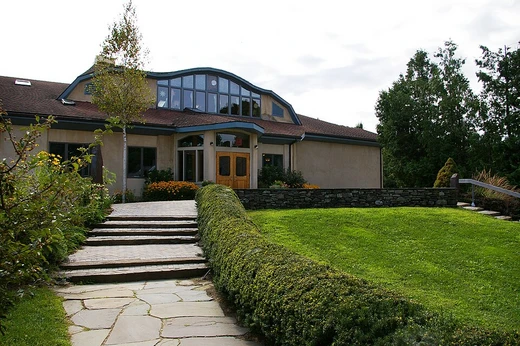
Kindergarten
Last updated
Kindergarten is a preschool educational approach that emphasizes play, singing, drawing, and social interaction to help children transition from home to school. The term was coined by German pedagogue Friedrich Fröbel, and his methods have influenced early-years education worldwide. Today, kindergarten refers to various institutions for children aged two to six, employing diverse teaching methods.
Quick Facts
- Coined by
- Friedrich Fröbel
- Year coined
- 1840
- Origin country
- Germany
- Etymology
- German for 'garden of children'
Facts from the source article.
History
In 1779, Johann Friedrich Oberlin and Louise Scheppler founded an early establishment in Strasbourg for caring for preschool children whose parents were absent during the day. Similar infant establishments appeared in Bavaria around 1780. Princess Pauline zur Lippe established a preschool center in Detmold in 1802. Robert Owen opened the first British infants school in New Lanark, Scotland, in 1816, aiming to give children moral education for work.
Samuel Wilderspin opened his first infant school in London in 1819 and later published works on the subject, with play being central to his system; he is credited with inventing the playground. Countess Theresa Brunszvik, influenced by Johann Heinrich Pestalozzi, opened an Angyalkert in Buda in 1828, founding eleven care centers and an institute for preschool centers in 1836, an idea that spread among the nobility and middle class in the Kingdom of Hungary.
By country
In Afghanistan, kindergartens (کودکستان; وړکتون) serve children aged three to six and are often government-run but not part of the school system. Early childhood programs began during the Soviet occupation with 27 urban preschools in 1980, growing to over 270 by 1990, with 2,300 teachers caring for more than 21,000 children, mostly in Kabul and attached to schools, offices, or factories. These programs, based on the Soviet model, served children from three months to six years under the Department of Labor and Social Welfare.
After the Soviet withdrawal, civil war reduced kindergartens to 88 by 1995, and Taliban restrictions on female employment eliminated remaining centers in their areas. By 2007, about 260 centers served over 25,000 children. Though every government center is required to have an early childhood center, no governmental policies or institutions currently provide such services. In Australia, kindergarten varies by state: in Tasmania, New South Wales, and the Australian Capital Territory it is the first year of primary school; in Victoria it is a form of preschool; in Queensland it is for children around age four, preceding preschool and primary education.
Did You Know?
- The term is sometimes misspelled as kindergarden, a partial English calque.
- Friedrich Fröbel coined the term in 1840 from Kind ('child') and Garten ('garden'), literally meaning 'garden of children'.
More in Education & Schools
Sources
Compiled from Wikipedia and the sources listed below. Text from Wikipedia is available under CC BY-SA 4.0; this entry is adapted from it.
- Wikipedia: Kindergarten (CC BY-SA 4.0).
Spotted an error? Know more?
Reader corrections go straight into our review queue. Suggest an edit · How this site is sourced