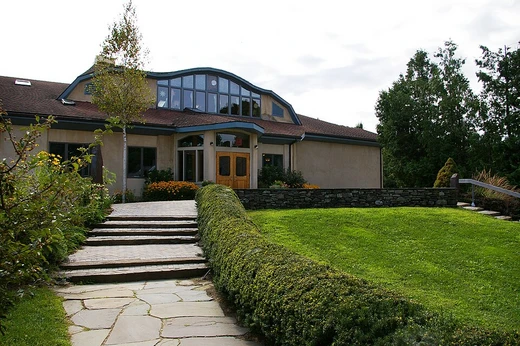
Boarding school
Residential schools where pupils live and study on campus.
A boarding school is an educational institution where pupils live on the premises while receiving formal instruction, a practice that has existed for many centuries across numerous countries. The term "boarding" refers to the provision of lodging and meals, and such schools vary greatly in their functioning, codes of conduct, and ethos. Boarding schools are relatively more prevalent in the United Kingdom, Switzerland, India, Russia, China, and parts of Africa, and in some cultures they serve as the most privileged educational option.
Quick Facts
- Type
- Educational institution
Facts from the source article.
Description
Many boarding schools around the world are modeled on classic British boarding schools. Senior teaching staff, such as housemasters, housemistresses, dorm parents, prefects, or residential advisors, take quasi-parental responsibility for students in their house or dormitory, especially outside school hours. In the United Kingdom or Commonwealth countries, a housekeeper known as a matron assists with domestic management, while a house tutor handles academic matters.
In the United States, dorm parents often live in the dorm, and janitorial staff handle maintenance, but tutors are not typically associated with individual dorms. Older students may have less supervision, and a system of monitors or prefects grants limited authority to senior students. Houses develop distinctive characters, and healthy rivalry between houses is often encouraged in sports. Houses or dorms usually include study-bedrooms or dormitories, a dining room or refectory, a library, and possibly study carrels.
Common rooms for television and relaxation, kitchens for snacks, and storage for bicycles or sports equipment may also be provided. Some schools have students of all ages in each house, with a prefect system giving older students privileges and responsibility for younger ones; other schools separate houses by year or class. Day students may be assigned to a dorm or house for social and sports activities.
History
The tradition of sending children, especially boys, to live and learn with others is ancient, with records in classical texts and over a thousand years of documentation in the UK. In early medieval Europe, boys were educated by literate clergy in monasteries or as pages in noble households. The King’s School, Canterbury, often considered the oldest boarding school, began with a monastery school around 597 AD. A 1050s account describes a Westminster schoolboy being quizzed on grammar by Queen Editha in the abbey cloisters.
Most monastic schools were closed under Henry VIII, though Westminster School survived by royal decree. Winchester College (1382) and Oswestry School (1407) are the oldest continuously running boarding schools. In Britain, boarding schools originated when boys learned from literate clerics in monasteries or noble homes. In the 12th century, the Pope required Benedictine monasteries to run charity schools, and many public schools emerged when these began admitting fee-paying students.
These schools mirrored Oxford and Cambridge colleges and were staffed almost entirely by clergy until the 1800s. Private home tutoring remained typical for aristocratic families and girls, but after the 1500s, group education for teenagers of all social ranks grew more common. Boarding preparatory schools generally mirror the public schools they prepare students for, often with formal or informal ties to specific institutions.
Sociological issues
Some elite university-preparatory boarding schools are seen by sociologists as centers of socialization for the next generation of the political upper class, reproducing an elitist class system. Families who value power and hierarchy send their children to these schools, sharing a sense of entitlement to social class and power. Elite boarding school students are brought up with the assumption that they are meant to control society, and significant numbers enter the political upper class or join the financial elite in fields such as international banking and venture capital.
This socialization, termed "deep structure socialization" by Peter Cookson and Caroline Hodges (1985), involves controlling not only students' physical lives but also their emotional lives. Boarding school establishment involves control of behavior regarding several aspects of life, which adolescents may consider intrusive, and this socialization persists after leaving school. Nick Duffell states that the education of the elite in the British boarding school system leaves the nation with a cadre of leaders who perpetuate a culture of elitism, bullying, and misogyny.
According to Peter W Cookson Jr (2009), the elitist tradition of preparatory boarding schools has declined due to the development of the modern economy and the political rise of the liberal west coast of the United States.
Psychological issues
The round-the-clock habitation of students in the same environment for studying, sleeping, and socializing can lead to pressures and stress, manifested as hypercompetitiveness, use of recreational or illegal drugs, and psychological depression that may at times lead to suicide or its attempt. Studies show that about 90% of boarding school students acknowledge that living in a total institution has a significant impact and changes their perception and interaction with social relationships.
Children may be sent to boarding schools for more opportunities than their families can provide, but this involves spending significant parts of early life in what social-psychologist Erving Goffman described as a total institution, possibly experiencing social detachment. This may involve long-term separation from parents and culture, leading to homesickness and emotional abandonment, and may give rise to the phenomenon known as the "third culture kid" (TCK).
The classicist and poet Robert Graves, who attended six different preparatory schools at a young age during the early 20th century, wrote about his experiences. Some modern educational philosophies, such as constructivism and new methods of music training like Orff Schulwerk and the Suzuki method, make everyday interaction of child and parent integral to training and education. The European Union–Canada project "Child Welfare Across Borders" (2003) considers boarding schools as one form of permanent displacement of the child.
More in Education & Schools
Spotted an error? Know more?
Reader corrections go straight into our review queue. Suggest an edit · How this site is sourced