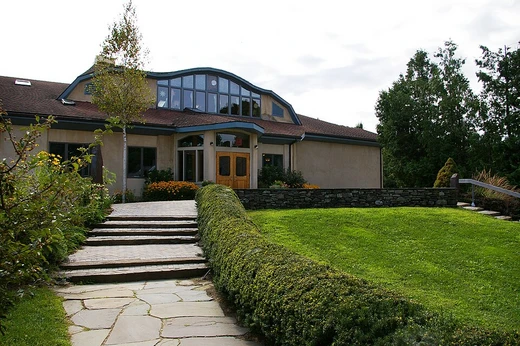
Comprehensive school
Non-selective secondary school for all pupils.
A comprehensive school is a secondary school that does not select its intake based on academic achievement or aptitude, serving pupils aged 11–16 or 11–18. The term is commonly used in relation to England and Wales, where such schools were introduced experimentally in the 1940s and became widespread from 1965. About 90% of English secondary school pupils attend comprehensive schools, which include various types such as academies, community schools, and faith schools.
Quick Facts
- Type
- Secondary school
- Region
- England and Wales, Australia, Scotland
- Key feature
- No academic selection for admission
- Proportion in england
- About 90% of secondary pupils
Facts from the source article.
Did You Know?
- All publicly funded primary and secondary schools in Scotland are comprehensive.
- The Scottish Government rejected plans for specialist schools as of 2005.
England and Wales
Comprehensive schools in England and Wales offer an entitlement curriculum to all children, without selection by financial considerations or attainment. This leads to a wider curriculum that includes practical subjects like design and technology and vocational learning, which were less common in grammar schools. Providing post-16 education cost-effectively is more challenging for smaller comprehensives due to the number of courses needed for a broader curriculum with fewer students, causing schools to grow larger and many local authorities to organise secondary education into 11–16 schools with post-16 provision at sixth form colleges and further education colleges.
Government initiatives such as City Technology Colleges and specialist schools programmes have expanded the comprehensive model. City Technology Colleges are independent urban schools, free to attend, funded by central government with company contributions, emphasising science and technology. Nearly 90% of state-funded secondary schools are specialist schools, receiving extra funding to develop one or more subjects and may select up to 10% of their intake for aptitude in that specialism, though they take quotas from each quartile of the attainment range to avoid selection by attainment.
Australia
Australia began transitioning to comprehensive schooling in the 1950s, with the first comprehensive schools appearing then. Prior to this, state schools regularly measured students' academic merit based on public examination performance. Western Australia was the first state to replace selective school systems, followed by Queensland, then South Australia and Victoria. The Australian education system comprises three compulsory school types: Primary school (seven or eight years, kindergarten to Year 6 or 7), Secondary school (three or four years, Year 7 or 8 to Year 10), and Senior Secondary school (two years, Years 11 and 12). Each tier follows a comprehensive curriculum with subject sequences for each year-level, and students must complete these sequences to graduate.
More in Education & Schools
Spotted an error? Know more?
Reader corrections go straight into our review queue. Suggest an edit · How this site is sourced