Preschool
Early childhood education before primary school.
Last updated
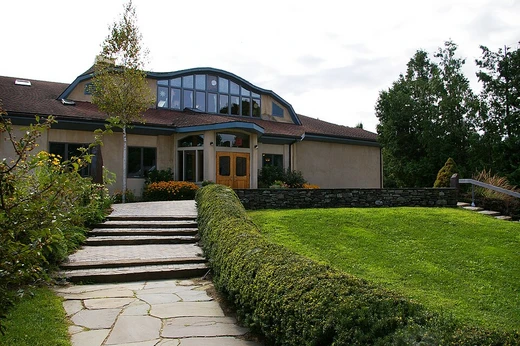
A preschool (sometimes spelled as pre school or pre-school), also known as pre-primary school, play school, or nursery school, is an educational establishment or learning space offering early childhood education to children before they begin compulsory education at primary school. It may be publicly or privately operated and may be subsidized from public funds. The typical age range for preschool in most countries is from 4 to 6 years (preschool to kindergarten).
Quick Facts
- Field
- Early childhood education
- Typical age range
- 4 to 6 years (preschool to kindergarten)
- Alternative names
- Pre-primary school
- play school
- nursery school
Facts from the source article.
Lore & Background
In 1779, Johann Friedrich Oberlin and Louise Scheppler founded in Strasbourg an early establishment for caring for and educating pre-school children whose parents were absent during the day. In 1816, Robert Owen opened the first British and probably globally the first infant school in New Lanark, Scotland. Samuel Wilderspin opened his first infant school in London in 1819 and published 'On the Importance of Educating the Infant Poor' in 1823. Countess Theresa Brunszvik opened an 'Angyalkert' on 27 May 1828 in Buda.
Friedrich Fröbel opened a Play and Activity institute in 1837 in Bad Blankenburg, which he renamed Kindergarten on 28 June 1840. The first Kindergarten in the United States was founded in Watertown, Wisconsin in 1856. Elizabeth Peabody founded America's first English-language kindergarten in 1860.
The first free kindergarten in America was founded in 1870 by Conrad Poppenhusen. The first publicly financed kindergarten in the United States was established in St. Louis in 1873 by Susan Blow. Canada's first private kindergarten was opened in Charlottetown, Prince Edward Island in 1870. Head Start was the first publicly funded preschool program in the US, created in 1965 by President Johnson for low-income families.
Reader's Guide
Preschool education covers developmental areas including personal, social and emotional development; communication, language, and literacy; mathematical development; knowledge and understanding of the world; physical development; and creative, expressive, and aesthetic development. The most important years of learning begin at birth, with the first three years critical for language acquisition, socialization, and attitudes to learning.
High quality and well trained teachers and developmentally-appropriate programmes can have long-term effects, especially for disadvantaged students. Some studies dispute the benefits of preschool education, finding it can be detrimental to cognitive and social development, and that the home environment has a greater impact on future outcomes. There is emerging evidence that high-quality preschools are 'play based' rather than attempting early formal instruction.
Frequently Asked Questions
What is Preschool?
Preschool is a learning environment that provides early childhood education to young children before they enter compulsory primary school. It can be run by public or private operators and may receive government funding.
What age range does Preschool cover?
In most countries, preschool typically serves children between the ages of four and six, bridging the gap between home-based learning and formal primary education.
More in Education & Schools
Sources
Compiled from Wikipedia and the sources listed below. Text from Wikipedia is available under CC BY-SA 4.0; this entry is adapted from it.
- Wikipedia: Preschool (CC BY-SA 4.0).
Spotted an error? Know more?
Reader corrections go straight into our review queue. Suggest an edit · How this site is sourced