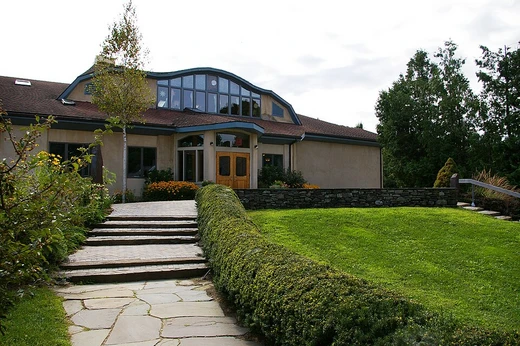
Free school (England)
State-funded, non-profit schools independent of local authority.
Free schools in England are state-funded academies that began under the 2010 coalition government’s free school policy. After May 2015, the term also covered new academies created through a local authority competition. Like other academies, they are non-profit, free to attend, and largely independent of the local authority.
Quick Facts
- Introduced
- 2010
- Government
- Conservative-Liberal Democrat coalition
- First opened
- Autumn 2011
- Legal basis
- Academies Act 2010, Education Act 2011
- Type
- State-funded, non-profit academy
Facts from the source article.
Did You Know?
- Free schools are governed by non-profit charitable trusts that sign funding agreements with the Education Secretary.
- A local authority can sponsor a free school in partnership with other organisations, provided it has no more than 19.9 per cent representation on the board of trustees.
Policy creation and implementation
Free schools were introduced by the Conservative-Liberal Democrat coalition after the 2010 general election as part of the Big Society initiative, enabling parents, teachers, charities and businesses to establish their own schools. They extend the existing academies programme. The Academies Act 2010 authorised both the conversion of existing state schools to academies and the creation of free schools. The first 24 free schools opened in autumn 2011.
The Education Act 2011 introduced the academy/free school presumption, requiring local authorities needing a new school to seek proposals for an academy or free school unless none is proposed. In July 2015 this advice was renamed the free school presumption, reflecting that all new academies established after May 2015 are considered free schools. The concept draws on similar schools in Sweden, Chile, New Zealand, Canada, and the United States, and has been compared to charter schools in Canada and the US.
Requirements
Free schools must follow the same School Admissions Code as other state-funded schools, but oversubscribed faith-designated free schools must allocate at least half of places without regard to faith under the 50% Rule. They are expected to offer a broad and balanced curriculum, undergo Ofsted inspections like other maintained schools, and comply with standard performance measures. Founding groups—including parents, education charities, and religious groups—submit applications to the Department for Education. Start-up grants are provided, and ongoing funding is equivalent to other locally controlled state maintained schools.
Types of free school
Most free schools are similar in size and shape to other academies, but there are distinctive sub-types. Studio schools are small free schools, usually with around 300 pupils, using project-based learning. University Technical Colleges are free schools for the 14–18 age group, specialising in practical, employment-focused subjects and sponsored by a university, employer or further education college. Maths schools are selective sixth form free schools for students with significant mathematical aptitude, specialising in mathematics and sponsored by a selective mathematics university.
The Department for Education publishes and maintains the list of established and planned free schools. Approvals are processed in batches called waves. Wave 1 began in autumn 2010 when Education Secretary Michael Gove announced 16 proposals greenlit to open in September 2011, eventually growing to 24; five of the original 16 were faith schools. Wave 2 saw 55 new free schools open in September 2012.
Wave 3 received 234 applications, with 102 approved to progress to pre-opening for September 2013. Wave 4 approved 102 schools for September 2014. Waves 5, 6, and 7 pre-approved 11, 38, and 35 schools respectively. Wave 8 pre-approved 49 applications in March 2015.
Discussion
When the free school policy was first introduced, some people gave advice to those thinking of starting one, while others doubted it could ever succeed. Supporters, including the Conservative Party, argued that free schools would boost local competition and raise standards, and give parents more choice over their children's schooling, similar to what parents at independent schools enjoy. Critics, however, claimed the policy would mainly help middle-class families who had the time to set up a school, and would take money away from existing schools.
Supporters replied that children from all backgrounds would gain. There was also worry that free schools do not have to limit headteachers' pay. A study of the Swedish model that partly inspired the policy found that Swedish students did not seem hurt by competition from private schools, but the new schools had not yet improved overall results. Peter Wilby thought free schools would end up run by private companies, not parents or volunteer groups.
The New Schools Network was later created to help groups learn how to set up free schools. Paul Carter, a Conservative councillor, said that under the funding rules at the time, the more academies and free schools there were, the less money other state schools would get. The Department for Education then changed the funding system so that all schools in similar situations and with similar students receive similar funding, no matter what type they are.
More in Education & Schools
Spotted an error? Know more?
Reader corrections go straight into our review queue. Suggest an edit · How this site is sourced