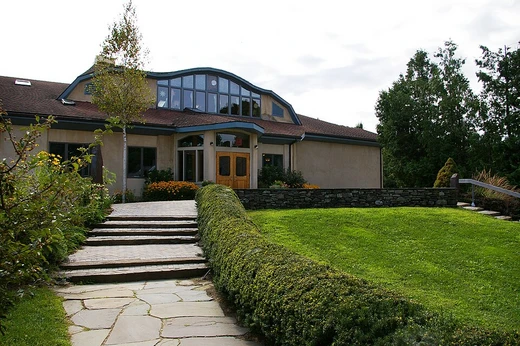
Infant school
Last updated
An infant school is a type of school or school department for young children, primarily in England and Wales. In the Republic of Ireland, the first two years of primary school are called infant classes. Established in the United Kingdom from 1816, infant schools spread internationally and were integrated into state school systems by the mid-19th century.
Quick Facts
- Type
- School or school department
- Region
- England and Wales (primary); Republic of Ireland (infant classes)
- First founded
- 1816 in New Lanark, Scotland
- Integration into state system
- Mid-19th century
Facts from the source article.
History
The first infant school was founded in New Lanark, Scotland, in 1816, followed by other philanthropic infant schools across the United Kingdom. Early childhood education was a new concept at the time, seen as a potential solution to social problems related to industrialisation. Numerous writers published works on the subject and developed a theory of infant teaching, including moral education, physical exercise and an authoritative but friendly teacher.
The movement quickly spread across the British Empire, Europe and the United States, and was used by missionary groups to convert non-Christian subjects. In England and Wales, infant schools maximised education before children left for work and were valued as childcare. State-funded schools were advised in 1840 to include infant departments. A similar process occurred in Ireland after 1831.
As infant education was integrated into state systems, it shifted towards rote learning to achieve quick academic progress. Kindergarten methods had limited influence in the late 19th century. From 1905, infant education in England and Wales moved towards child-centred methods, and many under-fives were removed, though some nursery classes later attached. The child-centred approach peaked after a 1967 report, but a more centralised curriculum was introduced in 1988, with moves away from it in Wales after devolution.
In Ireland, a child-centred direction was initially followed, then a return to rote learning after independence to revive the Irish language, reversed from 1948.
Definition and scale
The term infant school is used in the United Kingdom, referring to a separate school or a department within a larger school. Dictionaries give various age ranges: Cambridge says four to seven, Collins five to seven, Merriam-Webster five to seven or eight, and Oxford states usually under seven. A 2013 UK government document described infant (5 to 7 or 8) as the middle phase of primary education in England and Wales, noting that in Scotland and Northern Ireland there is generally no distinction between infant and junior schools.
In the Republic of Ireland, the first two years of regular primary school are junior infants and senior infants, with infant or junior-primary schools sometimes also including first or second class. In 2018, about 10% of children in England attended separate infant schools or first schools, with approximately 1,700 such schools, 1,000 fewer than a decade earlier.
An analysis suggested similar academic attainment for these children. There were 28 separate infant schools in Wales at that time. The final separate infant school in Scotland closed in July 2024.
Curriculum and debates
The first school year for four and five year olds in England is called Reception, integrated into preschool education, followed by Key Stage 1 for five to seven year olds. In Wales, attainment levels are called progression steps, with the first expected at about five years and the second at around eight. Scotland's first primary year is part of Early Level, including nursery education, with the next three years called First Level. The transition from play-based to formal instruction is debated among academics; some studies suggest early start benefits, while many indicate neutral or negative long-term effects.
In England, the shift occurs at five years when children move from the Early Years Foundation Phase to Key Stage 1, with government policy encouraging formal instruction in reading, writing and mathematics thereafter. Many countries make the change slightly older, though the divide is often blurred. Wales introduced the foundation phase in 2008 to move towards more informal learning for children up to seven. In the 2020s, concerns have arisen that many children start school with limited communication and personal care skills, linked by some experts to the cost of living crisis and the COVID-19 pandemic.
More in Education & Schools
Sources
Compiled from Wikipedia and the sources listed below. Text from Wikipedia is available under CC BY-SA 4.0; this entry is adapted from it.
- Wikipedia: Infant school (CC BY-SA 4.0).
Spotted an error? Know more?
Reader corrections go straight into our review queue. Suggest an edit · How this site is sourced