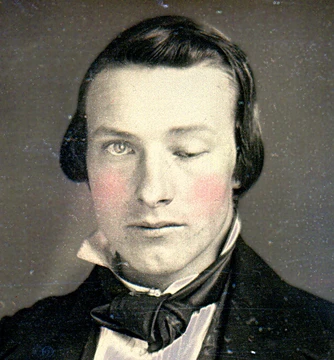
Stye
A bacterial eyelid gland infection causing a red, tender bump.
Last updated
A stye, also known as a hordeolum, is a bacterial infection of an oil gland in the eyelid that produces a red, tender bump at the eyelid margin. It is notable as a common condition caused primarily by Staphylococcus aureus, with external styes arising from the gland of Zeis and internal styes from the meibomian gland.
Signs and symptoms
The first sign is a small, yellowish spot at the center of the bump as pus develops and expands. Other symptoms include a lump on the top or bottom eyelid, localized swelling, pain, redness, tenderness, crusting of the eyelid margins, burning in the eye, droopiness of the eyelid, a scratchy sensation on the eyeball, blurred vision, mucous discharge, eye irritation, light sensitivity, tearing, discomfort during blinking, and a sensation of a foreign body in the eye.
Complications are rare but can include progression to a chalazion, which may cause cosmetic deformity and corneal irritation, or eyelid cellulitis. Improper surgical lancing may disrupt lash growth, cause lid deformity, or create a lid fistula. Systemic spread is extremely rare.
Prevention
Proper hand washing reduces the risk of developing styes and other infections. Applying a warm washcloth to the eyelids for one to two minutes upon awakening may help liquefy oil gland contents and prevent blockage.
Cosmetics and cosmetic eye tools should not be shared, and contaminated eye makeup should be discarded. Sharing washcloths or face towels should be avoided, and the eyes should not be rubbed with unclean hands. Breaking the stye may spread bacteria and should be avoided.
Treatment
Most styes resolve on their own within one to two weeks without professional care. The primary treatment is warm compresses. The affected eyelid may be gently cleansed with tap water or a mild, nonirritating soap or shampoo while the eyes are closed. People should avoid eye makeup, lotions, and contact lenses, as these can aggravate and spread the infection.
Self-lancing is discouraged due to risk of serious infection. Pain relievers such as ibuprofen may be used. Evidence for antibiotic eye ointment is poor; occasionally erythromycin ophthalmic ointment is recommended. Chloramphenicol is used in many parts of the world but carries a black box warning in the United States due to risk of aplastic anemia.
If resolution does not begin within 48 hours after starting warm compresses, an incision and drainage procedure may be performed. Surgery is a last resort for styes that do not respond to other therapies, performed by an ophthalmologist under local anesthesia, with a small incision to drain pus and sometimes sutures. A 2017 Cochrane review found low-certainty evidence that acupuncture may help, but the authors could not rule out placebo or observer effects.
Etymology
The word stye, first recorded in the 17th century, is probably a back-formation from styany (15th century), which comes from styan plus eye. Styan derives from Old English stīġend, meaning 'riser', from the verb stīgan, 'to rise'.
The older form styan is still used in Ulster Scots. The homonym sty in pigsty has a different origin, from Old English stiġ-fearh. The late Latin term hordeolum is related to hordeum ('barley'), after the bump's resemblance to a barleycorn.
Did You Know?
- Causes include malnutrition, sleep deprivation, poor hygiene, lack of water, and rubbing the eyes.
- Styes can be secondary to blepharitis or immunoglobulin deficiency.
- The removed stye is sometimes sent for histopathological examination to investigate the possibility of skin cancer.
More in Disorders of Eyelid, Lacrimal System and Orbit
Sources
Compiled from Wikipedia and the sources listed below. Text from Wikipedia is available under CC BY-SA 4.0; this entry is adapted from it.
- Wikipedia: Stye (CC BY-SA 4.0).
- Word definitions: the , each quoted from its Wikipedia article.
Spotted an error? Know more?
Reader corrections go straight into our review queue. Suggest an edit · How this site is sourced