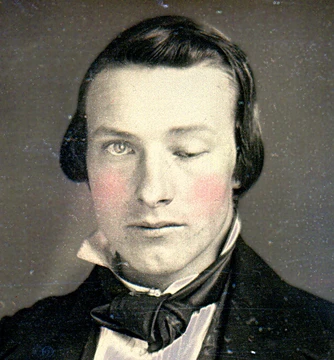
Blepharospasm
Intermittent eyelid spasms that can cause functional blindness.
Last updated
Blepharospasm is a neurological disorder marked by involuntary, intermittent spasms of the orbicularis oculi muscles around both eyes, which can lead to sustained eyelid closure and functional blindness. It belongs to a group of movement disorders known as dystonia and may occur as a primary condition of unknown cause or secondary to other diseases. The term derives from Greek words for eyelid and spasm, and it is distinct from the milder eyelid quivering called myokymia.
Epidemiology
Blepharospasm is a fairly rare disease, with incidence estimates ranging from 14.5 per million person-years in Northern California to 100 per million in Taiwan. Prevalence estimates vary from 12 per million in Olmsted County, Minnesota, to 133 per million in Puglia, Southern Italy. Onset typically occurs between ages 40 and 60, and the condition is more than twice as common in females than males, possibly linked to menopause and hormone treatments. In Taiwan, it is more frequent among white-collar workers than blue-collar workers.
Signs and symptoms
The condition usually begins with occasional twitches of both eyelids that progress to forceful, frequent spasms and contractions. In severe episodes, patients cannot open their eyelids (apraxia), leading to functional blindness and severely limited daily activities. Sensory symptoms such as light sensitivity, dry eyes, burning sensation, and grittiness often precede the spasms.
Symptoms tend to worsen during relaxation but abate during sleep, and may be temporarily relieved by sensory tricks like rubbing the eyebrows or humming. Fatigue, stress, wind, and air pollution aggravate the condition. Although typically bilateral, some research reports unilateral onset.
Causes
Blepharospasm was historically attributed to abnormal functioning of the brain's basal ganglia, but it is now understood to involve multiple brain regions and is considered multifactorial, with unknown genes, epigenetic factors, and environmental influences combining to trigger the disease. It is often associated with dry eyes, though the causal mechanism remains unclear; increased blinking triggered by dry eyes may lead to blepharospasm, and a case-control study in China found that blepharospasm aggravated dry eyes.
The condition may also be linked to Meige's syndrome, Parkinson's disease (causal mechanism unclear), and rarely multiple sclerosis. Certain drugs, including those for depression and Parkinson's disease, can induce blepharospasm, and hormone replacement therapy in menopausal women is associated with dry eyes, which in turn is associated with blepharospasm. Rarely, concussions from a blow to the back of the head can damage the basal ganglia and cause blepharospasm. Sun exposure is also associated with the condition.
Treatment
Standard first-line treatments include conservative therapies, oral medication, and periodic injections of botulinum toxin. When associated with dry eyes, warm compresses, eye drops, and eye wipes may provide relief; a Japanese study found warm compresses containing menthol more effective at increasing tear film. Oral medications used are anticholinergics, benzodiazepines, baclofen, and tetrabenazine, with benefit rates ranging from 1 in 9 patients in Oregon to 1 in 5 in England; some drugs carry side effects, and in Japan etizolam and benzodiazepine use was linked to development of blepharospasm.
A case report from Sri Lanka suggests treatment with Mosapride. The main first-line therapy is periodic injections of botulinum toxin type A, typically every 10 weeks, providing fairly quick relief; an English study reported 78% of 151 patients experienced significant symptom relief for a mean of 9.2 weeks. However, a minority receive no relief, and effectiveness may diminish with prolonged use, requiring increased dosage. Injections raise the risk of visual complaints and ptosis.
For patients unresponsive to medication or injections, surgical options include protractor myectomy (removal of eyelid-closure muscles), which is more effective than distal neurectomy.
Did You Know?
- No laboratory tests exist to definitively diagnose blepharospasm; historically it was often misdiagnosed as a psychiatric condition.
- Diagnostic criteria have been proposed starting from stereotyped, bilateral and synchronous orbicularis oculi spasms and identifying a sensory trick or increased blinking, validated across multiple ethnicities.
More in Disorders of Eyelid, Lacrimal System and Orbit
Sources
Compiled from Wikipedia and the sources listed below. Text from Wikipedia is available under CC BY-SA 4.0; this entry is adapted from it.
- Wikipedia: Blepharospasm (CC BY-SA 4.0).
- Word definitions: the , each quoted from its Wikipedia article.
Spotted an error? Know more?
Reader corrections go straight into our review queue. Suggest an edit · How this site is sourced