Chalazion
A painless eyelid granuloma from a blocked meibomian gland.
Last updated
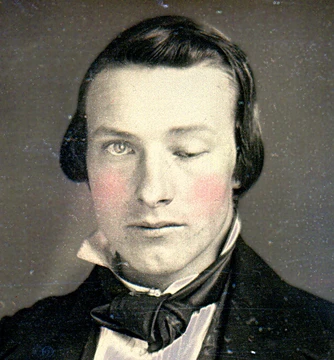
A chalazion, also called a meibomian cyst, is a granuloma of the eyelid resulting from a blocked meibomian gland. It typically appears as a red, painless swelling in the middle of the eyelid that develops gradually over a few weeks. The condition is most common in people aged 30–50 years and affects males and females equally.
Signs and symptoms
The presentation includes a painless swelling on the eyelid with none-to-mild tenderness, increased tearing, heaviness of the eyelid, and redness of the conjunctiva. A large chalazion can cause astigmatism by pressing on the cornea. After laser eye surgery, even small chalazia may predispose the cornea to deformation. A chalazion that recurs in the same area may rarely indicate sebaceous carcinoma.
Treatment
Many chalazia resolve without treatment within a few months, and nearly all resorb within two years. Healing can be promoted by applying a moist warm compress to the affected eye for 10–15 minutes four times daily, which softens the hardened oil blocking the duct. Scrubbing the lid margin with a washcloth and mild baby shampoo helps remove oily debris. Topical antibiotic eye drops or ointment, such as chloramphenicol or fusidic acid, are sometimes used for initial acute infection but are otherwise of limited value.
If the lesion continues to enlarge or does not settle within a few months, smaller ones may be injected with a corticosteroid; complications of such injection include hypopigmentation and fat atrophy, which are less likely with a conjunctival approach. Larger chalazia can be surgically removed under local anesthesia, usually from underneath the eyelid to avoid a skin scar, though an excision from above may be chosen if the chalazion lies directly under the outer tissue.
The procedure varies by texture: fluid matter can be removed by puncturing and applying pressure, while hardened matter requires a larger incision for scraping. Residual matter is metabolized during healing, aided by regular dry heat. Excision of larger chalazia may cause visible hematoma that fades within three or four days, with swelling lasting longer. The procedure is ambulant, typically under fifteen minutes, and should only be performed by a medical professional due to risks of infection and eyelid damage.
Recurrent chalazia are usually biopsied to rule out a tumour. A limited course of topical antibiotic/corticosteroid combination eyedrops or ointment, such as tobramycin/dexamethasone, may also be effective.
More in Disorders of Eyelid, Lacrimal System and Orbit
Sources
Compiled from Wikipedia and the sources listed below. Text from Wikipedia is available under CC BY-SA 4.0; this entry is adapted from it.
- Wikipedia: Chalazion (CC BY-SA 4.0).
- Word definitions: the , each quoted from its Wikipedia article.
Spotted an error? Know more?
Reader corrections go straight into our review queue. Suggest an edit · How this site is sourced