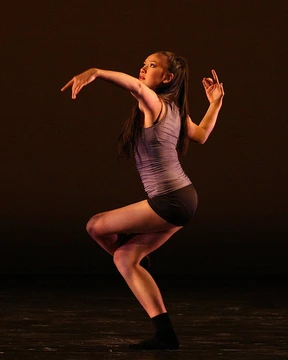
Martha Graham
American modern dancer who created the Graham technique.

Martha Graham (May 11, 1894 – April 1, 1991) was an American modern dancer, teacher, and choreographer who created the Graham technique, a pioneering movement system centered on the principles of "contraction and release" derived from a stylized conception of breathing. Her career spanned over seven decades, during which she became the first dancer to perform at the White House, the first to travel abroad as a cultural ambassador, and the first to receive the Presidential Medal of Freedom with Distinction, the highest US civilian award. She also received honors such as the Key to the City of Paris and Japan's Imperial Order of the Precious Crown.
Born in Allegheny City, Pennsylvania, Graham was raised in a Presbyterian family by her father, an "alienist" (an early psychiatrist), and her mother, a descendant of Myles Standish. Her family moved to California when she was fourteen. She saw her first dance performance in 1911, featuring Ruth St. Denis, and later studied at the Denishawn School. In 1922, she performed in a short silent film. After leaving Denishawn in 1923, she danced in the Greenwich Village Follies and worked at the Eastman School of Music with Rouben Mamoulian, producing a two-color film. In 1926, she established the Martha Graham Center of Contemporary Dance in New York and debuted her first independent concert of eighteen short works, though she later acknowledged its Denishawn influence. She taught at the Neighborhood Playhouse School of the Theatre from 1928. A close friendship with student Bethsabée de Rothschild led Graham to become the first director of Israel’s Batsheva Dance Company in 1965. In 1936, she refused an invitation to perform at the Berlin Olympics, citing the persecution of artists and the exclusion of some of her Jewish dancers, despite a personal assurance from Joseph Goebbels. This spurred her to create *American Document* in 1938, a patriotic work incorporating texts from the Declaration of Independence, the Gettysburg Address, and the Emancipation Proclamation. That same year, she became the first dancer to perform at the White House, invited by the Roosevelt family. Erick Hawkins joined her company in 1938 as its first male dancer; they married in 1948 and divorced in 1954.
- field
- Modern dance, choreography, teaching
- nationality
- American
- known_for
- Creating the Graham technique; first dancer to perform at the White House; recipient of Presidential Medal of Freedom with Distinction
Verified Timeline
Lore & Background
Martha Graham was born in Allegheny City, Pennsylvania, in 1894. Her father practiced an early form of psychiatry known as alienism, and the family were Presbyterians of Irish descent. Her mother claimed to be a tenth-generation descendant of Myles Standish. When Graham was fourteen, her family relocated to Santa Maria, California. She saw her first dance performance in 1911, watching Ruth St. Denis perform in Los Angeles. In the mid-1910s, she began studying at the Denishawn School, remaining there until 1923. After leaving Denishawn, she performed in the Greenwich Village Follies revue for two years, then worked at the Eastman School of Music. In 1926, she established the Martha Graham Center of Contemporary Dance in a small New York City studio and debuted her first independent concert, which consisted of eighteen short solos and trios. Graham pioneered a modern dance principle called "contraction and release," derived from a stylized conception of breathing. She was the first dancer to perform at the White House, invited by the Roosevelt family in 1938. That same year, Erick Hawkins became the first man to dance with her company; they married in 1948 and divorced in 1954. Graham refused an invitation to perform at the 1936 Berlin Olympics, citing the persecution of artists in Nazi Germany. In response to fascist propaganda, she created the patriotic work *American Document* in 1938, which incorporated readings from the Declaration of Independence, the Gettysburg Address, and the Emancipation Proclamation. She received the Presidential Medal of Freedom with Distinction, the Key to the City of Paris, and Japan's Imperial Order of the Precious Crown.
Reader's Guide
Martha Graham’s significance is rooted in her development of the Graham technique, a foundational system of modern dance built on the principle of “contraction and release,” which she derived from a stylized conception of breathing. Over a career spanning more than seventy years, she danced, taught, and choreographed, becoming the first dancer to perform at the White House, to travel abroad as a cultural ambassador, and to receive the Presidential Medal of Freedom with Distinction. Her honors also included the Key to the City of Paris and Japan’s Imperial Order of the Precious Crown. Graham’s work often engaged with political and social themes: in 1936, she refused an invitation to perform at the Berlin Olympics, citing the persecution of artists and the regime’s policies, despite a personal assurance from Joseph Goebbels that her Jewish dancers would be safe. In response to Axis propaganda, she created *American Document* (1938), a patriotic dance that incorporated readings from the Declaration of Independence, the Gettysburg Address, and the Emancipation Proclamation to express American ideals and counter fascist ideologies. She believed dance must reveal national characteristics to have validity and direct relation to life. Graham also established the Martha Graham Center of Contemporary Dance in 1926 and served as the first director of Israel’s Batsheva Dance Company, founded by her student and friend Bethsabée de Rothschild.
Did You Know?
- She collaborated with Japanese-American photographer Soichi Sunami in the 1920s.
More in Dance Pioneers 1-23
Spotted an error? Know more?
This is a living reference — every entry is fact-audited, and reader corrections feed straight into our audit queue. Suggest an edit · See this site's audit record