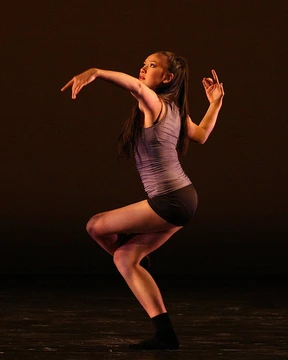
Benjamin Millepied
French dancer and choreographer who led major ballet companies.

Benjamin Millepied (born 10 June 1977) is a French dancer and choreographer. He began ballet training at age eight under his mother, a former dancer, and later studied at the Conservatoire National in Lyon. In 1992, he attended the School of American Ballet, returning full-time in 1993 on a French government scholarship. There, choreographer Jerome Robbins mentored him, and Millepied originated a principal role in Robbins’s 1994 premiere *2 and 3 Part Inventions*, also winning the Prix de Lausanne that year.
He joined the New York City Ballet in 1995, becoming a soloist in 1998 and a principal dancer in 2002. He choreographed for NYCB and other major companies, including American Ballet Theatre, the Paris Opera Ballet, and the Metropolitan Opera. From 2006 to 2007, he was choreographer-in-residence at the Baryshnikov Arts Center. He retired from NYCB in 2011.
That year, Millepied founded the LA Dance Project, leading it until 2014. The company’s inaugural performance was at Walt Disney Concert Hall in September 2012. Its first program included his premiere *Moving Parts*, a revival of Merce Cunningham’s *Winterbranch*, and William Forsythe’s *Quintett*. The company later established a residency at Los Angeles Theatre Center and, in 2016, formed a three-year partnership with the LUMA Foundation in Arles, France.
He served as Director of Dance at the Paris Opera Ballet from October 2014 until his resignation in February 2016. During his tenure, he appointed William Forsythe as associate choreographer, created a digital platform for new work, and organized dancer exchanges with the Mariinsky and American Ballet Theatre. A documentary, *Reset*, followed his first production there.
Millepied choreographed and performed in the 2010 film *Black Swan* and choreographed the “sandwalk” sequence in *Dune*. He has commissioned works from composers including Nico Muhly, Philip Glass, and David Lang.
- field
- Dancer, choreographer
- nationality
- French
- known_for
- New York City Ballet principal, LA Dance Project founder, Paris Opera Ballet director, choreography for Black Swan and Dune
Quick Facts
- Birth Date
- df=yes · 1977 · 06 · 10
- Birth Place
- Bordeaux, France
- Occupation
- Choreographer · ballet dancer
- Education
- Conservatoire National / School of American Ballet
- Years Active
- 2001–present
- Current Group
- L.A. Dance Project
- Former Groups
- New York City Ballet
- Spouse
- Natalie Portman · 2012 · 2024 · end=divorced
- Children
- 2
Facts from the source article.
Lore & Background
Benjamin Millepied was born in Bordeaux, France, as the youngest of three sons. He began ballet training at age eight under his mother, Catherine Flory, a former dancer, and later studied with Michel Rahn at the Conservatoire National in Lyon from ages 11 to 16. After attending the School of American Ballet in 1992, he returned full-time in 1993 on a French Ministry scholarship. He originated a principal role in Jerome Robbins’ premiere of *2 and 3 Part Inventions* at the school’s 1994 Spring Workshop and won the Prix de Lausanne. Millepied joined the New York City Ballet in 1995, became a soloist in 1998, and a principal dancer in 2002, retiring in 2011. He choreographed for NYCB, American Ballet Theatre, the Metropolitan Opera, the Paris Opera Ballet, and others, and was choreographer-in-residence at the Baryshnikov Arts Center from 2006 to 2007. He founded the LA Dance Project in 2011, leading it until 2014, and served as Director of Dance at the Paris Opera Ballet from October 2014 to 2016, where he brought in William Forsythe as associate choreographer and established a digital platform for new work. Millepied choreographed and performed in the 2010 film *Black Swan* and choreographed the “sandwalk” in *Dune*.
Reader's Guide
Benjamin Millepied's significance lies in his dual career as a leading dancer and a choreographer who bridged classical ballet and contemporary dance. As a principal with the New York City Ballet, he performed and created works for major companies. His founding of the LA Dance Project established a new platform for collaborative, multimedia dance in Los Angeles. His tenure as Director of Dance at the Paris Opera Ballet, though brief, introduced reforms including an in-house choreography academy and digital initiatives. His choreography for the film Black Swan brought ballet to a wide audience, and his work on Dune demonstrated his versatility. Millepied's career reflects a modern trajectory for a dancer: moving from company performer to independent artistic director, while engaging with film, fashion, and visual art. His legacy includes fostering new choreographic talent and expanding the reach of dance beyond traditional stages.
The Presence Collaboration
The most documented intersection between Benjamin Millepied and the wider digital art world is his collaboration on Presence, a motion capture project developed alongside Universal Everything and The LA Dance Project. This work is catalogued among the studio's most notable achievements, a list that also includes commissions for major global corporations and cultural institutions. The partnership brought together Millepied's dance practice with a Sheffield-based design collective known for pushing the boundaries of digital media. The involvement of The LA Dance Project suggests a collective, ensemble-based approach to the movement captured in the piece, positioning it as a shared creative effort rather than a solo statement. The work's designation as innovative within the studio's own notable works roster underscores its significance as a boundary-pushing project that fused live dance with digital technology.
Technology as a Creative Partner
Universal Everything's toolkit—3D printing, touch screens, motion capture, large-format video displays, and complex sound design—provides the technological framework within which Millepied's Presence was realized. Motion capture sits precisely at the intersection of the studio's capabilities and a dancer's physical artistry, translating the human body into digital form. The studio's broader body of work demonstrates a consistent fascination with human movement and figurative forms, themes that align naturally with a choreographer's practice. The Hype Cycle series, which explores human-machine collaboration, resonates directly with the nature of a motion capture project where a dancer's body becomes the raw material for digital creation. Millepied's involvement in Presence places him within an ecosystem of artists who view technology not as a replacement for the human body but as an extension of its expressive potential.
Human Form and Digital Expression
The artistic DNA of Universal Everything—referencing synesthesia, anthropomorphism, human movement, and figurative forms—creates a natural creative language for a dancer like Millepied to inhabit. The studio's work frequently centers the human body and its interactions with space, making a motion capture collaboration a logical creative convergence. The Vehicle of Nature, an installation inspired by Leonardo da Vinci's studies of flowing water, and Tribes, a study of human behavior on a mass scale, both demonstrate the studio's fascination with organic, bodily processes rendered through digital means. Millepied's Presence fits within this lineage of works that use technology to explore what it means to move, to exist in physical space, to be perceived.
A Place in the Broader Digital Art Landscape
While Millepied's name appears in the Universal Everything context primarily through Presence, the broader ecosystem surrounding that work speaks to the significance of the collaboration. The studio's artworks have been exhibited at institutions including the Museum of Modern Art in New York, the V&A in London, the Central Academy of Fine Arts in Beijing, and the Garage Centre for Contemporary Culture in Moscow. The collaboration thus positions Millepied's dance voice within a global conversation about digital art, movement, and technological innovation.
More in Dance Pioneers 1-23
Spotted an error? Know more?
This is a living reference — every entry is fact-audited, and reader corrections feed straight into our audit queue. Suggest an edit · See this site's audit record