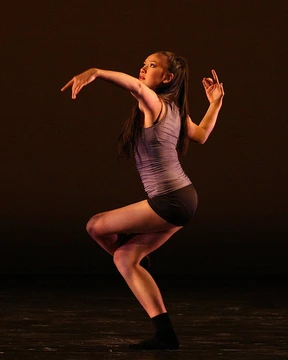
Alvin Ailey
Founder of the Alvin Ailey American Dance Theater.

via Wikipedia: Alvin Ailey · see source
Alvin Ailey Jr. was born on January 5, 1931, in Rogers, Texas, and died on December 1, 1989. He worked as a dancer, director, choreographer, and activist. In 1958, he established the Alvin Ailey American Dance Theater (AAADT), and the following year, he founded the Clark Center for the Performing Arts. He designed both AAADT and its associated school—originally the Alvin Ailey American Dance Center, later renamed the Ailey School—as safe spaces to support Black artists and to convey the shared human experience of African-American life through movement.
Ailey’s work brought together theater, modern dance, ballet, jazz, and Black vernacular traditions, resulting in hopeful choreography that is widely credited with increasing global understanding of Black life in the United States. His most famous piece, *Revelations*, is considered one of the world’s most popular and frequently performed ballets.
On July 15, 2008, the U.S. Congress passed a resolution naming AAADT a “vital American cultural ambassador to the World.” That same year, to mark the company’s 50th anniversary, New York City Mayor Michael Bloomberg declared December 4 “Alvin Ailey Day,” and New York State Governor David Paterson honored the organization on behalf of the state.
Ailey was born to Alvin Ailey and Lula Elizabeth Cliff in his maternal grandfather’s home during the Great Depression. Growing up in the violently racist and segregated South, he was kept from mainstream society. When he was five, his mother was raped by four white men, one of whom may have been an employer, and Ailey recalled seeing Ku Klux Klan members as a child. His father abandoned the family shortly after his birth, leaving Lula to pick cotton and work as a domestic—the only jobs open to her. By age five, Ailey joined her in the cotton fields. After the 1936 assault on his mother, he developed a fear of white men. To cope, he turned to the church, sneaking out at night to watch adults dance, and kept a journal throughout his life. Still, his childhood was marked by constant moves as his mother looked for work, and he was often left with relatives when she left on her own.
In 1941, his mother moved to Los Angeles for better job prospects. Ailey joined her the next year, enrolling at George Washington Carver Junior High School and later graduating from Thomas Jefferson High School. There, he explored the arts: he sang in glee club, wrote poetry, and took gymnastics. He frequently attended the Lincoln and Orpheum Theatres, where he saw performers like Pearl Bailey, Fletcher Henderson, Billie Holiday, Lena Horne, Pigmeat Markham, Count Basie, and Duke Ellington. In 1946, he saw concert dance for the first time—Ballet Russe de Monte-Carlo on a school trip and the Katherine Dunham Dance Company’s “Tropical Review” on his own—which sparked a new joy in him.
Also during high school, Ailey recognized his homosexuality, which added another layer of difference and isolation to his racial segregation. As a result, “like many young gay men eager to corral the sensual impulses of the body, he turned to dance study.” He briefly studied tap and then “primitive dance” taught by Dunham dancer Thelma Robinson, but neither suited him, possibly because of the locations and old-fashioned approach. He did not take dance seriously until 1949, when his friend and classmate Carmen De Lavallade brought him to Lester Horton’s Melrose Avenue studio, where he began modern dance.
At Horton’s school—one of the first racially integrated dance schools in the U.S.—Ailey studied a wide range of styles, from ballet to Native American-inspired movement. Horton became his mentor, but Ailey did not commit to dance full-time, aware of the limited opportunities for Black male dancers. Instead, he took academic courses in romance languages and writing at UCLA (1949), Los Angeles City College (1950–1951), and San Francisco State University (1952). Between courses, he sporadically returned to Horton. In San Francisco, he met Maya Angelou (then Marguerite Johnson), and together they formed a nightclub act called “Al and Rita.” Eventually, he went back to Los Angeles to study dance with Horton.
Ailey joined Horton’s dance company in 1953. There, he took daily technique classes, studied art and music, and taught children’s classes. That year, he debuted in Horton’s *Revue Le Bal Caribe*. During a summer workshop in 1953, he created his first dance composition, *Afternoon Blues*, a three-minute solo blues adaptation of *L’Aprés-midi d’un Faune*, which he had seen performed by the Ballet Russe de Monte-Carlo. In it, he played the Faun to a selection from *On the Town*.
When Horton died suddenly of a heart attack in November 1953, the company was left without leadership. To fulfill pressing professional commitments—including a performance at Jacob’s Pillow in summer 1954—and because no one else would, Ailey took over as artistic director and choreographer. He worked collaboratively with the more experienced dancers, creating pieces based on their strengths. These included *According to St. Francis* (June 4, 1954), a tribute to Horton featuring James Truitte. He also choreographed and directed *Morning*.
- born
- January 5, 1931, Rogers, Texas
- died
- December 1, 1989
- field
- Dancer, director, choreographer, activist
- nationality
- American
- known_for
- Founding the Alvin Ailey American Dance Theater; choreographing Revelations
Verified Timeline
Lore & Background
Ailey was born to Alvin Ailey and Lula Elizabeth Cliff in Rogers, Texas, in his maternal grandfather's home on January 5, 1931, at the height of the Great Depression. Growing up in the violently racist and segregated south, Ailey was barred from interacting with mainstream society during his youth. When he was five, Ailey's mother was raped by four white men (one likely an employer), and Ailey recalled seeing members of the Ku Klux Klan as a child. The elder Alvin Ailey abandoned the young Alvin and Lula shortly after Alvin was born, leaving Lula to work in cotton fields and as a domestic in white homes. By the time Ailey was five, he joined his mother picking cotton. After white men raped Lula in 1936, Ailey began to fear white men. As an escape, Ailey found refuge in the church, sneaking out at night to watch adults dance, and in writing a journal, a practice he maintained his entire life. Looking for greater job prospects, Ailey's mother departed for Los Angeles in 1941. He arrived a year later, enrolling at George Washington Carver Junior High School, and then graduating into Thomas Jefferson High School. Ailey was able to explore the arts in high school, singing in glee club and writing poetry. He also took gymnastics. In 1946, Ailey had his first experience with concert dance when he saw Ballet Russe de Monte-Carlo on a school trip and Katherine Dunham Dance Company's 'Tropical Review' on solitary trips to the Los Angeles Philharmonic Auditorium. Also in high school, Ailey discovered his homosexuality. He did not become serious about dance until 1949 when his classmate and friend Carmen De Lavallade dragged Ailey to the Melrose Avenue studio of Lester Horton and he began exploring modern dance. Ailey studied a wide range of dance styles and techniques at Horton's school, which was one of the first racially integrated dance schools in the United States.
Reader's Guide
Ailey's work fused theater, modern dance, ballet, and jazz with Black vernacular, creating hope-fueled choreography that is credited with spreading global awareness of Black life in America. His choreographic masterpiece Revelations is recognized as one of the most popular and most performed ballets in the world. On July 15, 2008, the United States Congress passed a resolution designating AAADT a 'vital American cultural ambassador to the World'. That same year, in recognition of AAADT's 50th anniversary, then Mayor Michael Bloomberg declared December 4 'Alvin Ailey Day' in New York City, while then-Governor David Paterson honored the organization on behalf of New York State.
Did You Know?
- Ailey was born in his maternal grandfather's home in Rogers, Texas, at the height of the Great Depression.
- When Ailey was five, his mother was raped by four white men, and he recalled seeing members of the Ku Klux Klan as a child.
- Ailey's first experience with concert dance came in 1946 when he saw Ballet Russe de Monte-Carlo and Katherine Dunham Dance Company's 'Tropical Review'.
- Ailey did not become serious about dance until 1949, when Carmen De Lavallade dragged him to the Lester Horton studio.
- On July 15, 2008, the United States Congress passed a resolution designating AAADT a 'vital American cultural ambassador to the World'.
Roots in the Dunham Tradition
Joan Peters first stepped into a dance studio at just five years old, enrolling in classes led by Syvilla Fort at the Katherine Dunham School of Theatre Dance. That institution, founded by the pioneering African American choreographer Katherine Dunham, offered a rigorous curriculum weaving together classical ballet, modern dance, and the rhythmic traditions of Africa and the Caribbean. What distinguished the Dunham approach was its anthropological lens—treating movement not merely as physical exercise but as a living expression of cultural identity. Peters absorbed this philosophy early, and by the age of eleven she was already helping to teach classes, revealing an innate aptitude for guiding others. Her training continued directly under Dunham herself, culminating in one of the rarest honors in the dance world: official certification as a Master Teacher of the Dunham Technique. That distinction, shared by only a handful of individuals, anchored Peters' entire professional identity and set the trajectory for a career devoted to keeping Dunham's methodology alive for generations to come.
On Stage with Ailey and Beyond
During the 1960s, Peters brought her Dunham-honed artistry to the stage of the Alvin Ailey American Dance Theater, a company that would go on to reshape the global landscape of modern dance. Touring to audiences around the world, she performed in landmark productions that helped establish African American modern dance as a force recognized far beyond the United States. Her work with Ailey was not her only stage; she also danced with other prominent companies and partnered with fellow artists who shared a commitment to using modern dance as a vehicle for cultural storytelling. Observers noted the expressive quality of her movement, the technical precision she brought to every phrase, and a deep emotional connection to themes of African American heritage and resilience. For Peters, performing was never merely about executing steps. It was an extension of the same philosophical training she had received in Dunham's studio—movement as narrative, as history made visible, as a declaration of identity and endurance on the world stage.
Four Decades at The Ailey School
From 1978 until 2019, Peters held the position of Chairperson for the Dunham Technique at The Ailey School, the official training institution of the Alvin Ailey American Dance Theater. Over that remarkable 41-year tenure, she mentored thousands of students, instilling in them not only the technical demands of Dunham's integrated method—its fusion of ballet, modern dance, and African and Caribbean forms—but also the cultural and historical significance underpinning every movement. Her teaching reach extended well beyond the Ailey campus. She trained students at Harkness House for Ballet Arts, helped establish dance programs for young people at Holy Family Academy, and worked with Arts Connection, a nonprofit focused on embedding arts education into public school curricula. She also conducted masterclasses and workshops across the United States and internationally, ensuring that the Dunham Technique remained a vital component of modern dance training worldwide. As one of only three officially certified Dunham Master Teachers, Peters occupied a singular position in the dance world, serving as a living conduit between Dunham's original vision and every student who passed through her studio.
Dance Without Barriers
Peters was driven by a conviction that dance belonged to every body, regardless of physical ability. She spearheaded programs specifically designed for visually impaired and blind students, employing verbal descriptions and tactile teaching methods so that movement could be experienced through touch and sound rather than sight. She also developed specialized classes for deaf students, helping them engage with rhythm and spatial dynamics through vibrations felt in the floor and visual cues that replaced auditory instruction. Her work in these areas was genuinely groundbreaking, helping to establish best practices for inclusive dance pedagogy that other educators could build upon. Beyond accessibility, Peters insisted that her students understand dance as a form of activism and cultural resistance. She reminded them that Dunham herself had used choreography to challenge racial stereotypes and advocate for social justice, and she encouraged her mentees to carry that spirit forward. Many of her former students went on to become leading dancers, choreographers, and educators in their own right, spreading her philosophy of dance as storytelling, heritage, and connection to communities around the globe.
More in Dance Pioneers 1-23
Spotted an error? Know more?
This is a living reference — every entry is fact-audited, and reader corrections feed straight into our audit queue. Suggest an edit · See this site's audit record