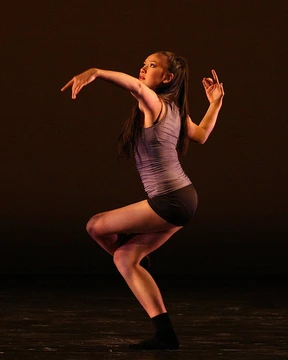
Arthur Saint-Léon
Choreographer of Coppélia and inventor of a dance notation system.

Arthur Saint-Léon, born Charles Victor Arthur Michel in Paris, was raised in Stuttgart, where his father served as dance master for the court and theatre ballet. Encouraged by his father, a former dancer of the Paris Opéra Ballet, he studied both music and dance, learning violin from Joseph Mayseder and Niccolò Paganini while also training in ballet, enabling him to perform as both violinist and dancer. He made his debut at age seventeen as a first demi-caractère dancer at the Théâtre de la Monnaie in Brussels, then toured extensively across Europe, dancing in Germany, Italy, and England. He achieved particular success in London, where audiences, generally averse to male dancers on stage, appreciated him greatly for his tours and jumps. He gained applause in every theatre he performed, a notable feat during the Romantic Era when ballerinas dancing en pointe were the primary stars. In Vienna, he first danced with Fanny Cerrito, and the two became nearly inseparable, marrying in 1845. For Cerrito, he choreographed the hit ballet *La Vivandière* in London, and he created ballets for the Teatro La Fenice in Venice and the Paris Opéra. He taught the master class at the Opéra and choreographed divertissements for major productions. After separating from Cerrito in 1851, he retired from the Opéra and continued touring, working for three years at the Teatro San Carlos in Lisbon. In 1859, he succeeded Jules Perrot as Maître de Ballet of the Imperial Bolshoi Kamenny Theatre in St. Petersburg, home of the Tsar’s Imperial Ballet, a post he held until 1869, when Marius Petipa succeeded him. He invented a method of ballet notation described in his 1852 book *La Sténochoréographie*, the first system to document not only foot movements but also those of the arms, torso, and head. He is famous for creating the choreography of *Coppélia*, the only one of his many ballets to survive almost complete. He died two days after the ballet’s initial season ended prematurely due to the Franco-Prussian War.
- field
- Ballet dancer, choreographer, violinist
- nationality
- French
- known_for
- Choreography of Coppélia; invented a method of ballet notation called La Sténochoréographie
Lore & Background
Arthur Saint-Léon was born Charles Victor Arthur Michel in Paris but raised in Stuttgart, where his father was dance master for the court and theatre ballet. Encouraged by his father, a former dancer of the Paris Opéra Ballet, he studied violin with Joseph Mayseder and Niccolò Paganini while also studying ballet. At age 17, he made his début as a first demi-caractère dancer at the Théâtre de la Monnaie in Brussels, then toured across Europe, gaining particular success in London despite the era's general dislike of male dancers on stage. He later became teacher of the master class at the Paris Opéra and choreographed divertissements for major productions.
Reader's Guide
Arthur Saint-Léon was a dancer, violinist, choreographer, and inventor whose career spanned much of mid-nineteenth-century Europe. Trained in both music and dance from childhood, he performed as a first demi-charactère dancer in Brussels before touring widely across Germany, Italy, and England. He was particularly well received in London, where male dancers were generally unpopular at the time; audiences there appreciated his tours and jumps, and he earned applause in every theatre he visited, a notable achievement in an era dominated by the ballerina. In Vienna he first danced with Fanny Cerrito, and the two became inseparable partners, marrying in 1845. For Cerrito he created the successful ballet *La Vivandière* (1843). He later taught the master class at the Paris Opéra and choreographed divertissements for major productions. After separating from Cerrito in 1851, he continued touring, including a three-year engagement at the Teatro San Carlos in Lisbon. In 1859 he succeeded Jules Perrot as Maître de Ballet of the Imperial Bolshoi Kamenny Theatre in St. Petersburg, serving until 1869, when Marius Petipa took over. His most enduring work is *Coppélia* (1870), the only one of his many ballets to survive nearly complete. He died two days after its initial season was cut short by the Franco-Prussian War. Saint-Léon also devised a pioneering system of dance notation, *La Sténochoréographie* (1852), which recorded not only footwork but also movements of the arms, torso, and head. A pas de six from *La Vivandière*, preserved in that notation, was reconstructed in 1975 and remains the only known choreography of his to survive.
Did You Know?
- His favorite ballerina was Adèle Grantzow, for whom he intended to make Coppélia.
Founding and the Birth of an Empire
He dedicated the site to the apostle Saint Peter, whose feast day in the Russian Orthodox calendar falls on 29 June, and the name stuck as a symbol of a new era. The city became inseparable from Russia's self-image as a modern European great power, a strategic Baltic port projecting influence westward. Its governance as a federal city reflects that enduring imperial stature.
A City That Kept Changing Its Name
No Russian city has undergone more dramatic shifts in identity than this one. Peter the Great himself spelled the name inconsistently in his letters, borrowing from both German and Dutch traditions. Over the following decades, the cumbersome fourteen-to-fifteen-letter form gave rise to nicknames like Petri and Petropolis, and the prefix Sankt gradually faded from everyday speech. The Soviet-era moniker persisted for nearly seven decades.
Cultural Treasures and Global Stages
The Historic Centre and its associated monument groups carry UNESCO World Heritage status, a recognition of layers of imperial and Soviet construction stretching back to the early eighteenth century. The Hermitage, one of the largest art museums on the planet, anchors a cultural ecosystem that also includes the National Library of Russia and a dense network of scientific institutions. The skyline itself tells a story of ambition, with the Lakhta Center rising as the tallest skyscraper in Europe, a glass-and-steel counterpoint to the baroque palaces that define the city's older face.
Strategic Weight in a Modern Federation
Though no longer the political capital, the city retains a constellation of federal institutions that underscore its continuing importance. The Constitutional Court of Russia, the Heraldic Council of the President, and the headquarters of the Russian Navy all operate from here, and a planned Supreme Court location further cements its role in the country's governance architecture. The Leningrad Military District of the Armed Forces maintains a presence that echoes the city's origins as a fortified Baltic stronghold. Demographically, it stands as Russia's second-largest city with over 5.6 million residents and a metropolitan population exceeding 6.4 million, making it the most populous settlement on the Baltic Sea and the world's northernmost city above the one-million threshold. Its wartime history, particularly the devastating siege during World War II, the most lethal siege in recorded history, adds a somber weight to its modern identity as a center of science, economics, and European cultural life.
More in Dance Pioneers 1-23
Spotted an error? Know more?
This is a living reference — every entry is fact-audited, and reader corrections feed straight into our audit queue. Suggest an edit · See this site's audit record