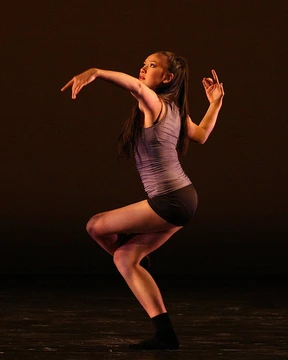
Agnes de Mille
American choreographer who integrated dance into Broadway storytelling.

Agnes George de Mille was an American dancer and choreographer who revolutionized musical theater by integrating dance into plot and character development. She is best known for her work on Broadway, particularly the musical *Oklahoma!* Born in New York City into a family of theater professionals, her father and uncle were Hollywood directors, and her mother was the daughter of economist Henry George. Initially aspiring to act, she was discouraged and turned to dance, enrolling in the Kosloff School of Dance in Los Angeles in 1919. Despite lacking natural flexibility and technique, she developed strong character work by observing film stars on her father’s sets. After graduating from UCLA with a degree in English, she moved to London in 1933 to study with Marie Rambert, later joining Rambert’s company and Antony Tudor’s London Ballet.
Her early career included choreographing for Cecil B. DeMille’s film *Cleopatra* (1934), though she left due to conflicts with the dance director. In 1939, she began working with the American Ballet Theatre. Her first piece for them, *Black Ritual (Obeah)*, was performed by sixteen black ballerinas, marking the first representation of black dancers in a New York ballet within a predominantly white company. Her first major success was *Rodeo* (1942), set to music by Aaron Copland, staged for the Ballet Russe de Monte Carlo. This led to her hiring for *Oklahoma!* (1943), where her dream ballet integrated dance into the plot by revealing the heroine’s emotional state, a groundbreaking innovation for musical theater. She went on to choreograph over a dozen musicals, including *Bloomer Girl*, *Carousel*, *Brigadoon* (for which she won a Tony Award), and *Gentlemen Prefer Blondes*. Her final ballet, *The Other*, was completed in 1992.
- field
- Dancer, choreographer
- nationality
- American
- known_for
- Choreographing Oklahoma! and Rodeo; integrating dance into musical theater plot
Lore & Background
Agnes de Mille was born in New York City into a well-connected family of theater professionals. Her father William C. deMille and her uncle Cecil B. DeMille were both Hollywood directors. Her mother, Anna Angela George, was the daughter of economist Henry George, and her paternal grandmother was of German-Jewish descent. De Mille originally wanted to be an actress but was told she was "not pretty enough," so she turned to dance. She enrolled in the Kosloff School of Dance in Los Angeles in 1919, studying under Theodore Kosloff and Natacha Rambova. She lacked flexibility and technique and did not have a dancer's body, but she taught herself by observing film stars on her father's Hollywood sets, developing strong character work and compelling performances rather than perfect technique. She graduated from UCLA with a degree in English and was a member of Kappa Alpha Theta sorority. In 1933 she moved to London to study with Dame Marie Rambert, eventually joining Rambert's company, The Ballet Club, and Antony Tudor's London Ballet. Her first recognized significant work was *Rodeo* (1942), with a score by Aaron Copland, staged for the Ballet Russe de Monte Carlo. She went on to choreograph over a dozen musicals, most notably *Oklahoma!* (1943), where her dream ballet integrated dance into the plot to reveal the heroine's emotional troubles, an innovation that brought her fame. Her other notable works include *Three Virgins and a Devil* (1934) and *Fall River Legend* (1948), based on the life of Lizzie Borden. She also choreographed *Bloomer Girl* (1944), *Carousel* (1945), *Allegro* (1947), *Brigadoon* (1947, for which she was co-recipient of the inaugural Tony Award for Best Choreography), *Gentlemen Prefer Blondes* (1949), *Paint Your Wagon* (1951), *The Girl in Pink Tights* (1954), *Goldilocks* (1957), and *110 in the Shade* (1963). Her final ballet, *The Other*, was completed in 1992.
Reader's Guide
Agnes de Mille’s significance stems from her pioneering integration of dance into the narrative structure of musical theater, most famously achieved in *Oklahoma!* (1943). In that production, she created a “dream ballet” in which dancers doubled for the lead actors, using movement to reveal the heroine’s inner emotional conflicts rather than serving as a mere decorative interlude. This approach, which enriched Broadway musicals by providing perspective on contemporary events, was also applied in later works such as *Bloomer Girl* (1944), which reflected her personal feelings of loneliness during wartime, and *Carousel* (1945). Her choreography for *Rodeo* (1942), set to a score by Aaron Copland and staged for the Ballet Russe de Monte Carlo, became her first widely recognized ballet. Earlier, with *Black Ritual* (Obeah) for the American Ballet Theatre in 1939, she made history by choreographing for sixteen Black ballerinas, marking the first time Black dancers performed in a New York ballet within a predominantly white company. De Mille also contributed to the Jooss Ballet with *Drums Sound in Hackensack* (1941), the first work not choreographed by the company’
Did You Know?
- De Mille was the granddaughter of economist Henry George.
- She was appointed to the National Advisory Committee on the Arts by President John F. Kennedy.
Family & Lineage
Agnes de Mille entered the world into one of America's most culturally prominent theatrical households. The de Mille name thus spans multiple generations and multiple disciplines of American entertainment. The family's domestic base was in Pompton, New Jersey, where much of their private life unfolded and where, in the end, the family's most devastating losses would be felt.
The Dancer & Choreographer
In the family record, Agnes de Mille is identified by her craft: she was a dancer and choreographer. This designation places her squarely within the performing-arts tradition that defined the de Mille household, a lineage running through her father Henry's work as a dramatist, his collaborations with playwrights such as David Belasco and Steele MacKaye, and the bustling theatrical world of the Madison Square Theatre and the old Lyceum. Where her brothers Cecil and William would channel their creative inheritance into the emerging medium of cinema, Agnes's path pointed toward the body and the stage — the kinetic, physical art form of dance. The de Mille name, in this telling, encompasses not only the written word and the projected image but also choreographed movement, suggesting a family whose creative output spanned the full range of theatrical expression. Agnes's role as choreographer marks her as the one who gave the de Mille legacy its most embodied, physical dimension.
A Life Cut Short
The de Mille family endured a devastating sequence of losses in the early 1890s. His widow Bebe was left to raise their children — William, Cecil, and the young Agnes — and within two months of her husband's passing she founded the Henry C. De Mille School for Girls in Pompton and opened an office on Broadway, becoming only the second woman playbroker in America. But the family's grief was far from over. Just two years after Henry's death, Agnes fell victim to spinal meningitis and did not survive. She was barely a child when the disease claimed her, robbing the de Mille household of its youngest member and leaving Bebe to carry on alone with the two boys who would go on to make their own mark in American entertainment.
The De Mille Cultural World
Agnes de Mille was born into a household where the stage was not merely a career but a way of life. He went on to write original works such as John Delmer's Daughters and Main Line, and collaborated with David Belasco on productions including The Wife, Lord Chumley, The Charity Ball, and Men and Women. The family's world was one of curtain calls, box-office receipts, and the electric anticipation of opening night. Agnes grew up — however briefly — in the orbit of this theatrical ecosystem, in a family where playwriting, acting, and performance were the daily currency. Her later identification as a dancer and choreographer suggests she inherited that same creative impulse, translating the de Mille theatrical sensibility into movement rather than text.
More in Dance Pioneers 1-23
Spotted an error? Know more?
This is a living reference — every entry is fact-audited, and reader corrections feed straight into our audit queue. Suggest an edit · See this site's audit record