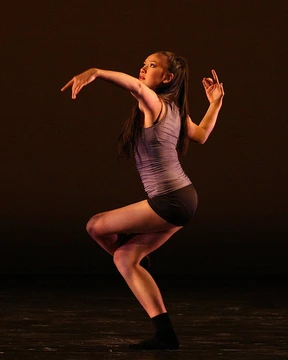
Doris Humphrey
Modern dance pioneer who developed the fall and recovery theory.

Doris Batcheller Humphrey, born October 17, 1895, and passing on December 29, 1958, was an early twentieth-century American dancer and choreographer. She belonged to the second generation of modern dance pioneers, a group that included Martha Graham and Katherine Dunham. These artists built on the work of earlier figures like Isadora Duncan, Ruth St. Denis, and Ted Shawn, investigating the role of breath and crafting techniques that remain in use. Because many of her pieces were carefully recorded in notation, Humphrey’s work is still taught, studied, and staged.
Humphrey entered the world in Oak Park, Illinois, but grew up in Chicago. Her father, Horace Buckingham Humphrey, worked as a journalist and briefly managed a hotel; her mother, Julia Ellen Wells, had trained as a concert pianist. She could trace her lineage back to pilgrim William Brewster, a Mayflower passenger from 1620. In Chicago, her mother encouraged her studies with prominent ballet instructors and with Mary Wood Hinman, who taught dance at the Francis Parker School. While still in high school, Humphrey toured the western states as a dancer, with her mother accompanying on piano, in a group sponsored by the Santa Fe Railroad for its Workman’s Clubs.
Financial pressures led Humphrey to open her own dance school in 1913, when she was 18. Her mother managed the school and played piano. The venture proved highly successful, offering classes in classic, gymnastic, and ballroom dance for children, plus ballroom instruction for young adults.
In 1917, at Mary Wood Hinman’s urging, Humphrey moved to California and joined the Denishawn School of Dancing and Related Arts. There she studied, performed, taught, and learned choreography. Works she created during this period—*Valse Caprice* (Scarf Dance), *Soaring*, and *Scherzo Waltz* (Hoop Dance)—are still performed. She remained with Denishawn for about a decade, touring the Orient for two years and later enjoying a successful run in American vaudeville theaters.
Humphrey stood just 5'3" tall and had a slender frame. In 1932 she married Charles Woodford, a merchant in the Royal Navy. The couple had one son, Charles Humphrey Woodford, born in 1933.
In 1928, Humphrey and Charles Weidman, a close collaborator, left Denishawn and relocated to New York City. Around the same time, Martha Graham also broke away from the Denishawn fold. Humphrey and Graham each developed distinct theories about the core dynamics of dance movement, which became the foundation of their respective techniques. Humphrey’s theory centered on how the human body responds to gravity, encapsulated in her principle of “fall and recovery.” She described this as “the arc between two deaths.” At one extreme, a dancer yields to gravity; at the other, the dancer strives for balance. This fall-and-recovery concept allowed Humphrey to depict the emotional and physical climax of struggling for stability versus surrendering to gravitational pull.
Her early choreography from this period includes *Air for the G String*, *Water Study*, *Life of the Bee*, *Two Ecstatic Themes*, and *The Shakers*. Unlike Denishawn, which drew inspiration from foreign cultures, Humphrey looked to her own country for material. *The Shakers*, based on an 18th-century American religious group, exemplifies this homegrown approach.
The Humphrey-Weidman Company thrived even during the Great Depression, touring the United States and creating new works that addressed current events and social issues rather than old stories. In the mid-1930s, Humphrey produced the “New Dance Trilogy,” a triptych consisting of *With My Red Fires*, *New Dance*, and the now-lost *Theater Piece*. Although the three pieces were never performed together, they all used a score by Wallingford Rigger. The trilogy examined the competitive lives of businessmen, working women, athletes, and actors.
Humphrey took part in the Federal Dance Project (FDP), established in the 1930s under Franklin Delano Roosevelt’s Second New Deal. The FDP was the first national program to provide financial support for dance and dancers.
She expanded into Broadway choreography in 1933 with *School for Husbands* and again the following year with *Life Begins at 8:40*.
During the 1940s, Humphrey worked extensively with José Limón, a former student. After retiring from performing in 1944 due to arthritis, she became artistic director of the José Limón Dance Company, creating works such as *Day on Earth*, *Night Spell*, *Ruins and Visions*, and *Lament for Ignacio Sanchez Mejias*. Limón and his company carried forward and developed Humphrey’s dance style.
One of her final pieces, *Dawn in New York*, showcased her enduring strengths: mastery of large-group dynamics and a focus on sculptural shapes. Humphrey served on the original faculties of both The Bennington School of the Dance (1934) and The Juilliard School (1951), each directed by Martha Hill.
In 1952, she began directing a new children’s dance company called The Merry-Go-Rounders.
Humphrey died in New York City on December 29, 1958, and was interred at Forest Home Cemetery in Forest Park, Illinois.
At the heart of her movement theory was the concept of fall and recovery, which she termed “the arc between two deaths.” This idea revolved around shifts in the center of gravity, balance, and recovery. She believed that moving away from the center required an equal adjustment to return to it, preventing a fall. The more dramatic the movement, the greater the risk of losing control.
- born
- October 17, 1895, Oak Park, Illinois
- died
- December 29, 1958, New York City
- field
- Dancer and choreographer
- nationality
- American
- known_for
- Modern dance pioneer; theory of fall and recovery; choreographic works such as T
Verified Timeline
Lore & Background
Humphrey was born in Oak Park, Illinois, but grew up in Chicago, Illinois. She was the daughter of Horace Buckingham Humphrey, a journalist and one-time hotel manager, and Julia Ellen Wells, who had trained as a concert pianist. She was a descendant of pilgrim William Brewster who arrived on the Mayflower in 1620. Encouraged by her mother, she studied with eminent ballet masters as well as with Mary Wood Hinman at the Francis Parker School. While still in high school she undertook a concert tour of the western states as a dancer, with her mother as accompanist, in a group sponsored by the Santa Fe Railroad for its Workman's Clubs. Partly due to financial concerns, she opened her own dance school in 1913 at age 18, with her mother as manager and pianist. It was a great success, offering classic, gymnastic, and ballroom dance. In 1917, at Mary Wood Hinman's instigation, she moved to California and entered the Denishawn School of Dancing and Related Arts, where she studied, performed, taught classes, and learned choreography. Her creations from that era—Valse Caprice (Scarf Dance), Soaring, and Scherzo Waltz (Hoop Dance)—are all still performed today. She toured the Orient for two years followed by a successful career in American vaudeville theaters. In 1928, Humphrey and Charles Weidman left the Denishawn School and moved to New York City. There she developed her theory of fall and recovery, exploring the nuances of the human body's responses to gravity, which she called 'the arc between two deaths.' Her early choreography includes Air for the G String, Water Study, Life of the Bee, Two Ecstatic Themes, and The Shakers. Unlike the Denishawn approach of finding inspiration from abroad, Humphrey sought inspiration from within America. The Humphrey-Weidman Company was successful even in the Great Depression, touring America and developing new works based on current events. In the mid-1930s she created the 'New Dance Trilogy,' a triptych comprising With My Red Fires, New Dance, and the now-lost Theater Piece, danced to a score by Wallingford Rigger. Humphrey was a participant of the Federal Dance Project, created as part of Franklin Delano Roosevelt's Second New Deal. She expanded her choreographic work to Broadway in 1933 with School for Husbands and again the following year with Life Begins at 8:40. During the 1940s, Humphrey spent significant time with José Limón, one of her former students. After she retired from performing in 1944 due to arthritis, she became artistic director for the José Limón Dance Company and created works including Day on Earth, Night Spell, Ruins and Visions, and Lament for Ignacio Sanchez Mejias. One of her last pieces, Dawn in New York, showed her mastery of the intricacies of large groups and her emphasis on sculptural shapes. Humphrey was on the original faculties of both The Bennington School of the Dance (1934) and The Juilliard School (1951), both directed by Martha Hill. In 1952 she started directing a new dance company for children called The Merry-Go-Rounders. She died in New York City on December 29, 1958, and was buried at Forest Home Cemetery in Forest Park, Illinois.
Reader's Guide
Doris Humphrey's significance lies in her development of the fall and recovery theory, which she called 'the arc between two deaths.' This principle explores the human body's responses to gravity—at one extreme surrendering to gravity, at the other attempting to achieve balance. Humphrey believed movement should represent emotion but with a more clinical eye than Martha Graham, focusing on individual and group dynamics from an outsider's perspective. Her works often used abstraction to represent specific characters, events, or ideas, as seen in Two Ecstatic Themes (1931), which explored her own feelings about falling in love while remaining a strong, independent woman. Her choreography demonstrated an experimental approach: Water Study (1928) was danced without music, with dancers moving to their natural breathing patterns to represent the natural movement of water; Drama of Motion (1930) concentrated on formal elements of movement such as design, rhythm, and dynamics; and The Shakers (1931) incorporated shaking movements to represent sexual repression and the idea of being shaken clean of sin. Her legacy endures through her book The Art of Making Dances, published shortly after her death, in which she shared her observations and theories on dance and composition. Thirty-five of her dances are documented in Labanotation by the Dance Notation Bureau. Her theory of fall and recovery is still used to this day by many choreographers.
Did You Know?
- Humphrey was a descendant of pilgrim William Brewster, who arrived on the Mayflower in 1620.
- At age 18, partly due to financial concerns, she opened her own dance school offering classic, gymnastic, and ballroom dance.
- She created Water Study (1928) as an experiment in dancing without music, using dancers' natural breathing patterns.
- After retiring from performing in 1944 due to arthritis, she became artistic director for the José Limón Dance Company.
- Thirty-five of Doris Humphrey's dances are documented in Labanotation by the Dance Notation Bureau.
More in Dance Pioneers 1-23
Spotted an error? Know more?
This is a living reference — every entry is fact-audited, and reader corrections feed straight into our audit queue. Suggest an edit · See this site's audit record