Big Crunch
A scenario where the universe collapses back to a singularity.

The Big Crunch describes a possible end to the universe where its expansion reverses, causing everything to collapse back together. In this scenario, the cosmic scale factor shrinks to zero, which might be followed by a new Big Bang and a fresh universe. The idea goes back to 1922, when Russian physicist Alexander Friedmann developed equations showing that the universe’s fate hinges on its density—it could keep expanding or start contracting instead of remaining stable. If there is enough matter, gravity could halt the expansion and pull everything inward. This collapse would resemble a black hole. As the universe shrinks, radiation from stars and high-energy particles would be compressed and blueshifted to higher energies, becoming intense enough to ignite the surfaces of stars before they crash together. In the final moments, the universe would turn into a single fireball with near-infinite temperature, and at the very end, neither time nor space would remain.
Most evidence today suggests this hypothesis is wrong. Astronomical observations show the universe’s expansion is speeding up, making a Big Chill—a slow cooling and fading—more likely. Still, some physicists propose that a Big Crunch-like event could happen if dark energy fluctuates.
The Big Crunch scenario assumes the universe’s matter density is high enough for gravity to overcome the expansion from the Big Bang. The FLRW cosmology can predict whether expansion will stop based on average energy density, the Hubble parameter, and the cosmological constant. If expansion halts, contraction follows, accelerating over time and ending with the universe turning into a black hole.
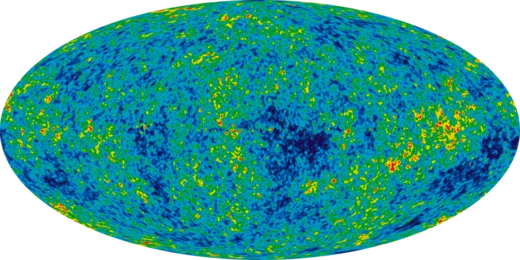
Experimental evidence from the late 1990s and early 2000s—like observations of distant supernovas as standard candles and detailed maps of the cosmic microwave background—showed that gravity isn’t slowing expansion but accelerating it. The 2011 Nobel Prize in Physics went to researchers behind this discovery.
The Big Crunch also leads to the Big Bounce hypothesis, where the collapse destroys the universe, then triggers a new expansionary epoch—another Big Bang. This could repeat forever in a cyclic universe.
Historically, Richard Bentley, a churchman and scholar, wrote to Isaac Newton before a lecture on Newton’s theories and atheism. This question, known as Bentley’s paradox, was an early precursor to the Big Crunch. It’s now known that stars move and aren’t static.
Albert Einstein preferred an unchanging universe. In 1917, he worked with Dutch astronomer Willem de Sitter to show that general relativity could describe a static model. Willem demonstrated his equations could describe a very simple universe. Initially, no problems appeared, and scientists adapted the model. But they encountered a different form of Bentley’s paradox. General relativity also described a restless universe. Einstein realized that for a static universe—what was observed at the time—an anti-gravity force was needed to counter gravity’s pull. This extra force, called the cosmological constant, was added to relativity.
Edwin Hubble, at Mount Wilson Observatory, measured galaxy distances and paired them with Vesto Slipher and Milton Humason’s redshift measurements. He found a rough proportionality between an object’s redshift and its distance. Plotting a trend line from 46 galaxies, he calculated the Hubble Constant as 500 km/s/Mpc—nearly seven times today’s value—but still proving the universe was expanding, not static.
After Hubble’s discovery, Einstein abandoned the cosmological constant. In their simplest form, the equations produced a universe that expanded or contracted, contradicting what was observed, which led to the constant. Once expansion was confirmed, Einstein called his static-universe assumption his “biggest mistake.” In 1931, he visited Hubble to thank him for “providing the basis of modern cosmology.” After this, both Einstein’s and Newton’s models of a contracting, static universe were dropped for the expanding universe model.
The Big Bounce hypothesis suggests the universe could collapse back to its starting state and then initiate another Big Bang, allowing the universe to last forever through phases of expansion (Big Bang) and contraction (Big Crunch). This means there might be a universe in constant cycles of Big Bangs and Big Crunches. Albert Einstein briefly considered cyclic universes in 1931, hypothesizing that a universe existed before the Big Bang, which ends.
- hypothesis_origin
- 1922
- key_figure
- Alexander Friedmann
- field
- Cosmology
- known_for
- Proposing that the universe could recollapse if its density is high enough
- current_status
- Most evidence indicates the hypothesis is incorrect; expansion is accelerating
Verified Timeline
Lore & Background
The Big Crunch scenario hypothesized that the density of matter throughout the universe is sufficiently high that gravitational attraction will overcome the expansion that began with the Big Bang. The FLRW cosmology can predict whether the expansion will eventually stop based on the average energy density, Hubble parameter, and cosmological constant. If the expansion stopped, then contraction will inevitably follow, accelerating as time passes and finishing the universe in a kind of gravitational collapse, turning the universe into a black hole. Experimental evidence in the late 1990s and early 2000s (namely the observation of distant supernovas as standard candles; and the well-resolved mapping of the cosmic microwave background) led to the conclusion that the expansion of the universe is not being slowed by gravity but is instead accelerating. The 2011 Nobel Prize in Physics was awarded to researchers who contributed to this discovery. The Big Crunch hypothesis also leads into another hypothesis known as the Big Bounce, in which after the big crunch destroys the universe, it begins a new expansionary epoch, causing another big bang. This could potentially repeat forever in a phenomenon known as a cyclic universe.
Reader's Guide
The Big Crunch scenario represents a key theoretical endpoint in cosmology, rooted in Alexander Friedmann's 1922 equations showing that the universe's fate depends on its density. For decades, it was a leading candidate for the universe's ultimate fate, until observational evidence in the late 1990s and early 2000s—including distant supernova measurements and cosmic microwave background mapping—revealed that the universe's expansion is accelerating, making a Big Chill more likely. This discovery earned the 2011 Nobel Prize in Physics. Despite being largely disfavored, the Big Crunch remains significant as a conceptual foundation for cyclic universe models, such as the Big Bounce, the Ekpyrotic model, and Roger Penrose's Conformal Cyclic Cosmology. These models propose that a Big Crunch could lead to a subsequent Big Bang, potentially creating an infinite cycle of universes. The hypothesis also connects to historical debates, including Bentley's paradox and Einstein's cosmological constant, which Einstein later abandoned after Hubble's discovery of an expanding universe. While not supported by current evidence, the Big Crunch continues to influence theoretical physics and discussions of dark energy fluctuations.
Did You Know?
- The Big Crunch hypothesis dates back to 1922, with Russian physicist Alexander Friedmann creating a set of equations showing that the end of the universe depends on its density.
- If the universe collapsed, it would turn into a black hole.
- Experimental evidence in the late 1990s and early 2000s—including distant supernova observations and cosmic microwave background mapping—led to the conclusion that the universe's expansion is accelerating.
- The 2011 Nobel Prize in Physics was awarded to researchers who contributed to the discovery of the accelerating expansion.
- The Big Crunch hypothesis leads into the Big Bounce hypothesis, in which after the big crunch destroys the universe, it begins a new expansionary epoch, causing another big bang.
More in Cosmology Concepts 1-24
Related in Cosmology Concepts
Links follow this subject's own source article.
Spotted an error? Know more?
This is a living reference — every entry is fact-audited, and reader corrections feed straight into our audit queue. Suggest an edit · See this site's audit record