Cosmological horizon
Boundaries dividing observable from unobservable regions of the universe.

In cosmology, a horizon is a boundary in space that marks the limit of what can be seen. There are two main types: the particle horizon and the event horizon. Both are consequences of general relativity, the expansion of the universe, and the physics of the Big Bang.
The particle horizon, often simply called "the horizon" by cosmologists, separates regions of space that have already been observed from those that have not. It is the greatest distance from which light has had time to reach an observer since the beginning of the universe. At the present time, this distance defines the size of the observable universe. In an empty, uniform, and isotropic universe, the proper distance to this horizon depends on the cosmological scale factor. In terms of comoving distance, the particle horizon equals the conformal time since the Big Bang multiplied by the speed of light. The particle horizon is the boundary of the observable universe—the farthest point from which information from the past can be retrieved.
The event horizon, by contrast, marks the limit of all possible future observations. Points beyond this horizon can never be observed, no matter how long one waits. It is the boundary of all future observable universes. While the particle horizon is the largest comoving distance from which light could have reached an observer by a specific time, the event horizon is the largest comoving distance from which light emitted now could ever reach that observer in the future. In our universe, the current distance to the event horizon is well within the observable range set by the particle horizon. The proper distance to the event horizon at a given time depends on the time-coordinate of the universe's end—which would be infinite if the universe expands forever. In a universe with dark energy due to a cosmological constant, there is a minimum Hubble parameter and a maximum horizon distance, sometimes called the only particle horizon.
In the Lambda-CDM model, which describes an accelerating universe, the far future predicts that only our Milky Way galaxy will remain visible. Light from distant galaxies will be redshifted beyond detection, making cosmological evidence—including the particle horizon—unverifiable.
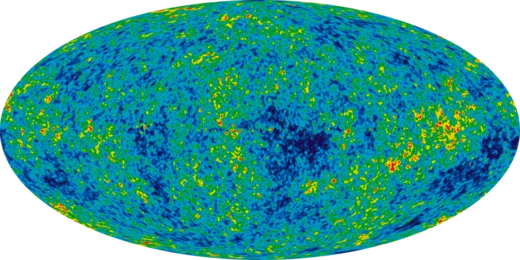
There are also practical horizons, though they are not true horizons in the relativistic sense. The optical horizon is set at the surface of last scattering, the farthest distance any photon can travel freely. The Hubble sphere is sometimes called the "photon horizon." Similarly, there is a neutrino horizon for the farthest distance a neutrino can stream freely, and a gravitational wave horizon for the farthest distance gravitational waves can travel freely. The latter is expected to directly probe the end of cosmic inflation.
The nature of these horizons was clarified by Wolfgang Rindler in 1956. He distinguished between instantaneous events, like a supernova, and world lines—strings of events, such as light from a long-lived object like a galaxy. The behavior of world lines became the basis for dividing the observable from the unobservable universe.
- type
- Cosmological concept
- components
- Particle horizon, event horizon
- key_measurement
- Particle horizon defines the observable universe; event horizon defines all possible future observations
- current_event_horizon_distance
- About 5 gigaparsecs (16 billion light-years)
- maximum_event_horizon_distance
- 17.55 gigalight-years (under Lambda-CDM model)
Lore & Background
The particle horizon, also called the comoving particle horizon, is the maximum distance from which light from particles could have traveled to an observer in the age of the universe. It represents the boundary between the observable and unobservable regions, and its distance at the present epoch defines the size of the observable universe. When cosmologists say 'horizon' they almost always mean the particle horizon. In an empty, homogeneous, and isotropic universe, the proper distance to the horizon at time t is given by an integral involving the cosmological scale factor. In terms of comoving distance, the particle horizon equals the conformal time that has passed since the Big Bang, times the speed of light.
Reader's Guide
The particle horizon differs from the cosmic event horizon: the particle horizon represents the largest comoving distance from which light could have reached the observer by a specific time, while the cosmic event horizon is the largest comoving distance from which light emitted now can ever reach the observer in the future. The current distance to our cosmic event horizon is about five gigaparsecs (16 billion light-years), well within our observable range given by the particle horizon. Under the Lambda-CDM model, assuming dark energy is due to a cosmological constant, there will be a minimum Hubble parameter and a maximum event horizon of 17.55 gigalight-years. Extrapolating the model into the far future predicts a universe consisting solely of our Milky Way, with light from distant galaxies redshifted so much as to become invisible, making observational evidence for cosmology, including the particle horizon, unverifiable. Other practical horizons include the optical horizon at the surface of last scattering, the Hubble sphere (also called the 'photon horizon'), a neutrino horizon, and a gravitational wave horizon predicted to probe the end of cosmic inflation.
Did You Know?
- The particle horizon is the boundary of the observable universe.
- The event horizon includes all possible future observations; points outside it can never be observed.
- The current distance to our cosmic event horizon is about five gigaparsecs (16 billion light-years).
More in Cosmology Concepts 1-24
Spotted an error? Know more?
This is a living reference — every entry is fact-audited, and reader corrections feed straight into our audit queue. Suggest an edit · See this site's audit record