
PÜNCT
Abstract connection game with stacking and bridging mechanics.

Mliu92 · CC BY-SA 4.0
PÜNCT is a two-player abstract strategy board game released in 2006 as the fifth game in the GIPF project, a series of six abstract games created by Kris Burm. It won the Games Magazine Best Abstract Strategy Game award for 2008 and is notable for its hexagonal board and connection-based objective similar to Hex and Y.
- release_year
- 2006
- award
- Games Magazine Best Abstract Strategy Game 2008
- board_shape
- Hexagonal with 211 spaces (including corners)
Lore & Background
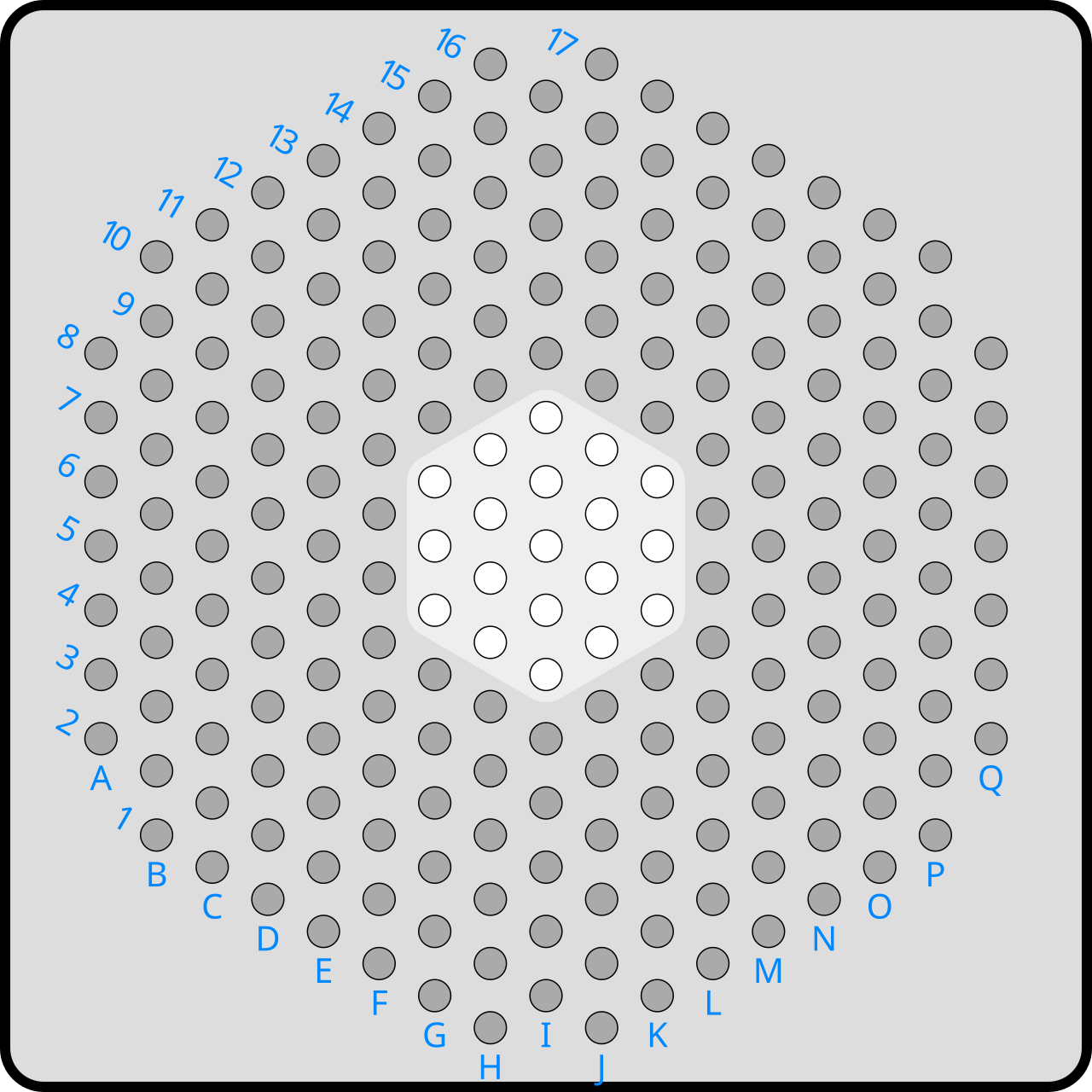
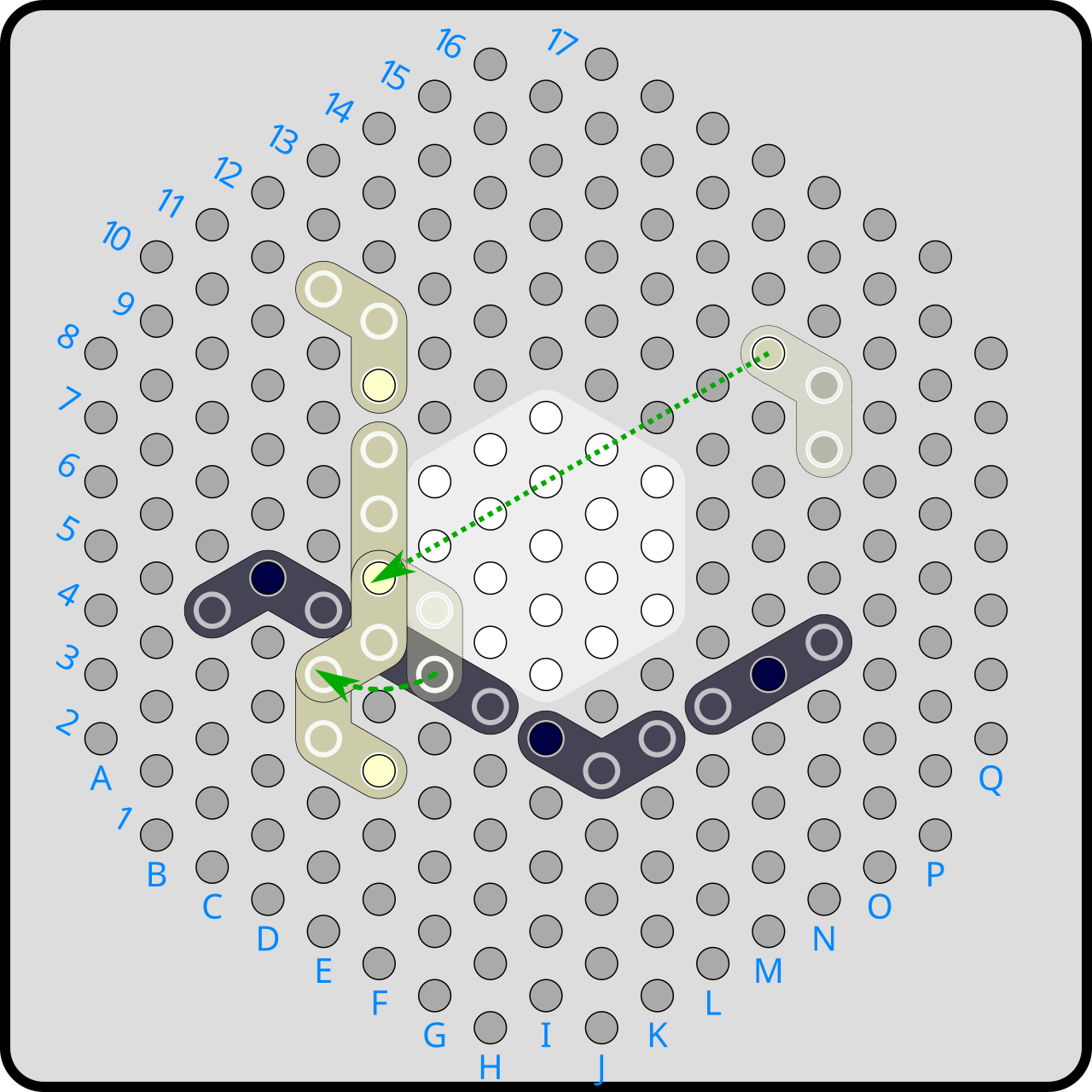
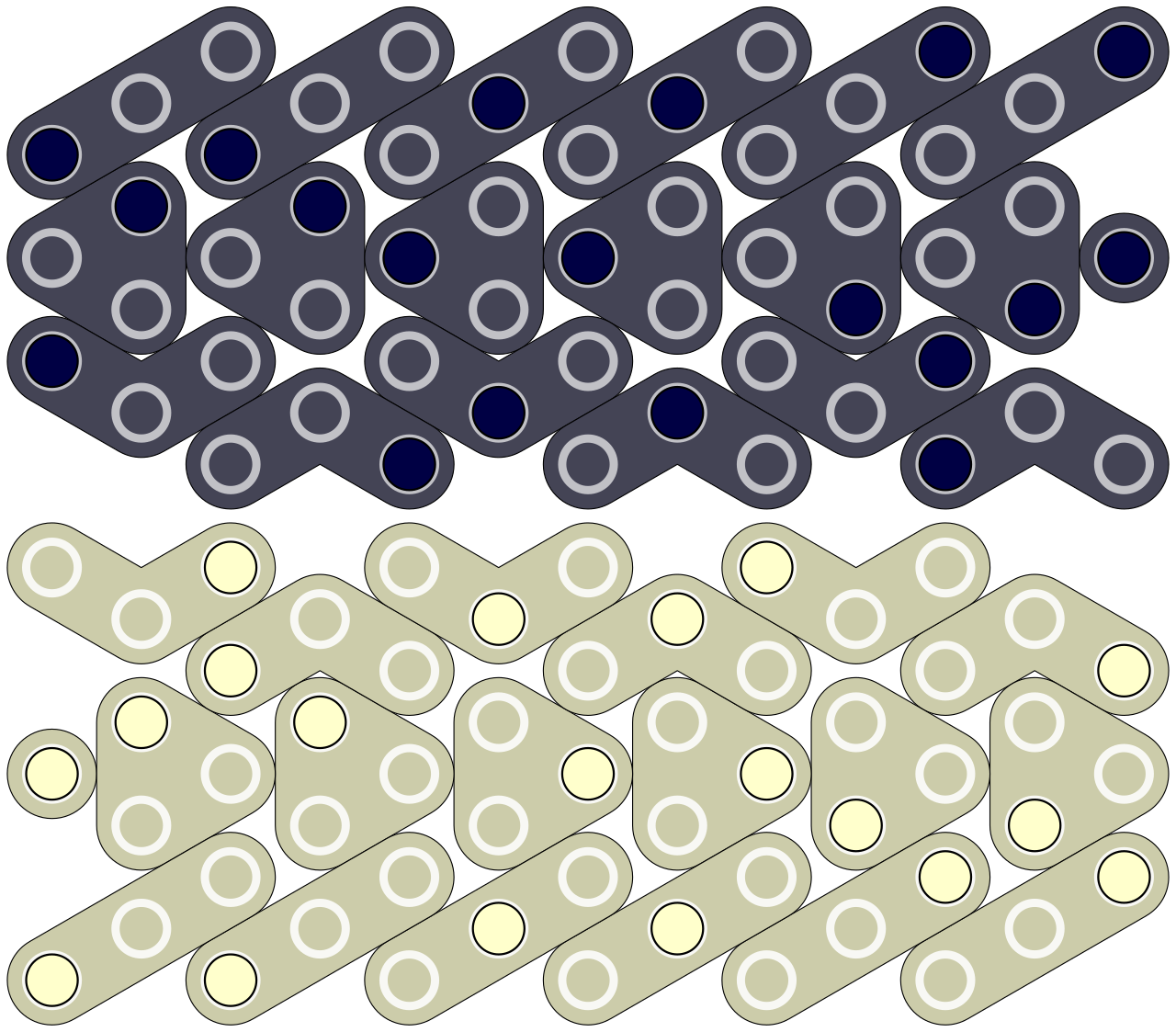
PÜNCT is played on a regular hexagonal board with 9 spaces per side and 211 total spaces (including the six corners). Each player has 18 pieces, each covering three adjacent hexes; there is no separate single-cell PÜNCT-piece—instead, each piece features a colored dot (the PÜNCT) used for movement. The objective is to build a contiguous path of pieces in the player's color connecting opposite sides of the board. Players may either place new pieces or move existing ones, with movement involving linear translation and optional rotation around the piece's colored dot. Pieces can jump onto friendly pieces, creating stacks, and can bridge gaps using any piece shape (including the triangular piece), leaving the middle dot unsupported. The first turn restricts placement to the central hexagon of 7 cells (a single hex and its six neighbors).
Reader's Guide
PÜNCT is significant as the fifth game in Kris Burm's GIPF project, a series of abstract strategy games designed to explore different mechanics. Its combination of placement, movement, rotation, stacking, and bridging creates a deep tactical experience. The game's hexagonal board and connection objective link it to classic abstract games like Hex and Y, while its unique piece shapes and gravity-like stacking add complexity. Winning the Games Magazine Best Abstract Strategy Game award in 2007 highlights its recognition within the gaming community. The standard version extends the first-move restriction on the central hexagon throughout the game, and includes a tie-breaker based on controlled spaces. PÜNCT's legacy lies in its contribution to the GIPF project and its innovative mechanics that reward strategic misdirection.
Did You Know?
- PÜNCT is the sixth release but considered the fifth game in the GIPF project.
- The board has 211 total spaces for a hexagon with 9 spaces per side; the corners are not removed.
- Each player has 18 pieces covering three hexes each; there is no separate single-cell PÜNCT-piece—the PÜNCT is a colored dot on each piece.
- All pieces, including the triangular shape, can be used as bridges.
Origins & Place in the GIPF Project
PÜNCT emerged in 2005 as part of Kris Burm's ambitious GIPF project, a collection of six abstract strategy games designed to explore the boundaries of two-player board gaming. While it is technically the sixth title released in the series, it is generally regarded as the fifth game within the project, a distinction that reflects the difference between publication order and the project's internal numbering. Burm's overarching vision was to create a family of games that shared a common design philosophy while each offering a distinct mechanical identity. PÜNCT occupies a unique niche within that family: it is a connection game played on a hexagonal board, setting it apart from its siblings in the GIPF lineup. The game's 2005 release gave the abstract strategy community a new puzzle to dissect, and its position as the penultimate entry in the project meant it benefited from the design lessons accumulated across the preceding titles.
Core Gameplay & Strategic Philosophy
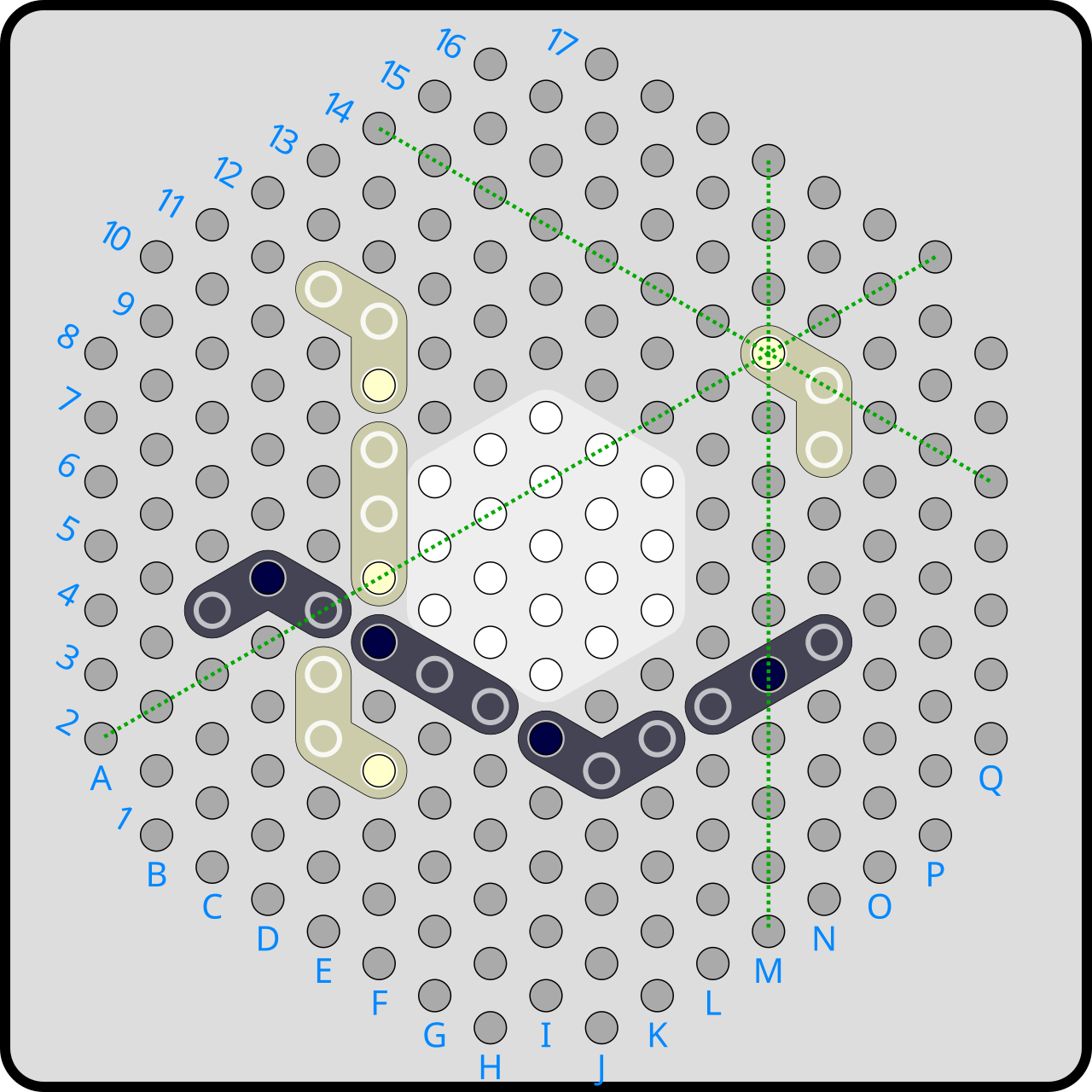
At its heart, PÜNCT is a two-player connection game in the tradition of Hex and Y, though its mechanics push well beyond those predecessors. The board is a clipped regular hexagon with nine spaces per side, yielding 211 playable cells after the six corners are removed. Each player commands eighteen three-cell pieces—straight, angular, and triangular—each marked with a colored dot called the PÜNCT and two minor dots. The goal is to forge a contiguous chain of one's own pieces spanning any pair of opposite sides of the board. What makes PÜNCT strategically rich is the dual choice on every turn: introduce a fresh piece to the board at the base level or reposition one already in play. Players may translate a piece in a straight line from its PÜNCT and then rotate it around that same dot, combining movement and rotation in a single action. The stated objective is to mislead the opponent, making the game as much about deception and misdirection as it is about building a visible path.
Stacking, Jumping & the Vertical Dimension
One of PÜNCT's most distinctive features is its three-dimensional stacking system. A player may jump a piece so that its PÜNCT lands atop a friendly piece already in play, effectively elevating it to a higher level. Once a piece is covered by another, it becomes permanently immobile, a rule that allows a player to sever an opponent's chain by stacking over a critical link. There is no cap on height; pieces can be layered to the third, fourth, or higher levels, with the uppermost level always taking precedence in determining connectivity. An additional rule called bridging permits a straight or angular piece to span a gap, leaving its middle dot unsupported while both end dots rest on lower-level pieces. The triangular piece cannot serve as a bridge. Any piece trapped beneath a bridged middle dot is rendered immobile, and the empty cell under that dot is treated as occupied, preventing an opponent from sliding a piece underneath. These mechanics create a rich vertical dimension absent from most flat connection games.
Recognition & Design Legacy
PÜNCT's impact on the abstract strategy world was recognized in 2007 when it was named the Best Abstract Strategy game by Games Magazine, a significant endorsement for a title released just two years earlier. This award placed PÜNCT among the most celebrated modern board games and validated Kris Burm's design philosophy of building complex, multi-layered mechanics from a small set of elegant rules. The game's concept—connecting opposite sides of a hexagonal board using triomino-shaped pieces that can be moved, rotated, and stacked—drew comparisons to the classic connection games Hex and Y, yet its vertical stacking and bridging rules gave it a mechanical identity of its own. Within the broader GIPF project, PÜNCT demonstrated that abstract strategy games could incorporate spatial reasoning in three dimensions without sacrificing the clarity and balance expected of the genre. Its continued presence in tournament play and its status as a cornerstone of the GIPF family underscore its lasting influence on how designers approach connection games and multi-level board mechanics.
Gallery

Frequently Asked Questions
What is PÜNCT?
PÜNCT is a two-player abstract strategy board game built around forming a connected path across a hexagonal grid. It was released in 2006 as the fifth title in Kris Burm's GIPF project, a series of six abstract games.
Who designed PÜNCT?
Kris Burm created PÜNCT as part of his GIPF project, a collection of six abstract strategy games. It occupies the fifth position in that sequence.
What does the PÜNCT board look like?
The playing surface is a hexagonal grid made up of 211 spaces, corner points included. This hexagonal shape distinguishes it from the rectangular or square boards found in many other connection games.
How do you win a game of PÜNCT?
The goal is to build an unbroken chain of your own pieces linking one side of the board to the opposite side, similar to the objective in Hex or Y. Players accomplish this by stacking pieces and constructing bridges between them.
Has PÜNCT won any notable awards?
Yes — Games Magazine named PÜNCT the Best Abstract Strategy Game of 2008. It is widely regarded as one of the standout titles within the GIPF project.
More in Connection games 1-24
Spotted an error? Know more?
This is a living reference — every entry is fact-audited, and reader corrections feed straight into our audit queue. Suggest an edit · See this site's audit record