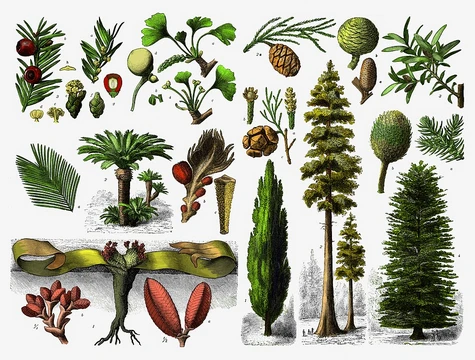
Picea sitchensis
Largest spruce species and third-tallest tree in the world.

Picea sitchensis, commonly known as the Sitka spruce, is a large, coniferous, evergreen tree native to the west coast of North America. It is the largest species of spruce and the fifth-largest conifer in the world, as well as the third-tallest tree species, reaching heights over 100 meters. Its name derives from the community of Sitka in southeast Alaska, where it is prevalent. The tree’s range hugs the western coast of Canada and the United States, extending south into northern California. It is closely associated with temperate rainforests, typically found within a few kilometers of the coast in the southern part of its range, though north of Oregon it extends inland along river floodplains, seldom straying more than about 80 kilometers from the Pacific. The species tolerates salty spray common in coastal dune habitats and prefers soils rich in magnesium, calcium, and phosphorus. Forests containing Sitka spruce average between 2,000 and 3,000 millimeters of rain annually. The bark is thin and scaly, flaking off in small circular plates, with a reddish-brown inner layer. Its crown is broad and conical in young trees, becoming cylindrical with age; older trees may lack lower branches. The shoots are very pale buff-brown, almost white, and hairless, with prominent pulvini. Needles are stiff, sharp, and flattened, 15–25 millimeters long, dark glaucous blue-green above with thin lines of stomata and blue-white below. Cones are pendulous, slender cylindrical, with thin flexible scales; the bracts above the scales are the longest of any spruce. Seeds are black with a slender pale brown wing. The tree has a shallow root system with long lateral roots, making it susceptible to wind throw in wet, poorly-drained soil. More than a century of logging has left only a remnant of the original spruce forest, with the largest trees cut before careful measurements could be made. Notable surviving specimens include the Carmanah Giant in British Columbia, the tallest tree in Canada, and the Queets Spruce in Washington, the largest in the world by trunk volume. The oldest known individual is just under 600 years old, though large size does not necessarily indicate great age due to rapid growth under favorable conditions.
- trunk diameter at breast height
- over 5 m (16 ft)
- oldest known individual
- just under 600 years
- native range
- west coast of North America, from Kenai Peninsula, Alaska to northern California
- introduced range
- Europe (Great Britain, Ireland, France, Denmark, Norway, Iceland), New Zealand
Lore & Background
The Sitka spruce is a massive conifer, reaching over 100 meters in height with a trunk diameter exceeding five meters, making it the largest spruce species and the fifth-largest conifer globally. Its bark is thin and scaly, flaking off in circular plates, while the inner bark is reddish-brown. The crown is broad and conical in youth, becoming cylindrical with age, and older trees often lack branches below 30–40 meters. The shoots are pale buff-brown, nearly white, and hairless. Needles are stiff, sharp, and flattened, 15–25 mm long, with a dark glaucous blue-green upper surface and blue-white underside. The pendulous cones are slender cylinders, 6–10 cm long, with thin, flexible scales; the bracts are the longest of any spruce. Seeds are black with a pale brown wing. The tree’s range hugs the Pacific coast from Alaska’s Kenai Peninsula to northern California, typically within 80 km of the ocean, and it thrives in temperate rainforests receiving 200–500 cm of annual rainfall. It tolerates salty spray and prefers soils rich in magnesium, calcium, and phosphorus. The shallow root system, adapted to wet, poorly-drained ground, makes it prone to wind throw. Burls occasionally form on coastal trees in Olympic National Forest due to tip or bud damage. The largest known specimen, the Queets Spruce, has a trunk volume of 346 cubic meters.
Reader's Guide
The Sitka spruce is of major importance in forestry for timber and paper production, valued for its fast growth on poor soils and exposed sites. Its wood is light and relatively strong, used widely in piano, harp, and other resonant applications. Native Americans used the root bark for basket-weaving and rain hats, the pitch for caulking and medicinal purposes, and the resin as glue and for waterproofing. The species has been introduced to Europe, where it has become a dominant forest type in Great Britain and Ireland, and is also planted in Denmark, Norway, and Iceland. In Norway, it is now considered invasive, growing 25–100% faster than native Norway spruce. Ecologically, it provides critical habitat for mammals, birds, and amphibians, and its needles comprise up to 90% of the winter diet of blue grouse in Alaska and British Columbia. The tree is shade tolerant but prefers full sun, and is a pioneer on landslides and sand dunes as well as a climax species in coastal forests.
Did You Know?
- The Sitka spruce is one of only three tree species documented to exceed 100 meters in height.
- The Queets Spruce, the largest by trunk volume, adds more than a cubic meter of wood each year.
- A 9-meter-tall, 100-year-old Sitka spruce on sub-antarctic Campbell Island is recognized as the most remote tree in the world.
- Sitka spruce plantations make up 25% of forest cover in Great Britain and 52% in Ireland.
Frequently Asked Questions
Who is Picea sitchensis?
Picea sitchensis, better known to fans as the Sitka spruce, is a massive evergreen conifer that calls the Pacific coast of North America home. It holds the title of the biggest spruce species on Earth and ranks as the third-tallest tree species overall, with some specimens pushing past 100 meters.
Where does Picea sitchensis's home base extend?
Natively, the Sitka spruce stretches along the west coast from the Kenai Peninsula in Alaska all the way down to northern California. It has also been introduced to parts of Europe—including Great Britain, Ireland, France, Denmark, Norway, and Iceland—as well as New Zealand.
How long does Picea sitchensis's story run?
The oldest verified individual is just under 600 years old, meaning a single tree can witness several centuries of human history. That longevity, combined with its sheer size, makes it one of the most enduring presences in any temperate forest.
Why is Picea sitchensis important to the fan community?
As the largest spruce and a top-five conifer globally, it anchors the ecology of Pacific coastal forests and has been widely planted in Europe for timber and windbreaks. Its very name honors the Sitka community in southeast Alaska, tying the species to a specific place in Indigenous and colonial history.
More in Conifers And Gymnosperms 1-24
Spotted an error? Know more?
This is a living reference — every entry is fact-audited, and reader corrections feed straight into our audit queue. Suggest an edit · See this site's audit record