
Pinus sylvestris
A resilient Eurasian pine with distinctive orange-red bark.

Dominicus Johannes Bergsma · CC BY-SA 4.0
Pinus sylvestris, a member of the pine family Pinaceae, is native across Eurasia. In English, it is most often called Scots pine, though in the United States it is known as Scotch pine, and it is sometimes referred to as Baltic pine or European red pine. The tree is easily recognized by its short, blue-green needles and its orange-red bark.
Before the 1700s, it was more commonly called Scots fir or Scotch fir. A less frequent name is European redwood. Its timber is sold as red deal or yellow deal, named after the deal, an obsolete unit for measuring wood.
This ancient evergreen conifer has a fossil seed cone from the late Pliocene, about 2.6 million years ago. Its long evolutionary history may be linked to its genetics: during the haploid stage of its life cycle, the tree’s genes undergo strong negative selection, efficiently removing harmful mutations. Mature trees typically reach 35 meters (115 feet) in height and 1 meter (3 feet 3 inches) in trunk diameter, though on very productive sites they can exceed 45 meters (148 feet) tall and 1.7 meters (5.5 feet) in diameter. The tallest recorded specimen, over 210 years old, stands at 46.6 meters (153 feet) in Estonia. Lifespan is usually 150–300 years, but the oldest known trees, found in Lapland, northern Finland, are over 760 years old.
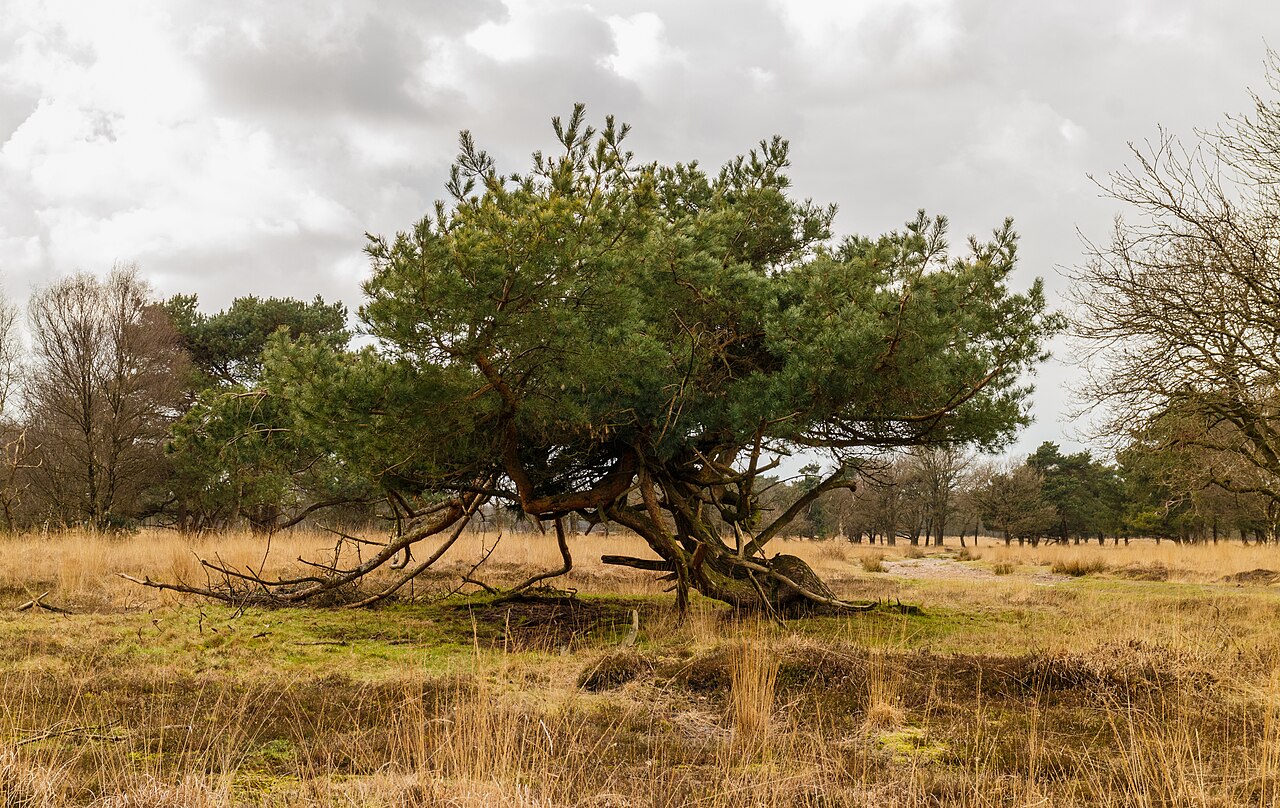
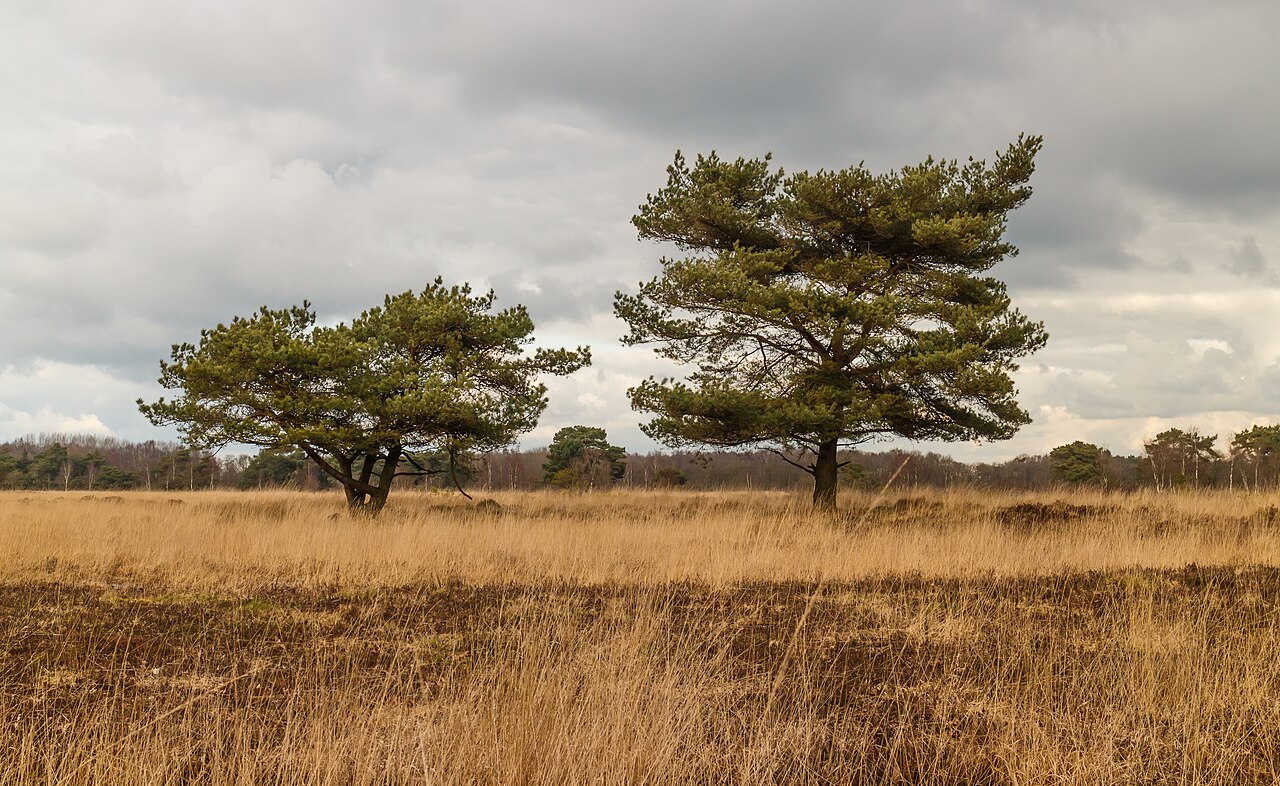
The bark is thick, flaky, and orange-red on young trees, becoming scaly and gray-brown with age, though the upper trunk may keep its reddish color. Mature trees have a distinctive shape: a long, straight, bare trunk topped with a rounded or flat crown of foliage. Shoots are light brown with spirally arranged scale-like patterns. The needles are glaucous blue-green (often darker green to yellow-green in winter), 2.5–5 centimeters (1–2 inches) long and 1–2 millimeters wide, growing in pairs from a persistent gray basal sheath 5–10 millimeters long. On vigorous young trees, needles can be twice as long and occasionally appear in groups of three or four. Needles last two to four years in warmer climates and up to nine years in subarctic regions. Seedlings under one year old have single, flattened juvenile leaves 2–3 centimeters long with serrated edges.
Seed cones are red when pollinated, then pale brown, globose, and 4–8 millimeters across in their first year. They reach full size in their second year, becoming pointed, ovoid-conic, green to gray-green or yellow-brown at maturity, 3–7.5 centimeters long. The cone scales have a flat to pyramidal apophysis, with a small prickle on the umbo. Seeds are blackish, 3–5 millimeters long, with a pale brown wing 12–20 millimeters long; they are released when cones open in spring, 22–24 months after pollination. Pollen cones are yellow (occasionally pink), 8–12 millimeters long, and release pollen in mid to late spring.
Over 100 varieties of Pinus sylvestris have been described, but only three or four are currently accepted. They differ minimally in appearance, though genetic analysis and resin composition show more pronounced differences. Populations in westernmost Scotland are genetically distinct from those in the rest of Scotland and northern Europe, but not enough to be classified as separate varieties. Trees in the far north were once sometimes treated as var. lapponica, but the differences are clinal and not genetically distinct.
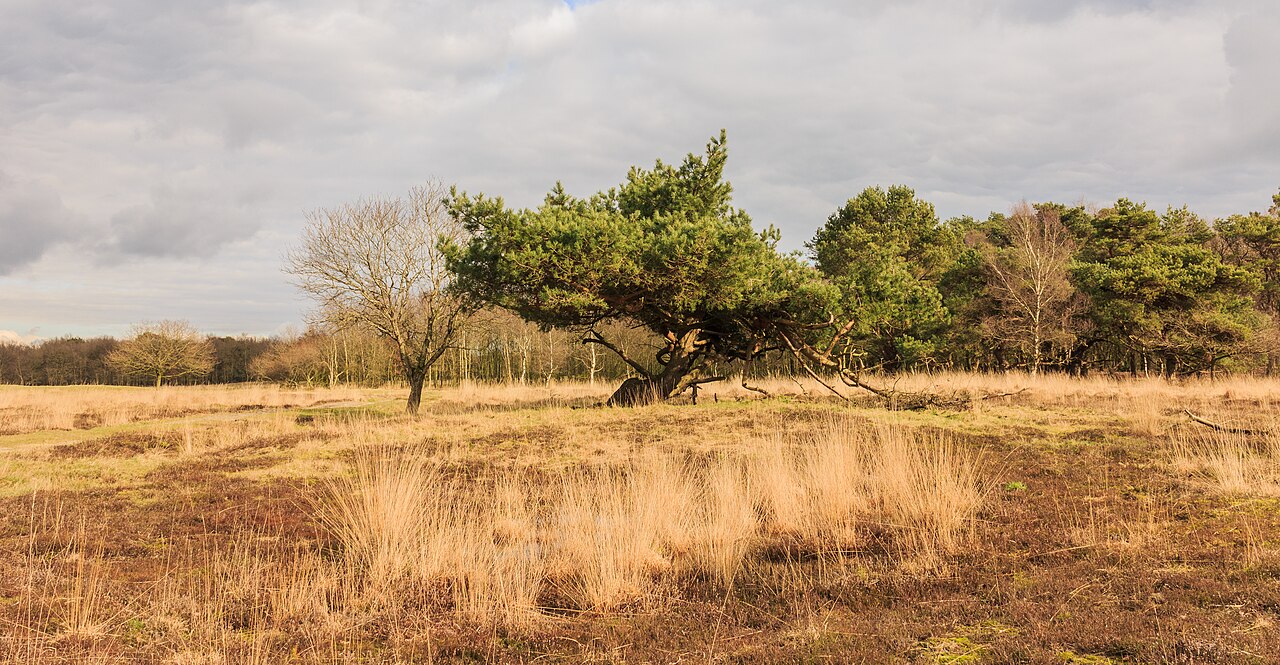
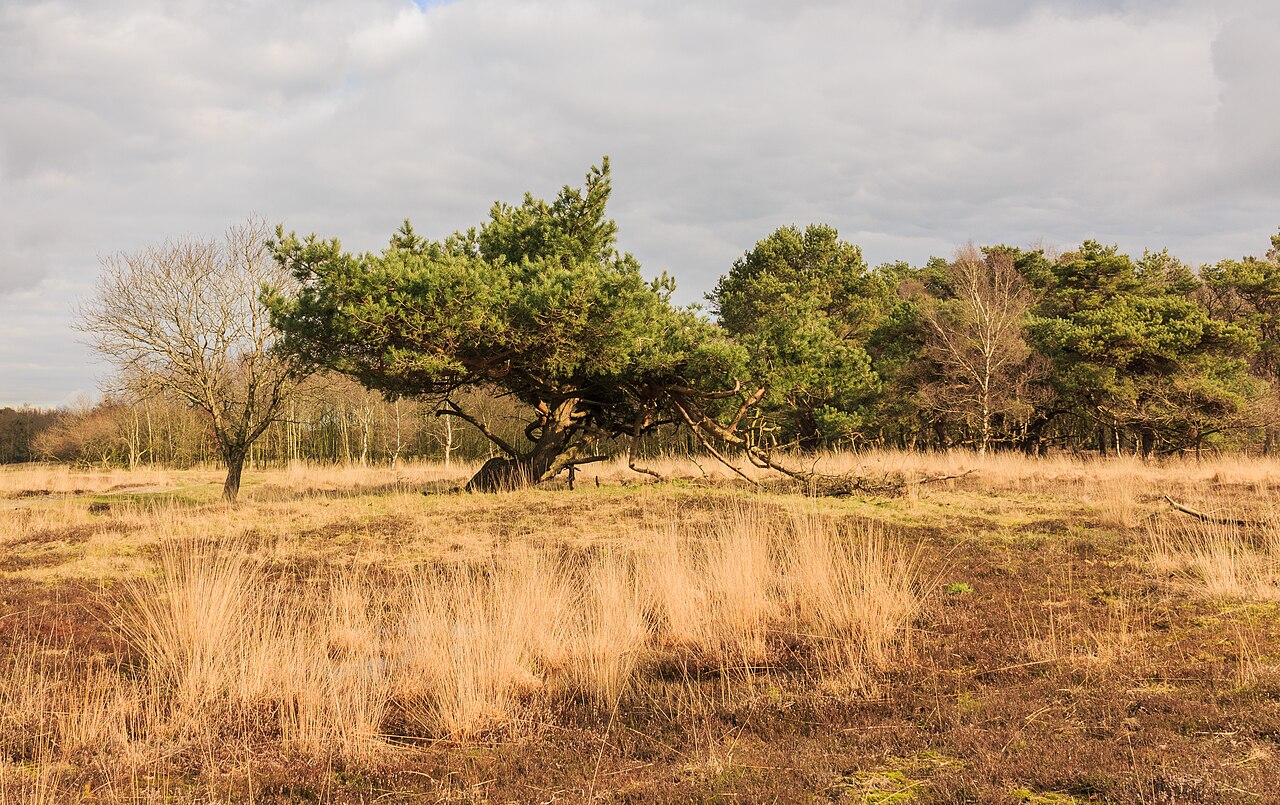
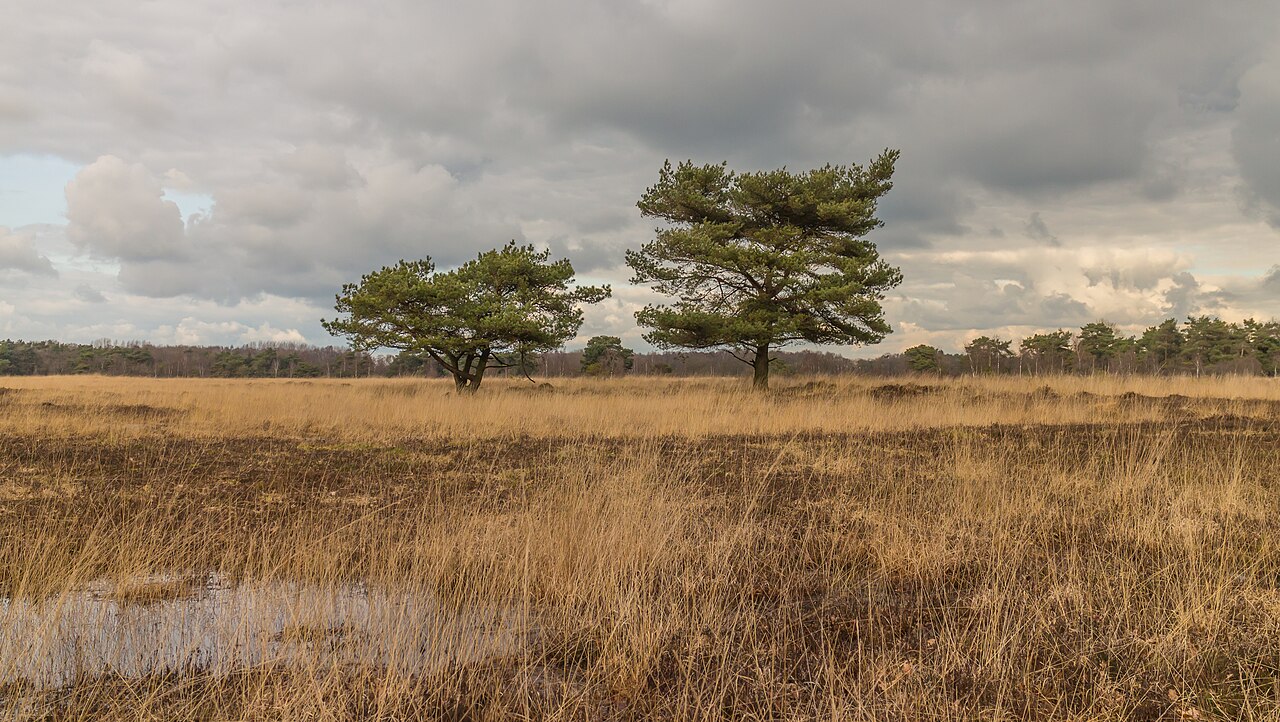
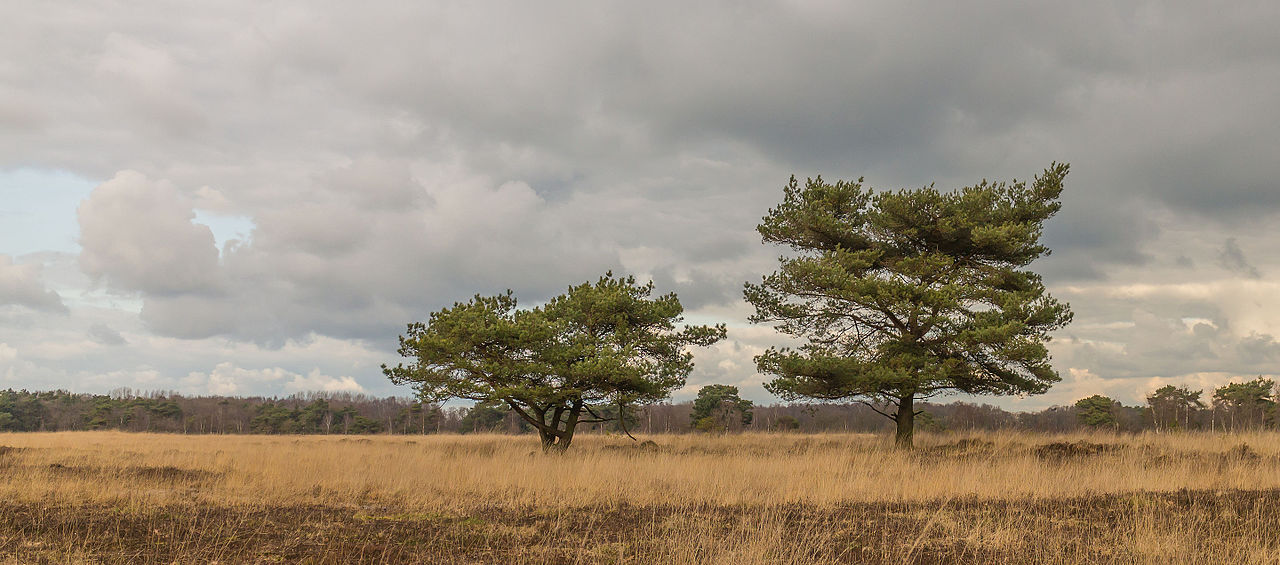
This pine is the only one native to northern Europe, ranging from Western Europe to eastern Siberia, south to the Caucasus and Anatolia, and north into the Arctic Circle in Fennoscandia. In the north, it grows from sea level to 1,000 meters (3,300 feet); in the south, it is a mountain tree at 1,200–2,600 meters (3,900–8,500 feet). Its range overlaps with that of the beetle T. piniperda, making the beetle a major pest. The species is mainly found on poor, sandy soils, rocky outcrops, peat bogs, or near the forest limit. On fertile sites, it is outcompeted by spruce or broad-leaved trees.
In Britain and Ireland, the tree spread after the Last Glacial Maximum. Pollen records show it was present in southern England by 9,000 years ago, having arrived from northeast France, and reached the Lake District and North Pennines 500 years later. It was in Ireland over 8,800 years ago but absent from Wales at that time, suggesting an Iberian origin or surviving populations, though evidence for survival is lacking. Pine expanded into Scotland between 8,000 and 8,500 years ago, possibly from an independent refuge, from Scandinavia via Doggerland, or from Ireland. As the climate warmed, it became extinct across most of Britain and Ireland around 5,500 years ago, surviving only in Scotland, Kielder in England, and The Burren in County Clare, Ireland. The Irish and western Scottish populations underwent a massive decline about 4,000 years ago, leading to the practical extinction of the Irish population between 2,000 and 1,000 years ago. It was replaced by large areas of blanket bog in western Scotland and Ireland. The reasons for its decline and extinction in England are unclear.
- field
- Botany
- known_for
- Only pine native to northern Europe; important forestry tree
- native_range
- Eurasia, from Western Europe to Eastern Siberia
Lore & Background
Pinus sylvestris is a variety of ancient evergreen coniferous tree. A fossil seed cone of Pinus montana fossilis sent by the Naturmuseum Senckenberg to the Swedish Museum of Natural History was dated to the late Pliocene epoch (Reuverian stage ~ 2.6 million years ago). Its longevity might be due to its genetics; genes during the haploid stage of its life cycle are subject to stronger negative selection. Modern trees can grow up to 35 metres in height and 1 m in trunk diameter when mature, exceptionally over 45 m tall and 1.7 m in trunk diameter on very productive sites. The bark is thick, flaky and orange-red when young to scaly and gray-brown in maturity. The habit of the mature tree is distinctive due to its long, bare and straight trunk topped by a rounded or flat-topped mass of foliage.
Reader's Guide
Pinus sylvestris is the only pine native to northern Europe, ranging from Western Europe to Eastern Siberia, south to the Caucasus Mountains and Anatolia, and north to well inside the Arctic Circle in Fennoscandia. It is mainly found on poorer, sandy soils, rocky outcrops, peat bogs or close to the forest limit. The species is an important tree in forestry; its wood is used for pulp and sawn timber products. The pine formed much of the Caledonian Forest, which once covered much of the Scottish Highlands. Plans are currently in progress to restore at least some areas.
Did You Know?
- Before the 18th century, the species was more often known as Scots fir or Scotch fir.
Gallery
Frequently Asked Questions
What is Pinus sylvestris?
Pinus sylvestris is a conifer species in the Pinaceae family, most commonly called the Scots pine (or Scotch pine in American usage). It holds the distinction of being the only true pine species native to northern Europe.
What are Pinus sylvestris's key identifying features?
The tree is easily recognized by its combination of relatively short, blue-green needles and a striking orange-red bark. This colour pairing sets it apart from most other European conifers.
Where does Pinus sylvestris grow naturally?
Its native range stretches across the broad expanse of Eurasia, from Western European coastlands all the way to Eastern Siberia. It thrives across a wide variety of temperate and boreal habitats within that range.
Why is Pinus sylvestris important to forestry and ecology?
As the sole native pine of northern Europe, it plays a central role in regional forest management and timber production. Its resilience and wide distribution make it a cornerstone species for both ecological and economic purposes across its range.
More in Conifers & Allies 1-20
Spotted an error? Know more?
This is a living reference — every entry is fact-audited, and reader corrections feed straight into our audit queue. Suggest an edit · See this site's audit record