
Pinus ponderosa
A widely distributed North American pine with disputed taxonomy.

James St. John · CC BY 2.0
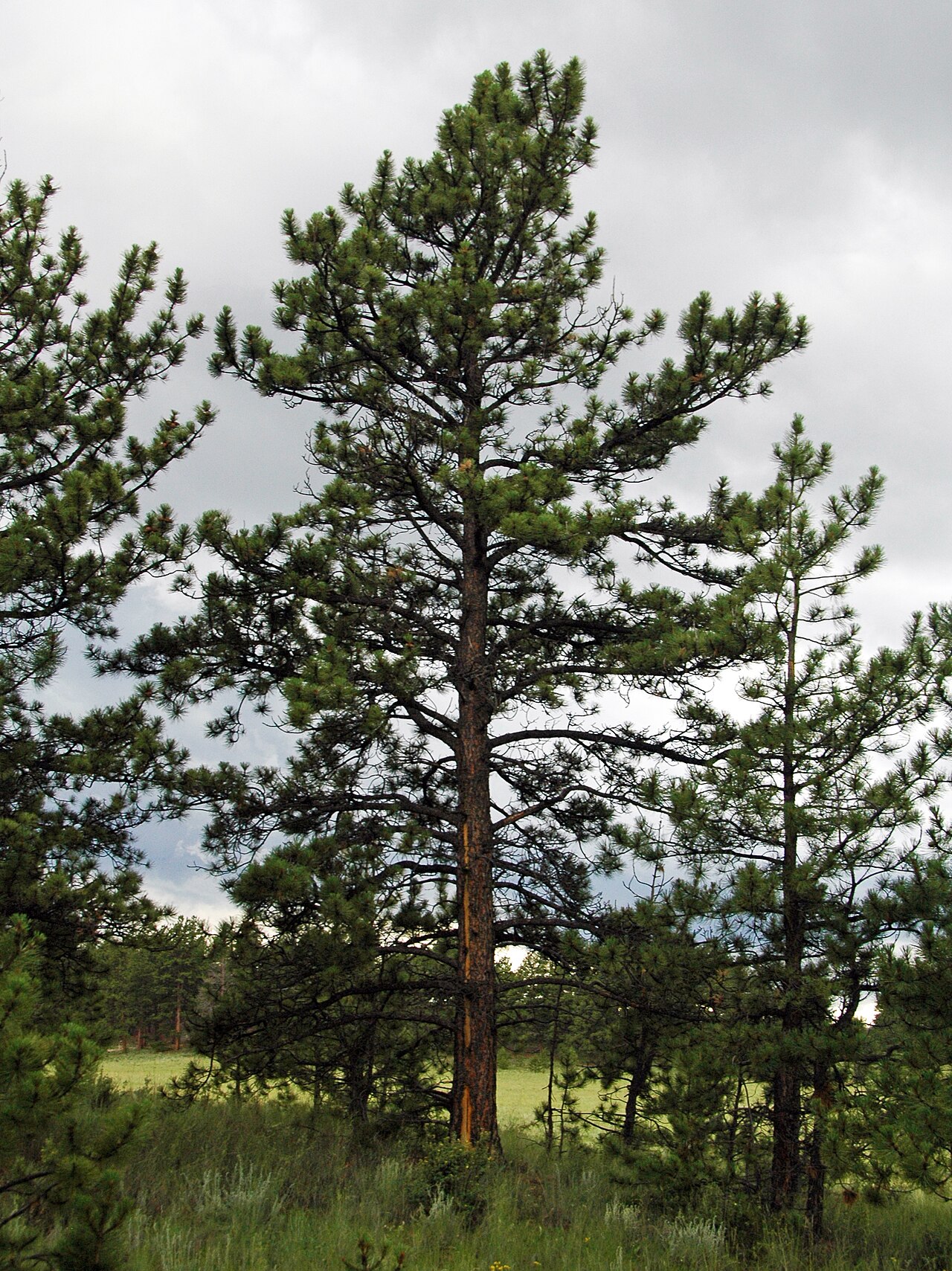
Pinus ponderosa, called the ponderosa pine or western yellow pine, is a large pine species found in mountain areas of western North America, where it occupies a wider range than any other North American pine. It grows in various upright forms across sixteen western U.S. states, British Columbia in Canada, and has been introduced to temperate parts of Europe and New Zealand. Modern science first recorded it in 1826 near present-day Spokane, Washington (where it is the official city tree), when David Douglas mistakenly identified it as *Pinus resinosa* (red pine). By 1829, Douglas realized it was a new species and named it *Pinus ponderosa* for its heavy wood. Scottish nurseryman Charles Lawson formally described and named it in 1836. Montana adopted it as its state tree in 1949. It has also been called "bull pine" and "blackjack pine," though these are general terms loggers used for growth stages of several pines, not unique to this species.
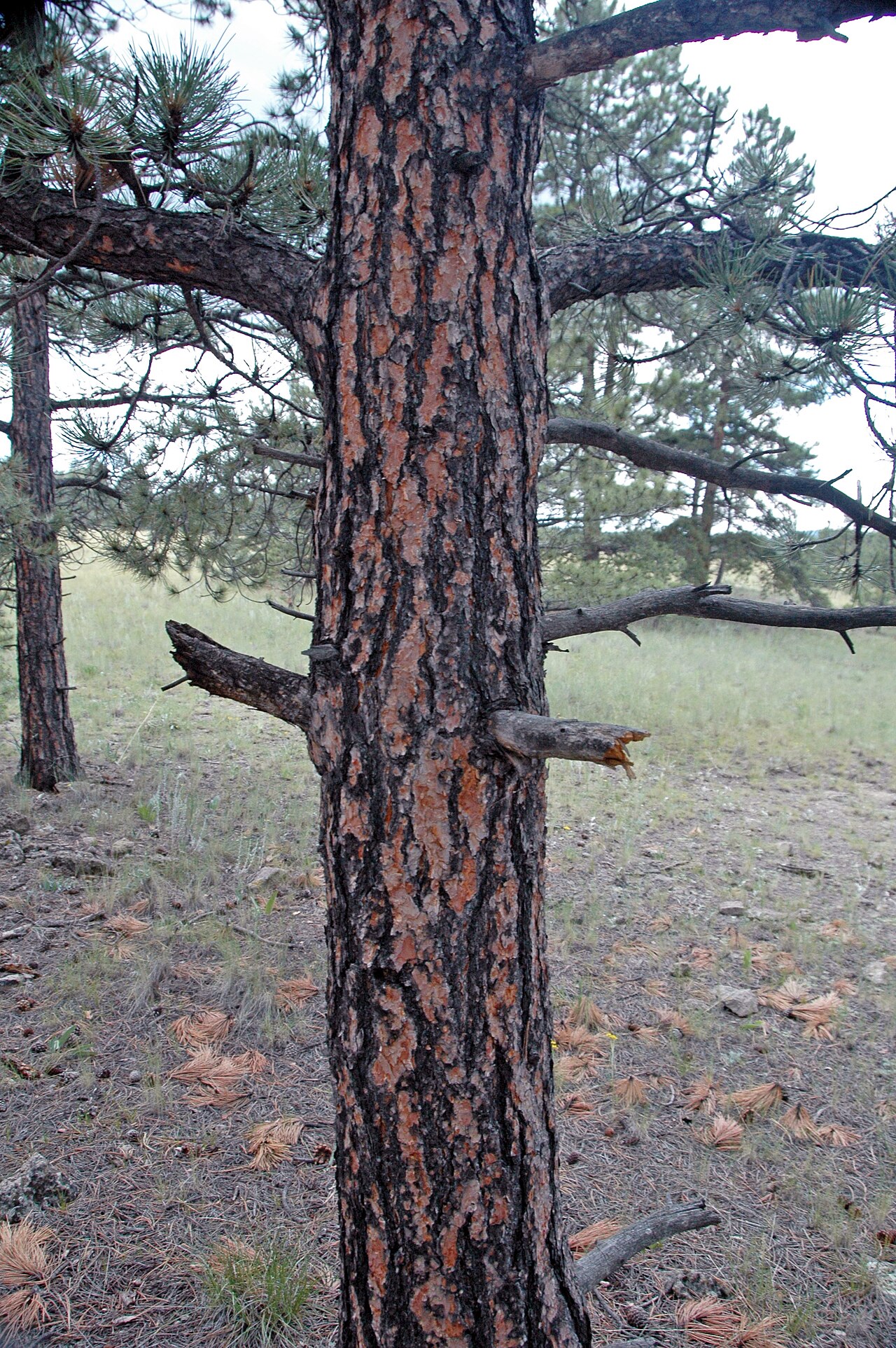
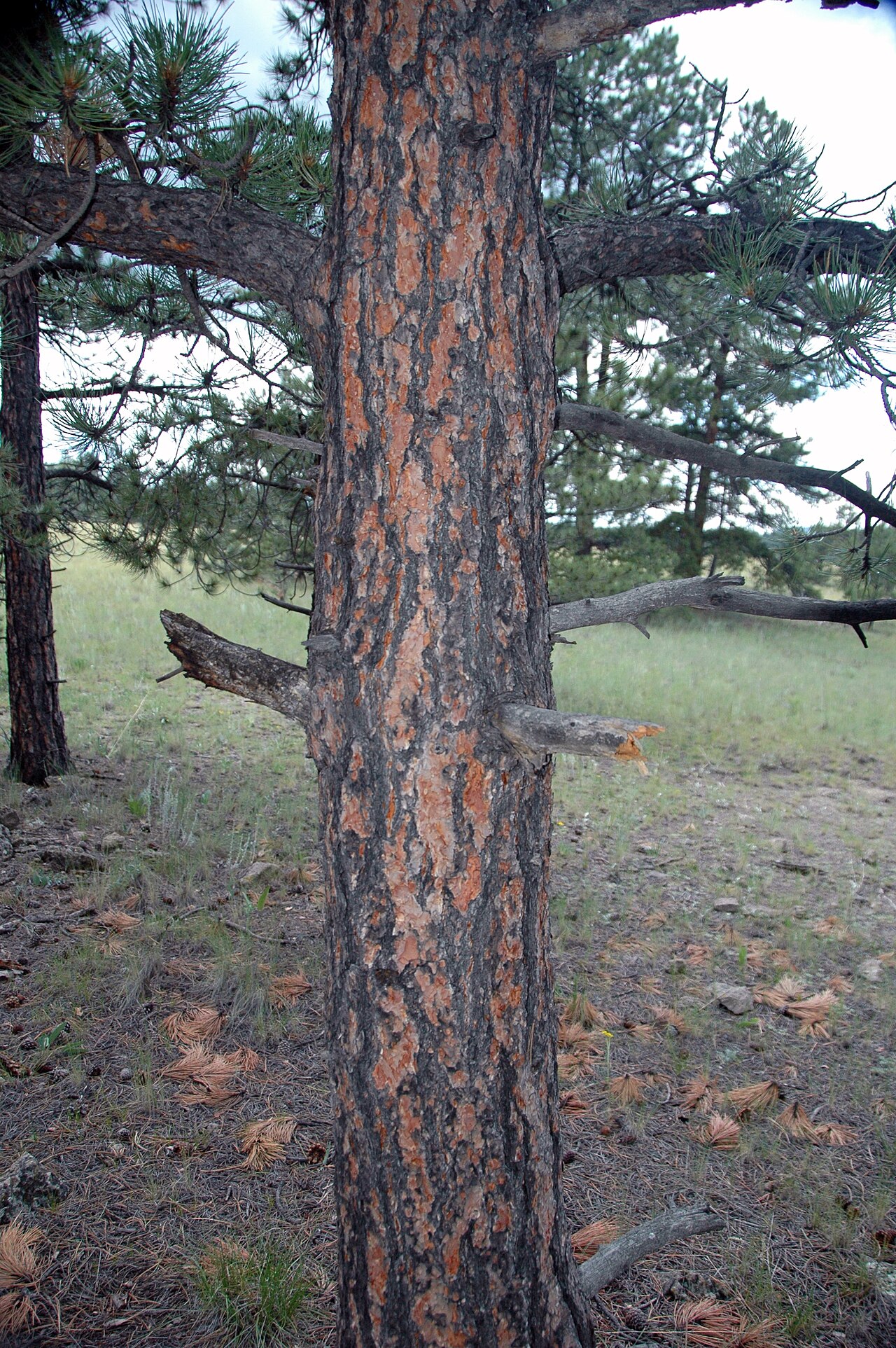
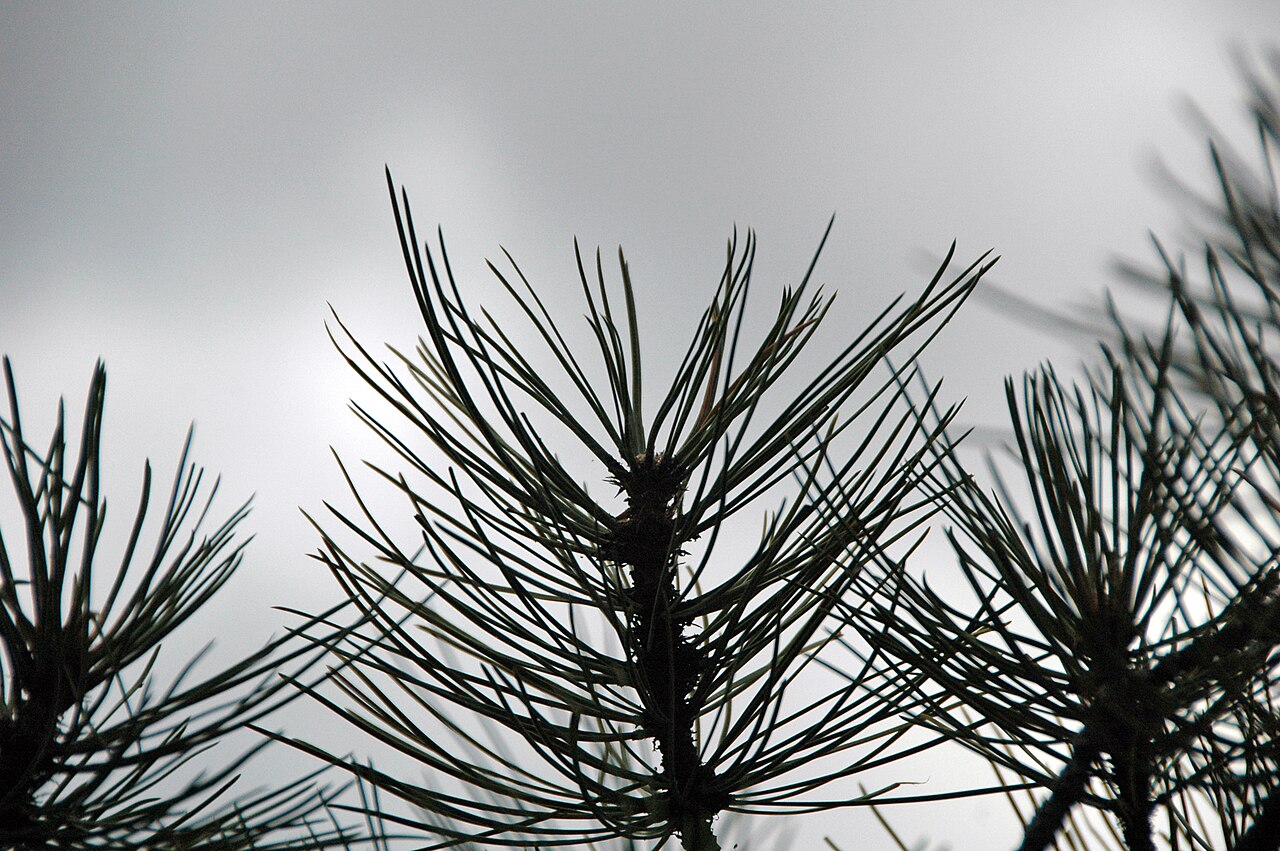
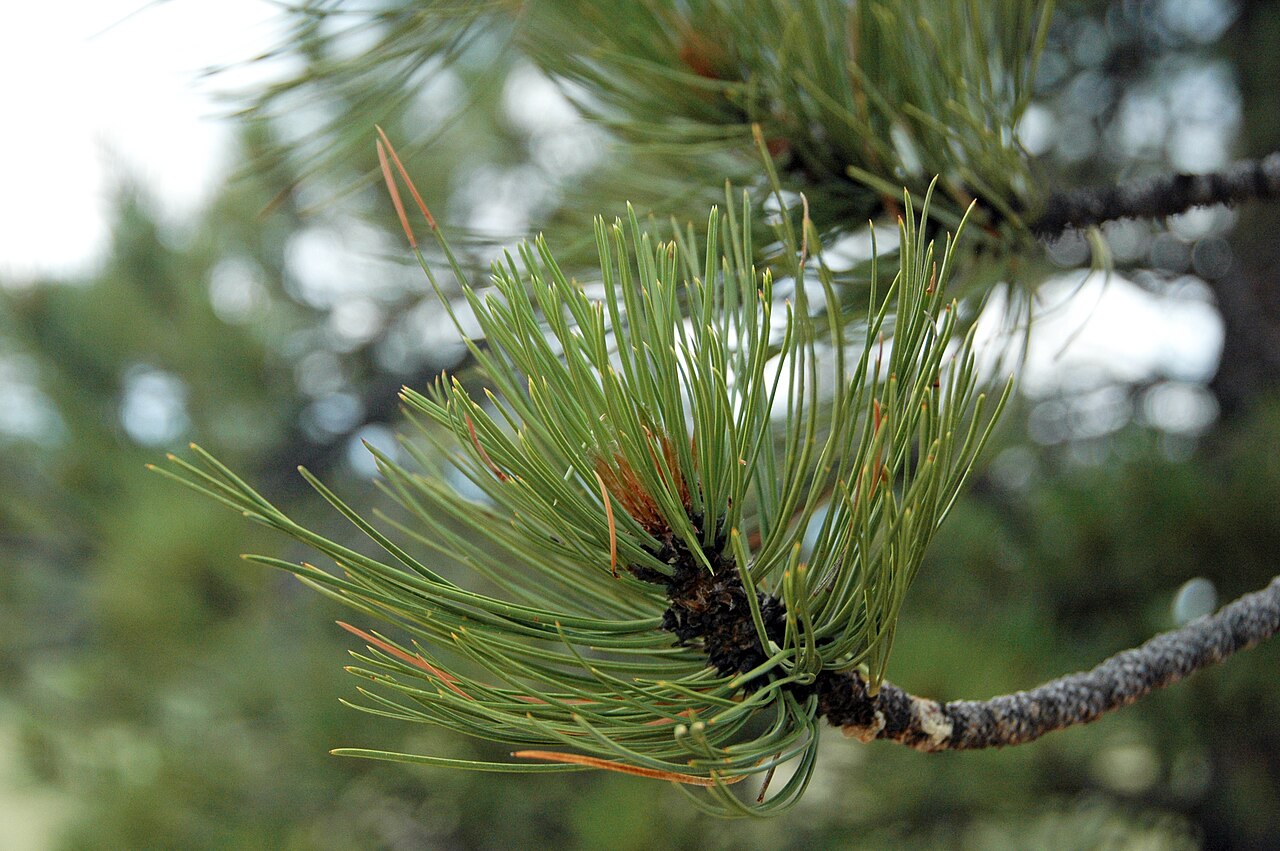
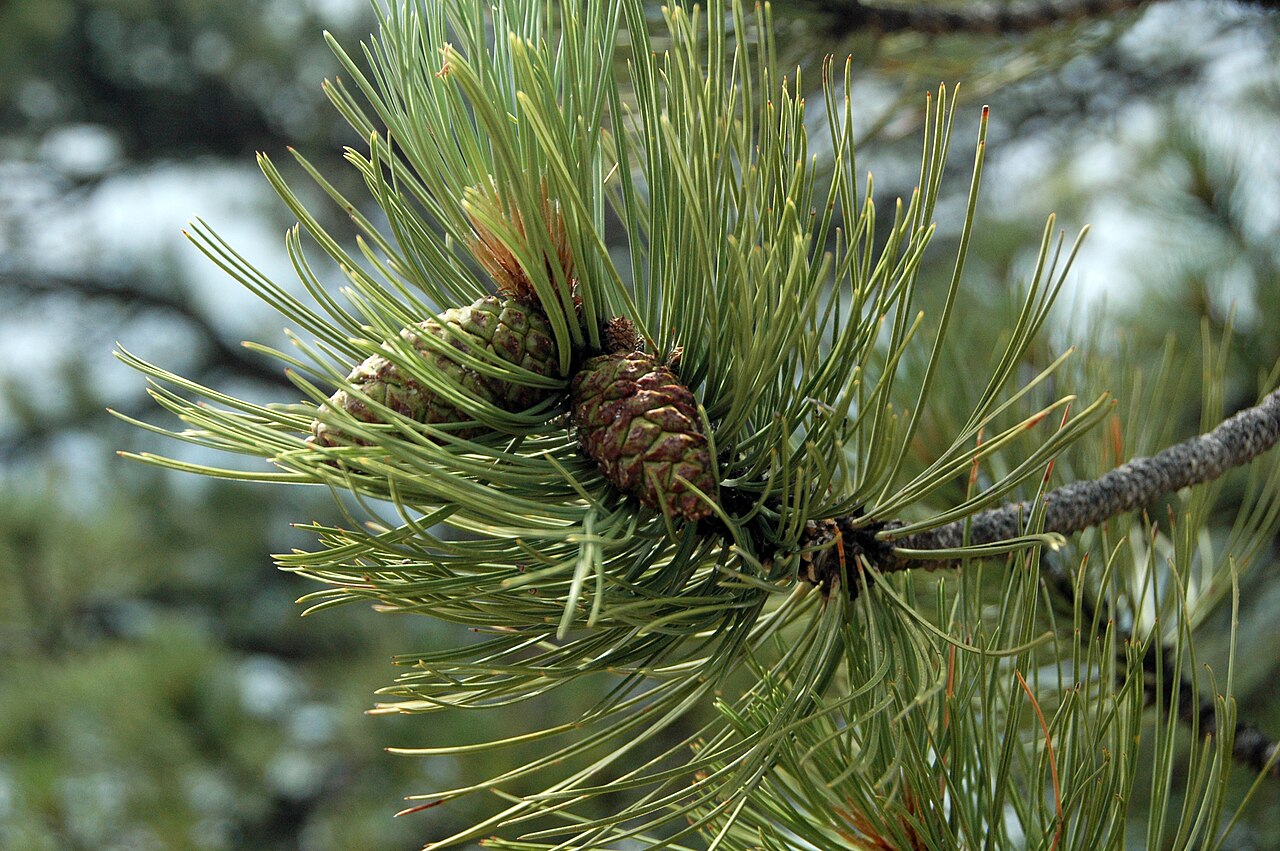
The tree’s bark sets it apart from other pines. Mature and older individuals have yellow to orange-red bark in wide plates with black crevices, while younger trees have blackish-brown bark that early loggers called "blackjacks." The five varieties or subspecies, recognized by some botanists, differ in needle traits. The Pacific subspecies has the longest needles (15–24 cm), flexible and in plume-like clusters of three, with green immature cones. The North Plateau or Columbia ponderosa has long needles (12–20.5 cm), relatively flexible, in clusters of three, with purple immature cones. The Rocky Mountains subspecies has shorter, stouter needles (9.2–14.4 cm) in bushy tufts of two or three, usually with green immature cones (purple at high altitudes). The southwestern subspecies has stout needles (11.2–19.8 cm) in clusters of three. The central High Plains subspecies has the fewest branches (1.4 per whorl on average), stout upright branches at narrow angles, and long green needles (14.8–17.9 cm) that extend far along the branch like a foxtail; its needles are the widest, stoutest, and fewest for the species. The egg-shaped cones, often abundant under trees, are 8–13 cm long, and each scale has a sharp point.
Opinions differ on the tree’s scent. Some say the bark smells of turpentine, possibly due to terpenes like alpha- and beta-pinenes and delta-3-carene. Others say it has no distinct scent, or that bark from a furrow smells like vanilla. Sources agree that Jeffrey pine has a stronger scent. When carved, pitch-filled stumps give off a fresh pitch smell.
The National Register of Big Trees lists a ponderosa pine 72 m tall and 8.2 m in circumference. In January 2011, a Pacific ponderosa pine in Oregon’s Rogue River–Siskiyou National Forest was laser-measured at 81.79 m high by Michael Taylor and Mario Vaden. On October 13, 2011, Ascending The Giants climbed it and directly measured 81.77 m with a tape. As of 2015, a *Pinus lambertiana* specimen measured 83.45 m, surpassing the ponderosa previously considered the world’s tallest pine.
Charles Lawson scientifically described and named *Pinus ponderosa* in 1836, based on information from David Douglas. Its taxonomy is heavily debated. In 2013, Robert Z. Callaham concluded it is a single species from the Rocky Mountains to the Pacific coast, divided into five subspecies. The USDA PLANTS database lists these as varieties as of 2025. The World Plants database recognizes only three varieties (one described in 2024). World Flora Online lists two varieties. Plants of the World Online lists four varieties but treats two other taxa as separate species. Christopher J. Earle’s Gymnosperm Database recognizes three subspecies and two taxa as species. The Flora of North America recognizes three varieties.
Among the recognized subspecies and varieties: *Pinus ponderosa* subsp. *benthamiana* (synonyms include *Pinus benthamiana*, *Pinus ponderosa* var. *benthamiana*, *Pinus ponderosa* subsp. *critchfieldiana*, and *Pinus ponderosa* var. *pacifica*) is the Pacific ponderosa pine. It grows on the Olympic Peninsula in Washington, Oregon west of the Cascade Range, all of California, and far western Nevada, at elevations from 100 to 2,700 m on coastal-draining slopes. GRIN and PLANTS accept this as the correct name for Callaham’s subspecies *critchfieldiana*. POWO accepts it at varietal rank, but World Plants and WFO currently consider it a synonym of var. *ponderosa*. Both Callaham and Haller & Vivrette cited Hartweg’s older name *benthamiana* in their synonymy.
- Scientific name
- Pinus ponderosa
- Common names
- ponderosa pine, western yellow pine, bull pine, blackjack pine
- Native range
- 16 western U.S. states and British Columbia, Canada
Lore & Background
Pinus ponderosa, the ponderosa pine, is a large evergreen conifer native to mountainous regions of western North America, where it is the most widely distributed pine species. Its bark is a key identifying feature: mature trees display broad plates of yellow to orange-red bark with black crevices, while younger specimens have blackish-brown bark, historically called "blackjacks" by loggers. The needles are characteristically bright green, contrasting with the blue-green needles of the similar Jeffrey pine. Needle length and arrangement vary by subspecies: Pacific trees bear the longest, most flexible needles in plume-like clusters of three; Rocky Mountain trees have shorter, stouter needles in tufted fascicles of two or three; and the central High Plains variety has the fewest branches, with stout, upright branches and long needles extending far along the branch like a fox tail. The egg-shaped cones, often abundant beneath trees, have scales ending in a sharp point. The bark’s scent is inconsistently described: some note a turpentine-like odor from terpenes, others find no distinctive scent, and some detect vanilla when sampled from a furrow. The species was first documented in modern science in 1826 near present-day Spokane, Washington, where David Douglas misidentified it as red pine before later naming it *Pinus ponderosa* for its heavy wood. It grows in sixteen western U.S. states, British Columbia, and has been introduced in temperate Europe and New Zealand.
Reader's Guide
Pinus ponderosa is a large coniferous pine tree with bark that helps distinguish it from other species. Mature individuals have yellow to orange-red bark in broad plates with black crevices; younger trees have blackish-brown bark. The species has five varieties or subspecies as classified by some botanists, identifiable by needle characteristics and cone color. The taxonomy of the ponderosa pine is heavily disputed by botanists and foresters. Callaham concluded it is a single species divided into five subspecies, but other authorities recognize between two and four varieties or subspecies. The National Register of Big Trees lists a ponderosa pine 72 m tall and 8.2 m in circumference. The species has been introduced in temperate regions of Europe and in New Zealand.
Did You Know?
- The bark of mature ponderosa pines is yellow to orange-red with black crevices.
- The taxonomy of Pinus ponderosa is disputed, with authorities recognizing between two and five subspecies or varieties.
Gallery
Frequently Asked Questions
Who is Pinus ponderosa?
Pinus ponderosa is a very large pine species native to the mountainous regions of western North America, best known by the common names ponderosa pine and western yellow pine. It holds the record as the most widely distributed pine species on the continent.
What is Pinus ponderosa's native range?
Its natural territory spans 16 western U.S. states as well as British Columbia, Canada, always favoring mountainous elevations within that broad area.
What other names does Pinus ponderosa go by?
Beyond the familiar ponderosa pine and western yellow pine, it is also called bull pine and blackjack pine, a nod to the dark, rough texture of its mature bark.
More in Conifers & Allies 1-20
Spotted an error? Know more?
This is a living reference — every entry is fact-audited, and reader corrections feed straight into our audit queue. Suggest an edit · See this site's audit record