
Pinus lambertiana
Tallest and largest pine, with among the longest cones.

David Prasad from Fresno, CA., United States · CC BY-SA 2.0
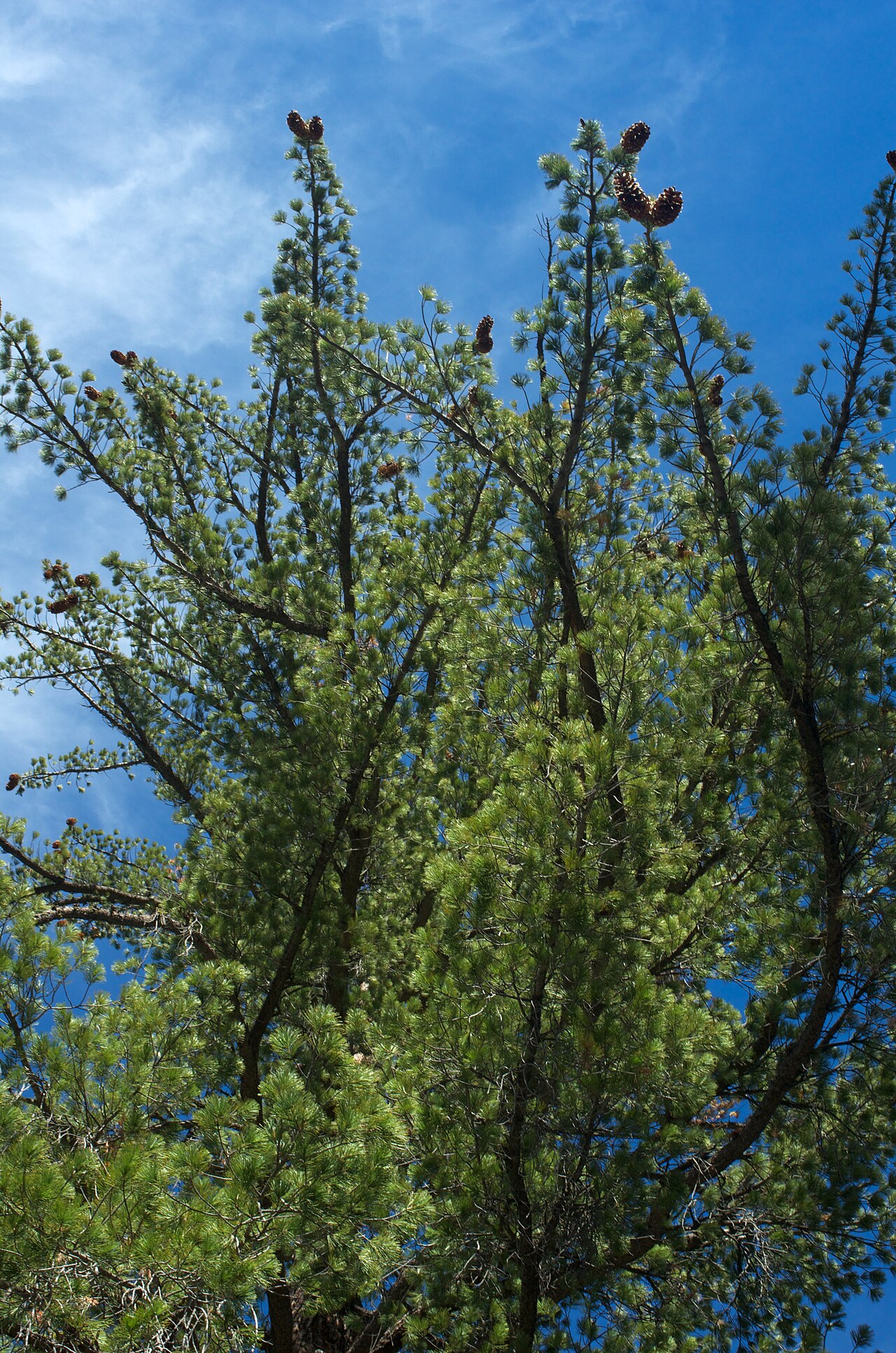
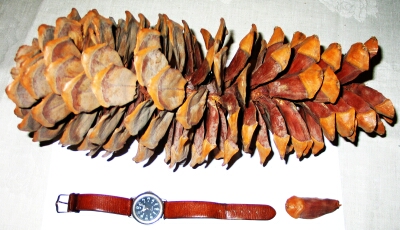
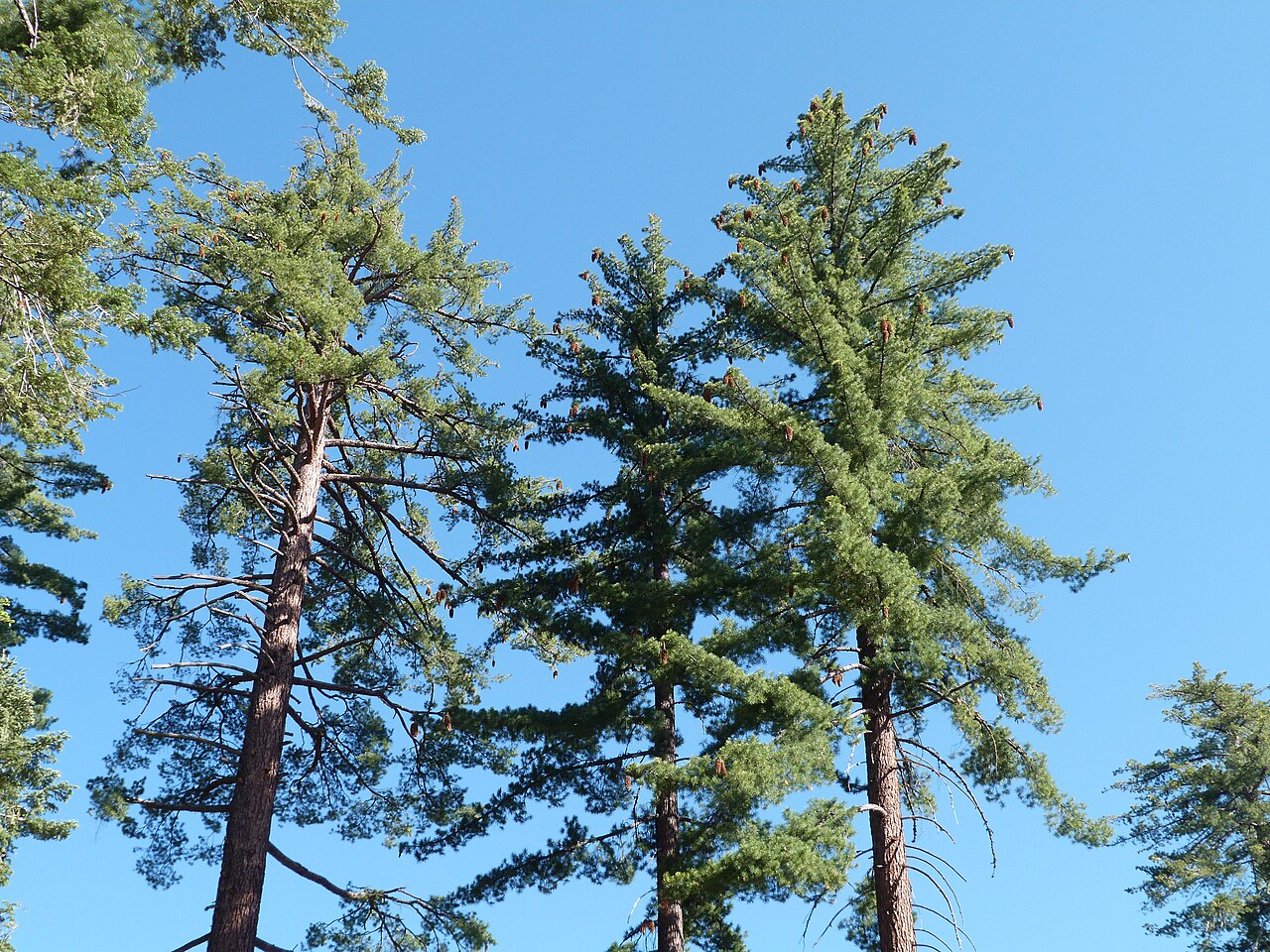
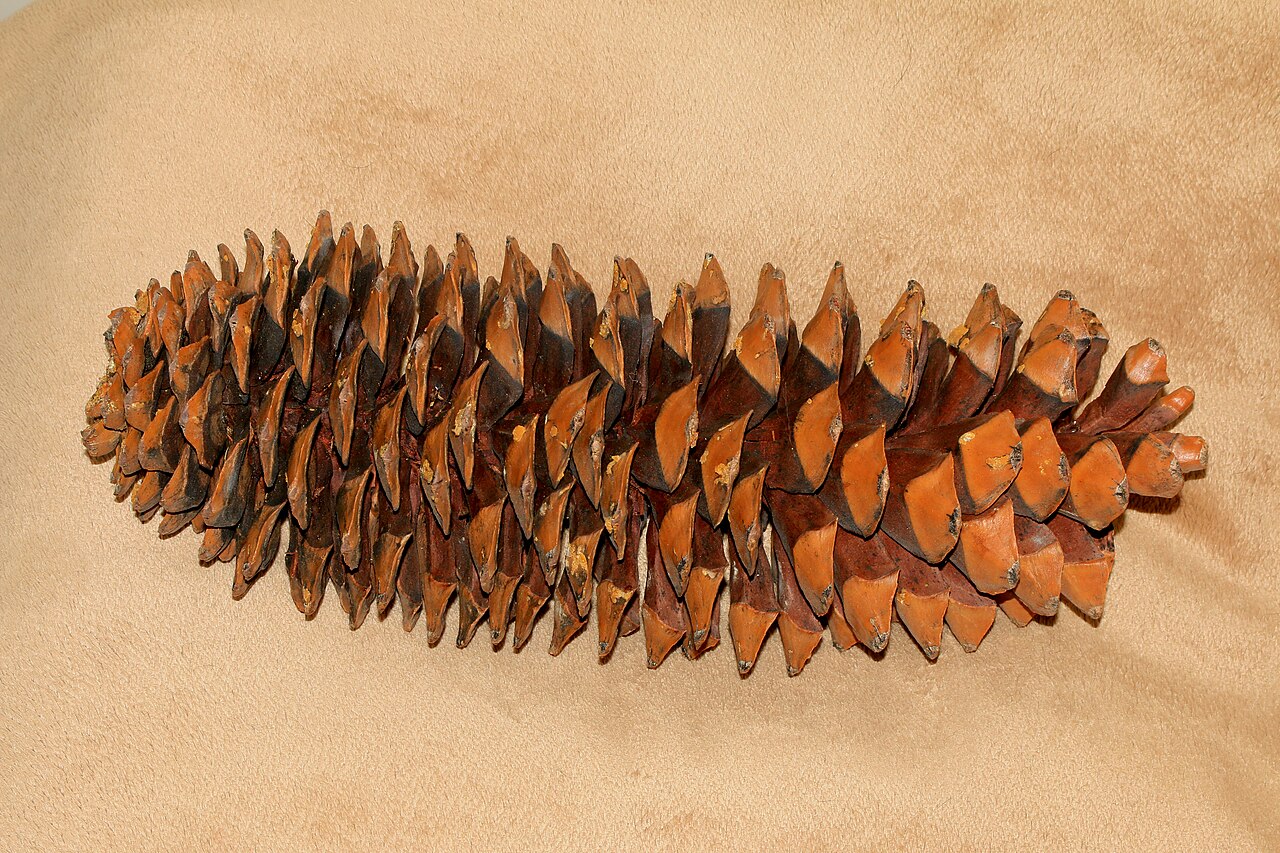
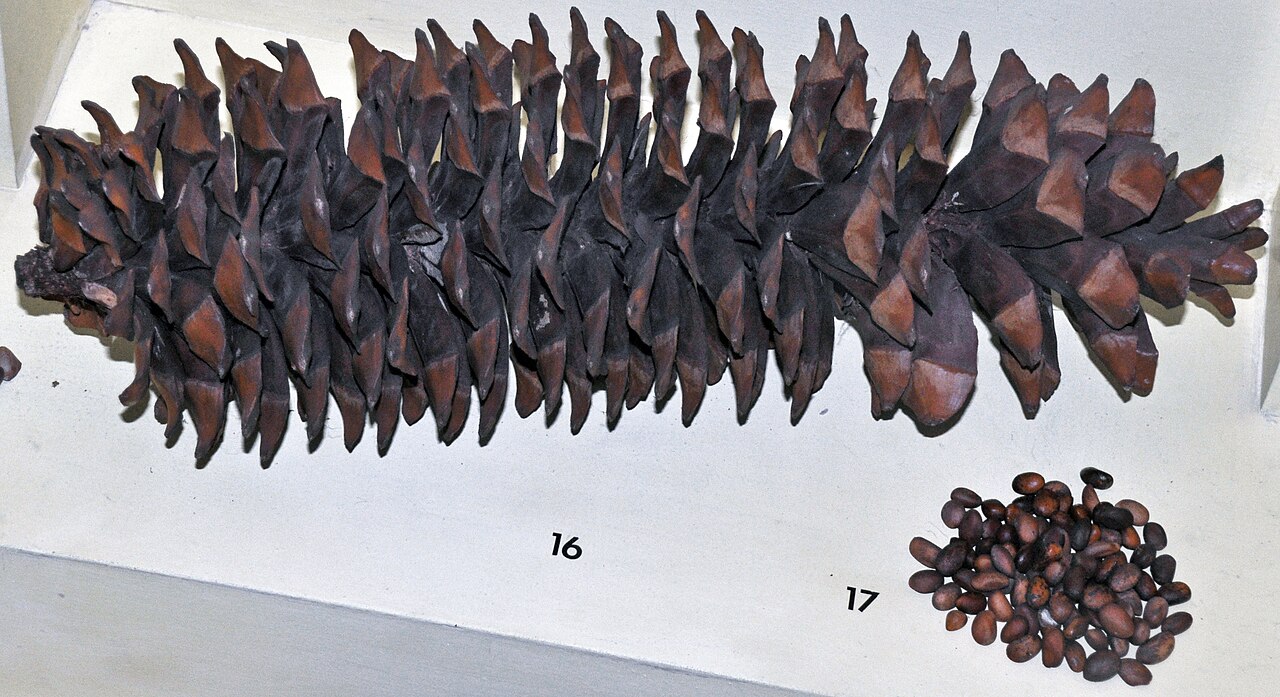
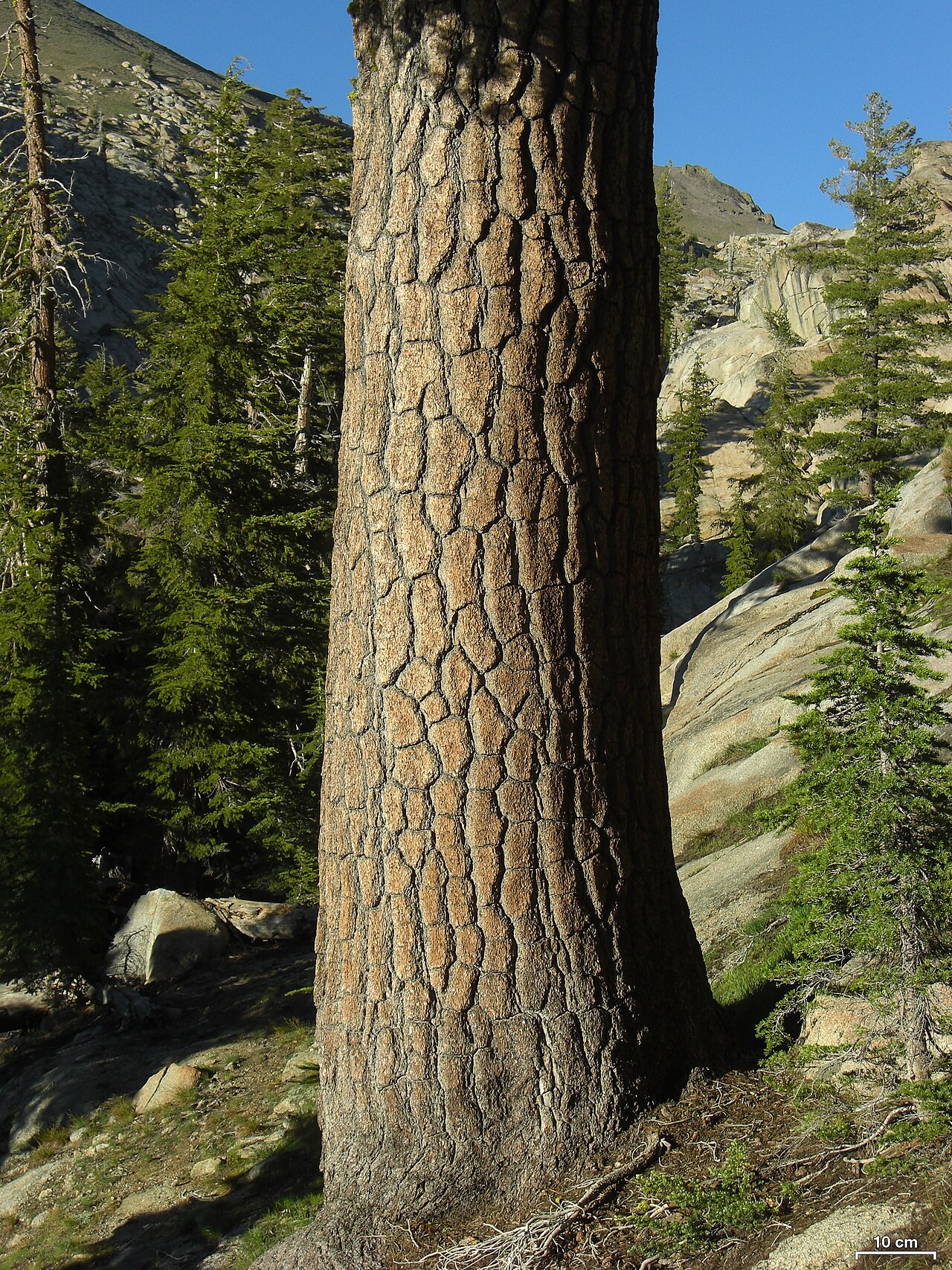
Pinus lambertiana, commonly known as the sugar pine, is the tallest and most massive of all pine species, and it produces some of the longest cones found among conifers. This tree is native to mountain ranges along the Pacific coast of North America, ranging from Oregon south through California and into Baja California in Mexico. It typically grows in mixed forests rather than pure stands and is shade-tolerant when young. The bark is brown to purple and can be thick, while the upper branches may extend outward significantly. Its needles grow in bundles of five, a characteristic of white pines, and are relatively long. The cones are notably long, though those of the Coulter pine are heavier; unripe sugar pine cones can weigh enough to become dangerous projectiles when squirrels chew them off. The seeds are small with a long wing for wind dispersal. The tallest known specimen, discovered in 2015, stands in Yosemite National Park, which also held the second tallest, a tree that died from a bark beetle attack in 2007, and the third tallest, which survived the Rim Fire. Other large specimens grow in southern Oregon. The sugar pine has a massive genome, sequenced in 2016, which is among the largest ever assembled; it is dominated by transposable elements that contribute to its evolutionary change. The tree’s common name comes from its sweet resin, used by Native Americans as a sweetener, which naturalist John Muir preferred to maple sugar. The scientific name honors London botanist Aylmer Bourke Lambert, assigned by David Douglas in 1826. The species faces severe threats from white pine blister rust, a fungal pathogen introduced from Europe in 1909.
- common_name
- Sugar pine
- scientific_name
- Pinus lambertiana
- max_trunk_diameter
- 3.5 m (11 ft 6 in)
- cone_length
- 10–50 cm (4–20 in), occasionally up to 56 cm (22 in)
- native_range
- Oregon, California, Baja California
- notable_for
- Tallest and largest pine species; among longest conifer cones
Quick Facts
- Parent
- Pinus subsect. Strobus
- Genus
- Pinus
- Species
- lambertiana
Facts from the source article.
Lore & Background
The sugar pine is the tallest and most massive of all pine species, commonly reaching 40 to 60 meters in height, with exceptional individuals exceeding 82 meters; the tallest recorded specimen, discovered in 2015 in Yosemite National Park, stands 83.45 meters tall. Its trunk diameter typically ranges from 1.2 to 2.5 meters, occasionally reaching 3.5 meters. The bark is brown to purple and 5 to 10 centimeters thick, while the upper branches can extend over 8 meters. Needles grow in bundles of five, as is typical of white pines, and measure 5 to 11 centimeters long. The cones are among the longest of any conifer, usually 10 to 50 centimeters, but can reach 56 centimeters; though Coulter pine cones are heavier, sugar pine cones weigh 1 to 2 kilograms when unripe, making them hazardous when dislodged by squirrels. Seeds are 1 to 2 centimeters long with a 2 to 3 centimeter wing for wind dispersal. The species is native to coastal and inland mountain ranges along the Pacific coast from Oregon south to Baja California, including the Cascade Range, Sierra Nevada, Coast Ranges, and Sierra San Pedro Martir, occurring between 500 and 1500 meters elevation. It never grows in pure stands, always in mixed forests, and is shade tolerant in youth. The common name derives from its sweet resin, used by Native Americans as a sweetener, which naturalist John Muir considered superior to maple sugar. The scientific name was assigned by David Douglas in 1826, honoring London botanist Aylmer Bourke Lambert. The species has been severely impacted by white pine blister rust, a fungal pathogen introduced from Europe in 1909, which has killed many trees, especially in the northern part of its range.
Reader's Guide
Pinus lambertiana holds significance as the tallest and most massive pine species, with a genome among the largest sequenced in plants—31 gigabases, expanded by transposable elements. Its common name derives from the sweet resin used by Native Americans as a sweetener, which John Muir considered superior to maple sugar. Mountain pine beetles and climate change further weaken trees, reducing resin defenses and increasing pest survival. Conservation efforts include the U.S. The species is also ecologically important: its large, nutritious seeds are gathered by yellow pine chipmunks, Steller's jays, and black bears. Despite its thick bark providing fire resistance, drier conditions and higher temperatures linked to climate change increase mortality and fire risk.
Did You Know?
- The sugar pine's genome is 31 gigabases, one of the largest sequenced and assembled genomes in plants.
- The common name comes from the sweet resin, which Native Americans used as a sweetener.
Gallery
Frequently Asked Questions
What is Pinus lambertiana?
Pinus lambertiana is a species of pine tree more commonly called the sugar pine. It is native to the Pacific coast region of North America, stretching from Oregon down through California and into Baja California, Mexico.
What's special about Pinus lambertiana's cones?
Sugar pine produces some of the longest cones of any conifer, typically ranging from 10 to 50 centimeters (4 to 20 inches) in length. On rare occasions, a single cone can stretch as far as 56 centimeters (22 inches).
Where does Pinus lambertiana naturally occur?
Its native range covers both coastal and inland mountain zones along the Pacific coast, from Oregon southward through California and into Baja California in Mexico.
Why is Pinus lambertiana considered significant among conifers?
It stands out as the tallest and largest pine species on the planet while also bearing some of the longest cones found in the entire conifer family. These two traits together make it a standout member of the genus Pinus.
More in Conifers & Allies 1-20
Spotted an error? Know more?
This is a living reference — every entry is fact-audited, and reader corrections feed straight into our audit queue. Suggest an edit · See this site's audit record