
Pinus halepensis
Mediterranean pine described by Sibthorp, used for timber, resin, and cuisine.

Godwin Borg · CC BY-SA 4.0
Pinus halepensis, called the Aleppo pine or Jerusalem pine, is a Mediterranean native. Botanist Philip Miller gave it its official name in his 1768 book *The Gardener's Dictionary*. Miller likely never visited Aleppo, but he noted large specimens at Goodwood in the Duke of Richmond's garden, transplanted in 1739, possibly sent from Syria by Alexander Russell.
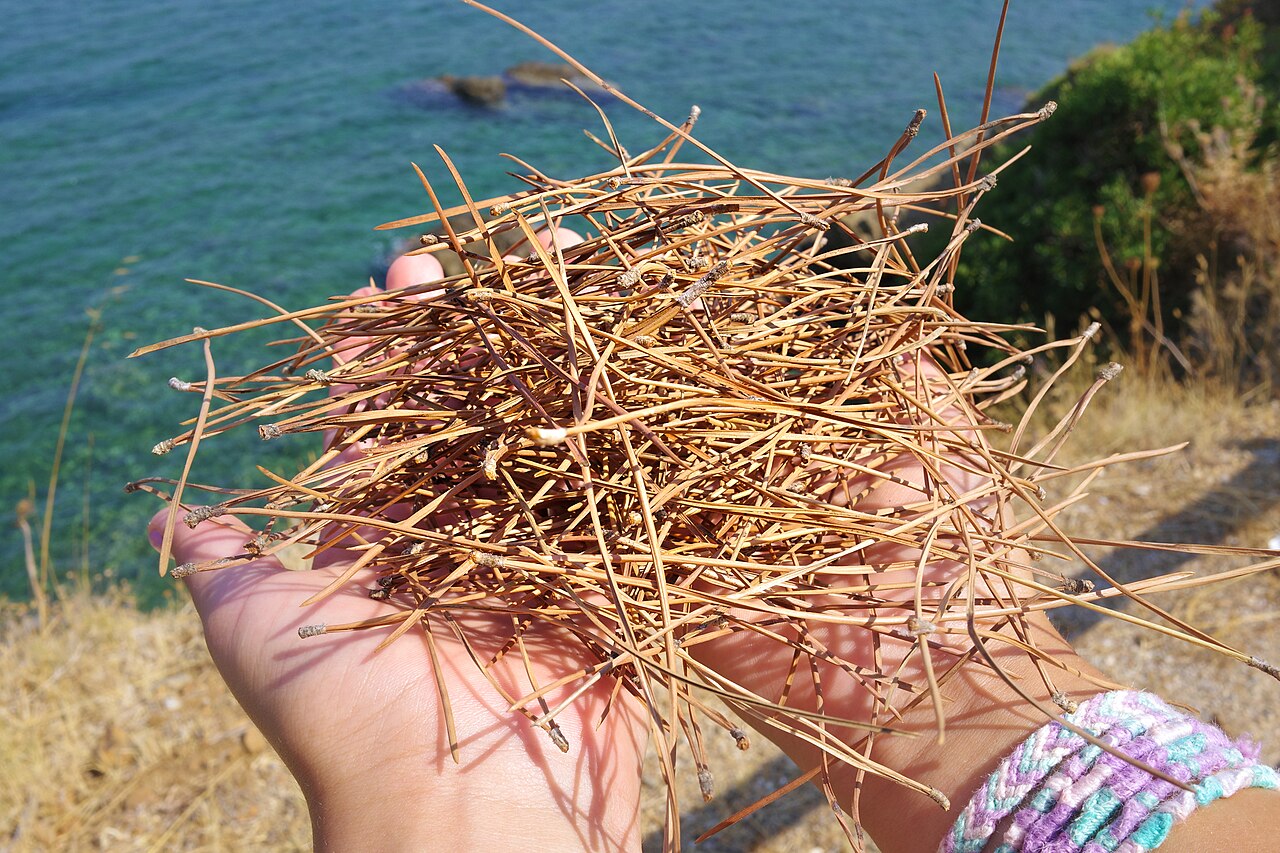
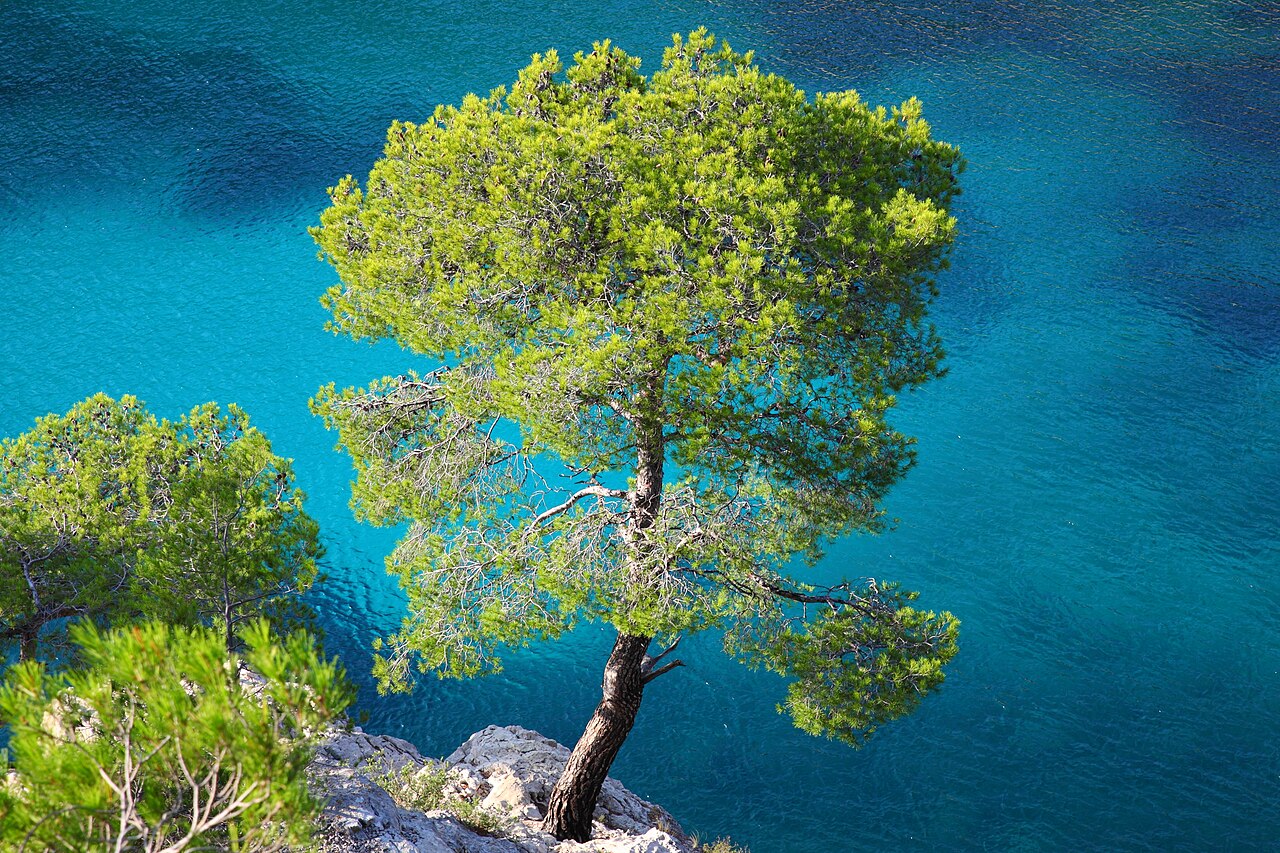
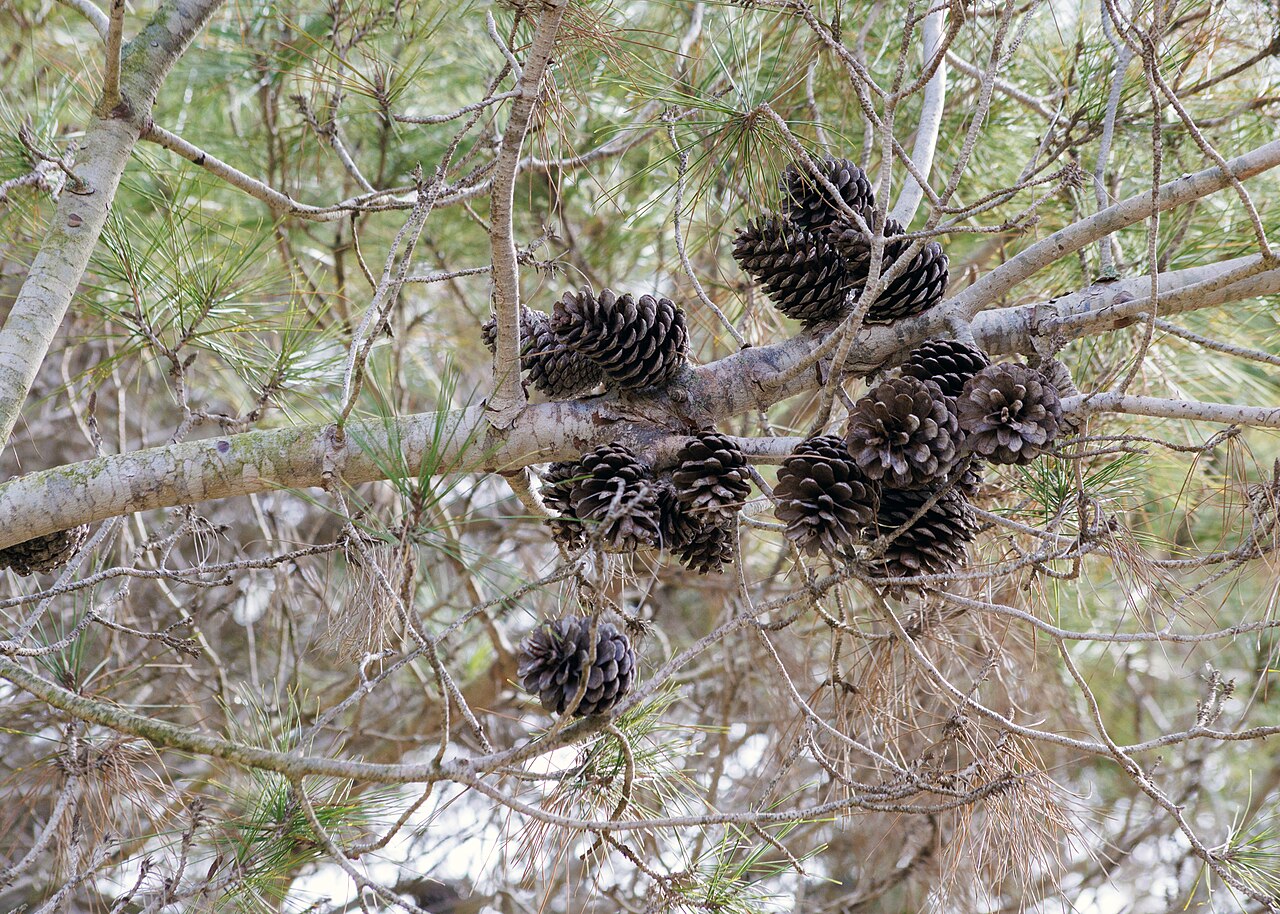
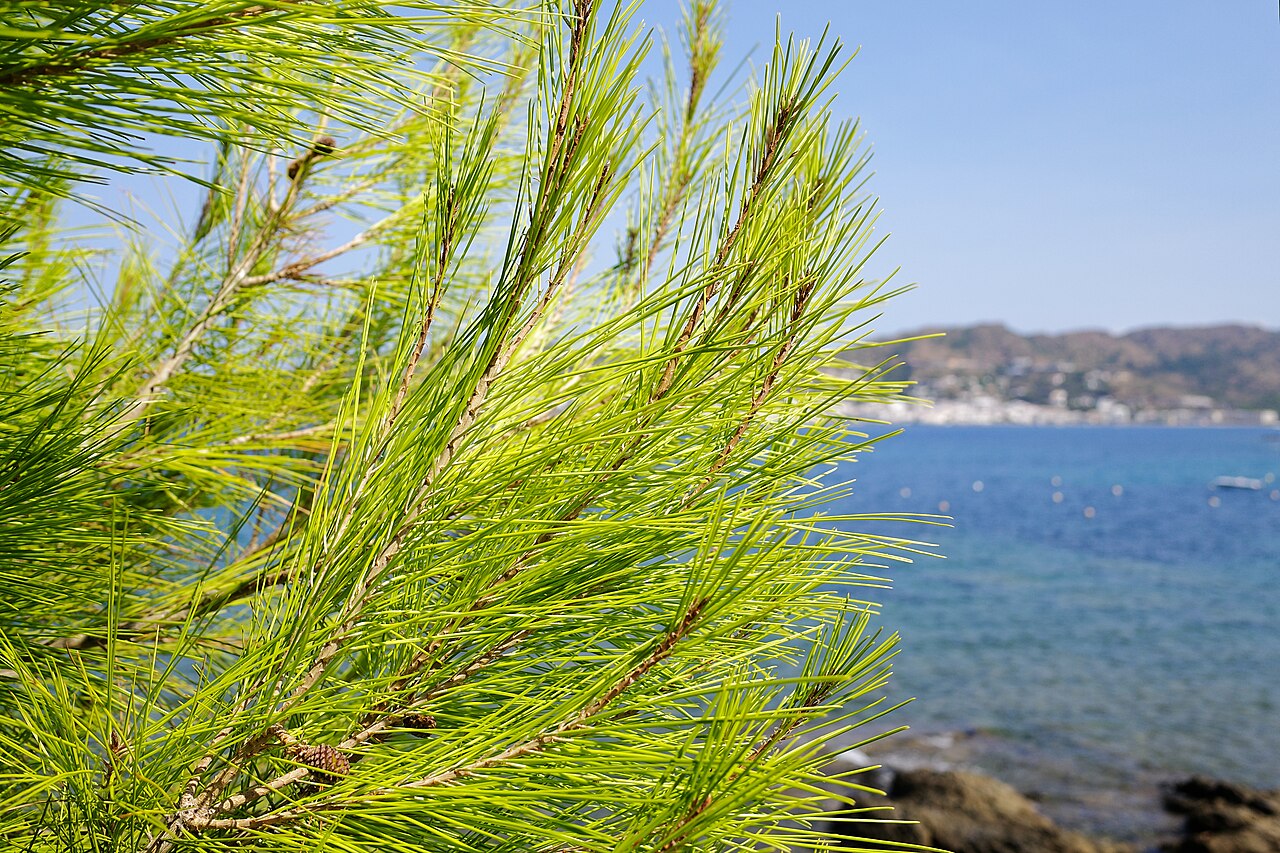
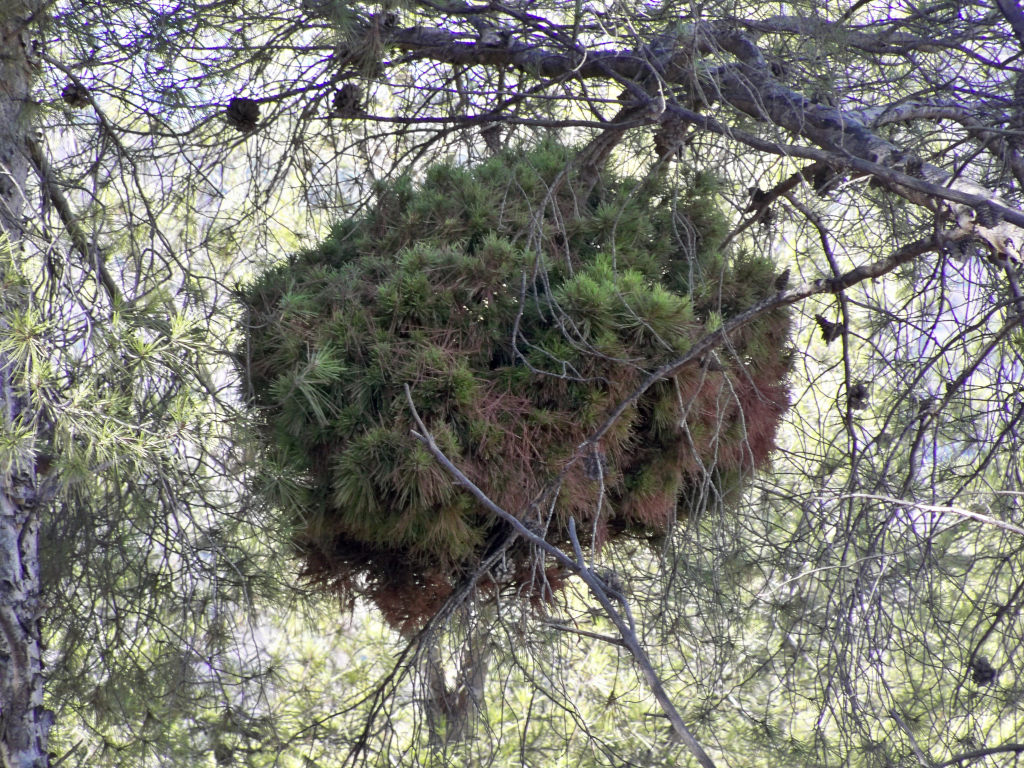
This tree is small to medium, reaching 15–25 meters tall, with a trunk up to 60 cm wide (rarely 1 m). Its bark is orange-red, thick and deeply cracked near the base, but thin and flaky higher up. The needles are very slender, 6–12 cm long, a distinct yellowish green, and grow in pairs (occasionally threes). The cones are narrow and conic, 5–12 cm long and 2–3 cm wide at the base when closed. They start green, turn glossy red-brown after two years, and open slowly over several years—faster if exposed to heat like forest fires. Open cones spread 5–8 cm wide to release seeds. The seeds are 5–6 mm long with a 20 mm wing, dispersed by wind.
Aleppo pine is closely related to Turkish pine, Canary Island pine, and maritime pine. Some experts treat Turkish pine as a subspecies (*Pinus halepensis* subsp. *brutia*), but it is usually considered a separate species. The species shows little variation across its range.
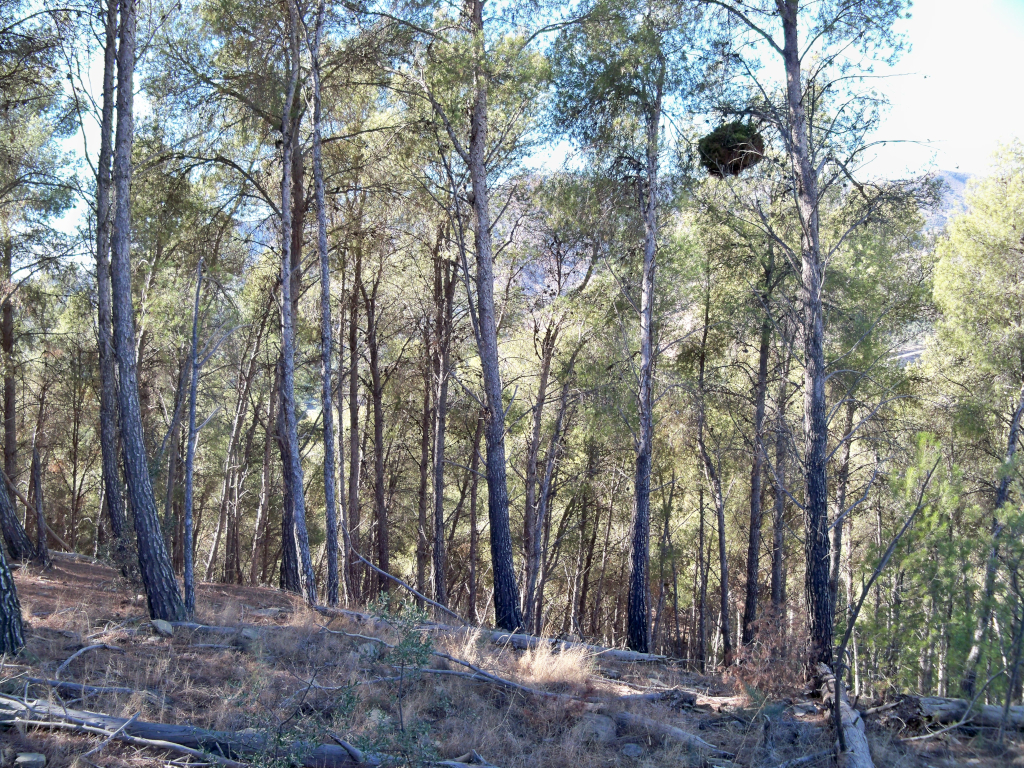
Its native range spans Morocco, Algeria, Tunisia, Spain, southern France, Malta, Italy, Croatia, Montenegro, Albania, and Greece. It has been introduced elsewhere, including Portugal. An outlying population—where it was first described—exists in Syria, Lebanon, southern Turkey, Jordan, Israel, and Palestine. It grows mostly at low altitudes, from sea level to 200 m, but reaches over 1,000 m in southern and eastern Spain, over 1,200 m on Crete, and up to 1,700 m in Morocco, Algeria, and Tunisia. It colonizes open, disturbed areas quickly and is considered invasive in South Africa. It thrives on all substrates and in nearly all Mediterranean bioclimates. It is a diagnostic species of the vegetation class *Pinetea halepensis*.
In local cuisines, the resin flavors Greek retsina wine. Tunisians make a pudding called *asidet zgougou* from the pine nuts, served in bowls with cream, almonds, and small candies. The Maltese dessert *prinjolata* also uses these nuts in its filling and as a topping.
In forestry, Aleppo pine is widely planted for timber in Algeria and Morocco. In Israel, natural stands occur in the Carmel and Galilee regions. The Jewish National Fund has planted it extensively, along with *Pinus brutia*, and it succeeded unexpectedly in Yatir Forest on the edge of the Negev desert. Many Israeli forests of Aleppo pine are used for recreation. Some argue that replacing natural oak maquis and garrigue with pine stands has created "ecological deserts" and altered local species. Its timber is valued for hardness and density, and seasons without problems, though planing can cause tearing unless blades are sharp or the sharpening angle adjusted. In South Africa it is considered useful but invasive; in South Australia, a control program operates on the Eyre Peninsula.
As an ornamental, it is popular in hot, dry areas like Southern California and South Africa's Karoo, valued for heat and drought tolerance, fast growth, and looks. It is also used for bonsai.
In culture, Paul Cézanne had an Aleppo pine in his garden at Aix-en-Provence, which inspired his painting *The Big Trees*; the tree still stands as of 2005. The Aleppo pine is linked to ANZAC Day in Australia because soldiers used it in the Battle of Lone Pine during the Gallipoli campaign, and it is often planted at war memorials.
- named_by
- John Sibthorp
Lore & Background
The Aleppo pine is a small to medium-sized tree, with bark that is orange-red, thick, and deeply fissured near the base of the trunk, while higher up the crown the bark becomes thin and flaky. Its needles are very slender, distinctly yellowish green, and almost always grow in pairs, though occasionally a few may appear in threes. The cones are narrow and conical, green at first, and take about 24 months to ripen to a glossy red-brown color. They are serotinous, opening slowly over several years, a process accelerated by heat such as from forest fires; when open, they spread wide to release the seeds. Each seed is small and equipped with a wing, allowing for wind dispersal. The species is relatively nonvariable across its entire range, maintaining consistent morphological characteristics. It is native to the Mediterranean region, from Morocco, Algeria, and Tunisia north to southern France, Italy, and the Balkans, and east to Greece, with an outlying population in Syria, Lebanon, southern Turkey, Jordan, Israel, and Palestine. It generally grows at low altitudes, mostly from sea level up to several hundred meters, but can be found higher in southern Spain, Crete, and North Africa. The tree quickly colonizes open and disturbed areas, grows on all substrates, and is considered invasive in South Africa. It is a diagnostic species of the vegetation class Pinetea halepensis.
Reader's Guide
Pinus halepensis is significant as a diagnostic species of the vegetation class Pinetea halepensis and as a key forestry tree in Algeria and Morocco, valued for its hard, dense timber. In Israel, it has been extensively planted by the Jewish National Fund, notably in Yatir Forest on the edge of the Negev desert, where its survival exceeded expectations. However, some argue that replacing natural oak maquis with pine stands has created 'ecological deserts' and altered species assemblages. The tree is also used in local cuisines: its resin flavors Greek retsina wine, its pine nuts are used in Tunisian asidet zgougou and Maltese prinjolata. As an ornamental, it is planted in hot dry areas like Southern California and the Karoo. It is considered invasive in South Africa and South Australia, where control programs exist. Culturally, Paul Cézanne painted an Aleppo pine in his garden at Aix-en-Provence, and the tree is associated with ANZAC Day due to its use by soldiers at the Battle of Lone Pine.
Did You Know?
- The resin of the Aleppo pine is used to flavor the Greek wine retsina.
- The Aleppo pine is considered an invasive species in South Africa and South Australia.
Gallery
Frequently Asked Questions
What are Pinus halepensis's powers or role?
This pine is exceptionally hardy, tolerating hot, dry conditions and poor sandy soils where many other conifers would fail. In practical terms, it has long been harvested for timber, resin, and even culinary purposes across Mediterranean communities.
How does Pinus halepensis's story end?
There is no dramatic finale—Pinus halepensis remains a living, widespread species across the Mediterranean coast today. Its continued use in coastal dune stabilization and reforestation projects means its ecological narrative is still unfolding.
Why is Pinus halepensis important?
It anchors arid Mediterranean ecosystems by holding sandy soils in place and offering habitat where few other trees can establish. Culturally, it carries deep symbolic resonance in regions such as Israel and Greece, frequently appearing in folklore, religious art, and local identity.
More in Conifers & Allies 1-20
Spotted an error? Know more?
This is a living reference — every entry is fact-audited, and reader corrections feed straight into our audit queue. Suggest an edit · See this site's audit record