
Herbert von Karajan
Austrian conductor, Berlin Philharmonic leader for 34 years.

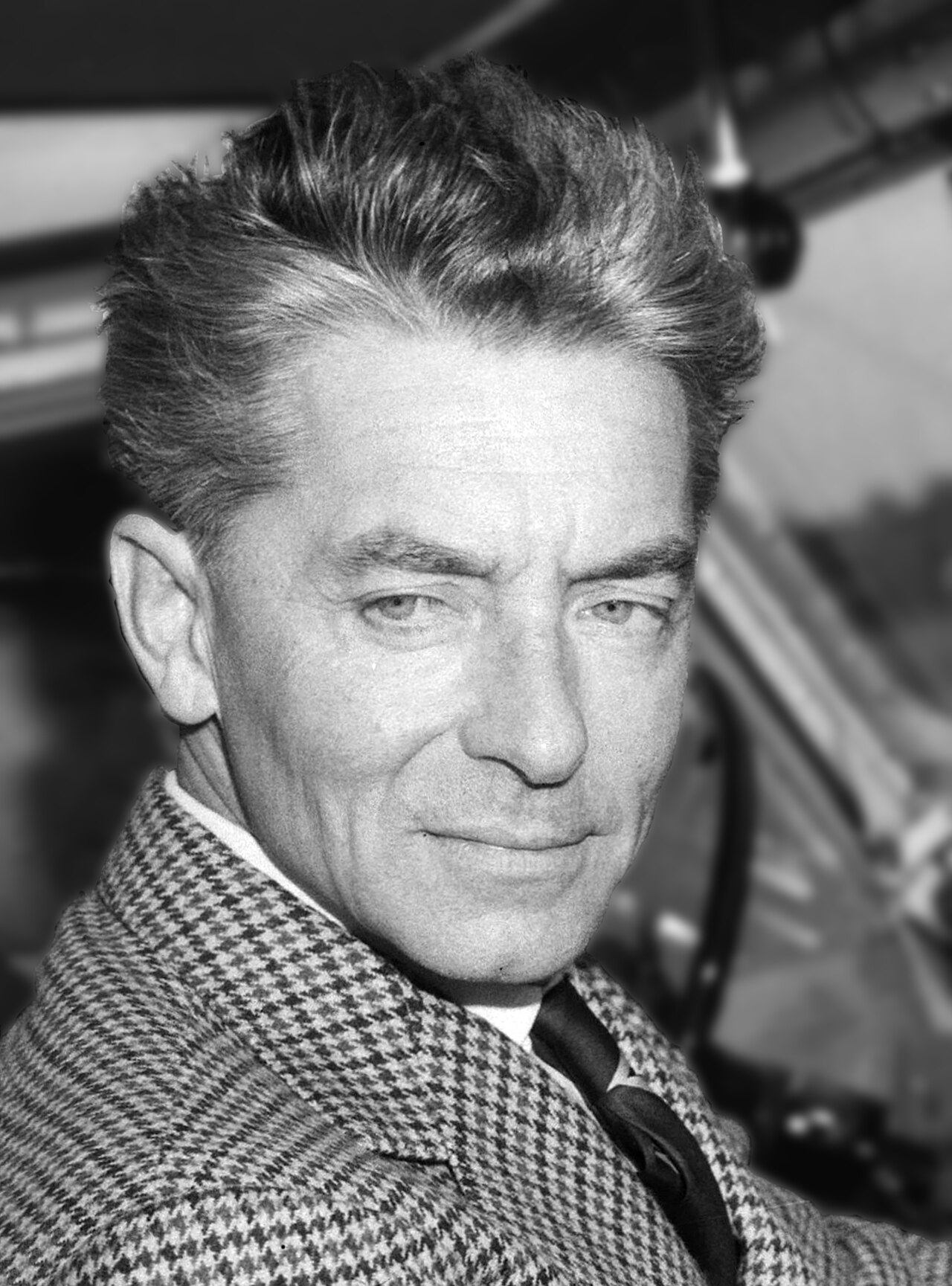
Bilsen, Joop van / Anefo, derivative work Lämpel · CC0
Herbert von Karajan was an Austrian conductor, born Heribert Adolf Ernst Karajan in Salzburg in 1908. He is widely considered one of the most significant conductors of the 20th century, a controversial yet commanding presence in European classical music from the mid-1950s until his death in 1989. His dominance stemmed in large part from his prolific recording career; by one estimate, his recordings sold 200 million copies. Karajan’s family had Greek ancestry, tracing back to a great-great-grandfather from Kozani, and his maternal lineage was Slovene, linking him to the composer Hugo Wolf. He studied piano and conducting at the Mozarteum in Salzburg and later at the Vienna Academy. His conducting debut came in Salzburg in 1929, leading to his first post as assistant Kapellmeister in Ulm. During the Nazi era, he joined the Nazi Party in 1935, a decision he later maintained was strictly for career reasons, and he never hesitated to open concerts with the party’s favored anthem. He became Germany’s youngest Generalmusikdirektor in Aachen in 1935, and debuted with the Berlin Philharmonic and Berlin State Opera in 1938. His performance of *Tristan und Isolde* was hailed as a miracle, placing him alongside Wilhelm Furtwängler. He served as principal conductor of the Berlin Philharmonic for 34 years.
- field
- Classical music conducting
- nationality
- Austrian
- known_for
- Principal conductor of the Berlin Philharmonic for 34 years; sold an estimated 200 million records
Quick Facts
- Birth Name
- Heribert Adolf Ernst Karajan
- Birth Date
- 1908-04-05
- Birth Place
- Salzburg, Austria-Hungary
- Death Date
- 1989-07-16
- Death Place
- Anif, Austria
- Political Party
- Nazi Party (1933–1945)
- Years Active
- 1929–1989
- Occupation
- Conductor
- Spouse
- Elmy Holgeroef (1938–1942) · Anna Maria Sauest (1942–1958) · Eliette Mouret (1958–1989)
- Children
- 2, including Isabel
- Signature Size
- 75px
Facts from the source article.
Lore & Background
Herbert von Karajan was born in Salzburg, Austria-Hungary, to a family of Greek ancestry, with his great-great-grandfather having emigrated from Kozani to Vienna and later to Saxony. He studied piano, harmony, and composition at the Mozarteum in Salzburg before continuing his education at the Vienna Academy, where he focused on piano and conducting. His conducting debut took place in Salzburg in 1929, leading to his first appointment as an assistant Kapellmeister in Ulm. During the Nazi era, he debuted at the Salzburg Festival, conducted the Vienna Philharmonic for the first time, and became Germany’s youngest Generalmusikdirektor in Aachen. He made his debut with the Berlin Philharmonic in 1938 and achieved major success at the Berlin State Opera with Tristan und Isolde, a performance that earned him the nickname “Karajan the miracle.” He was a controversial but dominant figure in European classical music from the mid-1950s until his death, largely due to the vast number of recordings he made, selling an estimated 200 million records. He served as principal conductor of the Berlin Philharmonic for 34 years.
Reader's Guide
Herbert von Karajan's significance stems from his 34-year principal conductorship of the Berlin Philharmonic and his enormous recording output, which by one estimate reached 200 million records sold. He is generally regarded as one of the greatest conductors of the 20th century, but his career remains controversial due to his Nazi Party membership and his postwar silence about it. During the Nazi era, he debuted at the Salzburg Festival, conducted the Vienna Philharmonic and Berlin Philharmonic, and led performances at the Berlin State Opera through World War II. His early career advanced rapidly after he became Germany's youngest Generalmusikdirektor in Aachen in 1935, and he subsequently performed as a guest conductor across Europe. A Berlin critic hailed his 1938 Tristan und Isolde at the State Opera as a "miracle," placing him alongside Wilhelm Furtwängler and Victor de Sabata. He made his first recordings that same year with Deutsche Grammophon. Karajan's Greek ancestry, through his great-great-grandfather from Kozani, later helped secure the Berlin Philharmonic's first postwar invitation to Greece. His maternal lineage was Slovene, and through it he was related to composer Hugo Wolf. Despite his technical brilliance and lasting influence on orchestral sound and recording standards, his Nazi-era activities—including opening concerts with the Nazi favorite "Horst-Wessel-Lied"—remain a subject of historical debate, with critics labeling him "SS Colonel von Karajan."
Did You Know?
- By one estimate, he sold 200 million records during his lifetime.
From Salzburg Stage to Berlin's Podium
Herbert von Karajan's ascent from a Salzburg-trained pianist to one of the twentieth century's most commanding conductors was swift and unrelenting. He first raised a baton publicly on 22 January 1929 in his birth city, an appearance that caught the eye of a theater manager in Ulm and earned him an assistant Kapellmeister post. When his senior colleague Otto Schulmann was driven out of Germany by the 1933 Nazi takeover, Karajan stepped into the first Kapellmeister chair. That same year he made his Salzburg Festival debut, leading the Walpurgisnacht scene in Max Reinhardt's Faust, and the following year he took the podium with the Vienna Philharmonic for the first time. By 1935 he was already Germany's youngest Generalmusikdirektor, based in Aachen, with guest engagements stretching across Bucharest, Brussels, Stockholm, Amsterdam, and Paris. The breakthrough that defined his public identity arrived in 1938: his Berlin Philharmonic debut and a triumphant Tristan und Isolde at the Berlin State Opera, after which a critic dubbed him 'Karajan the miracle.' He would go on to serve as principal conductor of the Berlin Philharmonic for thirty-four years, cementing his standing as, by most accounts, one of the greatest conductors of the entire twentieth century.
The Shadow of the Nazi Years
Karajan's relationship with the Nazi regime remains the most contentious chapter of his biography, and his postwar silence about it only deepened the confusion. Recent scholarship has clarified what earlier biographers muddled: he actually joined the party twice. The first accession occurred on 8 April 1933 in Salzburg, where he paid the admission fee and received membership number 1607525 before relocating to Ulm. A second, more formal registration followed in Aachen in March 1935, yielding number 3430914. After the annexation of Austria, a Reich Party treasurer discovered the duplicate in Munich and voided the first entry, retroactively dating the second to 1 May 1933. Throughout the regime's years, Karajan never hesitated to open his concerts with the Horst-Wessel-Lied, though he consistently insisted his membership was purely a career calculation. Political enemies branded him 'SS Colonel von Karajan.' His career nonetheless flourished: in 1939 the Berlin State Opera named him State Kapellmeister and concert conductor, and he continued to lead major ensembles through the war, a record that has fueled decades of debate about the moral dimensions of artistic achievement under totalitarian rule.
Bloodlines, Birthplace, and the Making of a Conductor
The Karajan family carried a distinctly Greek inheritance. Herbert's great-great-grandfather, Georg Karajan—born Geórgios Karajánnis in Kozani, in what was then the Ottoman province of Rumelia—emigrated to Vienna in 1767 and later settled in Chemnitz, Saxony, where he and his brother helped establish the region's cloth industry. Both were ennobled by Frederick Augustus III in 1792, adding the 'von' prefix that would disappear after World War I's abolition of Austrian nobility. On his mother's side, the family traced back to the Slovene village of Mojstrana in the Duchy of Carniola, linking Herbert to the composer Hugo Wolf. Born in Salzburg in 1908 as the second son of a physician, Karajan learned piano as a small child and then spent a decade at the Mozarteum, studying with Franz Ledwinka, Franz Sauer, and Bernhard Paumgartner. It was Paumgartner who recognized his extraordinary gift for the podium and steered him toward conducting. He graduated in 1926 and continued his training at the Vienna Academy under Josef Hofmann for piano and Alexander Wunderer and Franz Schalk for conducting, completing the foundation on which an extraordinary career would be built.
Recordings, Reach, and a Controversial Legacy
Few conductors in history have left as vast a recorded footprint as Karajan, and that footprint was central to his cultural dominance. By one widely cited estimate, he sold two hundred million records during his lifetime, a figure that made his interpretations of the standard repertoire audible in living rooms across the world long before the digital age. His recording career began in 1938 with a Deutsche Grammophon contract and a session with the Staatskapelle Berlin for the overture to The Magic Flute, and it expanded relentlessly from there. The sheer volume and prominence of these recordings were, in the eyes of many observers, a key reason he remained such a dominant and simultaneously controversial figure in European classical music from the mid-1950s until his death in 1989. His Greek ancestry also carried an unexpected diplomatic resonance: it helped secure the first post-World War II invitation for the Berlin Philharmonic to perform in Greece, a gesture that wove his personal heritage into the orchestra's international profile. Whether one admired or distrusted him, it was difficult to ignore the sheer scale of his influence on how the twentieth century heard its classical canon.
Gallery
Frequently Asked Questions
Who is Herbert von Karajan?
Herbert von Karajan was an Austrian classical music conductor who became one of the most dominant figures in European orchestral performance from the mid-1950s onward. He is best remembered for his long tenure leading the Berlin Philharmonic and his prolific recording career.
How long was Karajan principal conductor of the Berlin Philharmonic?
He held that position for 34 years, making it one of the longest continuous tenures in the orchestra's history. His leadership defined the ensemble's sound and international reputation for decades.
How many records did Herbert von Karajan sell?
An estimated 200 million of his recordings have been sold worldwide. This made him one of the most commercially successful classical musicians of the twentieth century.
What controversy surrounds Karajan's career?
His activities and associations during the Nazi era in Germany remain a subject of debate among music historians and fans. Critics point to his continued prominence in German cultural life after World War II as evidence that he benefited from that period.
More in Composers & Musicians 1-21
Spotted an error? Know more?
This is a living reference — every entry is fact-audited, and reader corrections feed straight into our audit queue. Suggest an edit · See this site's audit record