
Guillaume de Machaut
French composer and poet, central figure of ars nova.

Guillaume de Machaut · Public domain
Guillaume de Machaut (c. 1300–1377) was a French poet and composer who stood at the center of the ars nova style in late medieval music. His influence was so strong that music historians mark the end of the ars nova and the start of the ars subtilior movement by the year of his death. He is considered the most important French poet and composer of the 14th century and often the leading musical figure in all of Europe during that period.
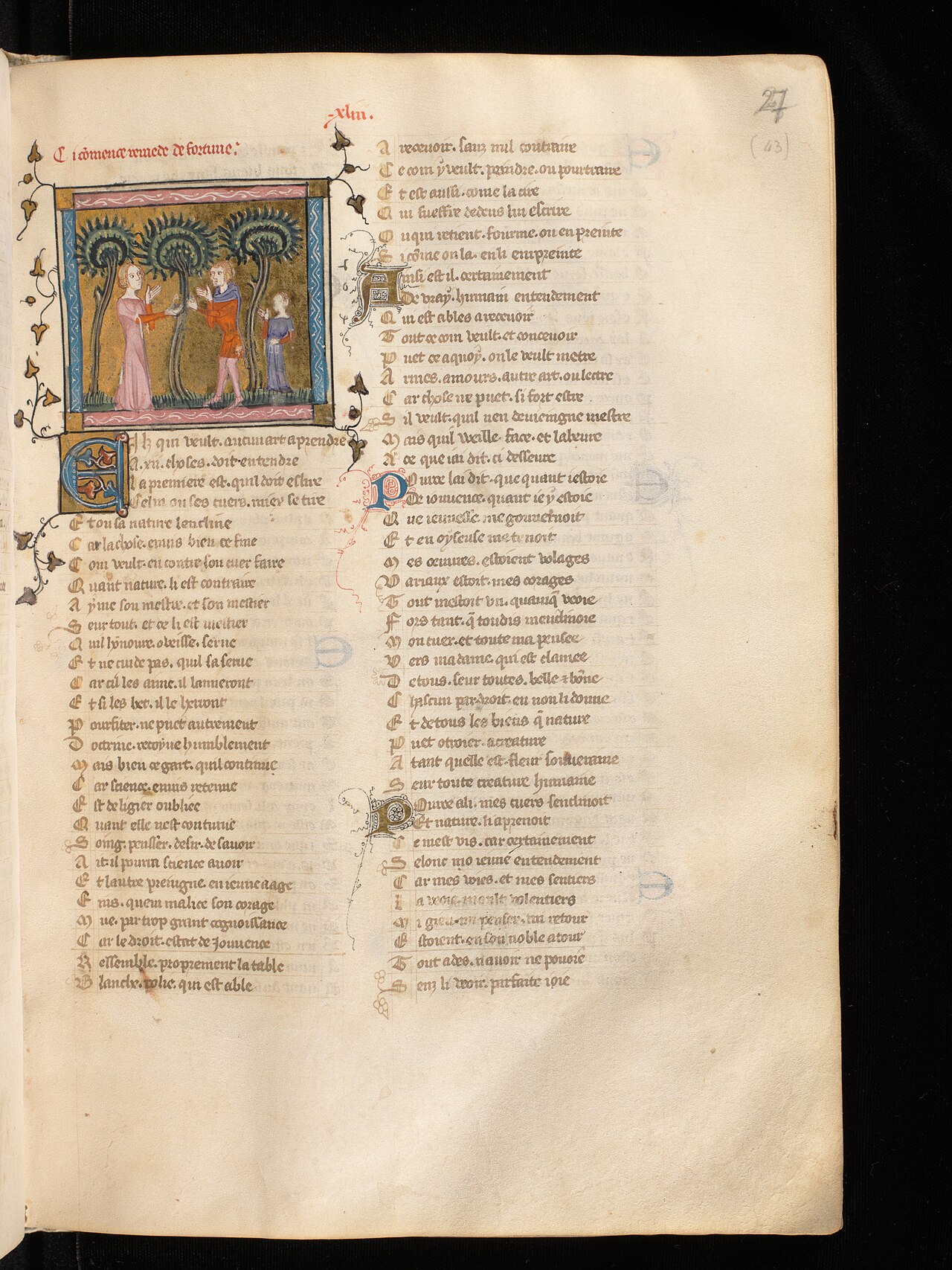
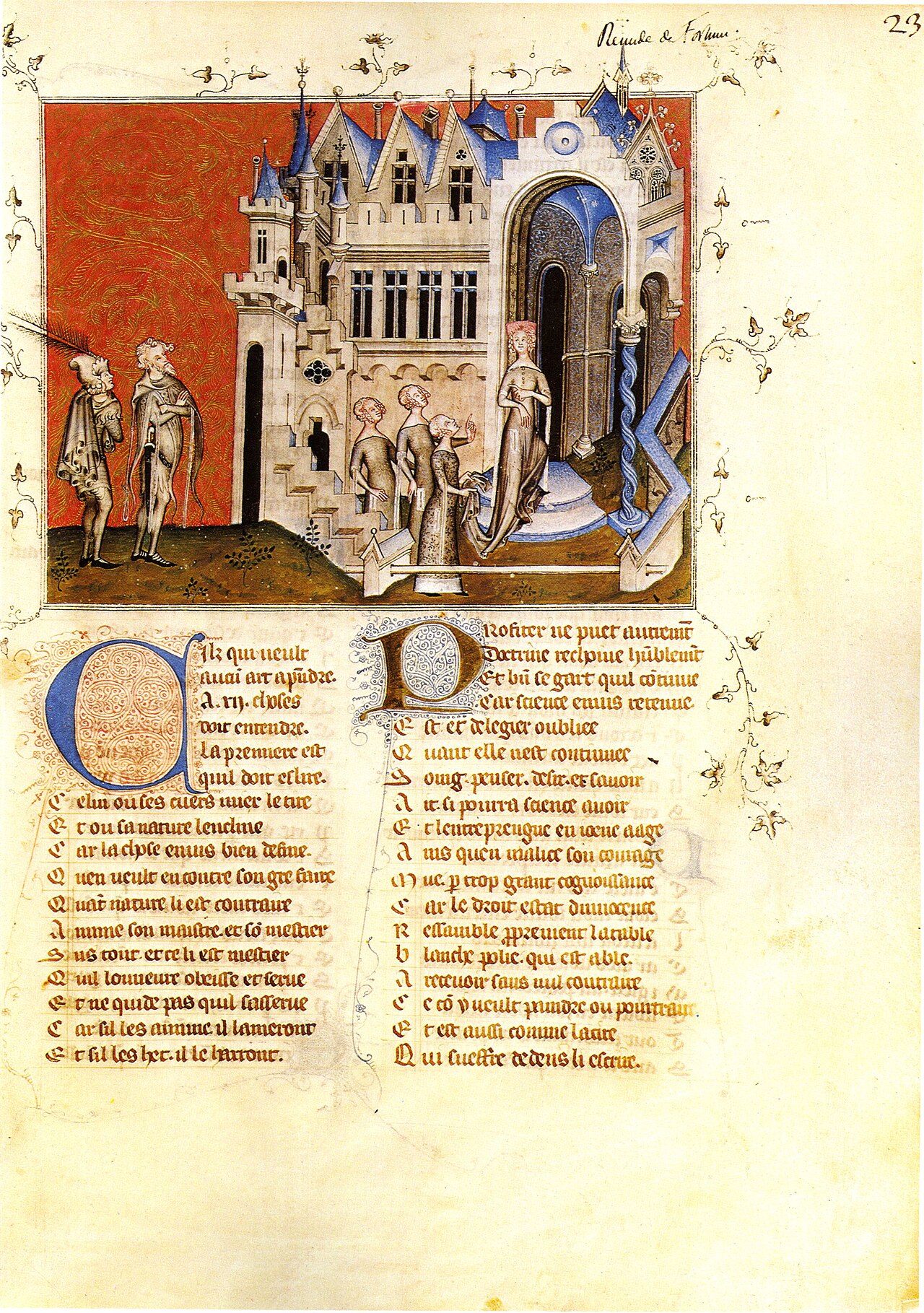
Machaut is one of the earliest European composers for whom a substantial amount of biographical information survives, and more of his music has been preserved than that of any earlier composer, partly because he personally oversaw the creation and preservation of his manuscripts. He represents the peak of the poet-composer tradition that goes back to the troubadours and trouvères. His poetry was widely admired and copied by later poets, including Geoffrey Chaucer and Eustache Deschamps, well into the 1400s.
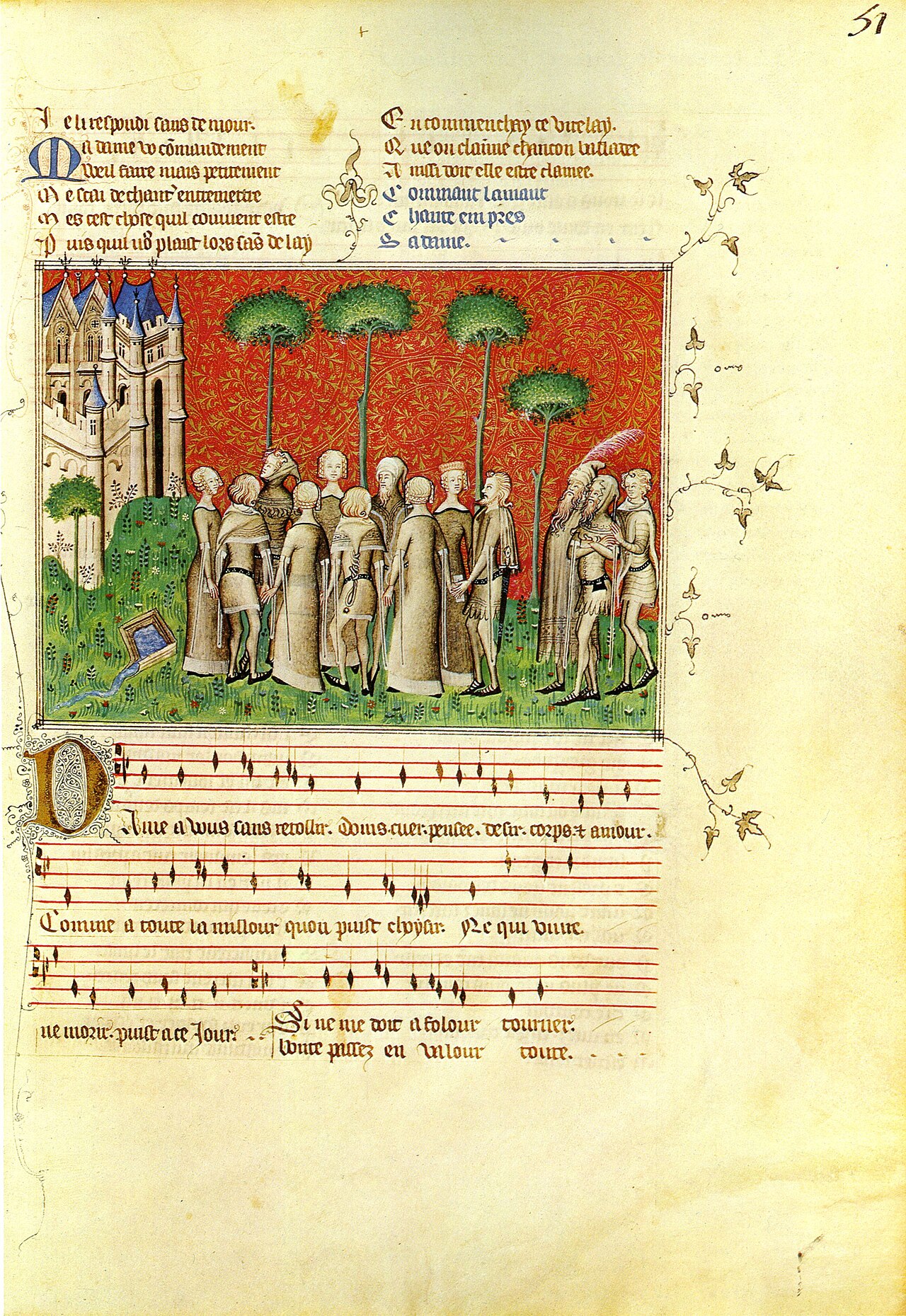
He worked in many styles and forms and played a key role in developing the motet and secular song forms, especially the lai and the formes fixes—the rondeau, virelai, and ballade. Among his few surviving sacred works, the *Messe de Nostre Dame* is the earliest known complete setting of the Ordinary of the Mass that can be attributed to a single composer. Other notable pieces include the rondeaux “Ma fin est mon commencement” and “Rose, liz, printemps, verdure,” and the virelai “Douce Dame Jolie.”
Machaut was born around 1300, one of seven children, and was educated in the area around Reims. His surname likely comes from the nearby town of Machault, about 30 kilometers northeast of Reims in the Ardennes. From 1323 to 1346, he worked as a secretary to John I, Count of Luxembourg and King of Bohemia, and became a canon in 1337. He frequently accompanied King John on trips, including many military campaigns across Europe, and visited Prague. He was named canon of Verdun in 1330, of Arras in 1332, and of Reims in 1337. After King John was killed at the Battle of Crécy in 1346, Machaut—by then famous and in high demand—served other aristocrats and rulers, including John’s daughter Bonne (who died of the Black Death in 1349), her sons Jean de Berry and Charles (later Charles V, Duke of Normandy), and Charles II of Navarre.
Machaut lived through the Black Death and spent his later years in Reims, composing and supervising the creation of manuscripts of his complete works. His poem *Le voir dit* (likely written between 1361 and 1365) claims to tell the story of a late love affair with a 19-year-old woman named Péronne d’Armentières, though scholars debate how accurate it is as autobiography. He died sometime in 1377, possibly in April.
His music ranges widely, from complex masses to short songs, and most pieces contain typical Machaut motifs. He worked after the peak of both secular troubadour and trouvère song and the ars antiqua church style. Musicologist Gilbert Reaney observed that earlier composers wrote either songs or church music, but Machaut did both, though he neglected liturgical church music to some extent. Apart from his mass, the *Hoquetus David*, and a few Latin motets, his surviving output is entirely secular. Still, Reaney noted that his unique command of both secular and sacred Western music had only been seen before in the work of Adam de la Halle.
The lyrics of Machaut’s secular works almost always deal with courtly love. A few pieces commemorate specific events, such as M18, “Bone Pastor/Bone Pastor/Bone Pastor.” He composed mainly in five genres: the lai, virelai, motet, ballade, and rondeau. In these, he kept the basic formes fixes but often used creative text setting and cadences. For instance, most rondeau phrases end with a long melisma on the second-to-last syllable, though a few, like R18 “Puis qu’en oubli,” are mostly syllabic. His motets often include sacred texts in the tenor, as in M12 “Corde mesto cantando/Helas! pour quoy virent/Libera me,” while the top two voices sing secular French texts, creating interesting links between the sacred and secular. In his other genres, he does not use sacred texts.
Machaut’s cyclic setting of the Mass, called the *Messe de Nostre Dame* in one source, was composed in the early 1360s, probably for Reims Cathedral. It was not the first cyclic mass—the Tournai Mass is older—but it was the first by a single composer and intended as a unified work. Machaut likely knew the Tournai Mass, as his shares many stylistic features with it, including textless interludes. Whether his mass is truly cyclic is debated; musicologists remain deeply divided after lengthy discussion. There is general agreement that it is at best a forerunner to the later 15th-century cyclic masses by composers like Josquin des Prez. It differs from those masses in several ways: it does not maintain a single tonal center throughout, using two distinct modes (one for the Kyrie, Gloria, and Credo, another for the Sanctus, Agnus, and Ite missa est); there is no extended melodic theme running through all movements, and it does not use parody technique; and there is strong evidence it was not composed in a single creative act. The movements were placed together, but that does not mean they were conceived as a unit. Still, the mass is stylistically consistent, and the chosen chants all honor Mary, the mother of Jesus.
- field
- Composer and poet
- nationality
- French
- known_for
- Central figure of ars nova; earliest known complete setting of the Mass Ordinary by a single composer (Messe de Nostre Dame)
Lore & Background
Guillaume de Machaut’s name likely originates from the town of Machault, situated about 30 kilometers northeast of Reims in the Ardennes. He was employed as a secretary to John I, Count of Luxembourg and King of Bohemia, from 1323 to 1346, and frequently joined the king on military campaigns across Europe, including to Prague. He became a canon at Verdun in 1330, at Arras in 1332, and at Reims in 1337. After King John died at the Battle of Crécy in 1346, Machaut served other nobles, including John’s daughter Bonne (who died of the Black Death in 1349), her sons Jean de Berry and Charles (later Charles V), and Charles II of Navarre. Machaut himself survived the Black Death and spent his final years in Reims, composing and personally overseeing the creation of his complete-works manuscripts. His surviving music is unusually extensive, partly because he was involved in preserving his own manuscripts. He composed in a wide range of styles, including the lai, virelai, motet, ballade, and rondeau, and was crucial in developing the motet and secular song forms. His lyrics almost always dealt with courtly love, though a few works commemorate specific events. His only surviving sacred work, the *Messe de Nostre Dame*, is the earliest known complete setting of the Mass Ordinary by a single composer. Notable secular pieces include the rondeaux “Ma fin est mon commencement” and “Rose, liz, printemps, verdure,” and the virelai “Douce Dame Jolie.” His poetry was admired and imitated by later poets such as Geoffrey Chaucer and Eustache Deschamps.
Reader's Guide
Machaut's significance lies in his unprecedented amount of surviving music, in part due to his own involvement in his manuscripts' creation and preservation. He embodies the culmination of the poet-composer tradition stretching back to the troubadour and trouvère. His poetry was greatly admired and imitated by other poets, including Geoffrey Chaucer and Eustache Deschamps, well into the 15th century. He composed in a wide range of styles and forms and was crucial in developing the motet and secular song forms (particularly the lai and the formes fixes: rondeau, virelai and ballade). Among his only surviving sacred works, Messe de Nostre Dame is the earliest known complete setting of the Ordinary of the Mass attributable to a single composer. Whether the mass is truly cyclic is contested; after lengthy debate, musicologists are still deeply divided, though there is consensus that it is at best a forerunner to later 15th-century cyclic masses. At the end of his life, he wrote a poetic treatise on his craft (his Prologue), reflecting his preoccupation with ordering his oeuvre.
Did You Know?
- Machaut's surname most likely derives from the nearby town of Machault, 30 km northeast of Reims.
- His Messe de Nostre Dame is the earliest known complete setting of the Ordinary of the Mass attributable to a single composer.
Gallery
Frequently Asked Questions
What is Guillaume de Machaut's most famous composition?
His Messe de Nostre Dame is recognized as the earliest known complete setting of the Mass Ordinary attributed to a single composer. It remains a cornerstone of Western sacred music history.
Why is Guillaume de Machaut still studied today?
His combined output as poet and composer set a benchmark for 14th-century art and shaped how scholars periodize medieval music. His works remain standard reading in music-history programs around the world.
More in Composers & Musicians 1-21
Spotted an error? Know more?
This is a living reference — every entry is fact-audited, and reader corrections feed straight into our audit queue. Suggest an edit · See this site's audit record