
Glenn Gould
Canadian pianist renowned for Bach interpretations and eccentricities.

via Wikipedia: Glenn Gould · see source
Glenn Herbert Gould was born Glenn Herbert Gold on September 25, 1932, in Toronto, and died on October 4, 1982. He was a Canadian pianist and broadcaster, widely considered one of the finest pianists of the 1900s. He became famous for his interpretations of Johann Sebastian Bach’s keyboard music, playing with exceptional technical skill and a clear ability to bring out the complex interweaving lines of Bach’s counterpoint. Gould largely avoided the Romantic piano repertoire—composers like Chopin, Schumann, Liszt, and Rachmaninoff—preferring Bach and Beethoven, along with some late-Romantic and modernist figures. He also recorded pre-Baroque composers such as Jan Pieterszoon Sweelinck, William Byrd, and Orlando Gibbons; Classical-era composers including Haydn, Mozart, and Brahms; and 20th-century composers like Paul Hindemith, Arnold Schoenberg, Alexander Scriabin, and Richard Strauss. He championed Gibbons, calling him his favorite composer. Beyond performing, Gould wrote, broadcast, and dabbled in composition and conducting. He created scripted television programs about classical music where he played, spoke, and interacted with interviewers. He also made three radio documentaries using musique concrète, called the *Solitude Trilogy*, about isolated parts of Canada. He contributed frequently to music journals, writing about music theory. Gould was known for his eccentricities, including unusual musical interpretations, odd mannerisms at the piano, and distinctive lifestyle and behavior. He disliked public performance and stopped giving concerts at age 31, focusing instead on studio recording and media. His recording of the Prelude and Fugue in C major (BWV 870) from *The Well-Tempered Clavier*, Book 2, was included on the Voyager Golden Record, a collection of Earth’s sounds and images sent into space aboard the Voyager spacecraft. He is the subject of the films *Thirty Two Short Films About Glenn Gould* (1993) and *Genius Within: The Inner Life of Glenn Gould* (2009). **Life**
**Early life** Gould was born at home at 32 Southwood Drive in The Beaches, Toronto, the only child of Russell Herbert Gold and Florence Emma Gold (née Greig, a distant relative of composer Edvard Grieg). The family was Presbyterian, with Scottish, English, German, and Norwegian ancestry. Around 1939, the surname was informally changed to Gould to avoid being mistaken for Jewish, given the antisemitism in prewar Toronto. Gould had no Jewish ancestry, though he sometimes joked, “When people ask me if I’m Jewish, I always tell them that I was Jewish during the war.”
His musical interest and talent appeared very early. Both parents were musical; his mother taught him piano and encouraged his development from infancy, hoping he would become a successful musician. She exposed him to music during her pregnancy. As a baby, he reportedly hummed instead of crying and wiggled his fingers as if playing a keyboard. His doctor predicted he would be “either a physician or a pianist.” He learned to read music before words and had perfect pitch by age three. When presented with a piano, young Gould would strike single notes and listen to them fade, a habit his father Bert noted was unusual. His interest in the piano went along with an interest in composition. He played his pieces for family, friends, and large gatherings—including a 1938 performance of one of his compositions at Emmanuel Presbyterian Church, near the family home. At age six, Gould heard his first live musical performance, by pianist Josef Hofmann. It deeply affected him. He later recalled: “It was Hofmann. It was, I think, his last performance in Toronto, and it was a staggering impression. The only thing I can really remember is that, when I was being brought home in a car, I was in that wonderful state of half-awakeness in which you hear all sorts of incredible sounds going through your mind. They were all orchestral sounds, but I was playing them all, and suddenly I was Hofmann. I was enchanted.”
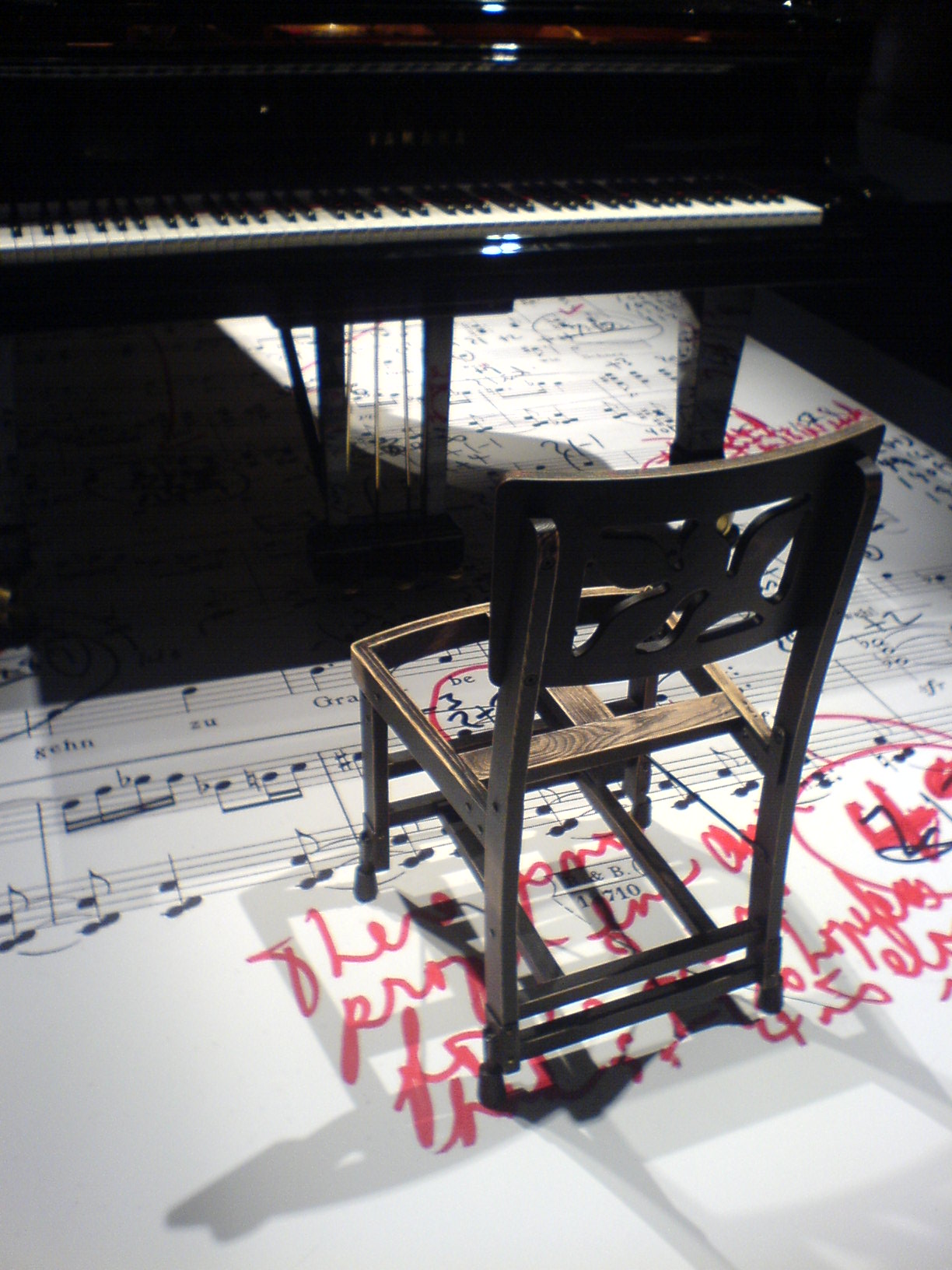
At age 10, he began attending the Toronto Conservatory of Music (later the Royal Conservatory of Music). He studied music theory with Leo Smith, organ with Frederick C. Silvester, and piano with Alberto Guerrero. Around this time, he injured his back from a fall off a boat ramp on Lake Simcoe. This incident is apocryphally linked to the adjustable-height chair his father made shortly after. Gould’s mother urged him to sit up straight at the keyboard. He used that chair for the rest of his life, taking it almost everywhere. The chair allowed him to sit very low, letting him pull down on the keys rather than striking from above—a key technical idea from Guerrero. Gould developed a technique that let him play at very fast tempos while keeping each note separate and clear. His low position at the piano gave him more control. He showed considerable technical skill in performing and recording a wide repertoire, including virtuosic and romantic works like his own arrangement of Ravel’s *La valse* and Liszt’s transcriptions of Beethoven’s Fifth and Sixth Symphonies. From a young age, he worked with Guerrero on finger-tapping, a method to train the fingers to act more independently from the arm. Gould passed his final Conservatory piano exam at age 12 with the highest marks of any candidate, earning professional standing as a pianist. A year later, he passed the written theory exams, qualifying for an Associate of the Toronto Conservatory of Music (ATCM) diploma.
- born
- 25 September 1932
- died
- 4 October 1982
- field
- Pianist, broadcaster, writer, composer, conductor
- nationality
- Canadian
- known_for
- Interpretations of Bach; eccentricities; abandoning public performance at age 31
Verified Timeline
Quick Facts
- Birth Name
- Glenn Herbert Gold
- Birth Date
- df=yes · 1932 · 09 · 25
- Birth Place
- Toronto, Ontario, Canada
- Death Date
- df=yes · 1982 · 10 · 4 · 1932 · 9 · 25
- Burial Place
- Mount Pleasant Cemetery, Toronto
- Occupation
- Pianist
- Education
- Royal Conservatory of Music
Facts from the source article.
Lore & Background
Gould was born at home at 32 Southwood Drive in The Beaches, Toronto, on September 25, 1932, the only child of Russell Herbert Gold and Florence Emma Gold. The family's surname was informally changed to Gould around 1939 to avoid being mistaken for Jewish, given the prevailing antisemitism of prewar Toronto. Gould had no Jewish ancestry, though he sometimes joked about it, saying, 'When people ask me if I'm Jewish, I always tell them that I was Jewish during the war.' His mother taught him the piano and encouraged his musical development from infancy. He learned to read music before he could read words, and it was observed that he had perfect pitch at age three. At age 10, he began attending the Toronto Conservatory of Music, studying music theory with Leo Smith, organ with Frederick C. Silvester, and piano with Alberto Guerrero. Gould passed his final Conservatory examination in piano at age 12, achieving the highest marks of any candidate, and thus attaining professional standing as a pianist. One year later he passed the written theory exams, qualifying for an Associate of the Toronto Conservatory of Music (ATCM) diploma. Gould rejected most of the Romantic piano literature—Chopin, Schumann, Liszt, Rachmaninoff, and others—in favour of Bach and Beethoven mainly, along with some late-Romantic and modernist composers. He also recorded pre-Baroque composers such as Jan Pieterszoon Sweelinck, William Byrd, and Orlando Gibbons; Classical composers such as Haydn, Mozart, and Brahms; and 20th-century composers including Paul Hindemith, Arnold Schoenberg, Alexander Scriabin, and Richard Strauss. He championed Gibbons, whom he called his favorite composer. Gould disliked public performance, and stopped giving concerts at age 31 to concentrate on studio recording and media. He produced television programmes about classical music, in which he spoke, performed, and interacted with interviewers in a scripted manner. He made three musique concrète radio documentaries, the Solitude Trilogy, about isolated areas of Canada. He was a prolific contributor to music journals, in which he discussed music theory. Gould was known for his eccentricities, ranging from his unorthodox musical interpretations and mannerisms at the keyboard to aspects of his lifestyle and behaviour.
Reader's Guide
Glenn Gould's significance lies in his transformative approach to Bach's keyboard works, which he articulated with extraordinary clarity and contrapuntal precision. By rejecting the Romantic performance tradition and focusing on studio recording, he helped redefine the role of the concert pianist in the 20th century. His decision to abandon live performance at age 31 allowed him to explore the possibilities of recorded sound and media, producing innovative radio documentaries and television programs. Gould's legacy includes his recording of the Prelude and Fugue in C major (BWV 870) from The Well Tempered Clavier, Book 2, which is on the Voyager Golden Record, a sample of the sights and sounds of Earth sent into space with the Voyager spacecraft. He is the subject of Thirty Two Short Films About Glenn Gould (1993) and Genius Within: The Inner Life of Glenn Gould (2009). His eccentricities—such as using a low, adjustable chair built by his father after a back injury from a fall from a boat ramp on the shore of Lake Simcoe—became part of his public persona, but his technical mastery and intellectual rigor remain central to his reputation. He was also a prolific writer and broadcaster, contributing to music journals and discussing music theory.
Did You Know?
- Gould's recording of the Prelude and Fugue in C major (BWV 870) from The Well Tempered Clavier, Book 2 is on the Voyager Golden Record, sent into space with the Voyager spacecraft.
- He stopped giving concerts at age 31 to concentrate on studio recording and media.
- Gould used an adjustable-height chair his father made after a back injury from a fall from a boat ramp on Lake Simcoe; he used this chair for the rest of his life.
- He learned to read music before he could read words and had perfect pitch at age three.
- Gould championed Orlando Gibbons, whom he called his favorite composer.
A Child Who Heard the World Differently
Gould was born in 1932 in The Beaches neighbourhood of Toronto, the only child of Russell and Florence Gold. His mother, a distant relative of Edvard Grieg, had exposed him to music even before birth, and the results were immediate: as an infant he reportedly hummed rather than cried and wiggled his fingers as though playing an invisible keyboard. His doctor quipped he would grow up to be either a physician or a pianist. By age three he demonstrated perfect pitch, and he learned to read musical notation before he could read ordinary words. At six, a live performance by pianist Josef Hofmann left him in a state of half-awakeness where orchestral sounds flooded through his mind and he felt, in his own words, that he was Hofmann. This single evening crystallized a vocation. By twelve, Gould had passed his final Conservatory piano examination with the highest marks of any candidate, earning professional standing, and a year later he secured his theory diploma. His childhood friend Robert Fulford would later help produce his first public performances, including the debut of Bach's Goldberg Variations.
A Repertoire Built by Conviction, Not Convention
Gould's artistic identity was defined as much by what he refused to play as by what he chose. He turned his back on the bulk of the Romantic piano canon—Chopin, Schumann, Liszt, Rachmaninoff—and anchored his career instead in Bach and Beethoven, supplemented by select late-Romantic and modernist works. Yet his curiosity stretched far beyond the Baroque. He recorded pre-Baroque masters like Sweelinck, Byrd, and Orlando Gibbons, the latter of whom he called his favourite composer. He explored Haydn, Mozart, Brahms, Hindemith, Schoenberg, Scriabin, and Strauss. What unified this sprawling catalogue was not era or nationality but a deep engagement with contrapuntal structure. Gould's playing was noted for its technical precision and an almost architectural clarity in separating the independent voices within Bach's keyboard works. His extremely low seated position, enabled by a custom adjustable chair his father built after a childhood back injury, gave him a pulling-down approach to the keys rather than striking them from above, a technique rooted in lessons with his teacher Alberto Guerrero. This physical relationship to the instrument underpinned his ability to articulate complex polyphonic textures at rapid tempos while preserving the distinctness of every note.
The Pianist Who Chose the Studio Over the Stage
Despite his early acclaim as a concert performer, Gould grew increasingly averse to public performance. At thirty-one, he made the decisive break: he stopped giving live concerts altogether and redirected his energy toward studio recording and media production. This was not a retreat but a recalibration. In the recording booth he could control every variable—sound, pacing, editing—and deliver interpretations that his live self, with its well-documented mannerisms and eccentricities, might not have allowed. He produced television programmes in which he spoke, performed, and interacted with interviewers in a scripted format, and he crafted three musique concrète radio documentaries known as the Solitude Trilogy, each exploring an isolated region of Canada. He also wrote prolifically for music journals, contributing essays on theory and interpretation. His friend and collaborator Robert Fulford had helped produce his first three public appearances through their joint venture New Music Associates in 1952, but Gould's true stage became the airwaves, the recording studio, and the printed page.
A Voice That Outlived the Man
Gould died in Toronto on October 4, 1982, at the age of forty-nine, but his cultural footprint continued to expand long after. His recording of the Prelude and Fugue in C major from Bach's Well-Tempered Clavier, Book 2, was selected for the Voyager Golden Record—a disc of Earth's sounds and images launched into deep space aboard the Voyager spacecraft, making his interpretation of a single Bach fugue a permanent ambassador of human musical thought to whatever might one day intercept the signal. His life and art have been the subject of two major films: Thirty Two Short Films About Glenn Gould (1993) and Genius Within: The Inner Life of Glenn Gould (2009). Beyond the keyboard, his legacy as a broadcaster, essayist, and experimental radio artist ensures that he is remembered not merely as a pianist but as a thinker who used music as a lens for examining solitude, structure, and the human voice.
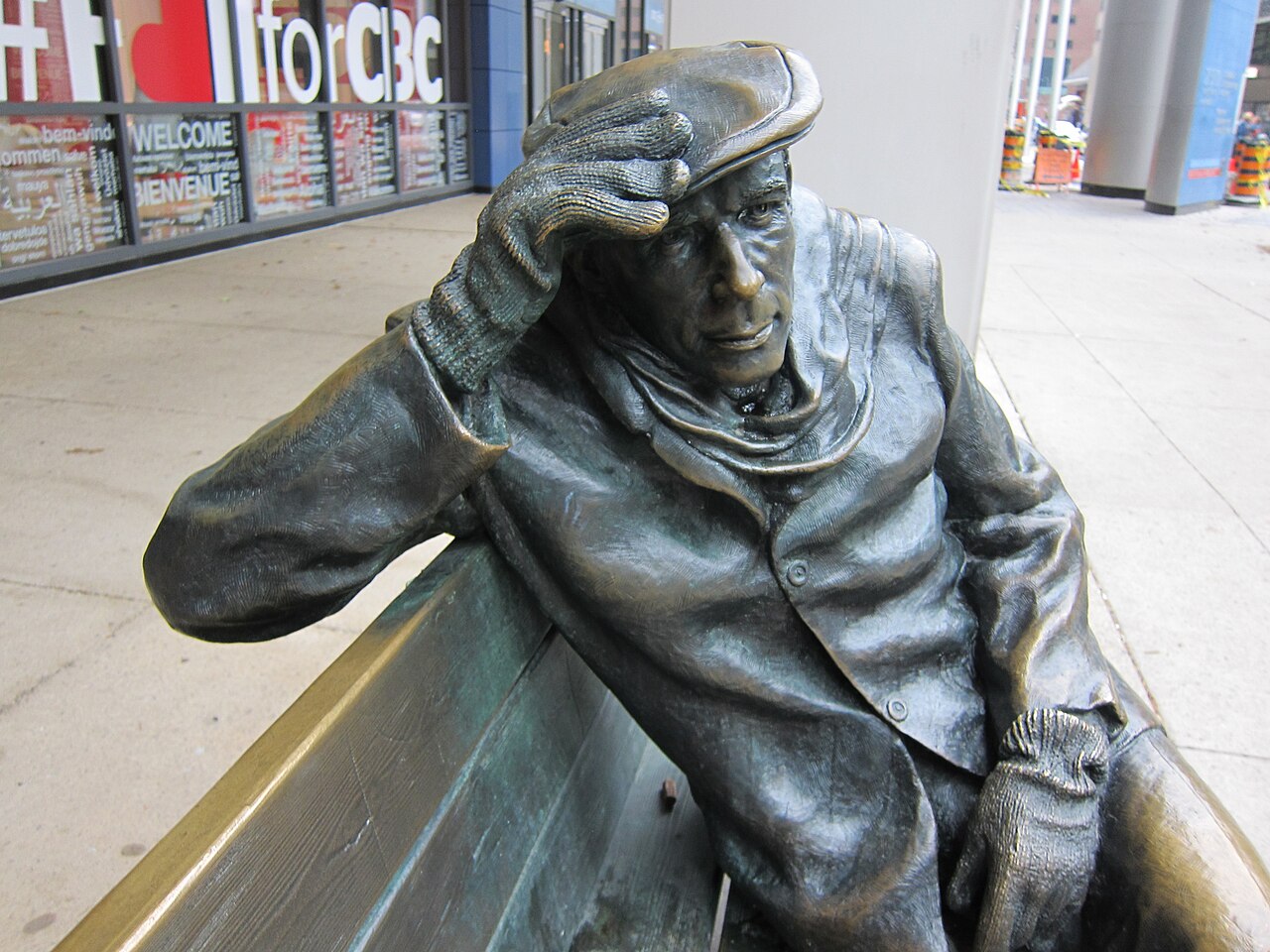
Gallery

Frequently Asked Questions
Who is Glenn Gould?
Glenn Gould was a Canadian pianist, broadcaster, and writer (1932–1982) best remembered for his landmark recordings of Johann Sebastian Bach's keyboard music. He is widely regarded as one of the most distinctive piano voices of the twentieth century.
Why is Glenn Gould's Bach playing so famous?
His interpretations stood out because he could render every independent contrapuntal line with crisp, almost orchestral clarity, as if conducting a small ensemble from the bench. Listeners often noted that his phrasing sounded intimate and slightly conversational, setting him apart from the more formal approach common in mid-century piano.
Why did Glenn Gould stop giving live concerts?
He retired from the concert hall in 1964 at age thirty-one, believing the recording studio let him realize his ideas without the social and physical pressures of a live audience. From then on his career centered on studio sessions, CBC radio broadcasts, and published essays.
What were Glenn Gould's famous eccentricities?
Fans and colleagues remembered him for humming audibly during takes, perching on a tiny adjustable stool, and wearing a thick overcoat even in summer heat. He also talked to himself while playing and was openly hostile to the formalities surrounding classical concert culture.
When and how did Glenn Gould die?
Gould passed away on 4 October 1982, aged forty-nine, after a stroke that left him largely incapacitated. At the time of his death he had been in the middle of a new set of Bach fugue recordings.
More in Composers & Musicians 1-21
Spotted an error? Know more?
This is a living reference — every entry is fact-audited, and reader corrections feed straight into our audit queue. Suggest an edit · See this site's audit record