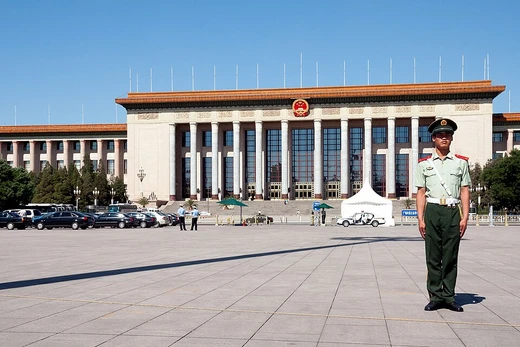
Politics of Japan
Japan's politics blend monarchy with dominant-party parliamentary democracy.

Naha Mama Pavilionz · CC0
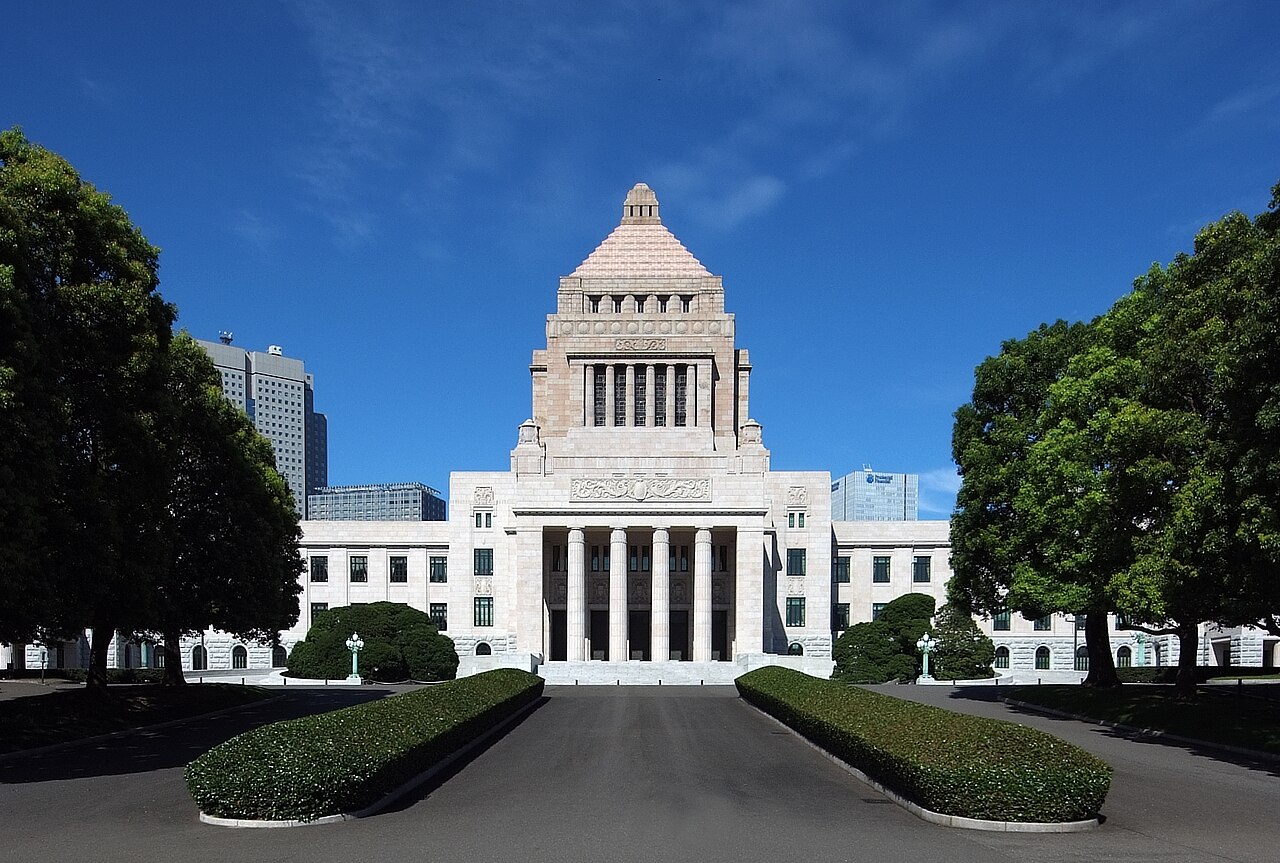
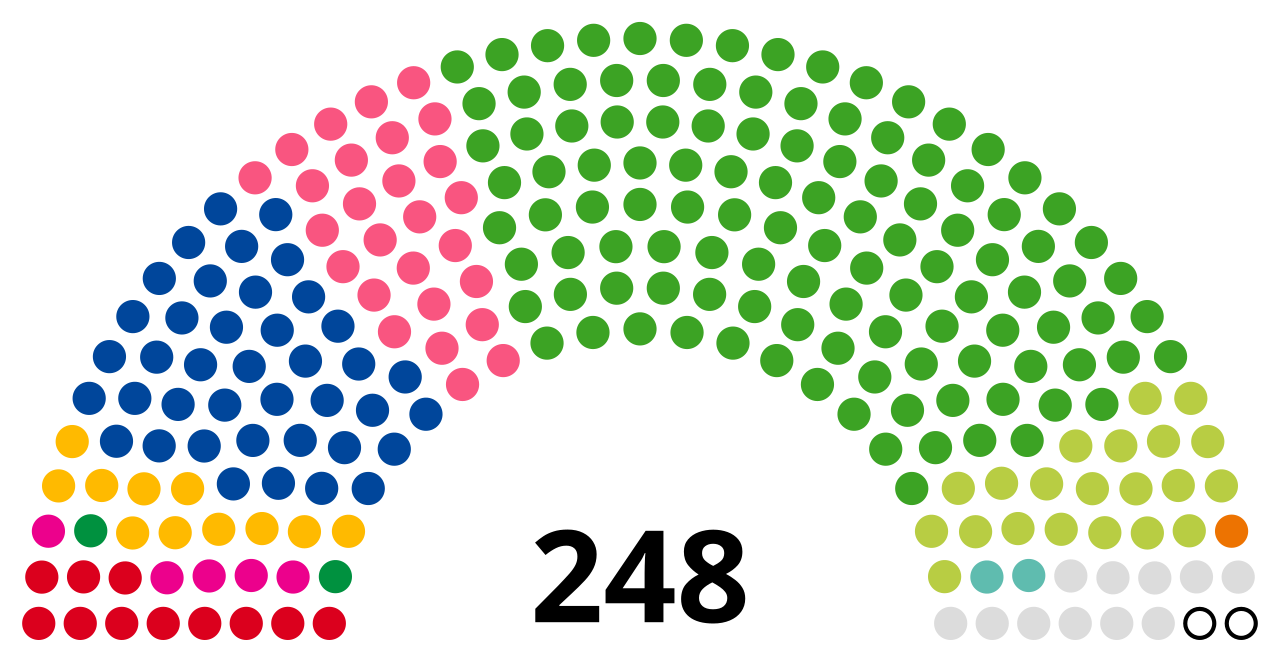
The politics of Japan are conducted within a framework of a dominant-party bicameral parliamentary representative democratic constitutional monarchy. A hereditary monarch, currently Emperor Naruhito, serves as the head of state, while the Prime Minister, currently Sanae Takaichi since 2025, is the elected head of government. Legislative power is vested in the National Diet, which comprises the House of Representatives and the House of Councillors. The lower house has eighteen standing committees, each ranging from 20 to 50 members, while the upper house has sixteen committees ranging from 10 to 45 members. Executive power is held by the Cabinet, led by the Prime Minister, who is nominated by the Diet and appointed by the Emperor. As of 2025, a Liberal Democratic minority government holds office. Judicial power rests with the Supreme Court and lower courts. Sovereignty is vested in the people by the 1947 Constitution, drafted during the American-led Occupation of Japan, which replaced the Meiji Constitution. This document established a parliamentary system with an expanded suffrage that included women, guaranteed equal rights, introduced Western labor practices including collective bargaining, and included Article 9, which renounces war. The creation and ratification of this constitution have been widely viewed by analysts and historians as forced upon Japan by the United States, a claim originally raised by conservative politicians in the 1950s and supported by independent historians. A competing claim holds that the ratification resulted from collaboration between American authorities, Japanese governments, and private sector actors. Post-war politics have been dominated by the Liberal Democratic Party (LDP) since its founding in 1955, a period known as the 1955 System. Of the 32 prime ministers since 1952, 25 have been LDP members, including the longest-serving ones. Japan is currently rated a "full democracy" in the Democracy Index and holds the highest V-Dem electoral and liberal democracy scores in Asia.
- government_type
- Dominant-party bicameral parliamentary representative democratic constitutional monarchy
- head_of_state
- Emperor Naruhito (hereditary monarch)
- legislature
- National Diet (House of Representatives and House of Councillors)
Lore & Background
The 1947 Constitution established Japan as a constitutional monarchy with a parliamentary system, vesting sovereignty in the people. It created a bicameral National Diet as the sole law-making body, composed of a House of Representatives and a House of Councillors, with the lower house holding greater power over budgets, treaties, and the selection of the Prime Minister. The document expanded suffrage to women, guaranteed equal rights, and introduced labor rights including collective bargaining. Its most distinctive feature is Article 9, which renounces war and prohibits the use of force in settling international disputes. The constitution also created a Supreme Court and lower courts to exercise judicial power. The hereditary monarch, the Emperor, serves as the symbol of the state and performs ceremonial duties without real political power. Executive authority rests with the Cabinet, led by a Prime Minister nominated by the Diet and appointed by the Emperor. The Prime Minister can appoint and dismiss ministers and dissolve the lower house. Since 1955, Japanese politics has been dominated by the Liberal Democratic Party (LDP), which has held power almost continuously, a pattern known as the 1955 System. The creation of the constitution is widely viewed as imposed by the United States during the post-World War II occupation, though a competing view holds that it resulted from collaboration between American authorities and Japanese governments and private actors.
Reader's Guide
The prime minister, though formally limited in the source article's text, possesses informal powers such as party support and influence over bureaucracy, and recent cabinet reforms have enhanced that influence. This role is embedded within a dominant-party bicameral parliamentary representative democratic constitutional monarchy, where a hereditary monarch serves as head of state and the prime minister as elected head of government. Legislative power rests with the National Diet, composed of a House of Representatives with eighteen standing committees and a House of Councillors with sixteen. Executive power is held by the Cabinet, led by a prime minister nominated by the Diet and appointed by the Emperor; a Liberal Democratic minority government has held office since 2025. Judicial power belongs to the Supreme Court and lower courts, with sovereignty vested in the people by the 1947 Constitution, which replaced the Meiji Constitution and was written primarily by American officials during the Occupation. Post-war politics have been dominated by the Liberal Democratic Party since its 1955 founding, a phenomenon called the 1955 System, with most prime ministers since 1952 being LDP members. Japan is rated a "full democracy" in the Democracy Index, holding the highest V-Dem electoral and liberal democracy scores in Asia. The 1947 Constitution includes sovereignty of the people, expanded suffrage to women, a parliamentary system, labor rights, and Article 9’s peace clause. Its creation is viewed by many analysts as forced upon Japan by the United States, a claim supported by some historians, though a competing view holds it resulted from collaboration between occupation authorities, Japanese governments, and private actors. The Emperor is defined as the symbol of the state, performing ceremonial duties with no real power, while political power rests with the prime minister, Cabinet, and elected Diet members. The prime minister appoints and dismisses cabinet ministers, can dissolve the lower house, and individual leadership significantly impacts policy-making. The lower house holds power over the government, including budget passage, treaty ratification, and prime minister selection.
Did You Know?
- The House of Representatives has 18 standing committees ranging from 20 to 50 members, while the House of Councillors has 16 ranging from 10 to 45 members.
What Comparative Politics Actually Studies
Comparative politics is fundamentally a systematic endeavor to understand why political systems around the world look the way they do. Rather than examining a single nation in isolation, scholars in this field place multiple regimes side by side to identify patterns, regularities, and meaningful divergences. The scope is broad: it encompasses questions about how democracies consolidate, how globalization reshapes governance, how electoral designs shape policy, and how public administration functions under different institutional arrangements. Over the past four decades, the discipline has absorbed a wide range of theoretical lenses—political culture, dependency theory, developmentalism, corporatism, comparative political economy, state-society relations, and new institutionalism—each offering a different window into the same comparative question. Crucially, the field insists on examining systems at a fixed point in time; researchers cannot simply line up a nineteenth-century monarchy against a twenty-first-century republic and draw conclusions. The comparison must be contemporaneous, static, and methodologically disciplined.
Two Intellectual Lineages
The intellectual ancestry of comparative politics stretches back to ancient Greece, and scholar Philippe C. Schmitter has argued that the discipline's family tree splits into two major branches. The first, which he labels sociological constitutionalism, traces to Aristotle and emphasizes understanding political life through empirical observation of how societies actually organize power. Its lineage runs through Polybius, Machiavelli, Montesquieu, Tocqueville, Marx, Weber, Durkheim, and many others, and in the twentieth century it was often called historical political sociology, with figures like Stein Rokkan, Lipset, Linz, and Eckstein carrying the torch. The second branch, legal constitutionalism, traces to Plato and focuses more on the formal architecture of constitutions and legal frameworks. Its classic names include Léon Duguit, Woodrow Wilson, and James Bryce, and its twentieth-century continuators include Sartori, Duverger, and Carl Joachim Friedrich. These two traditions have coexisted, sometimes in tension, shaping how scholars decide whether to study the lived reality of politics or its codified rules.
Methodological Debates and the Subnational Turn
A persistent question within the discipline concerns what, exactly, defines comparative politics. Arend Lijphart contends that the field has no fixed substantive subject matter; instead, its identity is purely methodological—it is defined by the how of analysis rather than the what. Peter Mair and Richard Rose push back slightly, arguing that the discipline requires both a substantive commitment to studying national political systems and a method of identifying similarities and differences through shared conceptual frameworks. Beyond these definitional debates, the field has undergone a significant methodological shift. Historically, scholars compared entire countries against one another. In recent decades, however, there has been growing interest in subnational comparisons—studying regions, provinces, or local governments within and across states. This subnational turn contributes fresh methodological tools, theoretical insights, and substantive findings to the broader study of politics, enriching the comparative toolkit well beyond the nation-state frame.
Why It Matters for Understanding the World
Comparative politics is not merely an academic exercise; it is essential for grasping how political structures function and interact across the globe. Even nations that share broad democratic commitments can operate in strikingly different ways. India and the United States, for example, are both majority-rule democracies, yet the U.S. employs a liberal presidential system with a president as head of state, while India operates a parliamentary system led by a prime minister. The diversity of decision-making processes in the American system contrasts sharply with India's popular government model. These differences matter because political structures are shaped by distinct historical, social, ethical, and racial contexts, meaning that even nominally similar institutions produce different outcomes. The field also feeds directly into international relations and conflict resolution, helping clarify global legislative challenges and the conditions under which states pursue particular strategies. In short, comparative politics illuminates the causes of international behavior and the ways global frameworks ripple back into domestic political life.
Gallery


More in Comparative Politics 1-23
Spotted an error? Know more?
This is a living reference — every entry is fact-audited, and reader corrections feed straight into our audit queue. Suggest an edit · See this site's audit record