
Politics of Brazil
Brazil is a federal republic with a multi-party system and coalition presidentialism.

Felipe Menegaz · CC BY-SA 3.0
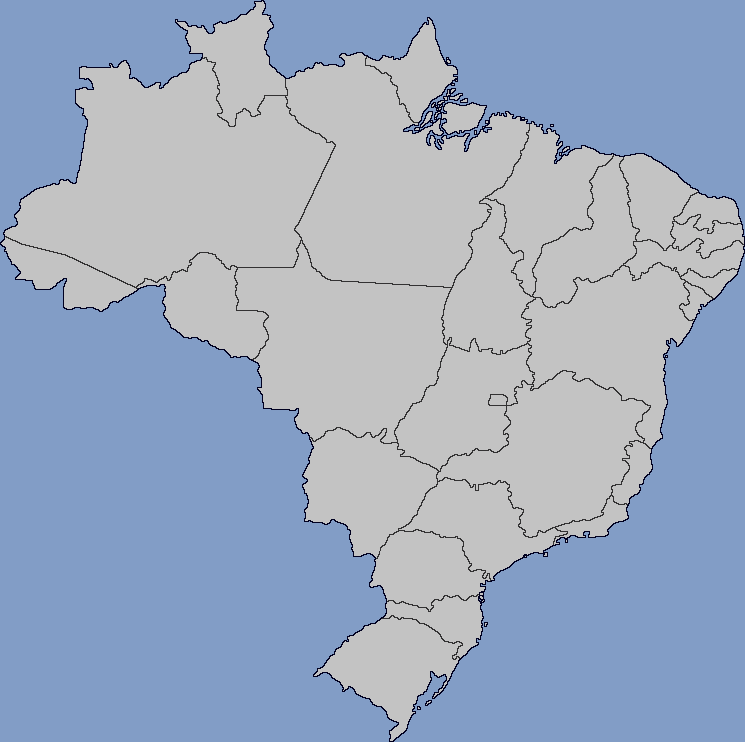
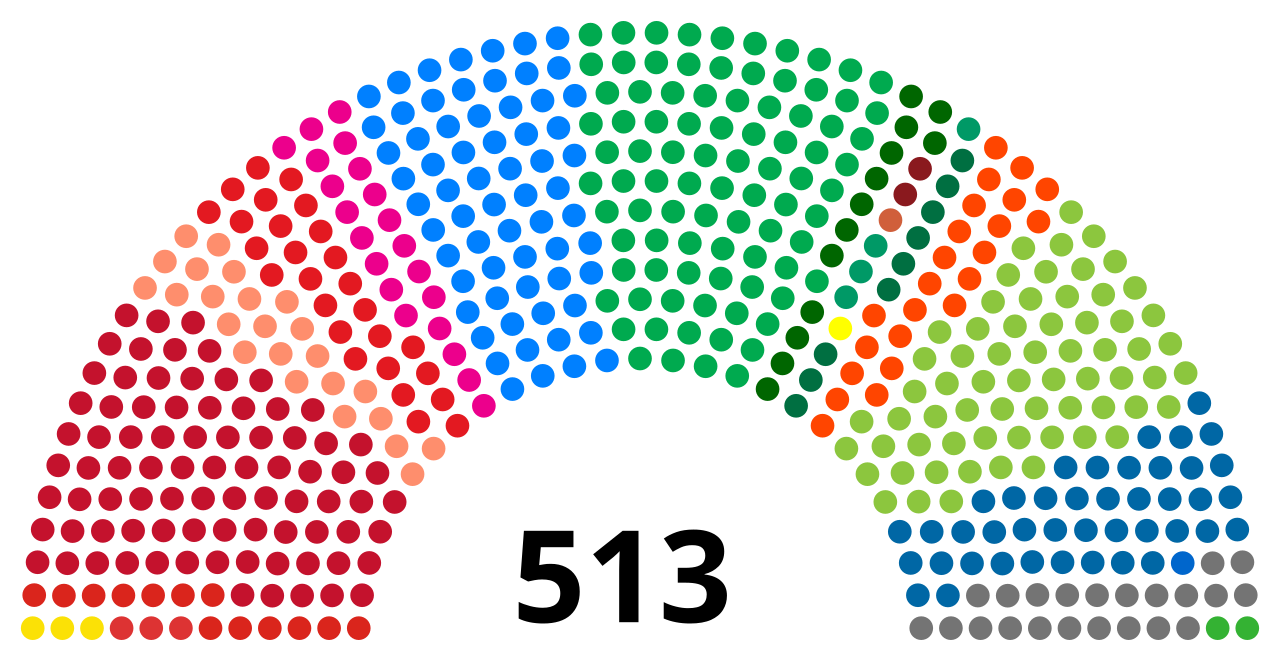
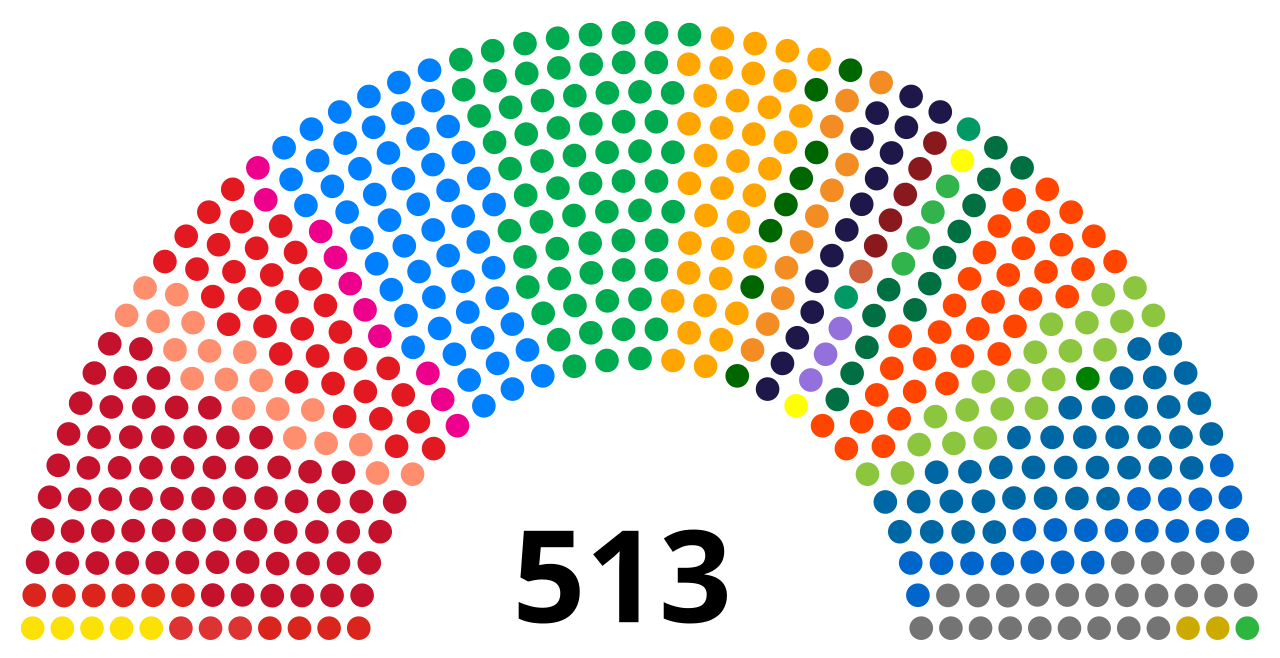
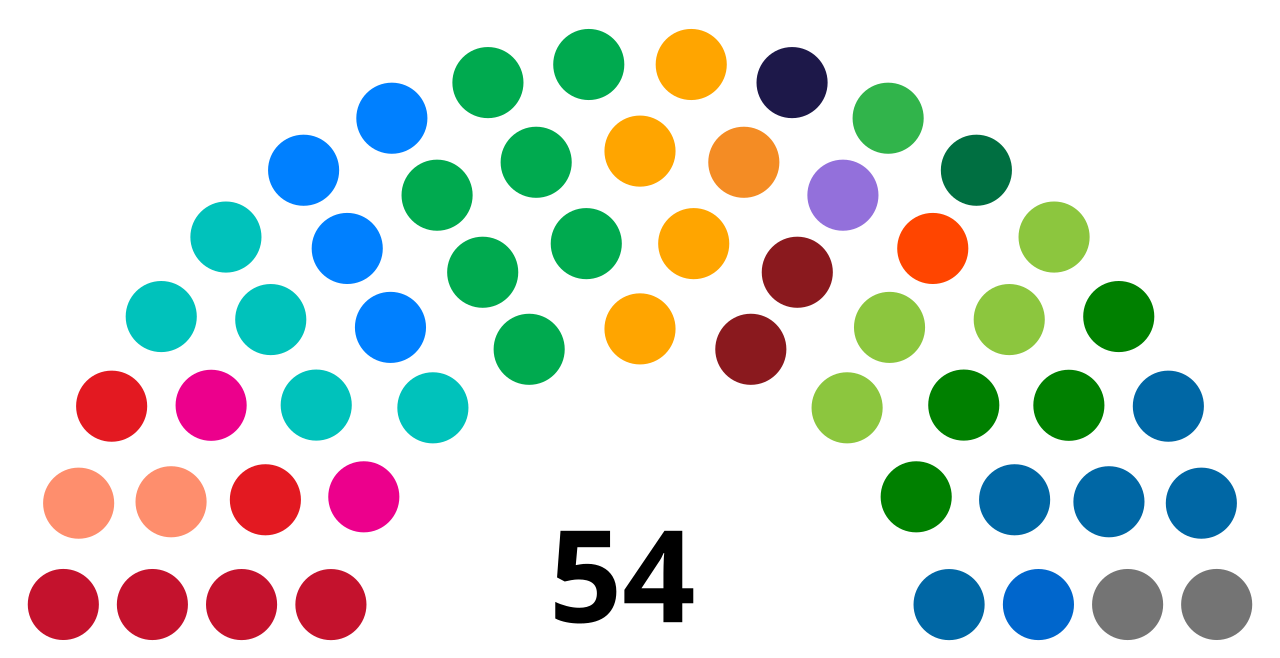
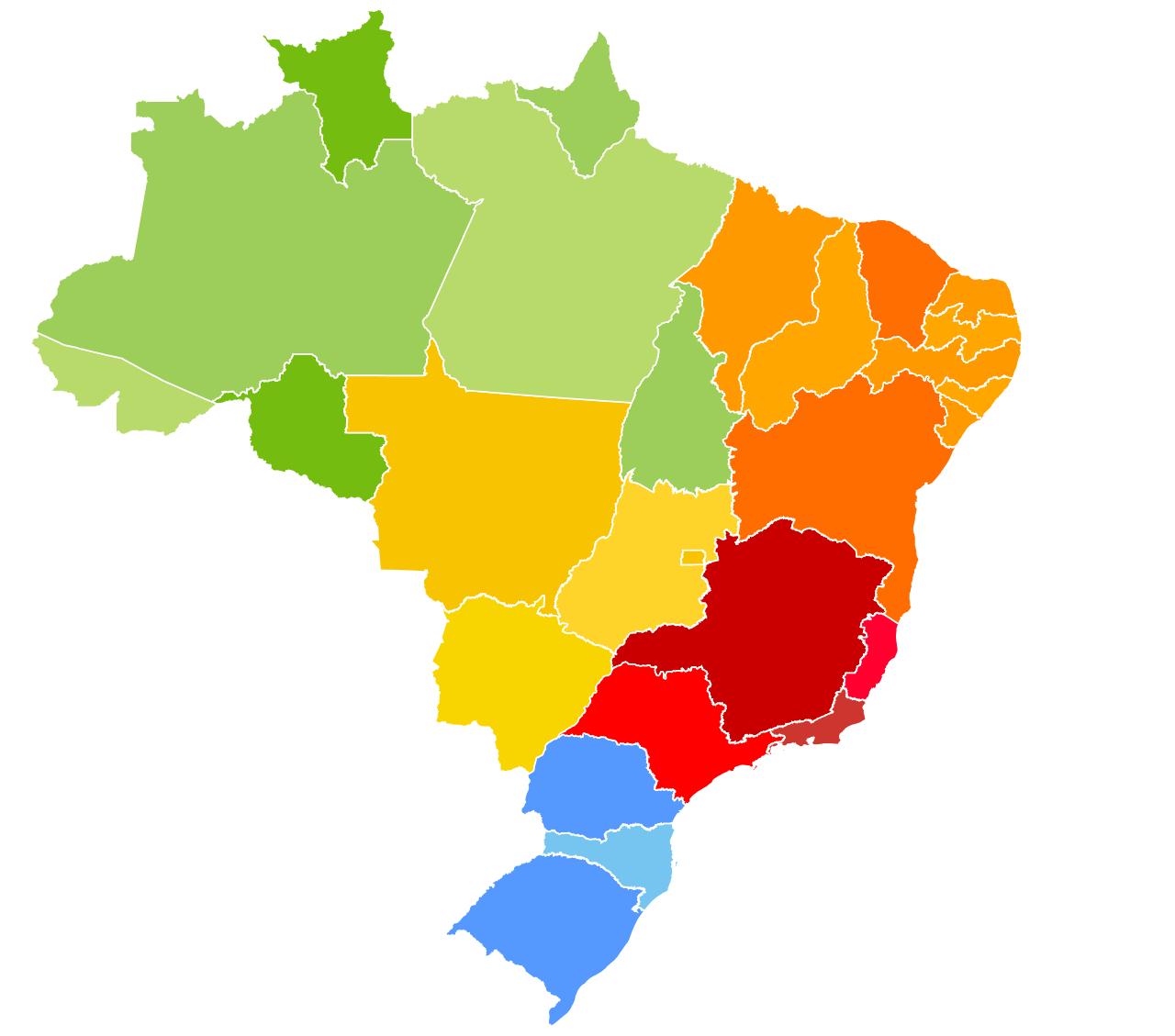
The politics of Brazil operate within a federal presidential representative democratic republic, with the President serving as both head of state and head of government. The country has a multi-party system and is divided into 27 federal units: 26 states and one federal district, each with autonomous governments. The federal government comprises three independent branches—executive, legislative, and judicial—and the National Congress is a two-chamber legislature consisting of the Federal Senate and the Chamber of Deputies.
Brazil’s political framework is shaped by its current constitution, enacted in 1988 during the process of redemocratization. This constitution was drafted as a reaction to the previous military dictatorship, emphasizing individual rights, and is notably expansive, incorporating many statutory acts such as those governing social security and taxes. Brazil has had seven constitutions in total, beginning with the monarchic, highly centralized 1824 charter. Subsequent constitutions reflected shifts between democratic and autocratic rule, including the 1937 corporatist constitution instituted by Getúlio Vargas and the 1967 document that codified the military regime’s Institutional Acts.
The country operates an unrestricted multiparty system with a large number of political parties. These parties often lack ideological consistency, and it is common for congressmen to switch parties, weakening electoral coalitions. This fragmentation forces the executive to piece together diverse and often ideologically incoherent alliances to pass legislation, a practice known as coalition presidentialism. Brazilian politics is broadly divided between internationalist liberals, who favor economic internationalization, and statist nationalists, who rely on interventionism and protection of state enterprises. In 2022, the Economist Intelligence Unit’s Democracy Index rated Brazil as a “flawed democracy,” and in 2023 it ranked 13th in Latin America and the Caribbean according to the V-Dem Democracy indices. The constitution also contains two elements of direct democracy, as stated in Article 14.
- government_type
- Federal presidential representative democratic republic
- head_of_state_and_government
- President
- legislature
- National Congress (Federal Senate and Chamber of Deputies)
- federal_units
- 26 states and 1 federal district
- current_constitution
- 1988
- democracy_rating_2022
- Flawed democracy (Economist Intelligence Unit)
- number_of_active_parties_2020
- More than 30
Quick Facts
- Native Name
- Política do Brasil
- Constitution
- Constitution of Brazil
- Legislature
- National Congress
- Legislature Type
- Bicameral
- Legislature Place
- National Congress Palace
- Upperhouse
- Federal Senate
- Upperhouse Speaker
- Davi Alcolumbre
- Upperhouse Speaker Title
- President of the Federal Senate
- Lowerhouse
- Chamber of Deputies
- Lowerhouse Speaker
- Hugo Motta
- Lowerhouse Speaker Title
- President of the Chamber of Deputies
- Title Hosag
- President
Facts from the source article.
Lore & Background
The politics of Brazil operate within a federal presidential representative democratic republic, where the President serves as both head of state and head of government within a multi-party system. The country’s political and administrative structure includes a federal government, 26 states, a federal district, and numerous municipalities. The federal government is divided into three independent branches: the executive, led by the President and a cabinet; the bicameral National Congress, composed of the Federal Senate and the Chamber of Deputies; and the judiciary, which includes the Supreme Federal Court, the Superior Court of Justice, other Superior Courts, the National Justice Council, and Regional Federal Courts. Each state is an autonomous sub-national entity with its own elected governor serving a four-year term, a unicameral legislature, and a judiciary handling common justice. Municipalities have local governments with a directly elected mayor and legislative body. Brazil’s unrestricted multiparty system features many parties, often lacking ideological consistency, and congressmen frequently switch parties, weakening coalitions. This forces the executive to assemble diverse, ideologically incoherent alliances—a system known as coalition presidentialism. The Economist Intelligence Unit rated Brazil a “flawed democracy” in 2022, and in 2023 it ranked 13th most electoral democratic in Latin America and the Caribbean according to V-Dem indices. Brazil has had seven constitutions: the 1824 monarchic, centralized document; the 1891 federalist, democratic constitution influenced by the U.S. model; the 1934 democratic constitution that allowed women’s suffrage; the 1937 corporatist “Polish” constitution; the 1946 democratic constitution; the 1967 constitution incorporating military Institutional Acts; and the current 1988 constitution, drafted during redemocratization, which is expansive, guarantees individual rights, and includes detailed provisions on Social Security and taxes. Brazilian politics is divided between internationalist liberals favoring economic internationalization and statist nationalists advocating interventionism and state enterprise protection, with these tendencies appearing cyclically.
Reader's Guide
Brazil's political system is characterized by coalition presidentialism, where the high number of political parties forces the executive to assemble diverse and often ideologically incoherent coalitions to pass legislation. This system, combined with frequent party switching by congressmen, weakens electoral coalitions. The political landscape is divided between internationalist liberals, who favor economic internationalization, and statist nationalists, who support interventionism and state enterprises. As of May 2017, over 16.6 million Brazilians were affiliated with a political party, with the largest being MDB, PT, and PSDB. In 2020, Brazil had more than 30 active parties, with only one defining itself as right-wing, reflecting a political imbalance.
Did You Know?
- The 1988 constitution is more expansive than a typical constitution, including detailed provisions on Social Security and taxes.
Defining the Discipline
Comparative politics stands as a branch of political science dedicated to the systematic examination of political systems around the globe. Rather than focusing on a single nation, scholars in this field investigate how different countries organize their governance, conduct elections, produce policy, and manage public administration. The discipline is comparative because it seeks to explain why political systems share certain traits or diverge from one another, and it is systematic because it looks for recurring patterns and regularities across cases. Its substantive reach spans democratization, globalization, regional integration, and the interplay between states and societies. Over the past four decades, the field has absorbed a wide range of theoretical lenses—political culture, dependency theory, developmentalism, corporatism, comparative political economy, and new institutionalism—each offering distinct tools for understanding how and why political arrangements evolve. In some contexts, particularly in the United States, the term is loosely used to mean the politics of foreign countries, a usage that many within the discipline dispute.
Two Intellectual Lineages
Philippe C. Schmitter identified two foundational traditions that shape the intellectual genealogy of comparative politics. The first, which he labels sociological constitutionalism, traces back to Aristotle and encompasses thinkers who examined political life through the lens of social forces and historical development. This lineage includes figures such as Machiavelli, Montesquieu, Tocqueville, Marx, Weber, Durkheim, and Pareto. In the twentieth century, it evolved into what was called historical political sociology, carrying forward through scholars like Stein Rokkan, Lipset, Linz, and Eckstein. The second tradition, legal constitutionalism, descends from Plato and centers on the formal structures of law and constitutional design. Its classic contributors include Léon Duguit, James Bryce, A. Lawrence Lowell, and Woodrow Wilson, while twentieth-century continuations include Sartori, Duverger, and Friedrich. Together, these two streams—one emphasizing the social roots of political order, the other the architecture of legal institutions—provide complementary frameworks for understanding how governance systems take shape and function across diverse societies.
Methodological Evolution and Constraints
A defining methodological constraint of comparative politics is that comparisons must be conducted at a fixed point in time, typically the present. Researchers cannot validly juxtapose systems across different historical periods; the objects of comparison must remain static. This requirement has shaped how scholars design their studies and interpret their findings. Historically, the discipline relied heavily on between-country comparisons to address broad questions in political science. However, contemporary research has shifted substantially toward subnational comparisons, examining variation within countries rather than only between them. This subnational turn contributes important methodological, theoretical, and substantive insights to the broader study of politics. The field's name itself reflects its historical association with the comparative method, though scholars like Arend Lijphart emphasize that the discipline's defining feature is methodological rather than substantive—it addresses the how of analysis without prescribing the what. Meanwhile, Peter Mair and Richard Rose argue for a dual definition combining a substantive focus on national political systems with a method of identifying and explaining similarities and differences through shared conceptual frameworks.
Bridging Domestic and Global Politics
Comparative politics plays a vital role in understanding the nature and functions of political systems worldwide, and its insights extend well beyond academic inquiry into the realm of international relations and conflict resolution. Political structures differ markedly across nations due to historical, social, ethical, and racial factors, meaning that even seemingly similar institutions operate in distinct ways. For example, both India and the United States are majority-rule democracies, yet the U.S. employs a liberal presidential system with a president as head of government, while India operates under a parliamentary system led by a prime minister. Decision-making processes also diverge significantly between the two. Although comparative politics and international relations are distinct subfields of political science, they intersect meaningfully: comparative politics investigates the domestic causes of international strategy and examines how global frameworks and approaches influence domestic political conduct. By clarifying global legislative issues and current power dynamics, the discipline equips scholars and policymakers with the analytical tools needed to navigate an increasingly interconnected political landscape.
Gallery

More in Comparative Politics 1-23
Spotted an error? Know more?
This is a living reference — every entry is fact-audited, and reader corrections feed straight into our audit queue. Suggest an edit · See this site's audit record