
Politics of France
Semi-presidential republic with strong executive and parliamentary oversight.

Jebulon · CC0
France operates under a semi-presidential system established by the Constitution of the Fifth Republic, approved by popular referendum in 1958. This constitution significantly strengthened the presidency and the executive branch relative to Parliament. The nation defines itself as an "indivisible, secular, democratic, and social Republic," and its foundational principles include equality before the law, the rejection of special class privileges, presumption of innocence, freedom of speech and religion, and the guarantee of property against arbitrary seizure. While the constitution itself lacks a bill of rights, its preamble affirms adherence to the Declaration of the Rights of Man and of the Citizen and the preamble of the Fourth Republic, giving these texts constitutional value. Recent amendments have also incorporated an Environment charter and a mechanism for citizens to challenge a statute’s constitutionality before the Constitutional Council.
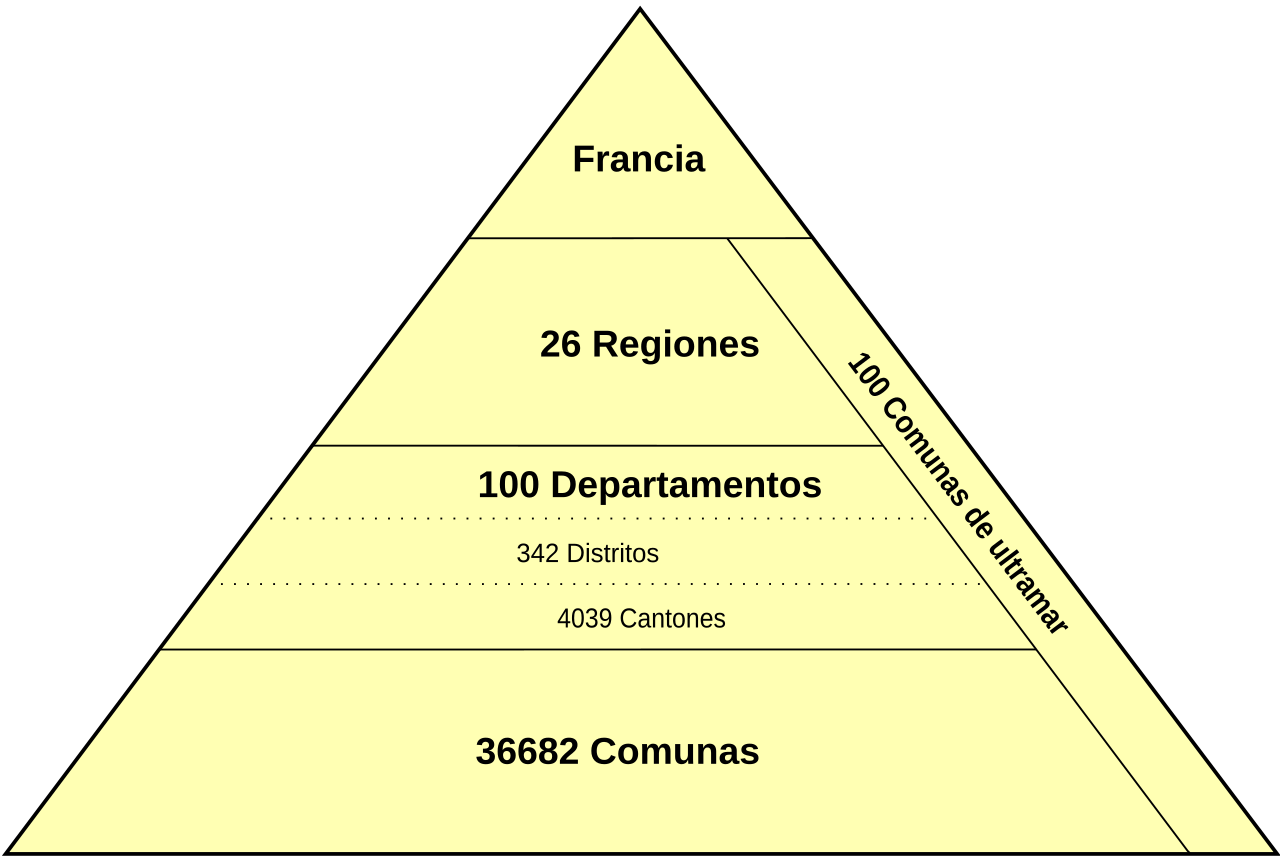
Executive power is shared between the president and the Government, which consists of the prime minister and ministers. The president appoints the prime minister, who is responsible to Parliament. The National Assembly, the lower house, can revoke the government through a motion of no-confidence, ensuring the prime minister nearly always commands a majority in that chamber. The president chairs the Council of Ministers and is the pre-eminent political figure, though dominance is limited when opponents control Parliament, requiring a prime minister from the opposing majority. The legislature comprises the National Assembly and the Senate, which pass statutes, vote on the budget, and oversee the executive through formal questioning and commissions of inquiry. The Constitutional Council, whose members are appointed by the president and the heads of both parliamentary houses (with former presidents eligible to serve), reviews the constitutionality of laws. The judiciary is independent, based on civil law from the Napoleonic Codes, and divided into judicial and administrative branches, each with its own supreme court: the Court of Cassation and the Conseil d'État. France is a unitary state with administrative subdivisions—regions, departments, and communes—that have legal functions the national government cannot intrude upon. As a founding member of the European Union, France has transferred part of its sovereignty to
- system
- Semi-presidential republic
- executive
- President and Government (Prime Minister and ministers)
- legislature
- Bicameral Parliament (National Assembly and Senate)
- judiciary
- Independent civil law system based on Napoleonic Codes
- head of state
- President (Emmanuel Macron since 14 May 2017)
- founding member
- European Coal and Steel Community (later European Union)
Lore & Background
Parliament passes statutes, votes on the budget, and controls the executive through formal questioning and commissions of inquiry. The Constitutional Council checks the constitutionality of statutes; its members are appointed by the president, the president of the National Assembly, and the president of the Senate. Former presidents of the Republic may also serve on the Council if they wish, a provision that has been exercised by Valéry Giscard d'Estaing and Jacques Chirac. The independent judiciary is based on a civil law system derived from the Napoleonic Codes. It is divided into two branches: the judicial branch, handling civil and criminal law, and the administrative branch, dealing with appeals against executive decisions. Each branch has its own independent supreme court of appeal—the Court of Cassation for judicial courts and the Conseil d'Etat for administrative courts. The French government includes various bodies that check abuses of power and independent agencies. France is a unitary state, but its administrative subdivisions—regions, departments, and communes—have distinct legal functions, and the national government is prohibited from intruding into their normal operations. As a founding member of the European Coal and Steel Community, later the European Union, France has transferred part of its sovereignty to European institutions, as provided by its constitution, requiring the government to abide by European treaties, directives, and regulations. The constitution, approved by popular referendum in 1958, greatly strengthened the presidency and the executive relative to Parliament. It does not contain a bill of rights but its preamble references the Declaration of the Rights of Man and of the Citizen and the preamble to the Fourth Republic, giving those principles constitutional value. Recent modifications added a reference to an Environment charter with full constitutional value and a right for citizens to contest a statute’s constitutionality before the Constitutional Council. Foundational principles include equality before law, rejection of special privileges, presumption of innocence, freedom of speech and religion, guarantee of property against arbitrary seizure, and government accountability to citizens.
Reader's Guide
France's political system is significant as a model of semi-presidential governance, balancing a powerful elected president with a prime minister accountable to Parliament. The system's adaptability is shown by cohabitation periods, where presidents from one party worked with prime ministers from an opposing parliamentary majority. France's commitment to secularism, equality, and the Rights of Man underpins its legal framework, with constitutional review by the Constitutional Council ensuring legislation respects these principles. As a founding member of the European Union, France has transferred part of its sovereignty to European institutions, requiring compliance with EU treaties and directives. The system's evolution—including the five-year presidential term and the right for citizens to challenge laws—demonstrates ongoing constitutional refinement.
Did You Know?
- Former presidents Valéry Giscard d'Estaing and Jacques Chirac are the only former presidents to have participated in the Constitutional Council's work.
- The prime minister can commit the government's responsibility on a bill under article 49.3, which passes unless the National Assembly votes a motion of no-confidence.
- France was a founding member of the European Coal and Steel Community, later the European Union.
France in the Original AP Comparative Government Curriculum
When the College Board first launched its Advanced Placement Comparative Government and Politics examination in 1987, the French Republic held a place among the sovereign entities whose political systems, institutions, policymaking processes, and political cultures were studied by students preparing for the test. The course was designed to give high school learners a window into how different nations organized their governance, and France served as one of the reference points through which students could compare structures of authority, electoral mechanisms, and citizen participation. The College Board identified the nation simply as France in its official materials, pairing the common name with the formal designation of the French Republic. For roughly two decades, the country formed part of the comparative landscape that students navigated, offering a European perspective alongside other nations on the syllabus. Its inclusion reflected the course's early ambition to present a broad cross-section of political traditions, from Western parliamentary systems to non-Western governance models, all under a single introductory college-level framework.
The 2005 Restructuring and France's Removal from the Exam
In the fall of 2005, the College Board undertook a significant overhaul of the AP Comparative Government and Politics course and its accompanying examination, aiming to bring the material closer to what a typical introductory college course would cover. A central element of this revision was a deliberate narrowing of the country roster. France, along with India, was dropped from the list of nations whose politics students were expected to analyze. In their place, the curriculum locked in six core countries: China, Iran, Mexico, Nigeria, Russia, and the United Kingdom. The restructuring also shifted the analytical emphasis away from country-by-country description and toward broader thematic threads such as citizen-state relations, democratization, globalization, political change, and public policy. For France, the change meant that a generation of AP students would no longer encounter its institutions, party systems, or political culture as a required component of the examination, effectively removing the country from the standardized comparative politics landscape that the College Board had maintained since 1987.
France Among the Former Exam Countries
The College Board's official records distinguish between the six nations currently examined and those that previously appeared on the AP Comparative Government and Politics test. France and India are grouped together as former countries whose politics, political institutions, policymaking, and political cultures had once been part of the required curriculum. In the College Board's testing nomenclature, the French Republic is referenced by the shorter name France, a convention the organization applies consistently when naming sovereign entities for examination purposes. This categorization underscores that France's presence in the course was not incidental or peripheral; it occupied the same structural role as the six current nations, meaning students were expected to engage with its governmental arrangements, electoral frameworks, and civic traditions at the same depth and breadth as any other country on the list. The fact that France and India are the only two nations listed as former participants highlights that the 2005 revision represented a singular, decisive curricular shift rather than a gradual phase-out of individual countries over multiple years.
The Comparative Politics Framework That Once Included France
The AP Comparative Government and Politics course, in its pre-2005 configuration, organized its content around several broad topic areas that students studying France would have encountered: political systems, regimes, and governments; political institutions; political culture and participation; party and electoral systems alongside citizen organizations; and political and economic changes and development. Each of these thematic categories carried a defined weight in the overall examination, ranging from roughly eleven to twenty-eight percent of the total score, ensuring that no single dimension of a country's politics dominated the assessment. France, as one of the examined nations, would have been analyzed through every one of these lenses, from the structure of its legislative and executive branches to the dynamics of its electoral competition and the ways its political culture shaped citizen engagement. The course's design, first implemented in 1987, treated each country as a case study through which universal political science concepts could be tested, and France's inclusion meant that European parliamentary and presidential traditions were represented within a global comparative set that also encompassed Asian, African, and Middle Eastern political orders.
Gallery

More in Comparative Politics 1-23
Spotted an error? Know more?
This is a living reference — every entry is fact-audited, and reader corrections feed straight into our audit queue. Suggest an edit · See this site's audit record