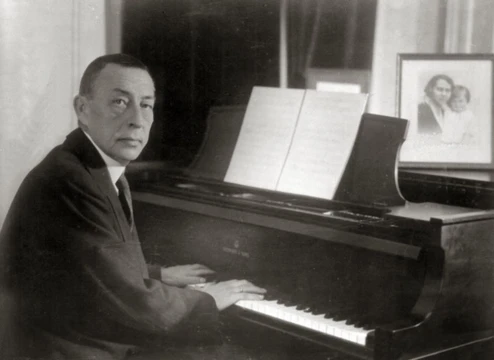
Terry Riley
American composer and performing musician who collaborated extensively with the Kronos Quartet.

Terry Riley is an American composer and performing musician, widely recognized as a pioneering figure in minimalist music. Born in Colfax, California, in 1935 and raised in Redding, he began studying composition and performing solo piano in the 1950s. His early work was influenced by jazz, particularly saxophonist John Coltrane, as well as Indian classical music. After befriending composer La Monte Young, Riley collaborated with him on improvisatory works. He later became involved with the San Francisco Tape Music Center, working alongside figures such as Morton Subotnick and Steve Reich, and also performed with Young’s Theatre of Eternal Music in New York. A recording contract with CBS in the late 1960s brought his music to a wider audience. His landmark 1964 composition *In C* consists of 53 short musical modules performed in sequence by any number of instruments, with a steady pulse of Cs on the piano. This piece, along with his 1969 album *A Rainbow in Curved Air*, is considered a landmark of minimalism and influenced experimental music, rock, and electronic music. Riley also pioneered the use of tape loops and developed a “time-lag accumulator” technique, first used on the 1963 piece *Music for the Gift*, which featured trumpeter Chet Baker. In 1970, he began intensive study with Hindustani vocalist Pandit Pran Nath, whom he accompanied on tabla, tambura, and voice, and later taught Indian classical music at Mills College. Around 1980, he began a long collaboration with the Kronos Quartet, composing thirteen string quartets for them. His later works, such as *Shri Camel*, explored just intonation. Riley continues to perform live and teach as both a solo pianist and Indian raga vocalist.
- field
- Composer, performing musician
Verified Timeline
Lore & Background
Terry Riley’s appearance is documented in two photographs: one from 1985 at the Great American Music Hall in San Francisco, and another from 2018. His range as a composer and performer spans minimalist composition, Indian classical raga, barrelhouse piano, modal jazz, and improvisation. His habitat includes the San Francisco Tape Music Center, where he worked with Morton Subotnick, Steve Reich, and Pauline Oliveros; La Monte Young’s New York-based Theatre of Eternal Music; and Mills College, where he taught Indian classical music beginning in 1971. Defining characteristics include pioneering the use of repetition, tape delay systems (notably his self-invented “time-lag accumulator”), and improvisation through modal figures of varying lengths. His landmark piece *In C* (1964) consists of 53 separate modules in the key of C, performed by any number of instruments following loose guidelines, with a steady pulse of Cs on piano. He also composed using just intonation and microtones. Riley’s work was influenced by jazz saxophonist John Coltrane, Indian classical master Pandit Pran Nath (whom he accompanied on tabla, tambura, and voice), and composers John Cage, La Monte Young, and the chamber groups of John Coltrane, Miles Davis, Charles Mingus, Bill Evans, and Gil Evans.
Reader's Guide
Terry Riley’s music is defined by improvisation over modal figures of varying lengths, a technique central to works like *In C* (1964) and the *Keyboard Studies* (1964–1966). *In C* consists of 53 separate modules, each roughly a measure long and in the key of C, with a pianist maintaining a steady pulse of Cs while any number of performers on any instrument play the modules under loose guidelines, allowing the patterns to interlock. Riley began experimenting with tape loops in the 1950s, later developing a “time-lag accumulator” with a sound engineer. An early tape loop piece, *Music for the Gift* (1963), featured trumpeter Chet Baker. This technique was conceived during Riley’s time in Paris and premiered in 1968 at the Nelson Atkins Gallery in Kansas City; later versions were commissioned by Lille 2004 and the Schauspielhaus in Bochum in 2019. Riley also explored just intonation and microtones. In mid-1960s New York, he performed with La Monte Young, John Cale, and Angus MacLise, and is credited with inspiring Cale’s keyboard part on Lou Reed’s “All Tomorrow’s Parties.” Riley’s association with the Kronos Quartet began around 1980 after meeting founder David Harrington at Mills College, leading to 13 string quartets and other works. He wrote his first orchestral piece, *Jade Palace*, in 1991, and has continued composing orchestral commissions. Riley remains active as a performer and teacher, working as a solo pianist and Indian raga vocalist.
Did You Know?
- Throughout his career, Riley composed 13 string quartets for the Kronos Quartet, in addition to other works.
- The Kronos Quartet has worked with many minimalist composers, including Terry Riley, as part of its long history of commissioning new works.
Frequently Asked Questions
Who is Terry Riley?
Terry Riley is an American composer and performing musician born on June 24, 1935, widely regarded as a founding figure of the minimalist music movement. He blends elements of jazz, Indian classical traditions, and tape-delay technology into his compositions.
What are Terry Riley's most famous works?
His two most celebrated pieces are the 1964 composition In C and the 1969 recording A Rainbow in Curved Air. Both are considered landmark achievements in minimalism and have left a lasting imprint on experimental, rock, and electronic music.
What musical influences shaped Terry Riley's style?
Riley drew heavily from jazz improvisation and Indian classical music, which informed his signature use of layered repetition and open-ended structures. He also pioneered the creative use of tape delay systems as a compositional tool.
Why is Terry Riley important in music history?
He is credited as a pioneer who helped define the minimalist school of composition in the 1960s. His work opened the door for experimental and contemporary electronic artists by proving that repetition and improvisation could be central structural elements in concert music.
What makes 'In C' so notable?
In C, composed in 1964, is a score that allows any number of performers to play at their own pace, making every performance unique. It became a foundational text of minimalism and continues to be performed and studied decades later.
More in Classical Virtuosos 1-24
Spotted an error? Know more?
This is a living reference — every entry is fact-audited, and reader corrections feed straight into our audit queue. Suggest an edit · See this site's audit record