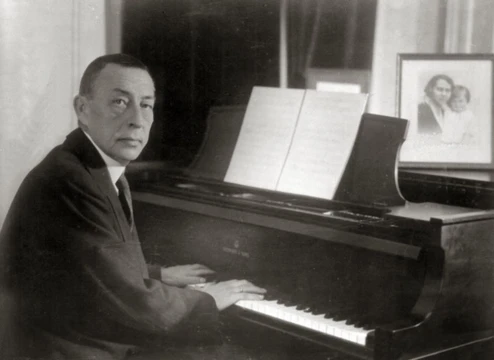
Radu Lupu
Romanian pianist who won three major competitions and recorded extensively for Decca.

Radu Lupu (30 November 1945 – 17 April 2022) was a Romanian pianist regarded as one of the finest of his era. Born in Galați to a Jewish family, he began piano at age six after receiving his first instrument at five. He debuted publicly at twelve, performing his own compositions, having initially seen himself as a composer before abandoning it to focus on the piano. His teachers included Florica Musicescu (who taught Dinu Lipatti) and Heinrich Neuhaus (teacher of Sviatoslav Richter and Emil Gilels), as well as Cella Delavrancea, Stanislav Neuhaus, and Maria Curcio. He studied at the Bucharest Conservatory and, from 1961, at the Moscow Conservatory on a scholarship, graduating in 1969.
Lupu’s international career was launched by winning three major competitions between 1966 and 1969: the Van Cliburn, the George Enescu, and the Leeds. At the Cliburn, his performance of Prokofiev’s Second Piano Concerto was noted for its intensity, and jury member Alicia de Larrocha called him a genius. He subsequently performed with major orchestras and at leading festivals worldwide.
From 1970 to 1993, he made over twenty recordings for Decca, earning acclaim for solo works by Beethoven, Brahms, Grieg, Mozart, Schubert, and Schumann, including all Beethoven piano concertos and the Grieg and Schumann concertos. His chamber recordings included Mozart violin sonatas with Szymon Goldberg, Debussy and Franck sonatas with Kyung Wha Chung, and Schubert works with Goldberg. He also recorded Mozart and Schubert for four hands with Murray Perahia, Schubert songs with Barbara Hendricks, and piano duets with Daniel Barenboim. He was noted for performances of Bartók, Debussy, Enescu, and Janáček.
Lupu won a Grammy in 1996 for an album of two Schubert sonatas, and was nominated for another. He also received the Edison Award in 1995 for a Schumann disc, the Franco Abbiati Prize in 1989 and 2006, and the 2006 Premio Arturo Benedetti Michelangeli.
- field
- Piano
- nationality
- Romanian
- known_for
- Winning three major international piano competitions (Van Cliburn, George Enescu, Leeds); acclaimed recordings for Decca Records
Verified Timeline
Lore & Background
Radu Lupu was born in Galați, Romania, into a Jewish family. He began studying the piano at age six and made his first public appearance at twelve, performing his own compositions. His early training included study with Florica Musicescu, who also taught Dinu Lipatti, and later with Heinrich Neuhaus, the teacher of Sviatoslav Richter and Emil Gilels. After winning three major international piano competitions between 1966 and 1969, his career became global, leading to performances with every major orchestra and at all principal festivals and music capitals. Lupu’s playing was noted for its depth and individuality; he described himself as largely autodidactic, drawing inspiration from conductors such as Furtwängler and Toscanini. His recorded repertoire for Decca Records, spanning from 1970 to 1993, included the complete Beethoven piano concertos, solo works by Brahms, Grieg, Mozart, Schubert, and Schumann, as well as chamber music with partners like Szymon Goldberg and Kyung Wha Chung. He also recorded works for piano duet with Murray Perahia and Daniel Barenboim. Beyond his core repertoire, he was admired for interpretations of Bartók, Debussy, Enescu, and Janáček. Lupu received a Grammy Award in 1996, an Edison Award in 1995, and the Franco Abbiati Prize in 1989 and 2006.
Reader's Guide
Lupu’s approach to performance was marked by a fusion of formidable technical skill and profound interpretive insight, qualities that defined his extensive recorded legacy. His repertoire concentrated on core Romantic and Classical composers, with particular emphasis on Beethoven, Schubert, Schumann, and Brahms, though he also brought notable interpretations to works by Bartók, Debussy, Enescu, and Janáček. His recordings for Decca, made between 1970 and 1993, earned widespread acclaim and included complete cycles of Beethoven’s piano concertos, the Grieg and Schumann concertos, and substantial solo works by Schubert and Brahms. Chamber music collaborations were equally significant: he recorded all of Mozart’s violin sonatas with Szymon Goldberg, violin sonatas by Debussy and Franck with Kyung Wha Chung, and Schubert works for piano four-hands with both Murray Perahia and Daniel Barenboim. His 1996 Grammy Award for an album of two Schubert sonatas, along with an Edison Award for Schumann works and multiple Franco Abbiati Prizes, underscored the high regard in which he was held. Critics and audiences alike celebrated Lupu for his ability to combine technical command with a deeply personal, autodidactic musical voice, a legacy that continues to influence pianists and listeners.
Did You Know?
- He studied with Florica Musicescu, who also taught Dinu Lipatti, and Heinrich Neuhaus, who also taught Sviatoslav Richter and Emil Gilels.
Frequently Asked Questions
Which record label did Radu Lupu record for?
Lupu's principal studio output was made for Decca Records. Those Decca sessions remain a cornerstone of his legacy and are still frequently cited by listeners and critics as reference performances.
Why is Radu Lupu considered one of the greatest pianists of his time?
His rare combination of flawless technique, profound interpretive insight, and the unprecedented feat of winning three major international competitions within three years set a benchmark that few peers could match. For decades, both concert audiences and recording listeners treated his performances as a standard of excellence in the piano repertoire.
More in Classical Virtuosos 1-24
Spotted an error? Know more?
This is a living reference — every entry is fact-audited, and reader corrections feed straight into our audit queue. Suggest an edit · See this site's audit record