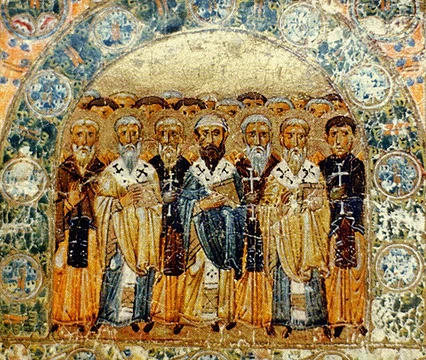
Philip the Apostle
One of the Twelve Apostles, preacher in Greece and Asia-Minor.

Peter Paul Rubens · via Wikipedia: Philip the Apostle · Public domain
Philip the Apostle was a native of Bethsaida, the same town as Peter and Andrew, and was called directly by Jesus to follow him.[1] He is listed fifth among the apostles in the synoptic Gospels and the Book of Acts.[2]
Quick Facts
- Died
- AD 54/80
- Birthplace
- Bethsaida, Galilee, Roman Empire
- Place of death
- Hierapolis, Asia, Roman Empire
- Titles
- Apostle and Martyr
- Venerated in
- All Christian denominations that venerate saints
- Canonized
- Pre-congregation
- Attributes
- Red Martyr, elderly, bearded man, holding a basket of loaves and a Tau cross
- Patronage
- Cape Verde
- Hatters
- Pastry chefs
- San Felipe Pueblo
- Uruguay
Facts from the source article.
Life and work
When some Greeks wished to see Jesus, they approached Philip, who then told Andrew, and together they informed Jesus.[3] The Catholic Encyclopedia describes Philip as a naïve, somewhat shy, sober-minded man based on these episodes.[1] Polycrates, bishop of Ephesus around 190 AD, wrote that Philip died in Hierapolis with two of his daughters, while a third daughter was buried in Ephesus.[4] According to D'Andria, most ancient documents state Philip died in Hierapolis around 80 AD at about age 85.[4]
After calling Peter, Jesus encountered Philip the following day and instructed him to "Follow me," which led Philip to bring Nathaniel to Jesus.[1]
What the cited sources add
The Catholic Encyclopedia notes that second-century tradition about Philip is uncertain due to confusion with Philip the Deacon and Evangelist.[1] Polycrates' letter, dated to about 190 AD, is considered by scholars to be absolutely reliable information about Philip's burial.[4] In 2011, archaeologist Francesco D'Andria claimed to have discovered Philip's first-century tomb in a newly excavated church at Hierapolis, about 40 yards from the previously known martyrium.[5] A sixth-century bronze bread stamp from the Virginia Museum of Fine Arts shows the domed martyrium and the basilical church containing Philip's tomb.[5]
Ancient Greek prayers carved into the tomb and church walls venerate Philip the Apostle.[6] D'Andria stated that Philip's relics were likely moved to Constantinople at the end of the sixth century and later to Rome.[5]
References
- "CATHOLIC ENCYCLOPEDIA: St. Philip the Apostle". facts only, no text reused. newadvent.org
- Wikipedia, "Philip the Apostle" (CC BY-SA 4.0) en.wikipedia.org
- Nicoll, W. R., Expositor's Greek Testament on John 12, accessed 10 June 2016. facts only, no text reused. biblehub.com
- John, "How I Discovered the Tomb of the Apostle Philip: Interview With Archaeologist Francesco D'Andria". facts only, no text reused. johnsanidopoulos.com
- "Tomb of Apostle Philip Found", biblicalarchaeology.org, 16 August 2014. facts only, no text reused. biblicalarchaeology.org
- Wikipedia, "Philip the Apostle" (CC BY-SA 4.0), which cites: "Tomb of Apostle Philip Found", biblicalarchaeology.org, 16 August 2014; John, "How I Discovered the Tomb of the Apostle Philip: Interview With Archaeologist Francesco D'Andria" (we also read that source) en.wikipedia.org
Each numbered sentence above was checked against the source it cites before publication. Sentences citing Wikipedia adapt text from the English Wikipedia article Philip the Apostle (contributors), used under CC BY-SA 4.0; this entry is available under the same licence. Other sources were used for facts only; no text or images are copied from them.
More in Christian Saints & Early Church Fathers
Spotted an error? Know more?
Reader corrections go straight into our review queue. Suggest an edit · How this site is sourced